
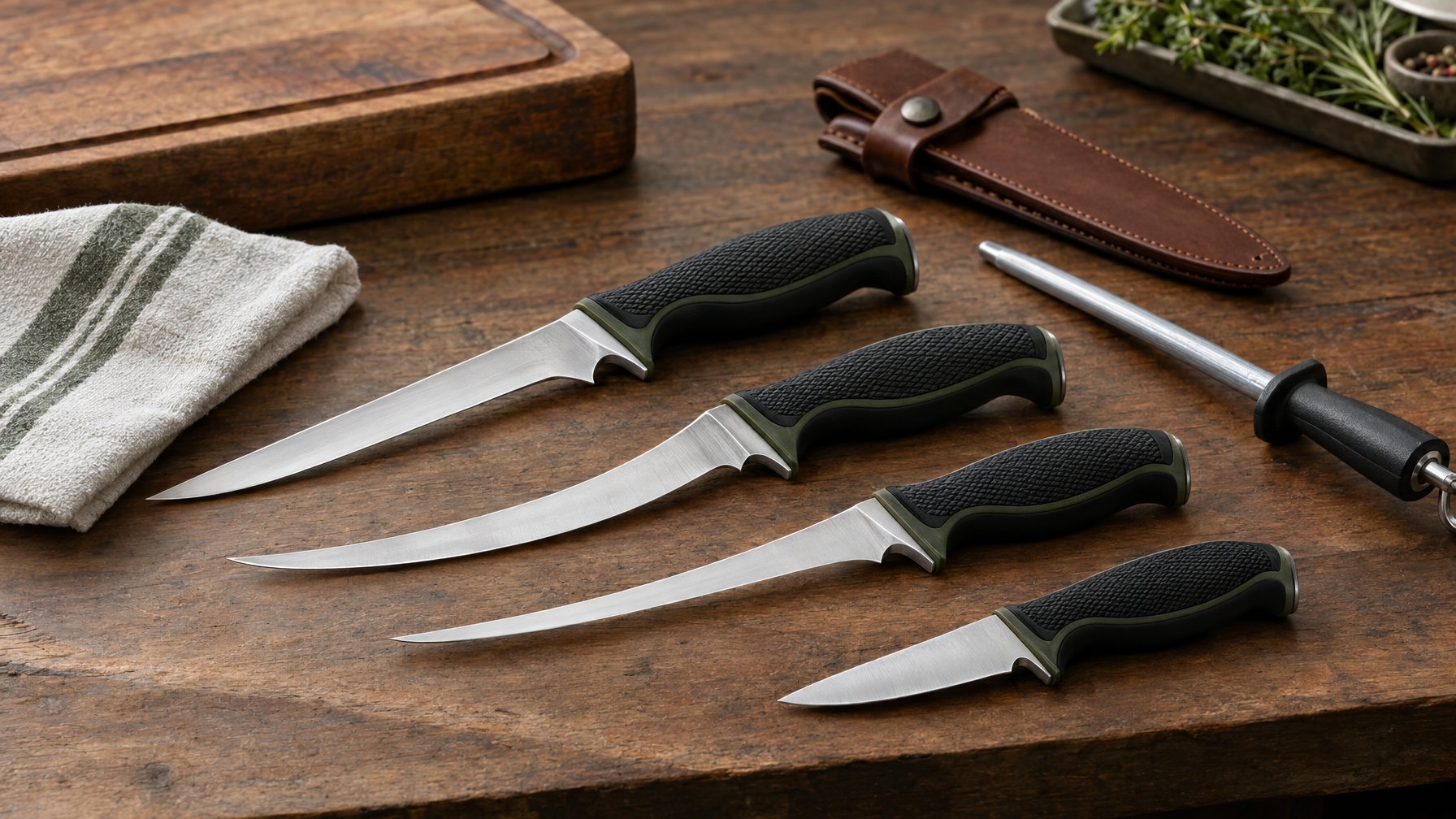
For most home deer processors, the Outdoor Edge WildPak 8-piece set is the knife to buy: it pairs a full-tang boning knife, gut-hook skinner, and caping knife with a bone saw and a hard case, which covers skinning through deboning for one to three deer a season. If you already own a saw and a cutting board, a single flexible boning knife does the real work of turning quarters into freezer-ready cuts for less money.
On This Page
Processing a deer at home is a sequence of different cuts. Initial field dressing deer during deer hunting takes care of internal organs, but meat processing and clean meat preparation require dedicated game processing tools.
Finding the best knife for processing deer depends on whether you prefer a single versatile blade, a compact hunting knife set, or a complete game processing knife set.
A portable field dressing kit covers the initial work in the woods, but full quartering requires broader blades. Efficient meat processing demands tools tailored for each stage of breaking down an animal.
You open the hide, skin, split the pelvic bone or ribcage, then break the carcass into shoulders, loins, and hindquarters. After that, almost everything is boning and trimming.
Dedicated skinning knives feature a deep curved belly to peel hide cleanly without puncturing meat. The tools that matter most are a curved boning knife, an agile skinning knife, a small caping knife for the head and neck, and a bone saw.
Watch four things before you buy. Blade length and flexibility decide how well you follow bone, not how the knife looks. A rugged full tang design matters on skinners and butcher blades, where you lever against joints.
Handle material dictates grip security when your hands are slick with fat and blood. Safe butchering requires non-slip handles that maintain traction in wet conditions.
A dependable non-slip grip keeps cuts controlled, and quality cutlery is a core piece of hunting gear.
A durable hard case ensures the set stays complete next November. SaltRail exists to help you move a harvested deer into organized packages, and knife choice is the first link in that workflow.
Best Knife for Processing Deer
Best for a complete home butchering station: Outdoor Edge Game Processor PR-1
Best for field-to-freezer work on one to three deer a season: Outdoor Edge WildPak 8-Piece Set
Best single knife for deboning venison: Victorinox Fibrox 6-Inch Curved Boning Knife
Best for skinning without stopping to sharpen: Outdoor Edge RazorLite EDC
Best budget boning knife: Mercer Culinary Ultimate White 6-Inch Curved Boning Knife
Outdoor Edge Game Processor PR-1
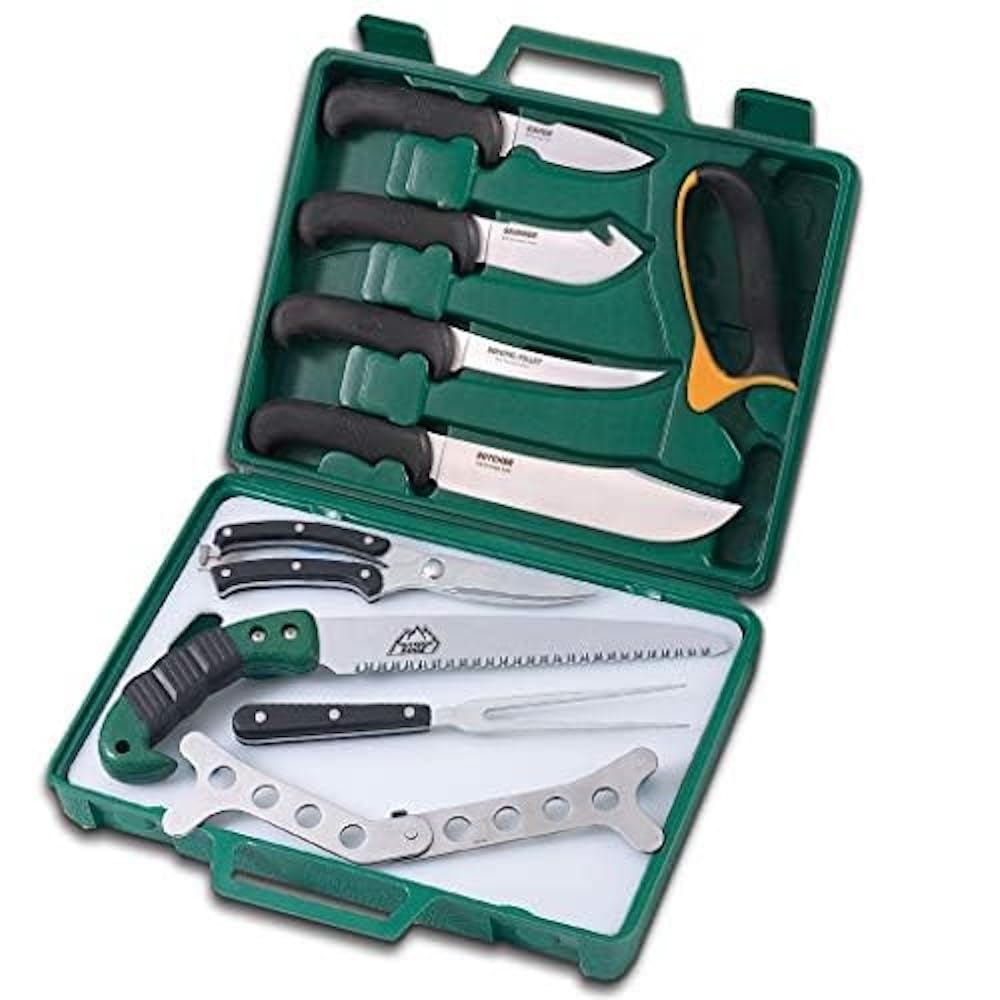
Buy this if you process a deer at home each fall and want one case that holds every cutting tool, including a butcher knife and a cutting board.
Pros
- Four full-tang knives: 4.3″ caping, 4.5″ gut-hook skinner, 5.9″ boning/fillet, 8.3″ butcher
- Includes a 10.2″ wood and bone saw, game shears, carving fork, rib spreader, and cutting board
- Tungsten carbide knife sharpener for touch-ups between quarters
Cons
- Heavy case at roughly 5.7 pounds, better suited to a garage table than a pack
- 420J2 stainless steel needs frequent touch-ups on a full deer
- Gloves are thin latex cleaning gloves, worth replacing with nitrile
This is the larger of Outdoor Edge’s two kits, and the extras are the reason to pick it. The 8.3-inch Bowie-style butcher blade breaks down whole loins and roasts much like a breaking knife, which the WildPak leaves to your kitchen knives. While some hunters carry a cleaver or gut-hook axe, a proper bone saw and butcher knife yield far cleaner cuts.
The included cutting board means you can set up directly on a folding table. The Outdoor Edge game processor keeps every butcher tool organized in a durable hard case. Its stainless steel blades offer good corrosion resistance against moisture and fat.
Each knife features a textured non-slip grip to ensure handling safety when wet. An included ribcage spreader allows rapid cooling of the chest cavity, which protects meat quality during butchering.
Owners on Amazon and hunting forums consistently praise the case layout and the bone saw. The repeated complaint is edge retention: 420J2 stainless steel is soft, tough steel. Plan on running the included knife sharpener or a handheld two-stage sharpener a few times per animal.
Skip it if you work out of a truck bed or want a kit light enough to pack in.
Outdoor Edge WildPak 8-Piece Set
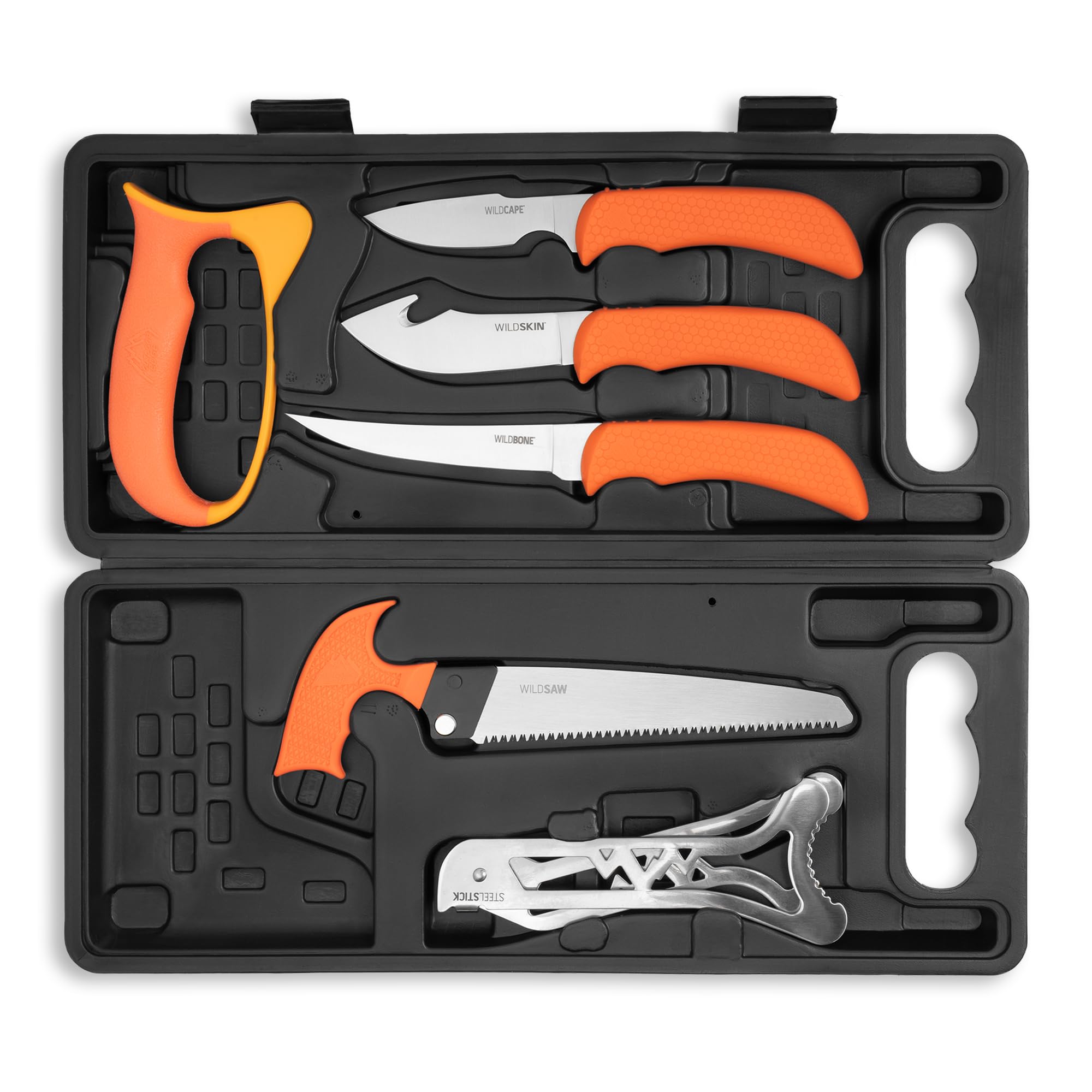
Buy this if you want an effective field dressing kit and processing tools in a case you can carry to camp, and you already have kitchen knives for slicing steaks.
Pros
- Caping knife, gut-hook skinner, and boning knife cover 90% of the work
- Blaze-orange TPR handles provide non-slip rubberized handles that are easy to find in leaves or on a wet table
- 9.3-inch case snaps each tool into place, so nothing rattles loose
Cons
- No butcher knife or cutting board
- Same 420J2 stainless steel, so sharpening is part of the routine
- Case holds the included tools only, with no spare room
The WildPak is the more popular of the two Outdoor Edge sets, and it bridges the gap between field dressing knives and home butchering cutlery. As a versatile hunting knife kit and compact hunting knife set, it is the better fit for most readers processing one to three deer a year.
You get the blade shapes that do the heavy lifting, including a bone saw, rib spreader, and gut hook knife. A dedicated gut-hook knife with a sharp gut hook speeds opening cuts without puncturing internal organs, while a ribcage spreader improves airflow.
The textured TPR handles ensure complete control when skinning or boning. A dedicated field dressing kit works well in the timber, but this set bridges the gap for home butchering.
Hunters looking for a pack-friendly alternative often consider the Outdoor Edge WildLite. For mobile hunters, the Outdoor Edge WildLite delivers a lighter pack-in option with similar utility.
Competitors like the KNINE OUTDOORS hunting deer knife set provide budget options often crafted from 7Cr17MoV steel, but the WildPak features Outdoor Edge ErgoMax styling. While other kits feature camo handles, blaze orange is much easier to spot in autumn leaves. This deer processing knife set fits comfortably behind a truck seat.
Owner reviews repeatedly mention the orange rubberized handles and the grip when hands are greasy. The common gripe matches the PR-1: the blades arrive sharp and then need attention. The carbide knife sharpener handles that in a few passes.
Skip it if you want a cutting board and a long carving blade included.
Victorinox Fibrox 6-Inch Curved Boning Knife
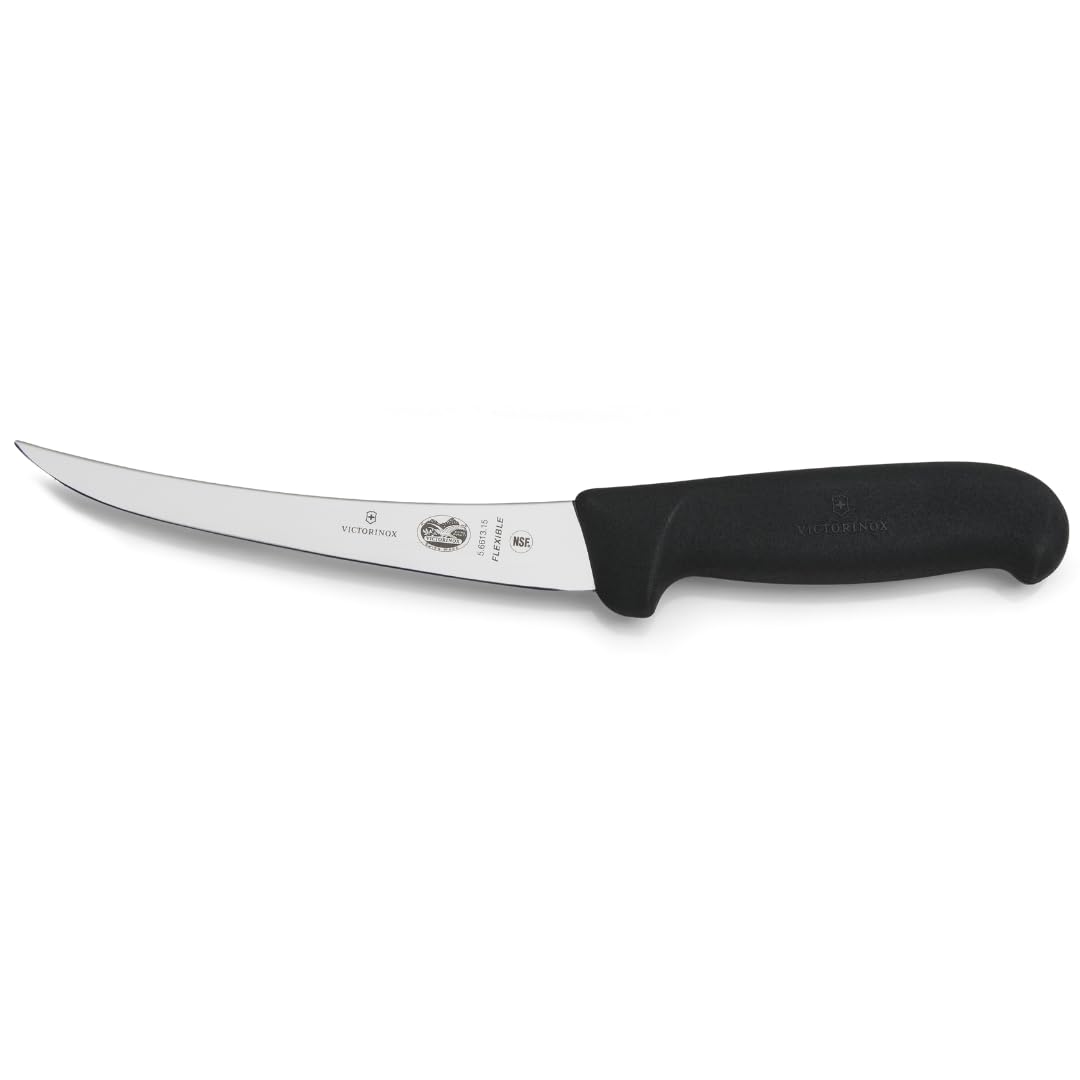
Buy this as your one serious knife for deboning venison, or as the upgrade blade alongside a kit.
Pros
- Flexible 6″ curved blade follows the ball joint and femur closely
- Swiss-made, NSF-approved, and dishwasher-safe
- Light at 3.2 ounces, which reduces hand fatigue over a long session
Cons
- One knife, so you still need a skinner and a saw
- Flexible blade is wrong for prying at joints
- Black Fibrox handle is easy to lose on a dark table
Deboning is where a deer becomes food, and this is the blade professional butchers reach for. While flexible fillet knives work on fish, venison demands extra backbone. Made from high-carbon stainless steel, these high-carbon stainless steel blades let the edge ride bone closely.
The curved blade gives you an ideal working angle on hindquarters without rolling your wrist. Meanwhile, its textured ergonomic handle reduces hand fatigue during repetitive butchering tasks.
Reviewers across Amazon and restaurant-supply sites report years of use and easy touch-ups on a sharpening steel or sharpening stone. The stamped thin blade is flexible, and owners note it takes a set if you lever with it. Use the bone saw for bone.
Skip it if you want a stiff blade for splitting a pelvis.
Outdoor Edge RazorLite EDC
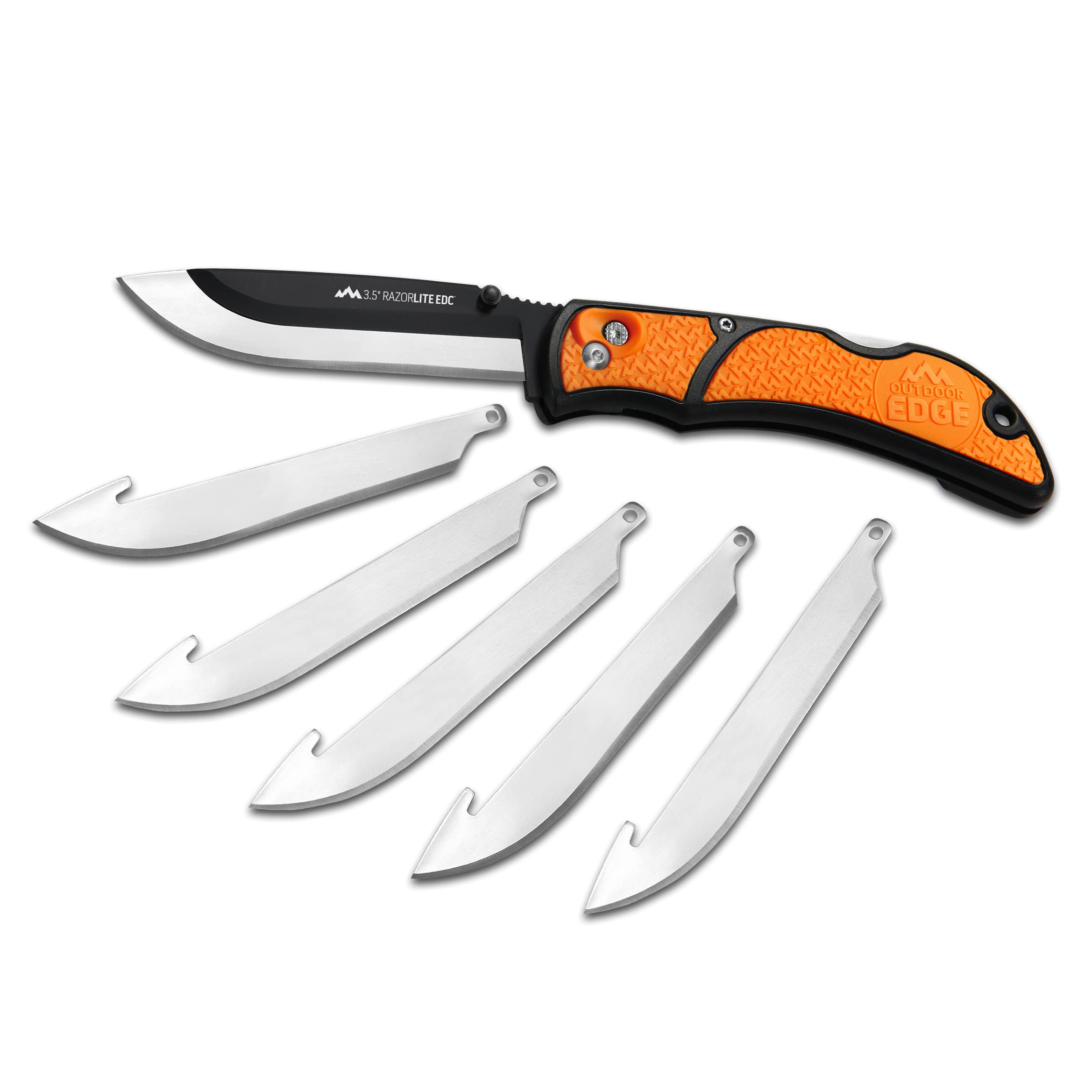
Buy this if you hate sharpening and want a scalpel-sharp edge through the whole skinning job.
Pros
- 3.5″ replaceable blades swap in seconds; six blades included
- 420J2 blade holder with black oxide coating handles the levering
- Grivory frame with TPR grip and a steel pocket clip; 4.8 ounces
Cons
- Ongoing cost for replacement blade packs
- Thin blades chip if you twist against bone
- Not a boning knife, and too short for large roasts
Hide dulls steel fast, challenging blade edge retention on traditional cutlery. The RazorLite uses a replaceable drop point blade that slides under hide smoothly and enables precision cutting around delicate seams.
Unlike standard skinning knives that require frequent honing, a replaceable-blade knife gives you a fresh edge mid-animal. Among modern hunting knives, skinning goes faster and you cut fewer hairs into the meat.
Owner feedback is strong on the lock and the blade-change mechanism, with the recurring complaint being blade breakage when users pry. Treat each blade as disposable and keep a stiff knife nearby for joints.
Skip it if you want one knife you sharpen and keep for twenty years.
Mercer Culinary Ultimate White 6-Inch Curved Boning Knife
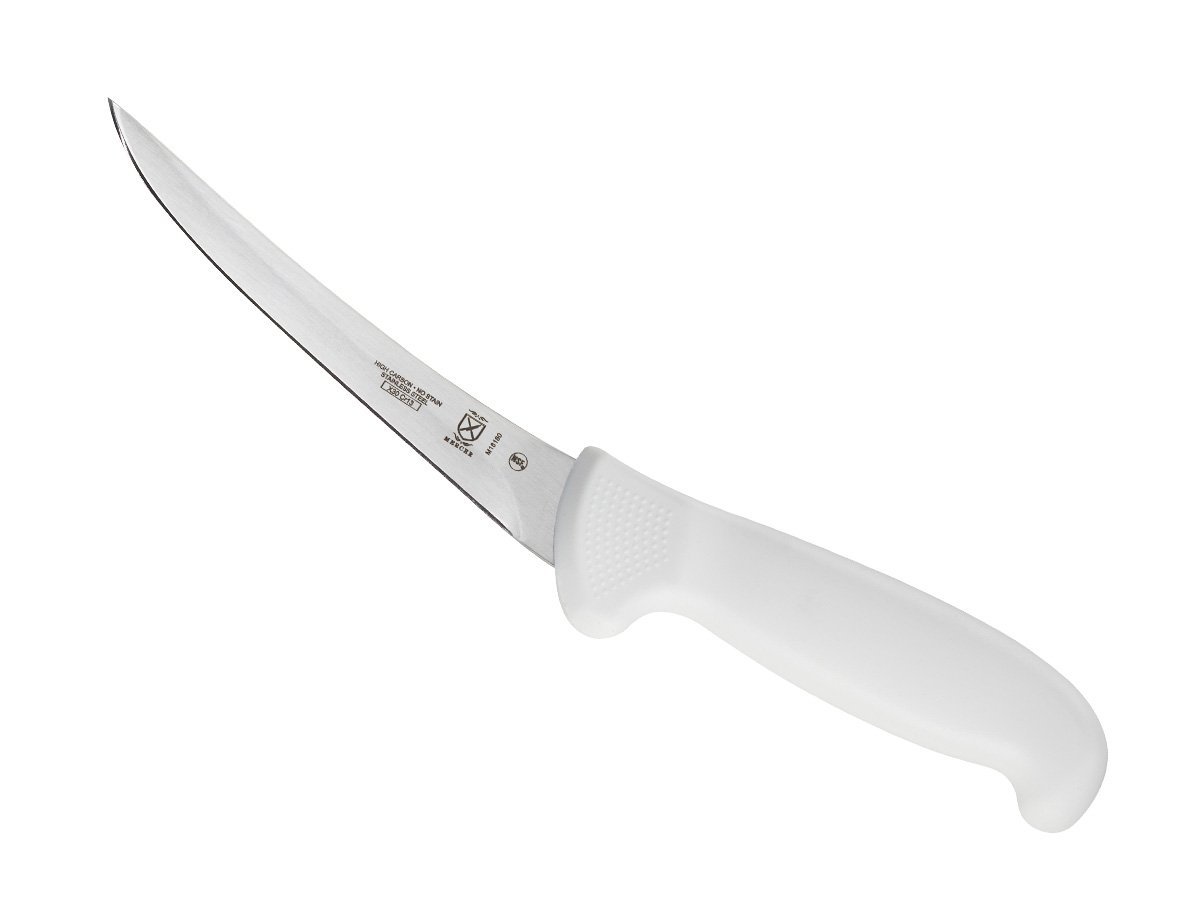
Buy this if you want a capable boning knife for trimming and deboning at the lowest sensible cost.
Pros
- High-carbon steel Japanese alloy takes a fine edge and sharpens quickly
- Textured polypropylene ergonomic handle with finger points for a secure non-slip grip
- Curved 6″ blade suited to hindquarters, shoulders, and trimming silverskin
Cons
- Hand wash only, no dishwasher
- White handle stains with blood and fat
- Single knife, so no saw or skinner
Mercer’s Ultimate White line is a commercial kitchen staple, and this boning knife is the reason. The high-carbon stainless steel sharpens fast, which fits home processing: touch up on a sharpening stone between quarters and keep moving.
Tough high carbon steel gives this blade the bite needed for heavy meat processing. The molded ergonomic handle sits comfortably in your palm during hours of deboning and trimming.
Reviewers describe it as close in performance to knives costing much more, with the two recurring notes being the hand-wash requirement and the handle discoloring over time. Neither affects the cut. Check today’s price, since it often lands well under other commercial boning knives.
Skip it if you want a dishwasher-safe handle or a stain-proof color.
Buying Guide
Quick Picks
| Pick | Best for | Key specs | Common praise | Common complaint |
|---|---|---|---|---|
| Outdoor Edge PR-1 | Full home butcher station | 12 pieces, 4 full-tang knives, 10.2″ saw, board, shears | Complete kit, hard case | Soft steel, heavy case |
| Outdoor Edge WildPak | Field to freezer, 1–3 deer | 8 pieces, caping/skinner/boning, saw, spreader | Orange grips, tight case | No butcher knife or board |
| Victorinox Fibrox 6″ | Deboning venison | 6″ flexible curved, 3.2 oz, NSF | Follows bone, holds edge | Too flexible to pry |
| Outdoor Edge RazorLite | Skinning | 3.5″ replaceable blades, 6 included | No sharpening needed | Blades break if twisted |
| Mercer Ultimate White 6″ | Budget boning | 6″ curved, high-carbon Japanese steel | Sharpens fast, low cost | Hand wash, handle stains |
How we researched
We compared maker specifications, published product manuals, and the feature lists for each knife and kit, then read owner-review patterns on Amazon and retailer sites along with discussions on Reddit hunting and butchery forums. Where owners repeat the same praise or the same failure, we treated that pattern as meaningful. Where a claim appears only in marketing copy, we labeled it as the maker’s spec.
SaltRail did not test these products. Our judgment comes from Mo Anwar’s 25 years in commercial kitchens, where blade flex, edge retention, and handle grip decide how long a shift runs. That experience tells us what to look for in a deer processing knife; it does not substitute for our own bench testing, and we do not claim any.
Seven things to check before you buy
- Boning blade length. 5 to 6 inches fits deer. Shorter loses reach on a hindquarter, longer gets clumsy near the ball joint.
- Flex. A flexible boning blade follows bone and saves meat. A stiff blade is for joints and pelvis work. Most home processors want one of each.
- Full tang. On skinners and butcher knives, a dependable full tang design ensures the steel runs the length of the handle. That is where leverage loads the joint.
- Handle grip when wet. Molded TPR handles, Fibrox, and textured polypropylene all hold with fat on your hands. Knives featuring a textured Santoprene handle or rubber compound provide sure traction in greasy hands. Durable ergonomic handles, non-slip handles, and rubberized handles prevent dangerous slips, whereas smooth wood or an untreated Pakkawood handle can turn slick when bloody.
- Saw included or separate. Splitting a pelvis or removing a head takes a bone saw. Using a heavy cleaver can shatter bone into meat, so a dedicated saw is preferred. Both Outdoor Edge kits include one; single knives do not.
- Sharpening plan. 420J2 stainless steel and 7Cr17MoV steel are common in budget deer processing knife sets because they provide solid corrosion resistance and sharpen easily. Choosing 7Cr17MoV steel gives you a dependable balance of edge holding and rust resistance. Premium high-carbon stainless steel and German stainless steel hold an edge longer.
Some hunters favor Damascus steel or high-carbon steel for edge life, but durable high-carbon stainless steel blades offer superior stain resistance. Keep a compact knife sharpener, two-stage sharpener, butcher’s sharpening steel, or dual-grit sharpening stone nearby.
- Case and storage. A molded case keeps a complete kit organized season after season. While an individual hunting knife or field dressing knife often rides in a leather sheath, multi-blade processing sets need a dedicated case so pieces do not disappear.
Carrying a field blade in a sturdy leather sheath works well on the mountain, but home processing calls for organized hard cases.
Match the setup to your volume
| Your season | Setup that fits | Freezer planning |
|---|---|---|
| One deer, first time | WildPak kit plus a kitchen cutting board | A whole deer yields roughly 50–75 lb of boneless meat; plan 3–4 cu ft |
| One to three deer | WildPak plus the Victorinox boning knife | 150–225 lb; plan 7–10 cu ft, or a 7 cu ft chest freezer per two deer |
| Three or more, plus grinding | PR-1 kit, RazorLite for skinning, two boning knives in rotation | 225 lb and up; 15 cu ft chest freezer, batch in 20–25 lb runs |
Work in batches you can finish. Meat sitting warm on a table costs you more than a slow knife does.
Raw meat safety
Keep the carcass and all cuts below 40°F while you work. Bring meat out in batches and return trimmed cuts to a cooler with ice or to the refrigerator.
Use a separate board for raw venison and wash knives, boards, and the case with hot soapy water when you finish. Wear nitrile cleaning gloves, change them when they tear, and wash your hands before touching packaging or your phone. Hand-wash all of these knives except the Victorinox, which is rated dishwasher safe.
Frequently Asked Questions
What type of knife is best for processing a deer?
A 5 to 6 inch curved boning knife does most of the work, because deboning and trimming take up the majority of the job. Pair it with a wide-bellied skinning knife or drop point blade for hide removal, and a bone saw for the pelvis and neck. Adding a gut-hook knife makes opening the belly quick, while an ergonomic handle prevents hand cramps during extended meat processing.
What is the best deer processing knife set for field-to-freezer work?
The Outdoor Edge WildPak covers field-to-freezer work for one to three deer a season with a caping knife, gut-hook skinner, boning knife, bone saw, and rib spreader in a hard case. Step up to the PR-1 kit if you want butcher knives, game shears, and a cutting board included.
What kind of knife is best for gutting a deer without puncturing the organs?
A gut hook knife lets you open the belly from the inside out during field dressing, so the tip stays away from the paunch. A sharpened gut hook guides cleanly along the midline without tearing into internal organs. Both Outdoor Edge kits include a gut-hook skinner, and the WildPak’s measures 4.5 inches.
Do I need a flexible boning knife for deboning venison?
Flex helps, because a flexible blade rides along bone and leaves less meat behind on shoulders and hindquarters. The Victorinox Fibrox 6-inch curved boning knife is built for that; keep a stiffer blade nearby for joints and pelvis work.
Is a replaceable-blade knife a good choice for skinning deer?
Yes, for skinning specifically. Hide and hair dull an edge quickly, and the Outdoor Edge RazorLite lets you swap in a fresh 3.5 inch blade in seconds, which keeps cuts clean. The trade-off is buying blade packs and avoiding any prying that snaps a thin blade.
What should I look for in a knife set for processing big game?
Look for full-tang blades, a boning knife in the 5 to 6 inch range, a gut-hook skinner, an included bone saw, rubberized handles, and a molded hard case.
An included ribcage spreader and a secure non-slip grip are major bonuses. A carbide knife sharpener is worth having in the case, since 420J2 stainless steel and 7Cr17MoV steel need touch-ups partway through an animal.