
New to processing your own meat? Start here. SaltRail is where hunters and home cooks learn to butcher, grind, package, freeze, cure and smoke their own meat, with food-safety numbers taken from USDA FSIS and university Extension sources and gear picks we research and compare. This page is the shortest route from a tagged deer to a full freezer.
Why Trust SaltRail?
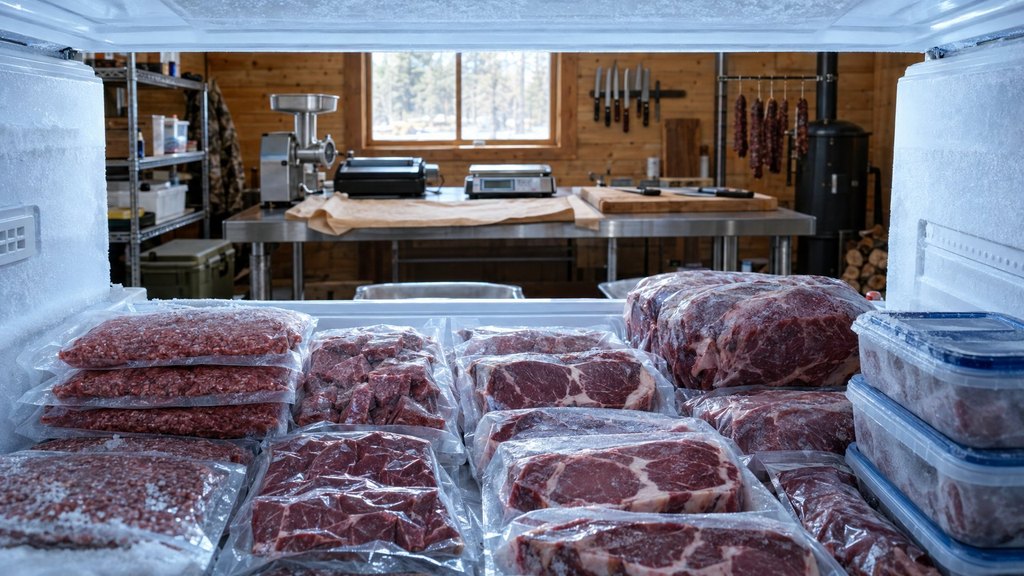
SaltRail does not run hands-on product tests. Every article compares manufacturer specifications, reads what owners report, and links the USDA FSIS or university Extension source for each food-safety number. When sources disagree, we show both and say so.
→ How we research
→ About SaltRail
I Have Never Processed a Deer
Start with the cost question, then the cooling and butchering basics.
→ Is it worth processing your own deer?
→ How to butcher a deer
I Have Done It Once or Twice
Most upgrades happen at the grinder and the packaging.
→ Meat grinder size guide
→ How long vacuum-sealed meat lasts in the freezer
I Want to Cure and Smoke
Jerky, summer sausage and bacon all start with choosing the right cure and holding safe temperatures.
→ Prague Powder #1 vs #2
→ Curing & Smoking hub
Step 1: See What It Costs
Processor prices vary by region and by what you order. The deer processing cost calculator puts your processor quote next to your gear cost, so you can find your own break-even point.
Step 2: Pick the Right Grinder Size
Grinder size is the most common buying mistake. Match the machine to how much meat you grind each season, not to the sale price.
→ Meat grinder size guide
→ Meat grinder buying guide
→ Best meat grinders
Step 3: Store It Safely
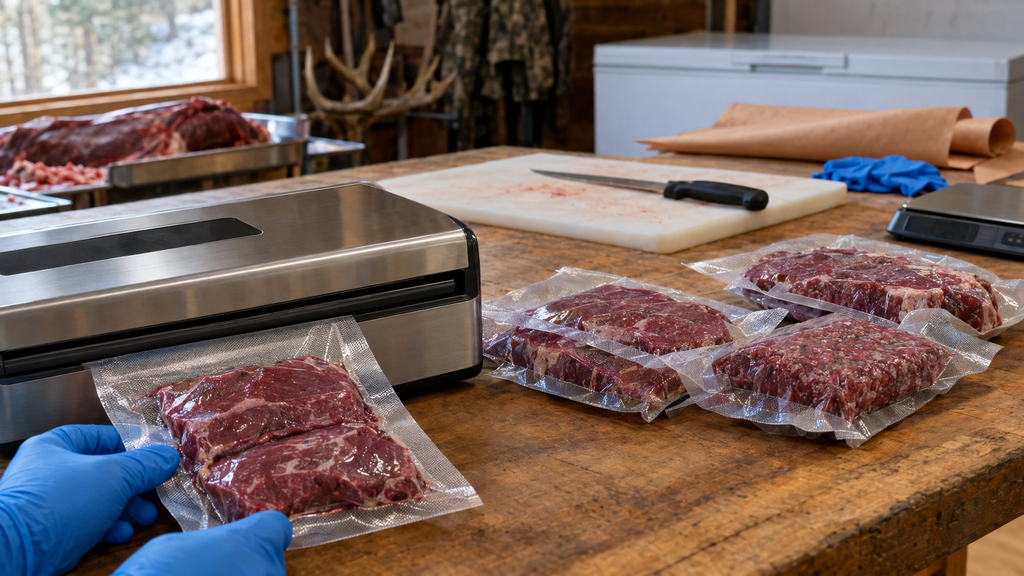
USDA FSIS says food kept frozen at 0°F stays safe; packaging decides how long it keeps its quality. Freezer burn is a quality problem caused by air reaching the meat surface, not a safety one.
→ How long vacuum-sealed meat lasts
→ How to label frozen meat
→ How to thaw vacuum-sealed meat
The Field-to-Freezer Roadmap
- Cooling and hanging: get the temperature down fast. How long to hang a deer
- Quartering: break the carcass into manageable pieces. How to quarter a deer
- Deboning and trimming: remove bone, silver skin and bloodshot meat. How to debone a deer and removing silver skin
- Choosing cuts: what becomes steak, roast or grind. Deer meat cuts chart and how to cut backstrap
- Grinding and mixing: fat ratios and keeping everything cold. How to grind venison and the fat ratio guide
- Packaging and freezing: seal, label and freeze flat. How to flash freeze meat
- Curing and smoking (optional): deer jerky in a dehydrator, venison summer sausage and how to cure bacon
Explore by Topic
- Processing: butchering, grinding, cuts and tools.
- Storage: vacuum sealing, freezing, shelf life and thawing.
- Curing & Smoking: cures, jerky, sausage, bacon and smokers.
Frequently Asked Questions
Is it cheaper to process your own deer?
It depends on how many deer you take and what gear you already own. Our cost calculator and break-even worksheet compare your own processor quote with your gear cost, so you can see when the gear pays for itself.
How fast does a deer need to be cooled?
Clemson HGIC says to refrigerate the carcass within 3 to 4 hours of the kill when the air is above 50°F. Our hanging guide covers the temperature limits in detail.
Is freezer burn dangerous?
No. USDA FSIS says freezer burn does not make food unsafe, only dry in spots. Cut the burned portions away before or after cooking. See vacuum-sealed meat and freezer burn.
What is the difference between Cure #1 and Cure #2?
Cure #1 is a 6.25% sodium nitrite cure used for bacon, jerky and cooked sausage. Cure #2 also contains sodium nitrate and is meant for long dry-cured meats that are not cooked before eating. Never swap one for the other in a recipe. See Prague Powder #1 vs #2.