FSIS brines a thawed turkey in ¾ cup of salt per gallon of water, fully submerged and covered in the refrigerator, from overnight up to 2 days. Illinois Extension uses a stronger brine for 6 to 8 hours. Keep the bird at 40°F or below the whole time, and cook it to 165°F.
This guide compares three sources: USDA FSIS’s Poultry: Basting, Brining, and Marinating (updated May 20, 2024), the USDA/FSIS article “Brining Safely Will Bring Tender, Flavorful Meat to the Thanksgiving Table” by Archie Magoulas (hosted by UW–Madison Extension, Dunn County) and University of Illinois Extension’s Brine Method. They disagree on several points. The tables below show each source’s figures side by side, without merging them.
What Is a Turkey Brine?
FSIS defines brine as a strong solution of water and salt. A sweetener such as sugar, molasses, honey or corn syrup may be added for flavor and browning. FSIS quotes Dr. Alan Sams of Texas A&M University on what the salt does: “It dissolves protein in muscle, and the salt and protein reduce moisture loss during cooking.” This is a plain salt brine, not a nitrite cure like bacon’s; for that difference, see wet cure vs dry cure bacon.
How Much Salt Goes in a Turkey Brine?
| USDA FSIS | Illinois Extension | |
|---|---|---|
| Salt | ¾ cup per gallon of water (3 Tbsp per quart) | 2 cups table salt or 4 cups kosher salt in 2 gallons of cold water |
| Per gallon | ¾ cup | 1 cup table salt or 2 cups kosher salt (SaltRail’s arithmetic) |
| Salt type | “For best flavor, use sodium chloride-table salt” | Kosher salt recommended, because table salt has additives such as anti-caking agents and iodine |
| Sugar | Optional sweetener | 1 cup in 2 gallons |
| Time | At least overnight; up to 2 days | 6 to 8 hours, or overnight with the salt and sugar cut in half |
| Where | Covered, in the refrigerator | Refrigerator, or a cooler with 5 to 6 ice packs holding 40°F or below |
Weighing salt is more consistent than measuring it by the cup, but neither source gives weights. For a scale, see best scale for curing meat.
How Do You Brine a Turkey, Step by Step?
- Start with a fresh or completely thawed turkey. FSIS says poultry may stay in the brine in the refrigerator up to 2 days after it is thawed or bought fresh. The USDA article says fresh turkeys keep only 1 to 2 days in the refrigerator.
- Clean up first. The USDA article says to wash your hands with soap and warm water for at least 20 seconds, and to sanitize counters and the sink with 1 tablespoon of unscented liquid chlorine bleach per gallon of water.
- Remove the giblets and neck (Illinois).
- Mix the brine until all the salt dissolves. If your recipe heats the brine, the USDA article says to cool it to room temperature before using it.
- Put the bird in breast down in a food-grade plastic, stainless steel or glass container, or a brining bag, that fits in your fridge. Cover the whole turkey with brine and put a lid on it.
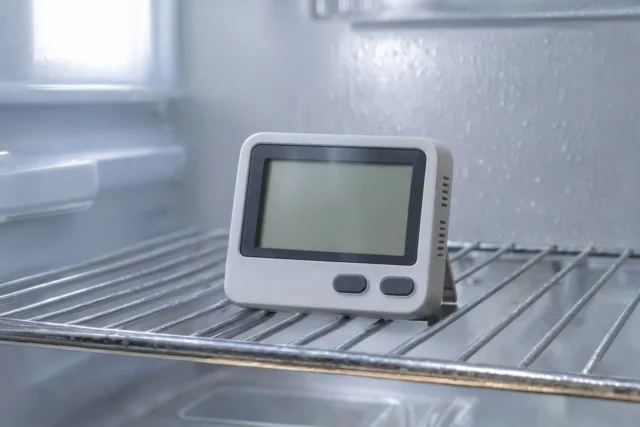
- Refrigerate it. Keep the turkey and brine at 40°F or less. Don’t leave it out at room temperature.
- Take it out on time and discard the brine (FSIS).
- Pat it dry. Illinois adds an optional step: refrigerate the bird uncovered overnight on a shallow pan so the skin dries and crisps.
- Cook it to 165°F in the innermost part of the thigh and wing and the thickest part of the breast. The USDA article says to let it stand 20 minutes before carving.
If you stuff the bird, FSIS says to brine it first and cook it immediately after stuffing. For washing cutting boards and surfaces afterward, see how to sanitize a cutting board after raw meat.
Should You Wash the Turkey Before Brining?
| Source | Before brining | After brining |
|---|---|---|
| USDA/FSIS article | “Do NOT wash the bird prior to brining.” Washing raw poultry can spread raw juices onto other foods and counters. | “If you must rinse”: clear the sink area, line it with paper towels, rinse the cavity gently with cold water, and don’t scrub or rinse the rest of the turkey |
| Illinois Extension | “Wash the bird inside and out” | Rinse inside and out under cold running water, then pat dry |
SAFETY: SaltRail’s suggestion, not a source’s: follow USDA and don’t wash the turkey before brining. If you rinse it after brining, use the USDA article’s steps to keep splashes off other food and surfaces.
How Long Should You Brine a Turkey?
FSIS says to refrigerate the bird in its brine at least overnight for best results, and no longer than 2 days. The USDA article says the time depends on the brine, but not to brine any longer than two days. Illinois uses 6 to 8 hours for its full-strength brine, or overnight at half strength so the turkey doesn’t take up too much salt. For injectors compared, see best meat injector for smoking.
Can You Brine a Turkey in a Cooler?
Illinois says yes, in a cooler with 5 to 6 ice packs, as long as the turkey and brine stay at 40°F or below for the entire time. Both USDA sources say to brine in the refrigerator. Illinois also says brining is more manageable with a smaller turkey of 12 to 14 pounds. For time limits outside the fridge, see how long can raw meat sit out.
What About Dry Brining?
FSIS describes dry brining as a two-day process in the refrigerator, in a food-grade plastic bag. Its amount: 1 tablespoon of kosher salt or seasoned salt for every 5 pounds of poultry, with herbs, spices, citrus or garlic if you like. Rub it over the whole surface, seal the bird in the bag with the air pressed out, refrigerate up to 2 days, and massage the mixture into the skin every 8 to 12 hours. Then pat it dry and cook to 165°F. For smoking it, see how to smoke a turkey.
What About Pre-Brined or Enhanced Turkeys?
FSIS says that if a raw poultry label says “self-basting,” “marinated” or “for flavoring,” a solution was added during processing: up to 3% by weight for bone-in poultry and up to 8% for boneless. Neither source says whether to brine a bird that already has added solution.
What Do the Sources Not Say?
- None covers wild turkey. For preparing one, see how to clean a wild turkey.
- None gives salt by weight.
- None covers injecting brine or reusing brine. FSIS says to discard brine after use.
- None says whether to brine an enhanced (“self-basting”) turkey.
- For thawing, see how to thaw vacuum-sealed meat.
Frequently Asked Questions
How much salt per gallon for turkey brine?
FSIS uses ¾ cup of salt per gallon of water. Illinois Extension uses 2 cups of table salt or 4 cups of kosher salt in 2 gallons, plus 1 cup of sugar.
How long can a turkey sit in brine?
FSIS and the USDA article say no longer than 2 days, in the refrigerator at 40°F or less. Illinois brines for 6 to 8 hours, or overnight at half strength.
Do you rinse a turkey after brining?
Illinois says to rinse it inside and out. The USDA article says that if you must rinse, clear and line the sink area first, rinse the cavity gently, and don’t scrub or rinse the rest of the bird.
Can you brine a frozen turkey?
FSIS says poultry may stay in brine up to 2 days after it is thawed or bought fresh, and Illinois says to start with a fresh or completely thawed turkey.
Can you brine a turkey in a cooler?
Illinois Extension says yes, with 5 to 6 ice packs keeping the turkey and brine at 40°F or below. The USDA sources say to brine in the refrigerator.
This is general information based on USDA FSIS and university extension guidance. When in doubt, follow the sources linked above.