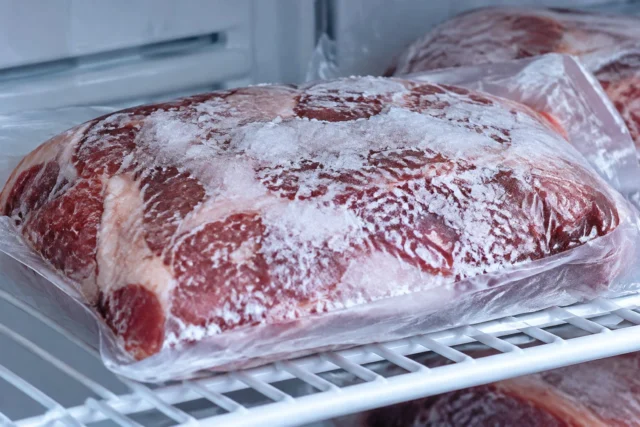

Thaw vacuum-sealed meat in the refrigerator at 40°F or below, in cold tap water changed every 30 minutes, or in the microwave if you will cook it right away. Never thaw it on the counter or in hot water. Those are the three methods USDA FSIS calls safe. FSIS says nothing about vacuum bags; Clemson Extension describes thawing the sealed package in the fridge or in cold water.
After reading, you will be able to pick a method by how much time you have. You will know how long a 1-pound pack takes, and what to do once it thaws.
You will also see what each source says about the bag, and why Maine’s fish rule is about fish.
Which Thawing Method Fits Your Schedule?
Your choice comes down to lead time. Refrigerator thawing needs a full day, while cold water takes an hour to a few hours. The microwave commits you to cooking right away.
The USDA FSIS lists three safe ways to thaw food: the refrigerator, cold water, and the microwave. Here is how the FSIS numbers line up.
| Method | How long (FSIS) | What to do after |
|---|---|---|
| Refrigerator | A full day, even for 1 lb of ground meat | Cook ground meat within 1–2 days and steaks, chops or roasts within 3–5 days. You can refreeze it raw. |
| Cold water | About 1 lb: 1 hour or less. 3–4 lb: 2–3 hours | Cook immediately. Cook it before you refreeze it. |
| Microwave | FSIS gives no time; cook right away | Cook immediately. Cook it before you refreeze it. |
Refrigerator Thawing: Follow These Steps When You Can Plan Ahead
Refrigerator thawing is the slowest method and the one that needs the least attention. FSIS says even a pound of ground meat needs a full day to thaw this way.
- Move the package from the freezer the day before you cook. A 1-pound pack needs about 24 hours.
- Set it on a plate or tray on a low shelf. A plate or tray keeps the package off the shelf.
- Check your fridge temperature. Meat held at 40°F or below stays out of the Danger Zone.
- Expect colder fridges to run slower. FSIS notes food thaws more slowly at 35°F than at 40°F, and some areas of the fridge run colder than others.
- Cook or refreeze within the FSIS window. Ground meat, stew meat and poultry get 1–2 more days. Red meat cuts get 3–5 days.
Clear labels make this easier. If you label frozen meat with the cut and weight, you can plan thaw time without opening the freezer twice.
Cold Water Thawing: Submerge the Package and Change the Water
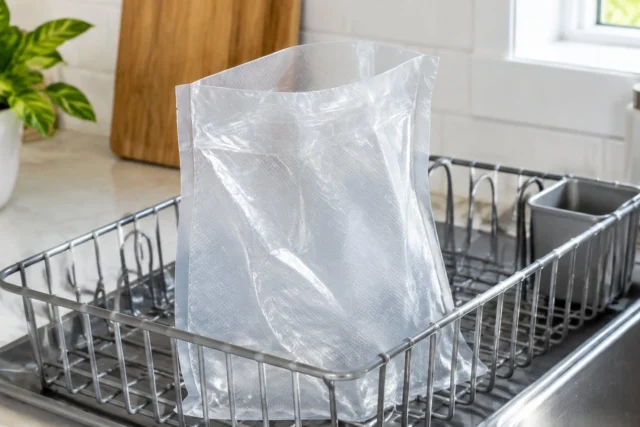
Cold water thawing is faster than the fridge but needs you nearby. FSIS requires the meat to be in a leak-proof package.
- Check the seal and bag for holes. A leak lets in bacteria and lets the meat soak up water.
- Fill a bowl or sink with cold tap water. FSIS says to use cold tap water.
- Submerge the whole package. Clemson HGIC says to immerse the sealed package.
- Change the water every 30 minutes. FSIS gives this interval.
- Cook as soon as it is thawed. FSIS says fully thawed meat from this method must be cooked right away.
FSIS puts a 1-pound package at about an hour or less and a 3- to 4-pound package at 2 to 3 hours.
Microwave Thawing: Defrost Only When You Can Cook Immediately
Microwave thawing is the least forgiving method. FSIS warns that parts of the meat can warm up and start to cook, which puts them in the Danger Zone.
- Check your microwave manual for defrosting packaged meat. The sources reviewed give no bag instruction for the microwave.
- Defrost only if you will cook right away. Clemson HGIC says foods may be defrosted in the microwave if they will be cooked immediately.
- Watch for warm spots. FSIS says some areas may become warm and begin to cook, which brings the food into Danger Zone temperatures.
- Cook it right away. FSIS does not recommend holding partly cooked food.
Use this method only when the meat goes straight into the pan or oven.
Should You Take Vacuum-Sealed Meat out of the Bag to Thaw?
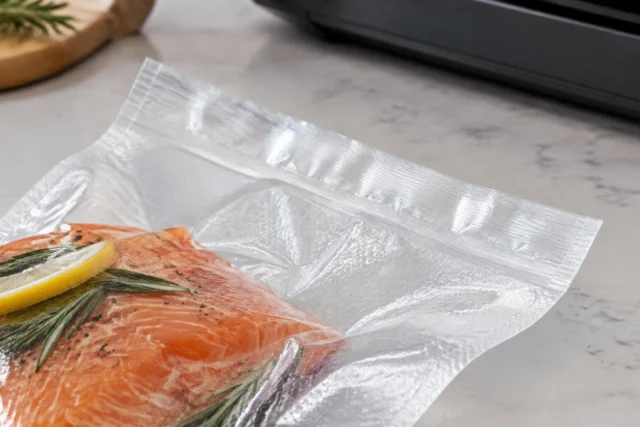
Clemson Extension describes thawing meat in its sealed package, in the fridge or in cold water. FSIS does not address vacuum bags, and no source we opened tells you to open a meat bag. Three sources address the question in different ways, and the fish rule is the one that causes confusion.
Where the Sources Differ on the Bag
The sources reviewed differ by food. None of them says to cut open meat bags before thawing.
| Source | What it says |
|---|---|
| USDA FSIS | Cold water thawing: food must be in a leak-proof package or bag. Says nothing specific about removing vacuum bags. |
| Clemson HGIC | Thaw the sealed package in the refrigerator. To thaw faster, immerse the sealed package in cold water. A closed package stays a vacuum environment. |
| University of Maine Extension | Fish only: remove fish from the packaging before thawing. |
Clemson HGIC notes that a closed package is still a vacuum environment where harmful bacteria can be active if the temperature gets warm enough. That is the reason it points you to the fridge or cold water, never the counter.
Clemson HGIC describes thawing the sealed package in the refrigerator or in cold water (its factsheet was last revised in 2007).
A closed package keeps its vacuum environment while it thaws, so temperature control still matters (Clemson HGIC).
Why the Fish Packaging Rule Is Not a Meat Packaging Rule
The University of Maine guidance tells you to remove vacuum-sealed fish from its packaging before thawing to reduce botulism risk. That page gives no bag-removal rule for meat.
Applying the fish rule to venison or beef goes past what the sources say. For meat, FSIS lists the three safe thawing methods and Clemson describes thawing the sealed package; the sources we opened do not say more about the bag.
For more on sealer types, see chamber vacuum sealer vs a standard vacuum sealer.
Can You Thaw Vacuum-Sealed Meat on the Counter?
No. FSIS says perishable food should never be thawed on the counter or in hot water, and it should not sit at room temperature for more than two hours. The two points below explain why a frozen center does not protect you and when warmed meat goes in the trash.
Why a Frozen Center Does Not Make Counter Thawing Safe
The outside of the meat thaws first. FSIS explains that the outer layer of food thawing on the counter can sit in the Danger Zone, between 40°F and 140°F, where bacteria multiply rapidly, while the center is still frozen.
The Danger Zone is the temperature range of 40°F to 140°F, where bacteria on perishable food multiply rapidly.
FSIS also rules out these spots for thawing:
- Garage or basement
- Car
- Dishwasher
- Plastic garbage bag
- Outdoors or on the porch
This matters for hunters thawing meat in a shop or garage. Cold fall air does not make those places safe thawing spots under FSIS guidance.
SAFETY: USDA FSIS says frozen food stays safe indefinitely, but once it warms above 40°F, bacteria present before freezing can start to multiply. Never leave perishable food at room temperature for more than two hours. Clemson HGIC adds that you should never leave thawed, vacuum-packaged food at room temperature.
When Should You Discard Meat That Has Warmed Up?
Throw out vacuum-sealed meat that has been above 40°F for more than two hours. Clemson HGIC gives this rule for vacuum-packaged foods, and it matches the FSIS two-hour room-temperature limit.
Use this check when a package was left out:
- Estimate how long it sat out. If you cannot say for sure, treat it as over two hours.
- Discard if it passed two hours above 40°F.
What Should You Do After Thawing—or If You Skip It?
Your next step depends on how the meat thawed. Fridge-thawed meat gives you a few days and the option to refreeze. Cold water and microwave thawing mean you cook now. Cooking straight from frozen skips thawing altogether.
How Long Is Thawed Meat Good in the Refrigerator?
After fridge thawing, FSIS gives ground meat, stew meat, poultry and seafood 1 to 2 more days before cooking. Red meat cuts such as roasts, chops and steaks get 3 to 5 days.
| Thawed in the fridge | Cook within (FSIS) |
|---|---|
| Ground meat, stew meat | 1–2 days |
| Poultry, seafood | 1–2 days |
| Roasts, chops, steaks | 3–5 days |
These windows apply only to meat thawed in the refrigerator. Meat thawed in cold water or the microwave gets cooked right away.
If you thaw venison trim to grind, it helps to know how long to freeze meat before grinding so the meat goes back into the grinder cold and firm.
Can You Refreeze Thawed Meat Without Cooking It?
Yes, if it thawed in the refrigerator. FSIS says food thawed in the refrigerator can be refrozen without cooking, although there may be some loss of quality.
Meat thawed in cold water or the microwave is different. FSIS says to cook those foods before refreezing them.
Can You Cook Meat From Frozen?
Yes. FSIS says it is safe to cook meat and poultry from frozen, and it takes about 50% longer than the time for fully thawed or fresh meat.
A recipe that calls for 20 minutes would need about 30 minutes from frozen.
Check the FSIS safe minimum internal temperature chart for the cut you are cooking.
Frequently Asked Questions
Is it safe to thaw meat in vacuum-sealed bags?
Clemson HGIC describes thawing the sealed package in the fridge or in cold water, changing the water often. FSIS requires a leak-proof package for cold-water thawing.
Will a pound of vacuum-sealed ground meat thaw in the fridge overnight?
Plan on a full day. FSIS says even small amounts, such as a pound of ground meat, need a full day to thaw in the refrigerator. A fridge set at 35°F thaws slower than one at 40°F. If you need it sooner, cold water thaws a 1-pound pack in about an hour or less.
Can bacteria grow in vacuum-sealed meat?
Yes. Clemson HGIC notes that a closed vacuum package is still a vacuum environment where harmful bacteria can be active if the temperature is warm enough. FSIS adds that once food warms above 40°F, bacteria present before freezing can start to multiply. Keep sealed meat cold while it thaws.
Does the botulism warning about vacuum-sealed fish also require opening meat bags?
No source reviewed says so. The University of Maine Extension tells you to remove vacuum-sealed fish from its packaging before thawing, and that rule is for fish only. For meat, FSIS and Clemson describe thawing the sealed package in the fridge or in cold water, with the bag still closed.
Do I have to cook meat right after cold water thawing?
Yes. FSIS says food thawed completely in cold water must be cooked immediately. It also says to cook cold-water-thawed food before refreezing it. If you want thawed meat to hold for a few days, thaw it in the refrigerator.
Before your next freezer session, use SaltRail’s guide on how to label frozen meat so every package shows what it is and how long it needs to thaw.
This is general guidance based on USDA recommendations. When in doubt, follow the USDA FSIS source linked above.