To clean a wild turkey, field dress it promptly: pull the entrails and the crop, wipe the cavity dry and get the bird below 40°F (NDSU Extension). Then pluck it if you want to keep the skin, or skin it and breast it out if you don’t. The NWTF says skinning takes under three minutes with practice. Cook the meat to 165°F.
The general handling rules here come from NDSU Extension’s game bird pocket guide (FN537, reviewed August 2022), which K-State Research and Extension adapted for its own guide. Those guides cover game birds in general, not turkeys alone, so the turkey-specific cuts come from the National Wild Turkey Federation (NWTF). Where the sources disagree, as they do on scald water, you see both.
What You Need
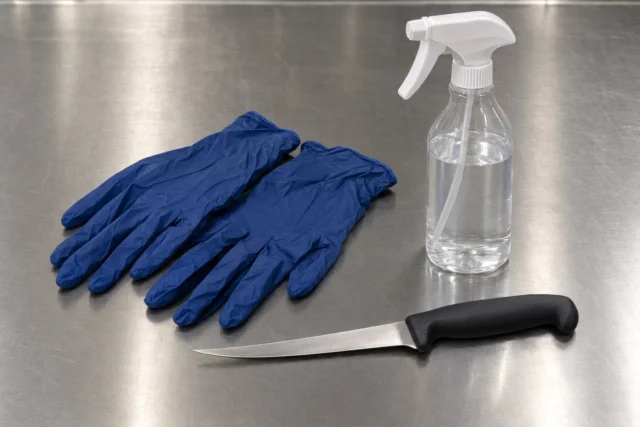
NDSU lists this field kit for game birds. The last column shows where each item comes in.
| Item | What it is for | Source |
|---|---|---|
| Sharp hunting knife and a steel or whetstone | Field dressing, skinning and cutting up | NDSU |
| Latex or rubber gloves | Worn when field dressing and cleaning birds | NDSU |
| Light rope or nylon cord | Hanging the bird (NWTF hangs it by the head to skin or pluck) | NDSU, NWTF |
| Plastic bags | Feathers if you pluck in the field; birds on ice in hot weather | NDSU |
| Clean cloths or paper towels | Wiping out the body cavity | NDSU |
| Cooler filled with ice | Cooling the bird and carrying it home | NDSU |
If you plan to pluck at home, you also need a pot of hot water; the sources disagree on how hot, as Step 4 shows. For blade types, our guide to the best knife for processing deer covers what to look for in a processing knife.
How Do You Clean a Wild Turkey, Step by Step?
The work runs in eight steps, from the field to the freezer. Each step gives the action, then the reason.
Step 1: Field Dress Promptly and Remove the Crop
NDSU says to field dress the bird promptly and to remove the entrails and crop as soon as possible, because the grain in the crop may ferment if it stays in. Wear gloves while you work. The NWTF lays the turkey on its back, cuts from the bottom of the breast plate to the vent, removes the entrails, then reaches into the cavity to sever the windpipe, heart and lungs. The NWTF calls field dressing a good idea in hot weather.
The heart and liver may be saved for giblets; NDSU says to store them in a plastic bag on ice. Leave any identification mark your state’s game regulations require. The same field habits apply to bigger game, as our guide on how to field dress a deer shows.
Step 2: Wipe the Cavity Dry and Start Cooling
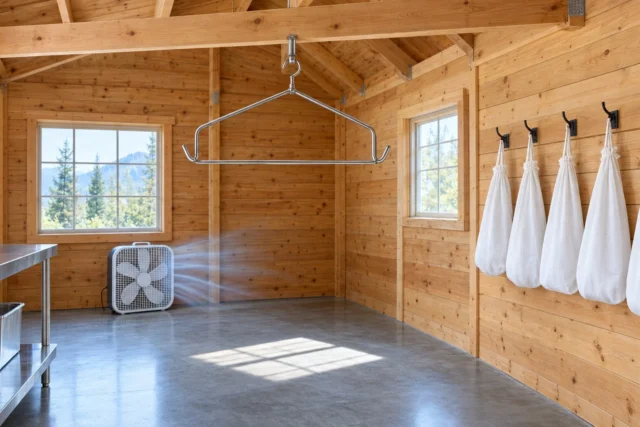
Wipe out the cavity with a clean cloth or paper towel. NDSU says not to use grass or snow, because it will contaminate the carcass. Let air circulate by hanging the bird or laying it in a well-ventilated place. The NWTF cools the cavity by placing ice inside the chest.
SAFETY: NDSU Extension calls a temperature above 40°F “meat’s worst enemy” and says to cool the carcass quickly. In hot weather, put birds individually in plastic bags on ice, and do not pile warm birds in a mass. Do not harvest or eat sick or abnormal-acting birds. Cook game birds to an internal temperature of at least 165°F (NDSU); USDA FSIS also lists 165°F for all poultry.
Step 3: Decide Whether to Pluck or Skin
NDSU says birds may be plucked or skinned in the field, and to bring a plastic bag for the feathers if you pluck. Plucking keeps the skin on; skinning is faster. The comparison table further down shows what each method keeps and needs.
Step 4: Pluck Wet or Dry
The NWTF says that if a source of nearly boiling water is available, wet plucking is the most effective. Dunk the bird head first, up to where the feathers end on the thighs, swish it in the bath for 10 seconds, then hang it by the head and pluck. The NWTF also describes dry plucking, with no water.
NDSU gives a much lower figure: feathers may be removed by scalding in hot water at 145°F. That line sits in NDSU’s paragraph on ducks, not turkeys. NDSU adds that pin feathers and down can come off after dipping the bird in a paraffin wax and hot water mixture and scraping once the wax hardens. The sources do not settle the gap, and SaltRail does not pick a number. For a farm-bird scald and pluck setup, see how to butcher a chicken; its scald figures are for chickens, not wild turkeys. For ducks, see how to clean a duck. For doves, see how to clean a dove.
Step 5: Skin the Turkey in the NWTF Order
If you skin the bird, the NWTF works in this order:
- Hang the bird by its head and cut off the wings at the first joint.
- Remove the beard by pulling gently and cutting the loose skin at its base.
- Remove the lower legs by cutting around the joint where the feathers meet the scaly part of the leg.
- If you want to mount the bird, cut the cape first. Start where the feathers begin on the back of the neck, follow the line between the back and breast feathers to the base of the tail, and cut through the fatty “pope’s nose” to free the fan. Set the cape and fan aside.
- Pull and trim the rest of the skin off. Roll it down each leg as far as it goes, then cut it free with a circular cut.
- Remove the entrails, if they are still in, by cutting from the tail to the tip of the breastbone and around the anus. Pull out the organs by hand without tearing them.
The NWTF says skinning a wild turkey is easy and, with practice, can take less than three minutes. It adds that skinning reduces the amount of fat and cholesterol that gather in the skin.
Step 6: Breast Out the Bird and Remove the Legs
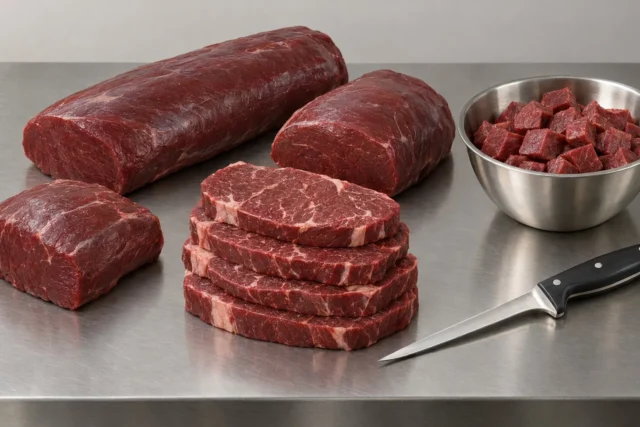
If you do not plan to cook the turkey whole, the NWTF lays it on its back and removes just enough breast feathers to expose the skin, then pulls or cuts the skin back. Cut along each side of the breastbone, or keel, and work from the rear of the breast forward, pulling the fillet and using the knife as needed. Keep each breast half in one large piece.
For each leg, the NWTF cuts through the thigh muscle where it attaches to the back, then pulls up on the thigh until the joint pops loose. Keep cutting until the thigh and leg come free.
Step 7: Cut Out Bloody Spots and Trim the Fat
NDSU says one advantage of packing parts instead of the whole bird is that bloody spots can be cut out or rinsed out with cold water. To reduce the distinctive taste of some wild game, NDSU says to trim off as much of the fat as possible. Our guide on how to get the gamey taste out of venison covers the same fat rule for deer.
Step 8: Wrap, Label and Freeze
Freeze the meat while it is fresh, at 0°F or lower (NDSU). Use moisture- and vapor-proof wrap, such as heavily waxed or laminated freezer wrap, heavy-duty aluminum foil or freezer-weight polyethylene bags. Wrap tightly, pressing out as much air as possible, and label each package with the contents and date. Parts may be boned, and NDSU says the carcass and neck can go toward a soup base. The folds are in how to wrap meat in freezer paper, and the label details are in how to label frozen meat.
Should You Pluck or Skin a Wild Turkey?
It depends on how you want to cook the bird. This table puts the NWTF and NDSU details side by side.
| Method | What you keep | Time | What you need |
|---|---|---|---|
| Wet pluck | The skin (NWTF) | Not stated | Nearly boiling water (NWTF) or 145°F water (NDSU, written for ducks) |
| Dry pluck | The skin (NWTF) | Not stated | No water; a bag for the feathers (NDSU) |
| Skin | Meat only; the cape and fan can be saved for a mount (NWTF) | Under three minutes with practice (NWTF) | A sharp knife and a way to hang the bird by the head (NWTF) |
| Breast out | Breast fillets, plus the legs and thighs if you take them (NWTF) | Not stated | A sharp knife; the whole bird is not kept |
How Do You Keep the Meat Cold on the Way Home?
NDSU says the best way to keep birds cool in transport is in a cooler on ice. If that is not possible, keep the car well ventilated and put the birds on the back seat or the floor. Do not carry them in the trunk, because the enclosed space does not let heat escape. Store the birds in a cooler or ice chest out of the sun.
Field-to-freezer checklist, all from NDSU:
- Entrails and crop out as soon as possible.
- Cavity wiped dry with a cloth or paper towel, never grass or snow.
- Bird below 40°F, bagged on ice in hot weather.
- No warm birds piled together, and none in the trunk.
- Parts wrapped airtight, labelled with contents and date.
- Frozen at 0°F or lower and used within a year.
How Long Does Wild Turkey Keep?
| Storage | Time | Source |
|---|---|---|
| Refrigerator at 40°F or lower | Use within three days | NDSU |
| Freezer at 0°F or lower | Use packages within a year | NDSU |
| Thawed in the refrigerator | Use within one to two days | NDSU |
| Thawed in the microwave | Cook immediately | NDSU |
| Cooked leftovers | Use within one or two days, or freeze | NDSU |
NDSU says to thaw birds in the refrigerator or the microwave. It also says to remove any stuffing before refrigerating a cooked bird, because stuffing is a good growth medium for microorganisms. For brining before you cook it, see how to brine a turkey.
Is It a Young Bird or an Old One?
The bird’s age decides the cooking method, NDSU says. Young birds have lighter legs, soft breastbones and flexible beaks; old birds have darker, hard-skinned legs, brittle breastbones and inflexible beaks. Dry cooking, such as frying, suits young birds, and moist cooking, such as stewing or braising, suits older ones. For smoking a turkey, see how to smoke a turkey.
Common Problems and Fixes
Each fix below comes from the NDSU guide.
- Pin feathers and down left after plucking: dip the feathered bird in a paraffin wax and hot water mixture, let the wax harden, and scrape the feathers off.
- Bloody spots on the meat: cut them out or rinse them out with cold water, which is easier on parts than on a whole bird.
- Strong wild flavor: trim off as much of the fat as possible.
- An older or skinned bird dries out when baked: NDSU suggests wrapping it with bacon, or use moist cooking for older birds.
- A hot day in the field: bag each bird on its own, put it on ice, and keep it out of the sun and out of the trunk.
What Do the Sources Not Say?
The extension guides opened for this post, NDSU’s and K-State’s adaptation of it, cover game birds in general. Neither gives turkey-specific steps, which is why the turkey cuts here come from the NWTF. No opened source compares scald temperatures for wild turkeys, and none gives a turkey hang time beyond NDSU’s general note on aging birds.
Frequently Asked Questions
Do you have to field dress a turkey right away?
NDSU Extension says to field dress game birds promptly and remove the entrails and crop as soon as possible, because grain in the crop may ferment. The NWTF calls field dressing a good idea in hot weather. Either way, get the bird below 40°F quickly.
Can you age a wild turkey?
NDSU says birds generally do not require aging. If you want to age one, holding it at just above freezing for two to three days may increase the tenderness of the meat.
How do you tell a young turkey from an old one?
NDSU says young birds have lighter legs, soft breastbones and flexible beaks, while old birds have darker, hard-skinned legs, brittle breastbones and inflexible beaks. Fry young birds; stew or braise older ones.
What temperature should wild turkey be cooked to?
Cook it to an internal temperature of at least 165°F. NDSU gives that figure for game birds, and USDA FSIS lists 165°F for all poultry, measured with a food thermometer.
Is it better to pluck or skin a wild turkey?
Pluck it if you want to keep the skin on. Skin it if speed matters: the NWTF says skinning takes under three minutes with practice and reduces the fat and cholesterol that gather in the skin.
Once the parts are wrapped, mark every package; our guide on how to label frozen meat covers what to write.
This is general guidance based on university extension recommendations and NWTF field guidance. When in doubt, follow the sources linked above and your state’s game regulations.