Skin a bear right away and remove the thick fat, because state wildlife agencies say the heavy hide and fat hold heat and can spoil the meat even on cold nights. Get the meat below 40°F as fast as you can, keep it clean and cool, and cook it all the way through. The agencies don’t agree on one cooking number: Missouri says 160°F, Montana 165°F, and Washington recommends 170°F for bear. This page shows all three and doesn’t pick one.
This guide compares Colorado Parks and Wildlife’s Bear: In the Field, the Alaska Department of Fish and Game’s Bear Hides: Skinning and Field Care (2022) and Nutritional Value of Alaskan Big Game, the Washington Department of Fish and Wildlife’s food safety guidelines for game meat, the Missouri Department of Conservation’s Bear: Properly Cook All Game, Montana Fish, Wildlife and Parks’ Trichinosis in Montana Bears and Oregon State’s PNW 517, Big Game from Hunt to Home (revised August 2022). Most of the agency pages carry no printed date.
Why Is a Bear Different From a Deer?
Colorado Parks and Wildlife says the warm temperatures of September, combined with a bear’s heavy fall hide and fat layer, call for special attention to the meat and pelt. Washington says that because of their heavy coats and abundant fat, it is especially important to remove the skin from bears as soon as possible. Oregon State’s PNW 517 says to field dress a bear the same way as a deer or elk.
What Do You Do in the Field?
- Field dress the bear as you would a deer or elk (PNW 517); see how to field dress a deer.
- Skin it immediately to dissipate heat from the hide and meat (Alaska; Colorado).
- Use a tarp under the bear while skinning, if you have one, to keep everything clean (Alaska).
- Remove the thick layers of fat (Colorado).
- Cool the meat to below 40°F as quickly as possible. On warm days, Washington says it may be necessary to pack the body cavity with bags of ice.
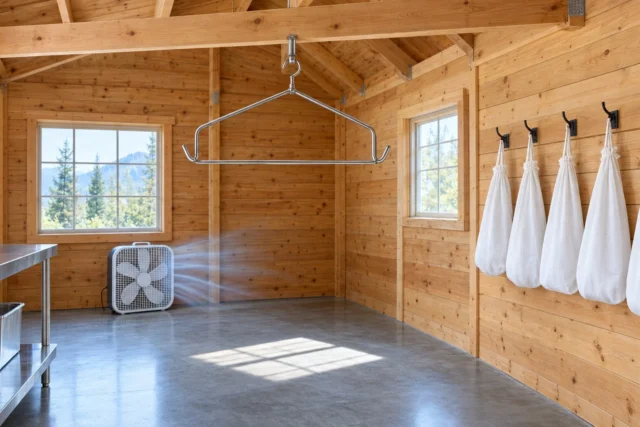
- Keep the carcass out of direct sunlight with good air circulation; if you can’t hang it, prop it on logs or rocks (Washington).
- If you want a rug or mount, leave the head and paws in the hide if you’re not sure of the skinning, and get it to a taxidermist as soon as possible (Alaska). Colorado says to talk to your taxidermist before the hunt.
For quartering and carrying, see how to quarter a deer. For transport, see how to pack a cooler with meat.
How Should You Handle the Hide?
Alaska says to keep the hide cool, clean and dry, the same rules as for meat, and never to store a hide in plastic; it uses game bags or burlap bags so the hide can breathe. Colorado says the hide should be refrigerated as soon as possible. Check your own state’s rules for presenting the hide or skull; Colorado, for example, requires the pelt and head of a hunter-killed black bear to be presented to a wildlife officer within five days.
What About the Fat?
Colorado says thick layers of fat should be removed, because even on cold nights the hide and fat insulate the meat and can spoil it. None of the sources here explains how to render or use bear fat.
What Temperature Should Bear Meat Be Cooked To?
| Agency | What it says |
|---|---|
| Missouri Department of Conservation | Wild game should be cooked to an internal temperature of 160°F |
| Montana Fish, Wildlife and Parks | Cook all bear and lion meat to an internal temperature of 165°F |
| Washington Department of Fish and Wildlife | All game meat to at least 165°F; WDFW recommends bear meat be cooked at 170°F |
| Alaska Department of Fish and Game | Bear meat should always be well cooked to prevent trichinosis (no number given) |
These are each agency’s own figures, shown side by side. SaltRail doesn’t choose between them. Use a meat thermometer; Missouri says color is not a good indicator of doneness. For more on the health side, see is bear meat safe to eat.
SAFETY: Missouri says smoking, freezing or curing game meat does not kill all Trichinella parasites, and Washington cautions that freezing, microwaving or smoking may not kill all bacteria, viruses or parasites in meat. Montana says it no longer offers Trichinella testing (since 2015). Cook bear meat thoroughly to your agency’s temperature. See does freezing kill parasites in wild game.
What Do the Sources Not Say?
- A cut-by-cut breakdown for a bear carcass; PNW 517 refers you to deer and elk methods.
- How to render or store bear fat.
- Whether to age bear meat.
- Hide and transport rules for most states. For other big game, see how to process a moose and how to butcher a deer.
Frequently Asked Questions
How soon do you need to skin a bear?
Immediately. Alaska and Colorado say to skin a bear right after the kill so heat can leave the meat.
Should you remove bear fat?
Yes. Colorado says thick layers of fat should be removed, because the hide and fat insulate the meat and can spoil it.
How do you cool bear meat in the field?
Washington says to get it below 40°F as quickly as possible, keep it in the shade with good airflow, and pack the cavity with bags of ice on warm days.
What temperature should bear meat be cooked to?
The agencies differ: Missouri says 160°F, Montana 165°F and Washington recommends 170°F for bear. Check with a thermometer.
Does freezing bear meat kill trichinella?
Missouri says smoking, freezing or curing game meat does not kill all Trichinella parasites. Cook it thoroughly.