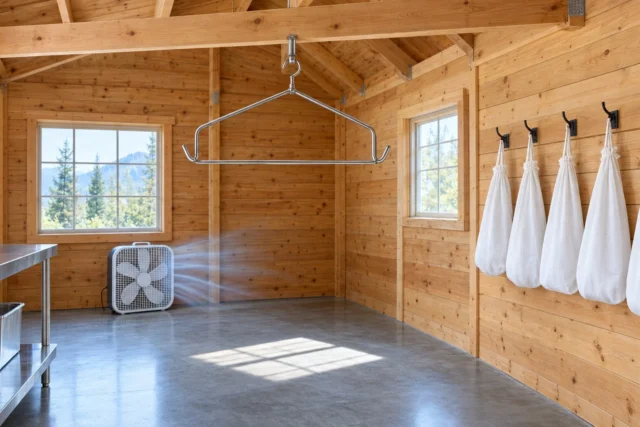
Get the hide off and the moose into quarters fast. Maine’s wildlife department says that at 50°F you may have 3 to 6 hours to cool a moose to 40°F, and that a moose should not be hung for cooling above 45°F. Put the meat in clean, dry game bags, hang it off the ground in shade with air around it, and keep it out of plastic.
This guide compares the Maine Department of Inland Fisheries and Wildlife’s Taking Care Of Your Moose (October 8, 2017), the Alaska Department of Fish and Game’s gutless field dressing brochure (2017) and Field-to-Freezer Meat Care page, the Minnesota DNR’s A Guide to Field Care of Moose Meat and Trophies (1987) and Colorado State Extension’s Field Care of Big Game 6.503 (reviewed August 2025). The Minnesota guide is old; its figures are shown with its date.
Why Is a Moose Harder to Cool Than a Deer?
Size and hide. Maine says a moose is 101°F inside and that this heat must escape for the carcass to cool quickly; removing the hide and quartering it lets it cool faster. Minnesota’s guide calls moose hide and hair “excellent insulators” and says a moose that can’t go into a commercial cool room the same day should be skinned within a few hours. It adds that cooling also requires separating the shoulders and hams from their quarters. Maine says bags of ice in the body cavity will not protect the backstraps or cool down the quarters.
What Do You Need in the Field?
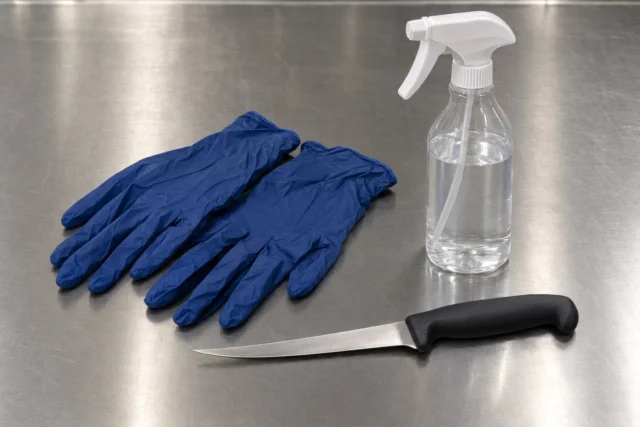
- A sharp knife or two and a knife sharpener (ADF&G)
- A bone saw and/or axe (ADF&G)
- Game bags; ADF&G says to check their size and quality, and Maine says a clean cotton pillow case also works
- A tarp, and rope with a pulley for lifting quarters (ADF&G)
- Latex and/or cut-resistant gloves (ADF&G)
- A pack frame and/or sled (ADF&G)
ADF&G says to avoid game bags that look like cheesecloth, because they rip easily and let flies reach the meat. For knives, see best knife for processing deer.
How Do You Field Dress and Quarter a Moose?
ADF&G’s gutless method suits large animals such as moose. It says not to use it if you plan to leave the animal intact overnight, because that causes spoilage regardless of the outside temperature; in that case, gut it. The order below follows ADF&G’s brochure. The same method on an elk is in how to field dress an elk; the deer version is in how to field dress a deer.
- Validate your harvest ticket or permit first (ADF&G).
- With the moose on its side, skin the top half back past the backbone and spread the hide out as a clean work surface. Keep hair off the meat; ADF&G says rut hair can taint the flavor.
- Remove the front quarter by cutting through the armpit and chest muscle. You don’t have to cut through bone (ADF&G).
- Remove the hind quarter by cutting through the hip’s ball-and-socket joint (ADF&G).
- Fillet the backstrap off along the spine, then take the ribs, flank and tenderloin (ADF&G).
- Roll the moose onto the skinned hide and repeat on the other side.
- Remove the neck meat. Minnesota’s guide says the neck averages about 40 pounds.
- Put each piece in its own clean, dry game bag.
ADF&G says you must legally salvage all big game meat, and some areas require more, such as leaving meat on the bone. Those are Alaska’s rules; check your own state’s salvage rules. For quartering, see how to quarter a deer.
How Fast Does Moose Meat Need to Cool?
| Rule | What it covers | Source |
|---|---|---|
| At 50°F you may have 3 to 6 hours to cool the moose to 40°F | First cooling after the kill | Maine IFW (2017) |
| Don’t hang a moose for cooling above 45°F | Hanging in warm weather | Maine IFW (2017) |
| Never stack meat before it is chilled below 40°F | Cooled vs uncooled pieces | Minnesota DNR (1987) |
| Refrigerate within 3 to 4 days if nights are above 45°F | Holding cooled meat | Minnesota DNR (1987) |
| Days of 60 to 70°F: fully butchered and frozen within three days | Holding cooled meat | Minnesota DNR (1987) |
| Usually keeps a week or more if kept cool and dry | Holding cooled meat in the field | ADF&G |
These rules don’t contradict each other as much as they look. Maine’s hours are about getting the heat out after the kill; the others are about how long already-cooled meat holds. ADF&G says the meat around the hip joint in the hind leg spoils first. In weather over 60°F it says it may be necessary to cool meat in a creek, river or lake for 30 to 45 minutes in a plastic bag, then take it out of the plastic, dry it thoroughly and put it in cotton game bags.
SAFETY: Maine says meat begins to spoil above 40°F, and that above 70°F bacteria double every 20 minutes. Colorado State says that for trips of several hundred miles, or temperatures consistently above 70°F, you should butcher and freeze the carcass and pack it in dry ice, and that dry ice isn’t allowed if you are flying.
How Do You Keep Meat Clean and Free of Flies?
- Cool, clean and dry: ADF&G says to trim blood clots and bloodshot meat and wipe off dirt and hair right away.
- Washing: ADF&G says you normally shouldn’t wash the carcass, because water removes the glaze of blood that helps prevent bacterial growth. If gut contents touch the meat, wash that area with clean water and dry it immediately.
- Crust: ADF&G says a dry crust reduces spoilage and deters egg-laying insects.
- Citric acid: ADF&G sprays hung meat with about 2 ounces of food-grade citric acid per quart of water until it runs off, then re-bags it once dry.
- Pepper or vinegar: Minnesota’s guide says black pepper discourages flies but can hide hair and damaged meat; a white vinegar wash also discourages flies and doesn’t hide anything.
- No plastic: ADF&G says not to wrap meat in plastic garbage bags or stack game bags. Minnesota allows plastic only in a freezer or as a very loose, ventilated rain cover.
- Hanging: ADF&G hangs bagged meat off the ground in a tree or on a rack, close enough to watch but not so close to camp that a bear causes problems, with a tarp loosely over the meat pole.
How Much Meat Does a Moose Yield?
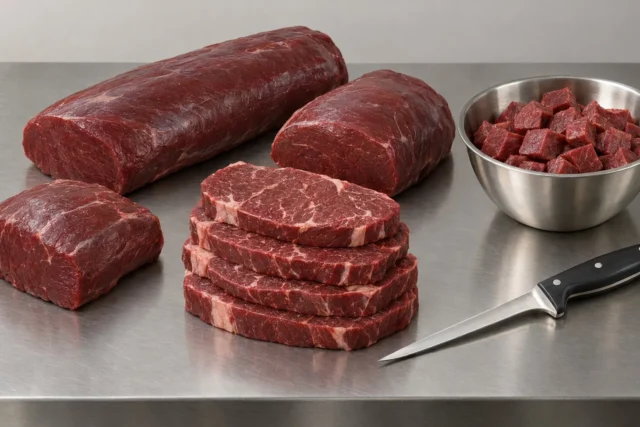
Minnesota’s 1987 guide says a gutted, skinned moose averages 400 to 450 pounds, adult quarters weigh well over 100 pounds each, and the body cut into about eight pieces of 40 to 70 pounds is about 60 percent of the moose’s live weight. Boning the meat can save carrying 50 to 75 pounds. Maine says a moose averages about 300 pounds of steaks, burgers and roasts.
Neither source gives a boneless yield percentage, so this page doesn’t. For elk, see how much meat from an elk.
How Long Should You Age Moose?
Minnesota’s guide says an older animal should normally age 7 to 14 days at 36 to 38°F in a cooling room, that a calf doesn’t need aging, and that above 40°F meat ages as much in 2 to 3 days as in a week in a cooler. ADF&G says hanging time ranges from one day to a couple of weeks, depending on the animal, temperature and humidity. Colorado State gives aging times for deer, elk and antelope only and says no research data exists for other big game species. See how long to age elk meat and how long to hang a deer.
Butchering and Freezing
ADF&G says to learn meat cutting and storage before you get out your knives and freezer paper, or take the meat to a professional. The deer steps carry over: how to debone a deer and how to wrap meat in freezer paper. Cook it to the temperatures in what temperature to cook venison.
What Do the Sources Not Say?
- A current, moose-specific extension aging schedule. Minnesota’s figures are from 1987.
- A boneless yield percentage, or weights cut by cut.
- A field hold time for meat that was never cooled below 40°F.
- Moose-specific steps for cooling a carcass whole. See how to cool a deer carcass for deer.
Frequently Asked Questions
How long can a moose hang before processing?
Minnesota’s 1987 guide ages an older moose 7 to 14 days at 36 to 38°F. ADF&G says one day to a couple of weeks. Maine says not to hang a moose for cooling above 45°F.
How much meat do you get from a moose?
Maine says about 300 pounds of steaks, burgers and roasts on average. Minnesota’s guide puts the bone-in pieces at about 60 percent of live weight.
Should you gut a moose or use the gutless method?
ADF&G says the gutless method suits large animals like moose, but if you will leave the animal intact overnight you should gut it, or it will spoil.
How do you keep moose meat cool in warm weather?
Skin and quarter it quickly, bag it and hang it in shade. Over 60°F, ADF&G may cool meat in cool water for 30 to 45 minutes in plastic, then dry and re-bag it.
Can you wash moose meat in the field?
ADF&G says normally not, because water removes the protective blood glaze. Wash only spots touched by gut contents, then dry them immediately.