To clean a squirrel, wet it and pluck the hair at the base of the tail. Cut through the tailbone without cutting the rump hide, stand on the tail and peel the hide toward the head. Remove the head and feet, gut it without cutting the entrails, then remove the leg glands and rinse off any hair, as the Missouri Department of Conservation describes.
Every cleaning step in this guide comes from one agency, the Missouri Department of Conservation (MDC): its How to Clean a Squirrel page, two Missouri Conservationist articles (Squirrel Hunting: Getting Started, August 2013, and A Squirrel Cuisine, November 1999) and its Basic Hunting: Squirrel booklet (2018), which reprints the same nine steps. SaltRail found no university extension guide with squirrel steps. The glove advice comes from the CDC’s tularemia prevention page (September 9, 2025).
What You Need
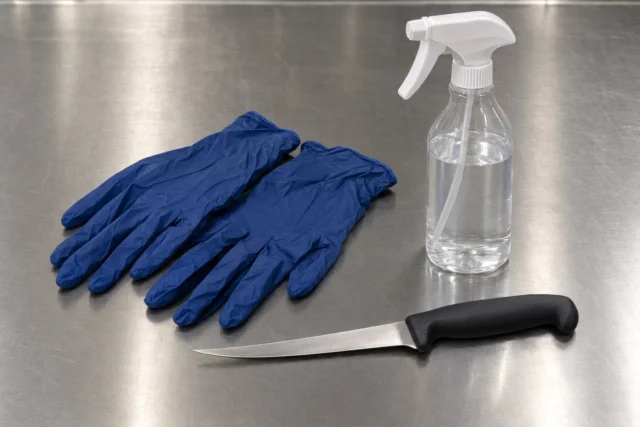
- Water: a bucket to dunk the squirrel in, or a spray (MDC).
- A small, sharp knife. For knife options, see the best knife for processing deer.
- A flat surface: MDC names a board, stump or flat rock.
- Gloves: the CDC says to use gloves when handling animals, especially rabbits, muskrats, prairie dogs and other rodents.
Should You Gut a Squirrel in the Field?
The two Conservationist articles say yes. The 2013 article says that even after a good head shot, it is a good idea to remove the chest and abdominal organs so the body cools quickly. If a squirrel is shot through the abdomen, it says removing the organs and rinsing the body cavity with water is critical to keep gut and bladder contents from tainting the meat. The 1999 article says to skin and gut a gut-shot squirrel immediately and rinse the cavity, and that cleaning squirrels in the field keeps them in fine shape during the two or three hours of a hunt.
The 2013 article says to take care removing the bladder to prevent spills, then split the pelvis and pull out the rest of the insides.
SAFETY: Wear gloves to clean a squirrel: the CDC says to use gloves when handling animals, especially rabbits, muskrats, prairie dogs and other rodents. If the squirrel was shot through the abdomen, remove the organs and rinse the body cavity with water right away so gut and bladder contents do not taint the meat (Missouri Conservationist, 2013). The CDC says to cook game meat thoroughly before eating.
How Do You Skin and Gut a Squirrel, Step by Step?
These are MDC’s nine steps from its How to Clean a Squirrel page:
- Wet the hair. Soak or spray the squirrel with water and pluck the hair from the base of the tail.
- Cut through the tailbone. Cut through the base of the tailbone without cutting the hide on top of the rump. MDC says cutting or pulling the tail off makes the job harder.
- Pin the back legs. Put the back legs on a board, stump or flat rock, put your foot on the hind feet and extend the cut toward the head about ½ to 1 inch.
- Make two angled cuts. Cut at an angle in front of each hind leg, down toward the belly.
- Pull up on the tail.
- Peel the hide toward the head until both front legs are exposed to the foot joint.
- Pull the rest of the hide down. Stand on the tail and pull the remaining hide down from the belly to the back feet. Pull the front legs through to the foot joint and cut the front feet off. Remove the head and both hind feet.
- Open the belly. Make sure the carcass is free of hair. Start between the hind legs and cut along the center of the belly to the neck, without cutting the entrails.
- Remove the entrails and wash the body cavity.
The 1999 article opens the belly the other way: it starts where the ribs meet the abdomen and cuts toward the hindquarters, taking care not to puncture the organs. Both keep the blade away from the entrails.
How Do You Remove the Glands and Stray Hair?
The 2013 article describes two sets of glands. There is gland tissue on the front legs where they join the body; remove it. On the inner joint of each hind leg there is a small, triangular patch of light tissue; cut into it and remove the small, round gland inside.
For hair, the 2013 article says to dunk the squirrel in a bucket of water and slosh it around a few times before skinning. Wet hair holds together, so less of it reaches the meat. For hair that still sticks, it says to hold the pieces under slowly running water and pick the hair off by hand.
How Can You Tell a Young Squirrel From an Old One?
| Sign | What the source says | Source |
|---|---|---|
| Skinning | The skin of young squirrels pulls far easier than that of older squirrels | Conservationist 1999 |
| Age and toughness | Any squirrel over a year old will probably be tough | Conservationist 1999 |
| Old males | A large scrotum with developed testicles | Conservationist 2013 |
| Old females | Often no hair around the nipples | Conservationist 2013 |
| Cooking | Young squirrels are for frying; dumplings are a great way to serve older, tougher squirrels | Conservationist 2013; MDC How to Clean a Squirrel |
The 1999 article marks older squirrels with two slashes as it cleans them and soaks them overnight in a bowl of water in the refrigerator. That is the article’s kitchen practice, not a safety step.
How Should You Cook Squirrel?
MDC suggests frying, squirrel and dumplings (which it calls a great way to serve older, tougher squirrels) and pot pie. The CDC says to cook game meat thoroughly before eating. No page opened for this post gives a squirrel-specific temperature; MDC’s general rule for wild game, on its bear page, is an internal temperature of 160°F, checked with a meat thermometer because color is not a good indicator of doneness.
Common Problems and Fixes
- Hair on the meat: dunk and slosh the squirrel before skinning, then pick off stray hair under slowly running water (Conservationist 2013).
- Skinning is hard at the tail: MDC says cutting or pulling the tail off makes skinning harder. Cut through the tailbone only and leave the rump hide whole.
- A gut-shot squirrel: skin and gut it right away and rinse the cavity with water (Conservationist 1999 and 2013).
- Bladder spills: remove the bladder with care before splitting the pelvis (Conservationist 2013).
- A tough old squirrel: MDC suggests dumplings; the 1999 article soaks older squirrels overnight in the refrigerator.
What Do the Sources Not Say?
All the cleaning steps here come from one state agency, and none of the pages opened covers squirrel diseases or parasites, or freezer times for squirrel. For packing the meat, see how to wrap meat in freezer paper and how to label frozen meat. For another small game animal, see how to butcher a rabbit and is wild rabbit safe to eat, which covers gloves and tularemia in rabbits.
Frequently Asked Questions
Do you have to gut a squirrel right away?
The Missouri Conservationist articles advise removing the chest and abdominal organs in the field so the body cools quickly, and say it is critical if the squirrel was shot through the abdomen.
How do you keep hair off squirrel meat?
Missouri’s 2013 Conservationist article says to dunk the squirrel in a bucket of water and slosh it before skinning, then pick off stray hair under slowly running water.
Where are the glands on a squirrel?
The 2013 Conservationist article says there is gland tissue on the front legs where they join the body, and a small, round gland inside a light triangular patch on the inner joint of each hind leg. Remove both.
How do you tell if a squirrel is young?
Missouri’s 1999 Conservationist article says the skin of a young squirrel pulls off far more easily. The 2013 article says old males have a large scrotum and old females often lack hair around the nipples.
Should you wear gloves to clean a squirrel?
Yes. The CDC says to use gloves when handling animals, especially rabbits, muskrats, prairie dogs and other rodents.
Hunting ducks as well? See how to clean a duck.
This is general guidance based on Missouri Department of Conservation and CDC recommendations. When in doubt, follow the sources linked above.