To butcher a rabbit, dispatch it, hang it by a hind leg and remove the head so it bleeds. Skin it down from the hocks, slit the belly and remove the entrails without breaking the gall bladder (WSU Extension). Rinse it, hold it at 35°F and no higher than 40°F (Mississippi State), then cut it into legs, ribs and loin.
This guide covers raised meat rabbits, such as fryers. The steps come from Mississippi State University Extension (MSU) and Washington State University Extension’s 4-H rabbit leader guide (WSU, 2014), with storage and cooking rules from USDA FSIS. Where MSU and WSU differ, both are shown. No source opened for this post covers wild rabbits or their diseases, so this guide does not either.
What You Need
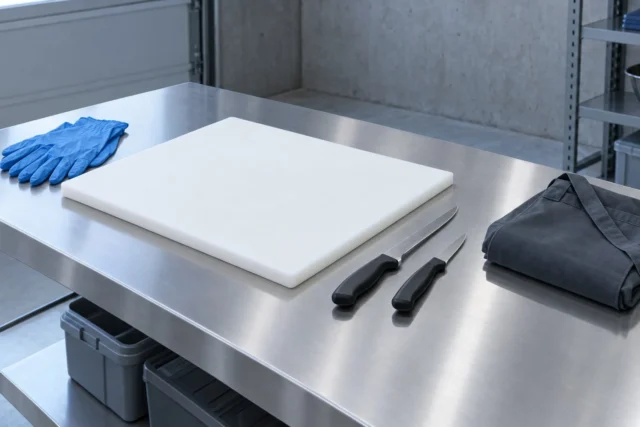
WSU lists these materials for home processing a rabbit:
| Item | What it is for | Source |
|---|---|---|
| Sharp knife | Skinning, opening the belly and cutting up | WSU |
| #6 screw hook fastened to a wall 5 feet above the floor | Hanging the rabbit by a hind leg | WSU |
| Bucket of water | Rinsing off hair and blood | WSU |
| Bucket of ice water | Cooling the carcass | WSU |
| Trash can and trash bags | Head, feet, skin and entrails | WSU |
| Freezer wrap | Wrapping the meat for the freezer | WSU |
For blade types, see our guide to the best knife for processing deer, which covers what to look for in a processing knife.
Which Rabbits Are Ready?
USDA FSIS defines a fryer, or young rabbit, as one weighing not less than 1½ pounds and rarely more than 3½ pounds, and less than 12 weeks of age. Its flesh is tender and fine grained and can be cooked much like young poultry. A roaster, or mature rabbit, is usually over 4 pounds and over 8 months old, with firmer, coarser meat that FSIS says is best braised or stewed.
How Do You Butcher a Rabbit, Step by Step?
MSU and WSU run the job in nearly the same order. Each step gives the action, then the reason. For laying out clean and dirty work areas, see our guide on how to butcher a chicken.
- Dispatch the rabbit. MSU’s preferred method is dislocation of the neck; it also describes a hard, quick blow to the skull behind the ears, and says both methods quickly render the rabbit unconscious. WSU describes the same two methods.
- Hang it and remove the head. MSU hangs the rabbit by one hind leg above the hock joint and removes the head immediately to allow complete bleeding. WSU suspends it by both hind feet, with the hook set between the tendon and bone of the right hind leg just above the hock.
- Remove the front feet and tail. WSU cuts off the tail and front feet next; MSU removes the forefeet, then the tail as skinning starts.
- Remove the free hind foot at the hock joint (WSU).
- Cut the skin. MSU cuts the skin around the hock joints, then across the lower body between those cuts. WSU cuts just below the hock of the hanging leg and opens the skin along the inside of the leg to the root of the tail and on to the other hock.
- Pull the skin off. Separate the edges of the skin from the flesh and pull it down off the carcass (WSU); MSU pulls it down and forward over the body. The skins of young fryers come off easily, and older rabbits are harder (MSU). WSU says to leave the fat on the flanks, not on the pelt.
- Open the belly. MSU cuts from the lower abdomen near the anus to the midpoint of the lowest rib. WSU warns not to cut the bladder, intestines or stomach as you slit down the belly.
- Remove the entrails and the gall bladder. MSU removes the intestinal tract and lungs and leaves the liver, kidneys and heart with the carcass. WSU says you may leave the heart and kidneys, save the liver, and always remove the gall bladder without cutting or breaking it, because its bitter green bile must not spill on the meat.
- Remove the last hind foot at the hock joint (MSU, WSU).
- Rinse the carcass in clean, cold water to remove hair, blood and any other soil (MSU, WSU).
- Chill it. MSU and WSU chill differently; the table below shows both.
- Rest it, if you have time. Oregon State Extension says to wrap and refrigerate carcasses for 24 hours so the fat hardens and the meat is easier to cut.
- Cut it up and wrap it for the freezer, as the next section shows.
SAFETY: Hold the carcass at 35°F if you can and never above 40°F (Mississippi State). USDA FSIS says to refrigerate rabbit at 40°F or below and use it within 2 days, or freeze it at 0°F, and to cook rabbit to an internal temperature of at least 160°F, checked with a food thermometer. Keep the gall bladder’s bile off the meat (WSU).
How Should You Chill the Carcass?
The guides agree on cold water for rinsing but not on how long the carcass should sit in water. Oregon State Extension (2018) adds a rest before cutting.
| Point | Mississippi State | WSU | Oregon State |
|---|---|---|---|
| How it hangs | One hind leg, above the hock | Both hind feet; the hook goes in the right hind leg | Not covered |
| Organs kept | Liver, kidneys and heart | Heart and kidneys if you like; save the liver; always remove the gall bladder | Not covered |
| Cooling | Store at 35°F, not over 40°F; do not hold dressed carcasses in water, because they absorb excess moisture | 15 minutes in ice water, then into a pan or wire basket | Not covered |
| Before cutting | Not covered | Cut up after cooling | Wrap and refrigerate 24 hours so the fat hardens |
MSU’s warning is about holding carcasses in water “for any length of time”; WSU’s dip is 15 minutes, after which the carcass comes out. SaltRail does not pick between them.
How Do You Cut Up a Rabbit?
WSU says rabbits are usually sold as a cut-up fryer rather than whole. Its order:
- Pull a front leg out and cut through the shoulder joint; twisting the leg helps you find the joint. Repeat on the other side.
- Pull out a rear leg and cut where the thigh joins the hip, keeping the thigh and leg in one piece. Repeat on the other side.
- Cut through the backbone just where the rib cage ends.
- Slice along the cartilage that joins the ribs and backbone, which makes two pieces of ribs.
- Cut off the rear section of the back if you like. WSU calls this the loin and the best portion of the rabbit.
SaltRail’s count of WSU’s steps: that gives seven pieces, which are two front legs, two hind legs, two rib pieces and the loin. WSU says to use freezer wrap to prevent freezer burn. For the folds, see how to wrap meat in freezer paper, and mark each pack as shown in how to label frozen meat.
How Much Meat Do You Get From a Rabbit?
MSU defines dressing percentage as the weight of the dressed carcass compared with the live weight, with the liver, heart and kidneys normally left in. Its figures for rabbits fed a commercial feed:
| Age | New Zealand | Dutch |
|---|---|---|
| 8 weeks | 55.9% | 60.3% |
| 13 weeks | 59.2% | 63.3% |
| Mature | 58.2% | 62.8% |
MSU says rabbits in average or slightly better condition dress at about 55 percent, while good-quality animals reach 60 percent or higher. SaltRail’s arithmetic, not a source figure: a rabbit that weighs 5 lb live, at 55 to 60 percent, gives about 2.75 to 3 lb of carcass.
How Long Does Home-Processed Rabbit Keep?
USDA FSIS gives these limits:
| Storage | Time |
|---|---|
| Refrigerator, 40°F or below | Use within 2 days, or freeze |
| Freezer, 0°F | Safe indefinitely; for best quality, whole rabbits within a year and pieces within 9 months |
| Thawed in the refrigerator | 2 days before cooking |
| Cooked leftovers | 3 to 4 days in the refrigerator; 4 to 6 months frozen for best quality |
FSIS lists three safe ways to thaw rabbit: in the refrigerator, in cold water in a leak-proof bag with the water changed every 30 minutes, or in the microwave. Cook it right after a cold-water or microwave thaw, and never thaw it at room temperature. For sealed packs, see how to thaw vacuum sealed meat. Rabbit can also be pressure canned; see how to can chicken.
Can You Sell Rabbit You Butcher at Home?
Rules vary by state. FSIS says Congress has not mandated rabbit inspection, so inspection is voluntary, and some states permit the sale of rabbit only if it is inspected under their laws. Oregon State says that if you plan on selling the meat, you must use a licensed processing plant. MSU says to check with your local county agent or state meat inspection agency. The difference between custom exempt and USDA inspected meat explains the basics.
Common Problems and Fixes
- The skin will not pull off an older rabbit: MSU says older rabbits are harder to skin than fryers. Separate the skin from the flesh along the edges first, as WSU describes, then pull.
- Bile touched the meat: WSU says bile must not spill on the meat. SaltRail’s suggestion: trim away any meat the bile touched.
- Hair on the carcass: rinse it in clean, cold water (MSU, WSU).
- Waterlogged meat: MSU says carcasses held in water absorb excess moisture, so take them out after a short dip.
- The meat is hard to cut neatly: Oregon State’s 24-hour rest in the refrigerator firms the fat first.
What Do the Sources Not Say?
No source opened for this post covers wild rabbits, the diseases they can carry or how hunters should handle them; if you hunt rabbits, check your state wildlife agency. None covers aging rabbit meat. MSU’s page carries no publication date. If you hunt rabbits, see is wild rabbit safe to eat. For other small game, see how to clean a squirrel.
Frequently Asked Questions
What age should a rabbit be for butchering?
USDA FSIS defines a fryer as a rabbit under 12 weeks old weighing 1½ to 3½ pounds; its meat is tender and fine grained. A roaster is usually over 8 months and over 4 pounds and is best braised or stewed.
Do you have to remove the gall bladder?
Yes. WSU Extension says to always remove the gall bladder without cutting or breaking it, because its bitter green bile must not spill on the meat. You can keep the liver once the gall bladder is off.
Should you soak rabbit meat in water?
Mississippi State says not to hold dressed carcasses in water for any length of time, because they absorb excess moisture. WSU uses a 15-minute ice-water dip to cool the carcass, then takes it out.
What temperature should rabbit be cooked to?
USDA FSIS recommends cooking rabbit to an internal temperature of at least 160°F, checked with a food thermometer.
Can you keep the liver and heart?
Yes. Mississippi State leaves the liver, kidneys and heart with the carcass, and WSU says to save the liver and you may leave the heart and kidneys.
Once the pieces are wrapped, plan your thaw ahead; our guide on how to thaw vacuum sealed meat covers the safe methods.
This is general guidance based on university extension and USDA FSIS recommendations. When in doubt, follow the sources linked above and your state’s rules.