State wildlife agencies, the CDC and USDA FSIS treat wild rabbit as food if you handle and cook it with care; the main concern they name is tularemia. Wear latex or nitrile gloves to clean the rabbit, check the liver for many white spots about the size of a pin head and throw the rabbit out if you find them (Missouri Department of Conservation), and cook the meat thoroughly. The sources give different minimum temperatures: 135°F, 160°F and 165°F.
This guide uses the Missouri Department of Conservation’s rabbit safety page (MDC), the Pennsylvania Game Commission’s tularemia page (PGC), the CDC’s Preventing Tularemia page (September 9, 2025) and USDA FSIS’s rabbit page (last updated March 12, 2024). They agree on gloves and thorough cooking, and they disagree on the cooking temperature, so all three numbers are shown. This is not medical advice; if you think you were exposed, see a doctor.
What Is the Risk With Wild Rabbits?
The Pennsylvania Game Commission says exposure to infected rabbits accounts for 90% of human tularemia infections in the United States, and that most of these are cottontail rabbits. MDC says rabbits get tularemia from the bite of an infected tick or deer fly.
The CDC says people can become infected in several ways, including tick and deer fly bites, contact with infected animals, drinking contaminated water and inhaling contaminated dust. For hunters, trappers and anyone who skins animals, it gives two steps: use gloves when handling animals, especially rabbits, and cook game meat thoroughly before eating. For feral hogs, see is wild hog meat safe to eat. For bear, see is bear meat safe to eat.
How Do You Clean a Wild Rabbit Safely?
These are the safety steps the sources give. For the dressing steps themselves, our guide on how to butcher a rabbit follows the extension guides for raised rabbits. For squirrels, see how to clean a squirrel.
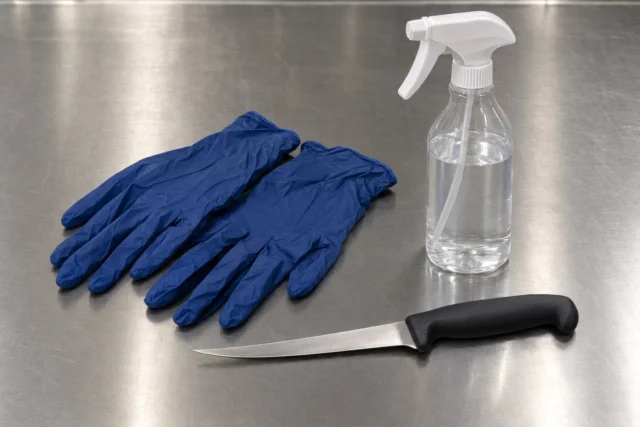
- Wear gloves. MDC says hunters cleaning rabbits should wear latex or nitrile gloves to keep blood and tissue off their skin, especially with cuts or open wounds on their hands or fingers. The CDC and PGC also say to use gloves.
- Check the liver as you gut the rabbit. MDC says to look for numerous white lesions about the size of a pin head on the liver.
- Throw out a spotted rabbit. If you find those lesions, MDC says the rabbit should be discarded and not eaten.
- Keep up simple hygiene. PGC lists simple hygiene alongside gloves and thorough cooking.
- Cook the meat thoroughly. MDC says tularemia can also spread through meat that is not thoroughly cooked. See the temperature table below.
- Protect yourself from ticks. PGC says to use insect repellent and remove ticks promptly; the CDC says the same.
SAFETY: MDC says that if you come down with flu-like symptoms after handling rabbits, seek medical attention and tell your doctor you might have been exposed to tularemia; it says treatment with antibiotics is standard for infected people. PGC also says to seek medical attention when a possible exposure occurs.
What Do Spots on a Rabbit Liver Mean?
| What you see | What the source says | Source |
|---|---|---|
| Numerous white lesions about the size of a pin head on the liver | Discard the rabbit; do not eat it | MDC |
| Pale spots throughout the liver, bone marrow and spleen; an enlarged liver and spleen | Seen at necropsy in animals that died of acute tularemia | PGC |
MDC’s line is the one written for hunters at the cleaning table. PGC’s describes what wildlife examiners find in animals that died of the disease. Neither source says a clean-looking liver proves a rabbit is free of it.
What Temperature Should Wild Rabbit Be Cooked To?
The three sources that give a number do not agree:
| Source | Minimum internal temperature | What it is for |
|---|---|---|
| Pennsylvania Game Commission | At least 135°F on a meat thermometer | Tularemia precautions for rabbit hunters and trappers |
| USDA FSIS | At least 160°F | Rabbit in general |
| Missouri Department of Conservation | Minimum of 165°F | A safe temperature that kills any potential disease in rabbit meat |
The CDC says to cook game meat thoroughly but gives no number. SaltRail’s arithmetic, not a source figure: 165°F meets all three minimums. Check your thermometer first; see how to calibrate a meat thermometer.
Is It Safer to Hunt Rabbits in Winter?
MDC says infected rabbits usually die within a few days, so exposure is less likely in cold months, when ticks and biting flies are less numerous and active. It also says waiting for cold weather may reduce your risk of meeting an infected rabbit, but will not eliminate it. Keep the gloves, the liver check and the cooking temperature in every season.
What If You Feel Sick After Handling a Rabbit?
MDC says to seek medical attention and tell your doctor that you might have been exposed to tularemia. PGC says trappers should seek medical attention when a possible exposure occurs. SaltRail gives no other medical advice here.
What Do the Sources Not Say?
No source opened for this post says whether freezing kills the bacteria that cause tularemia, so do not count on it; for parasites in game meat, a different question, see does freezing kill parasites in wild game. None covers other rabbit diseases, and none gives state-by-state hunting rules. MDC’s page carries no date. For another game-safety question hunters ask, see is venison safe to eat with CWD, and for glove and hygiene habits in the field, how to field dress a deer.
Frequently Asked Questions
Can you get sick from cleaning a wild rabbit?
Yes, tularemia can spread through contact with infected animals, the CDC says. The Missouri Department of Conservation tells hunters to wear latex or nitrile gloves to keep blood and tissue off their skin, especially with cuts on their hands.
What do white spots on a rabbit liver mean?
The Missouri Department of Conservation says that if the liver has numerous white lesions about the size of a pin head, the rabbit should be discarded and not eaten.
Should you wait until after the first frost to eat wild rabbit?
MDC says exposure is less likely in cold months, when ticks and biting flies are less active, but that waiting for cold weather will not eliminate the risk. Keep wearing gloves and cook the meat thoroughly.
What temperature should wild rabbit be cooked to?
The sources differ: the Pennsylvania Game Commission says at least 135°F, USDA FSIS says at least 160°F for rabbit, and the Missouri Department of Conservation says a minimum of 165°F.
Do you need gloves to clean a rabbit?
The CDC, the Missouri Department of Conservation and the Pennsylvania Game Commission all say to use gloves when handling or cleaning rabbits.
Ready to process the rabbit? Our guide on how to butcher a rabbit covers skinning, gutting and cutting it up.
This is general guidance based on state wildlife agency, CDC and USDA FSIS recommendations. It is not medical advice. When in doubt, follow the sources linked above and talk to your doctor.