Cut through the joints, not the bones. Texas A&M AgriLife Extension uses a sharp, rigid 5 or 6 inch knife and says you shouldn’t have to cut any bone except some small ribs. Take off the legs at the hip joints, split each into thigh and drumstick, remove the wings, then separate the breast from the back. That gives 8 pieces plus the back. Don’t rinse the bird first.
This guide compares Texas A&M AgriLife Extension’s Chicken Cut-up: Family Style (2026), Mississippi State Extension’s Cutting Up a Whole Broiler (an undated PDF it credits to the National Chicken Council) and its HappyHealthy video guide (updated November 25, 2025), Clemson’s Safe Handling of Poultry (HGIC 3512, revised 2008), UGA Extension Circular 1377 (2026), Purdue Extension (2021) and NC State Extension (2021).
What Do You Need?
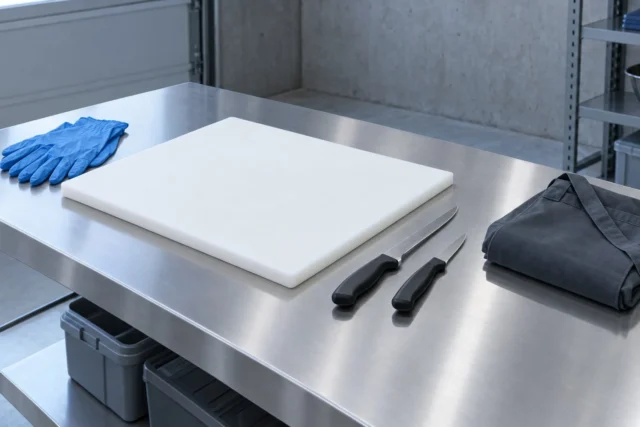
- A sharp, rigid knife with a 5 or 6 inch blade (Texas A&M). Mississippi State also says to use a sharp knife and work quickly.
- A cutting board with plenty of room, kept for raw chicken (Texas A&M; Purdue).
- Freezer wrap or bags and labels if you are freezing some pieces (Clemson).
Texas A&M says some people make the job harder by using a dull knife or trying to cut through bones. It also says to work quickly while the chicken is still cold, which makes cutting easier and prevents bacterial buildup.
Should You Rinse the Chicken First?
No. Texas A&M’s guide says to rinse the chicken and let it drain before starting, but three other extension sources say not to. UGA says not to rinse raw poultry; Purdue says washing spreads chicken juices to other foods, utensils and countertops; NC State says washing is more likely to spread germs around the kitchen than to remove them. This page leaves the rinse step out.
How Do You Cut Up a Whole Chicken, Step by Step?
These steps follow Mississippi State’s 9-part method, with detail from Texas A&M where it adds something.
- Put the chicken breast side up on the board and cut the skin between each thigh and the body (Mississippi State).
- Hold a leg in each hand, lift the chicken and bend the legs back until the hip joints pop (Mississippi State; HappyHealthy).
- Cut each leg and thigh away from the body between the joints, close to the backbone (Mississippi State; Texas A&M).
- Split each leg: bend it to find the knee joint and cut through it, skin side down. Texas A&M looks for the line of fat across the joint and cuts just on the drumstick side of it; if the knife hits bone, move it slightly and try again.
- Remove each wing by cutting through the joint where it meets the body. Texas A&M turns the knife slightly toward the wing tip so it doesn’t cut into the breast.
- Separate the breast from the back by cutting through the joints along each side of the rib cage (Mississippi State). In Texas A&M’s family style, cutting the ribs along the backbone is the only place bones may have to be cut.
- Leave the breast whole, or cut it in half through the wishbone at the V (Mississippi State).
- Sanitize the knife and board and wash your hands (HappyHealthy).
8, 9 or 13 Pieces?
| Method | Pieces | What you get | Source |
|---|---|---|---|
| Mississippi State whole broiler | 9 parts plus giblets | 2 legs (drumsticks), 2 thighs, 2 wings, 2 breast halves and the back; ample for four servings | Mississippi State |
| Commercial style | 8 | Pieces similar to store packs; back and wing meat stays on the breast and thigh | Texas A&M |
| Family style | 13 | Wings split into 3 sections, breast into 4 pieces, plus back and rib sections; pieces about the same size, ideal for frying | Texas A&M |
Mississippi State’s HappyHealthy guide takes the breast meat off the ribs instead, which leaves boneless breasts. Mississippi State’s PDF suggests saving the wing tips for stock or soup. To take the bone out of the breasts, see how to debone a chicken breast.
How Do You Store the Pieces?
| Raw chicken | Refrigerator (40°F) | Freezer (0°F) |
|---|---|---|
| Pieces | 1 to 2 days | 6 to 9 months |
| Whole | 1 to 2 days | 9 to 12 months |
| Giblets | 1 to 2 days | 3 to 4 months |
Source: Clemson HGIC 3512. Clemson says to keep the refrigerator at 34 to 38°F, to freeze fresh poultry you won’t cook within two days, and to wrap and label parts separately so you can thaw just what one meal needs. NC State says to store raw poultry on the bottom shelf so juices can’t drip on other food. See how to label frozen meat and how to wrap meat in freezer paper. For freezer times and thawing, see how to freeze chicken.
SAFETY: Cook all poultry to at least 165°F (Clemson; UGA), checking the thickest part of the breast (Clemson). Use a separate board for raw chicken, and refrigerate leftovers within 2 hours, or 1 hour above 90°F (Purdue). For cleaning the board, see how to sanitize a cutting board after raw meat; for the time limit, see how long can raw meat sit out.
Processing Your Own Birds?
Start with how to butcher a chicken. To turn the pieces into ground meat, see how to grind chicken. To check your thermometer, see how to calibrate a meat thermometer.
What Do the Sources Not Say?
- How to keep the back for stock in an 8-piece cut, beyond Mississippi State’s line about wing tips.
- How long a raw back or carcass kept for stock lasts in the fridge.
- Which cutting board material to use, or a sanitizer ratio.
- Steps for Texas A&M’s commercial style, which is in a separate publication this page didn’t open.
Frequently Asked Questions
How many pieces is a cut-up chicken?
Mississippi State’s method gives 9 parts (2 drumsticks, 2 thighs, 2 wings, 2 breast halves and the back) plus giblets. Texas A&M’s commercial style gives 8 and its family style 13.
Do you cut through the bones?
Almost never. Texas A&M says the bones are disjointed, not cut, and you may only need to cut some small ribs when separating the breast from the back.
Should you wash a chicken before cutting it up?
No. UGA, Purdue and NC State say not to wash raw poultry, because it spreads germs around the kitchen.
How long do cut-up chicken pieces keep in the fridge?
Clemson gives 1 to 2 days at 40°F, or 6 to 9 months frozen at 0°F for quality.
What knife do you need to cut up a chicken?
Texas A&M uses a sharp, rigid knife with a 5 or 6 inch blade.