As an Amazon Associate I earn from qualifying purchases.
As an Amazon Associate I earn from qualifying purchases.
For most hunters, the Weston 16-inch Butcher Saw is our pick. Its listing gives a stainless serrated blade and frame, a trigger lock that holds blade tension, a quick-release handle and a one-year warranty, at 1.79 pounds. The Weston 22-inch gives more reach for splitting a carcass, and the KATA 20-inch has an SK5 steel blade. Check your state’s CWD guidance first: UW–Madison Extension’s CWD advice is not to cut through bones at all.
A hand bone saw is for the cuts a knife can’t make: splitting the pelvis or brisket, taking off the head, or cutting bone-in steaks and chops. Many hunters bone out the whole deer instead and never need a saw; see how to debone a deer. For a powered saw, see best meat band saw for home use.
Should You Saw Through Deer Bones?
UW–Madison Extension’s Handling Venison Safely lists these steps to help protect against chronic wasting disease (CWD):
- Don’t cut through the spinal column except to remove the head, and use a knife or saw for that purpose only.
- Soak that knife or saw blade in a 50/50 solution of household bleach and water for 1 hour, or dispose of the blade.
- Remove only the meat, don’t cut through any bones, and remove all fat and connective tissue before eating or storing the meat.
- Clean all knives, equipment and cutting surfaces with hot soap and water after use, and disinfect with a 50/50 bleach and water solution.
UW adds that the World Health Organization and the CDC have found no scientific evidence that CWD can infect humans. Check your state wildlife agency for CWD areas. Following UW’s steps means boning out the meat and keeping a saw for the head only; see is venison safe to eat with CWD. Where it doesn’t, a saw lets you cut bone-in steaks; see how to butcher a deer.
How we ranked these
SaltRail did not hand-test these saws. We compared what each Amazon listing states: blade length and material, frame, tensioning, weight and warranty. We read every listing on November 14, 2026. None of the listings gives teeth per inch, so we can’t compare cutting speed. Commission rates play no part in the order.
| Pick | Blade (listed) | Overall length | Weight | Tension / handle | Warranty (listed) |
|---|---|---|---|---|---|
| Weston 16-inch 47-1601 (B001BQAQ88) | 16 in stainless, serrated | 21 in | 1.79 lb | Trigger lock; quick-release handle | 1-year limited |
| Weston 22-inch 47-2201 (B000T3OV1C) | 22 in stainless, serrated | 27 in | 2.27 lb | Quick-release handle | 1-year |
| KATA 20-inch KT23020 (B0C9TC1B9G) | 20 in SK5 steel | 25.9 in | 2.59 lb | Polypropylene handle | Not stated in the listing |
Best Bone Saw for Deer Processing
Best for most hunters: Weston 16-inch Butcher Saw
Best for splitting a carcass: Weston 22-inch Butcher Saw
Best alternative blade steel: KATA 20-inch Butcher Saw
Which Saw Fits Your Season?
- You bone out every deer: you may not need a saw at all, beyond one for the head. That is what UW–Madison’s CWD steps above point to.
- Quartering and bone-in cuts on a home table: the Weston 16-inch, the lightest pick at 1.79 pounds.
- Splitting carcasses or large bones such as a beef hind leg: the Weston 22-inch, the longest blade here.
- A mid-length blade in SK5 steel: the KATA 20-inch.
Weston 16-inch Butcher Saw
Weston 16-inch Butcher Saw
listed 16 in stainless serrated blade · trigger lock tension · 1.79 lb · 1-year warranty
Check today’s price on Amazon
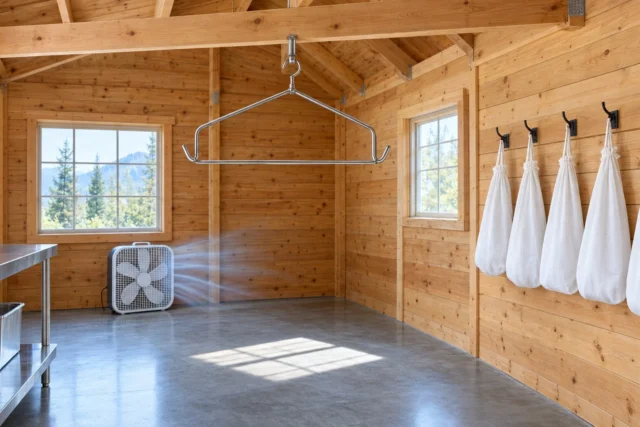
Buy this one if you want a light saw for quartering and bone-in cuts on a home table. For hanging the deer before you saw, see best deer hoist.
Pros
- Lightest pick: 1.79 pounds, per the listing
- Trigger lock that keeps the blade at tension, per the listing
- Stainless serrated blade and stainless frame; quick-release handle
- One-year limited warranty
Cons
- Shortest blade here, so long cuts take more strokes
- Plastic handle
The listing gives model 47-1601 and says it cuts through muscle, sinew and bone, including large game in the field.
Weston 22-inch Butcher Saw
Weston 22-inch Butcher Saw
listed 22 in stainless serrated blade · quick-release handle · 2.27 lb
Check today’s price on Amazon
On November 19, 2026, this saw’s Amazon page showed it as temporarily out of stock. Check the listing before you plan on it.
Choose the longer Weston if you split carcasses or saw through large bones such as a beef hind leg.
Pros
- Longest blade here at 22 inches
- Same stainless blade and frame design as the 16-inch
- Quick-release handle for blade changes
- One-year manufacturer warranty, per the listing
Cons
- 27 inches overall, harder to store and to use in a small space
- Plastic handle
The listing gives model 47-2201. For where a saw is used on a larger animal, see how to butcher a cow and how to quarter a deer.
KATA 20-inch Butcher Saw
KATA 20-inch Butcher Saw
listed 20 in SK5 steel blade · stainless frame · 2.59 lb
Check today’s price on Amazon
Pick this saw if you want a mid-length blade in SK5 steel instead of stainless.
Pros
- 20-inch blade, between the two Westons
- SK5 steel blade and a stainless steel frame, per the listing
- Also sold in 18-inch and 25-inch lengths
- Listing names deer, ribs and frozen meat
Cons
- No warranty is stated in the listing
- Heaviest pick at 2.59 pounds
The listing gives model KT23020 and a polypropylene handle. It doesn’t say whether the blade is stainless; SaltRail suggests drying it after washing.
What Owners Report
These are the recurring themes in Amazon’s review summaries, which Amazon generates from the text of customer reviews. We read them on November 19, 2026. They summarize what owners write, not SaltRail findings, and they change as new reviews come in.
- Weston 16-inch and 22-inch: both listings showed the same summary, so it may pool reviews across Weston’s butcher saws. Owners call them sturdy and good quality, and mention cutting frozen beef quarters. Cutting performance, sharpness, ease of use and value are mixed, and some report the blade breaking on first use.
- KATA 20-inch: owners call it easy to use and worth the price, say it cuts bone easily, and one uses it for deer and elk at camp. Build is mixed, with some finding it unstable, and several report the blade rusting on first use.
The rust reports fit the page’s note above: the KATA listing doesn’t say whether its SK5 blade is stainless, so dry it after washing.
Buying Guide
- Decide whether you need a saw at all. A boned-out deer needs only knives; a saw is for bone-in cuts and splitting.
- Pick a length. A 16-inch blade is easier to control on a table; a 20 to 22-inch blade covers more bone per stroke.
- Check blade changes. Both Westons list a quick-release handle.
- Keep a separate saw if your area has CWD. UW says to use the blade that cuts the spinal column for that purpose only.
For knives, see best knife for processing deer. For the costs of home processing, see is it worth processing your own deer.
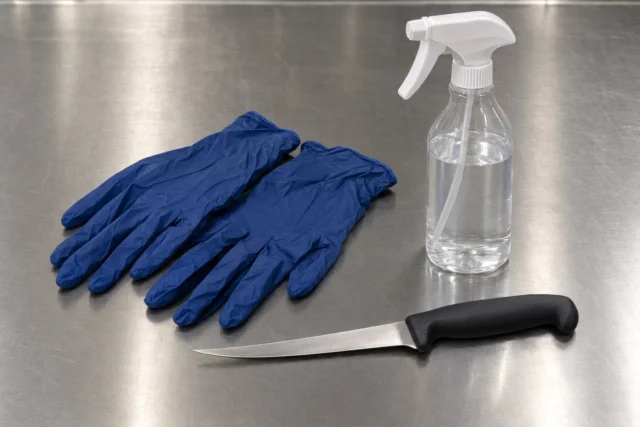
SAFETY: UW–Madison Extension says to clean all knives, equipment and cutting surfaces with hot soap and water after use and to disinfect with a 50/50 solution of household bleach and water (UW–Madison). UW’s key points are to keep venison clean, dry and cold. SaltRail also suggests keeping your free hand clear of the blade’s path. See how to sanitize a cutting board after raw meat.
What the Listings Don’t Say
- Teeth per inch, or which bones each blade is sized for.
- Whether replacement blades are sold, and at what length.
- A warranty for the KATA.
- Whether the KATA’s SK5 blade resists rust.
Frequently Asked Questions
What is the best bone saw for deer processing?
SaltRail’s pick is the Weston 16-inch Butcher Saw: a stainless serrated blade, a trigger lock for blade tension and 1.79 pounds, per its listing.
Do you need a bone saw to process a deer?
Not always. You can bone out the whole deer with knives. A saw is for splitting the carcass or cutting bone-in steaks.
Should you cut through deer bones because of CWD?
UW–Madison Extension’s CWD guidance says not to cut through any bones and to cut the spinal column only to remove the head, with a blade used for that purpose only.
What length bone saw is best for deer?
A 16-inch blade is easier to control on a table; the 20 and 22-inch saws here cover more bone per stroke.
How do you clean a bone saw after deer processing?
UW–Madison says to wash knives and equipment with hot soapy water after use and disinfect with a 50/50 household bleach and water solution.