CDC says to strongly consider a CWD test before you eat the meat from a deer or elk, and not to eat meat from an animal that tests positive. Minnesota DNR and Virginia DWR say cooking does not destroy the prions. No source we opened says CWD has infected a person, and a negative test is not a guarantee.
Chronic wasting disease (CWD) is a prion disease that affects deer, elk, moose and similar animals, according to the CDC. This guide compares what CDC, Minnesota DNR and Virginia DWR say, with their dates, and shows where they differ. We give no verdict of our own on whether venison is safe. For EHD, a different deer disease, see is it safe to eat a deer with EHD.
Has CWD Ever Infected a Person?
CDC (updated January 21, 2026) says CWD infections in people have never been reported and that it is not known whether people could get infected. It adds that some studies in monkeys suggest they could get CWD by eating meat or brain tissue from infected deer or elk, so in theory CWD could be considered a risk to people. Minnesota DNR says there is currently no evidence that humans can get CWD, and that CDC recommends not eating meat from a known positive animal. None of these pages gives a risk figure.
Does Cooking or Freezing Kill CWD?
| Source | What it says |
|---|---|
| Minnesota DNR hunter handout (2025) | Prions are highly resistant to disinfectants, heat or freezing; cooking the meat will not destroy this disease. |
| Virginia DWR (page undated) | Unlike bacteria or viruses, CWD will not be destroyed through normal cooking; thoroughly cooking meat will not damage the infectious prions. |
| CDC (Jan 2026) | The page we opened does not mention cooking. |
Minnesota DNR also lists freezing among the things prions resist. For the separate question of parasites in wild game, see does freezing kill parasites in wild game; it is not evidence about CWD.
Should You Test Your Deer Before Eating It?
| Source | Position |
|---|---|
| CDC (Jan 2026) | Strongly consider a CWD test before eating the meat. If the animal tests positive, do not eat meat from it. |
| Minnesota DNR (2025) | “It is the hunter’s choice to consume venison prior to receiving test results.” Keep the meat separate and identifiable from other deer until results are received. |
The two agencies differ on whether to wait for the result, and we do not choose between them. CDC says recommendations vary by state and to check your state wildlife and health department before you hunt. We did not open any state rules beyond Minnesota and Virginia.
What Does a Negative Test Result Mean?
Virginia DWR says the CWD diagnostic tests currently available are not food safety tests and are not meant to certify a deer as “safe for consumption.” Results are either “positive” or “no prions detected.” In early infection prions may not be at detectable levels, so “no prions detected” does not guarantee the animal is not infected, though it makes that considerably less likely. The CDC page we opened does not discuss test limits.
SAFETY: CDC says if your animal tests positive for CWD, do not eat meat from that animal. Minnesota DNR and Virginia DWR say cooking does not destroy the prions.
How Do You Handle a Deer in a CWD Area?
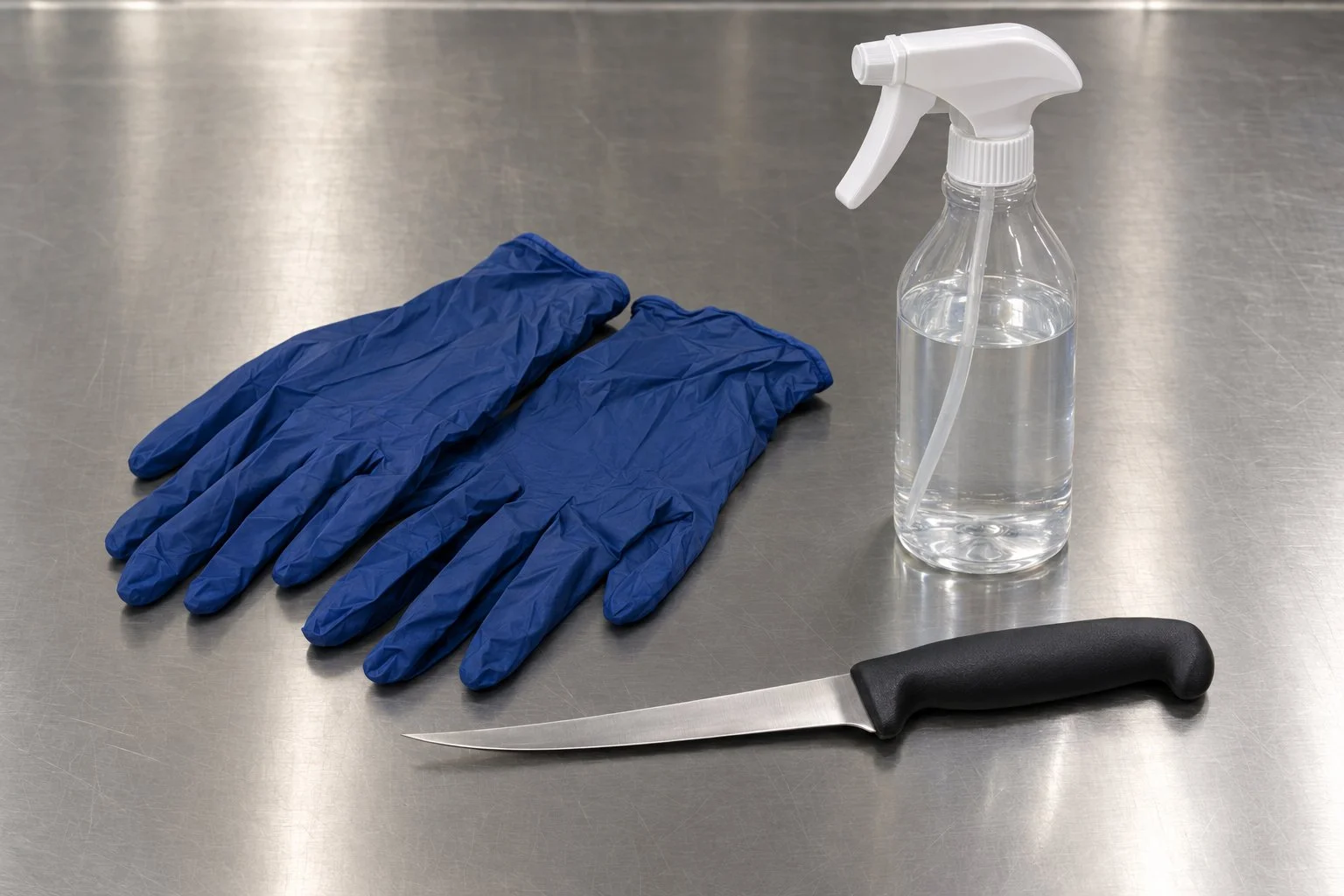
- Do not shoot, handle or eat an animal that looks sick or acts strangely, and do not touch or eat meat from an animal found dead (CDC).
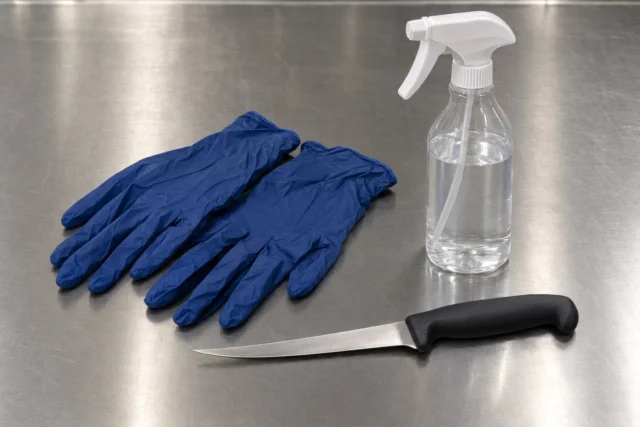
- Wear latex or rubber gloves when field dressing, and avoid handling the internal organs, especially the brain or spine (CDC).
- Do not use knives or other tools you use in your kitchen (CDC).
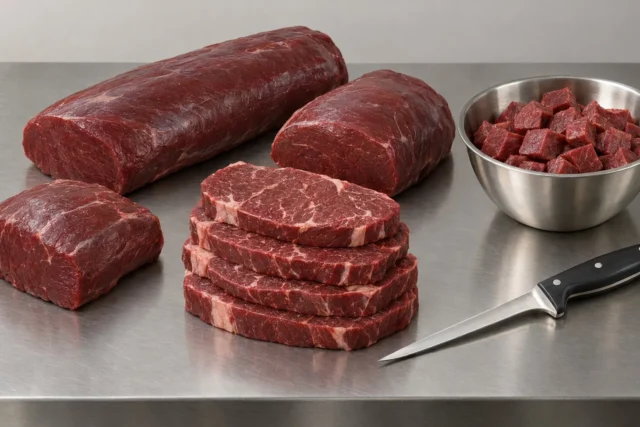
- Bone out the meat, and minimize handling of brain and spinal tissue (Minnesota DNR).
- Avoid consuming brain, spinal cord, eyes, spleen, tonsils and lymph nodes (Minnesota DNR).
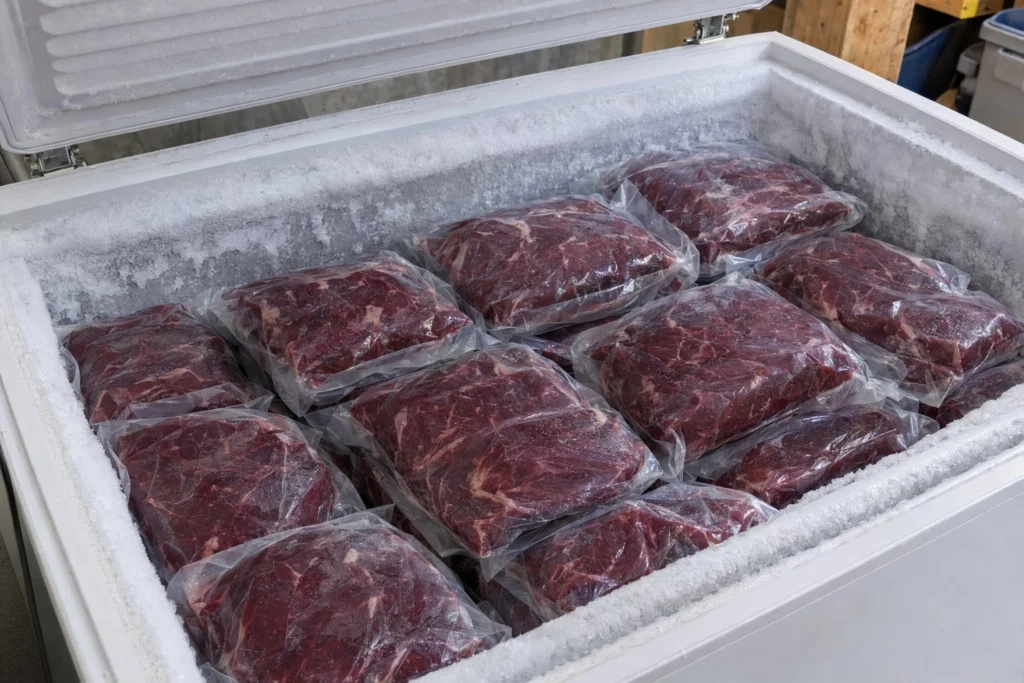
- Have the deer processed and wrapped individually; CDC says to ask a commercial processor for this (CDC, Minnesota DNR).
- Mark each package so venison from one animal can be found and removed from the freezer if the result is positive (Virginia DWR).
For the cutting steps, see our guides to how to debone a deer and how to butcher a deer, and to labeling frozen meat. If you are weighing a processor, see whether processing your own deer is worth it.
What Do the Sources Not Say?
- A probability that eating infected venison could make a person ill.
- A verdict that venison from any deer is “safe” or “unsafe.”
- How long a lab takes to return a result, or what it costs.
- What your state requires. CDC says rules vary.
Venison and CWD: Quick Answers
Can I eat venison while waiting for test results?
CDC says to strongly consider a test before eating the meat. Minnesota DNR says it is the hunter’s choice, and to keep the meat separate and identifiable until results are received.
Can I eat venison from a deer that looked healthy?
Minnesota DNR says CWD has an incubation period of 1½ to 3 years, so infected animals may not show symptoms. CDC advises not to eat animals that look sick.
Should I use the same knives for the kitchen?
No. CDC says not to use knives or other tools you use in your kitchen when field dressing.
What if a processor handles my deer?
CDC says if your deer is processed commercially, consider asking to have your animal processed individually.
Related: how to grind venison. For small game, see is wild rabbit safe to eat. For deer organs, see is deer liver safe to eat.