
As an Amazon Associate I earn from qualifying purchases.
When choosing between a chamber vacuum sealer vs vacuum sealer for home processing, the Avid Armor USV20 chamber sealer is our top pick. It seals wet meat, marinades, and broth without pulling liquid into the machine, and it runs on low-cost smooth pouches. For a few batches a year of mostly dry cuts, the Nesco VS-12 external sealer costs less up front and is lighter to store.
At SaltRail, the goal is to help you process and preserve your harvest at home. Reliable food preservation starts right on the cutting table. Quality food preservation protects your meat and locks in freshness.
Vacuum sealing is the last step before freezing.
A good seal keeps air off the meat, slows freezer burn, and lets you stack flat packs in the freezer. An external vacuum sealer pulls air out of textured vacuum sealer bags through a nozzle at the bag’s open end.
In contrast, a chamber vacuum sealer places the entire pouch inside an internal vacuum chamber to evacuate air. That fundamental difference dictates how each machine handles blood, brine, and long runs of packages.
Before you buy, check four things: how wet your packs are, how many pounds you seal per session, what bags cost per pack, and how much counter space you have. Weight matters too. A chamber machine is heavy enough that it tends to stay put. These points shape which sealer fits your season.
Best for multiple deer and wet meat: Avid Armor USV20 Chamber Vacuum Sealer
Best for occasional batches and small kitchens: Nesco VS-12 Deluxe Vacuum Sealer
| Pick | Best for | Key spec | Maker’s rated spec |
| Avid Armor USV20 | 2+ deer per season, ground meat, marinades | 4L stainless chamber, 11.5″ seal bar | 300 watts, 15 to 60 sec vacuum time; check today’s price |
| Nesco VS-12 | 1 deer or less, dry cuts, small batches | Double pump, bags up to 11.8″ wide | 130 watts, dry/moist/double seal modes; check today’s price |
Avid Armor USV20 Chamber Sealer
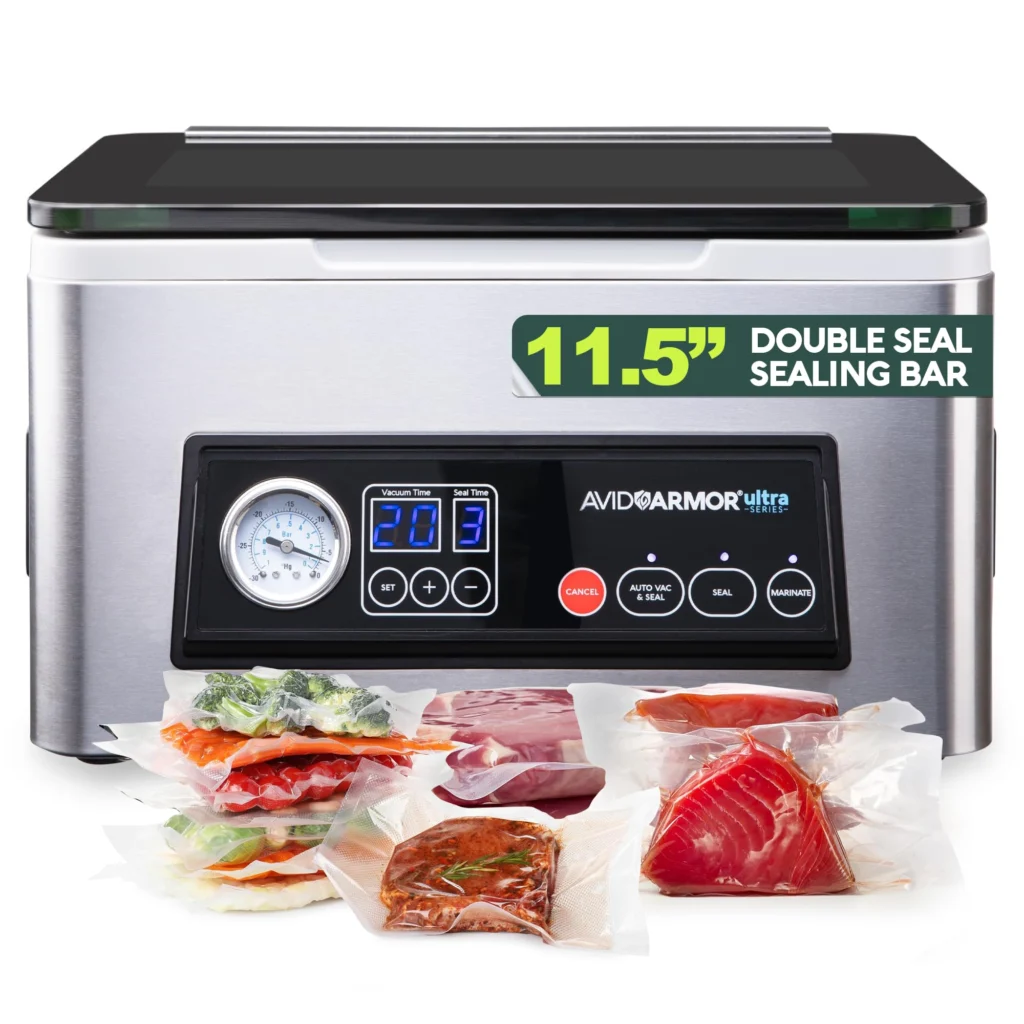
Buy this if you process enough meat each season that bag cost and wet seals start to add up.
Pros
- Seals liquids and wet meat cleanly
- Uses smooth pouches, which cost less than textured bags
- User-replaceable seal bar
Cons
- About 17 lb, so it is hard to move
- Pouches max out at 11 x 10 inches
- Higher upfront cost
The maker rates it at 300 watts with an adjustable vacuum time of 15 to 60 seconds and adjustable sealing time. The stainless chamber measures 12.25 x 8.5 x 3 inches. That fits a 1 lb or 2 lb pack of ground venison easily.
Keep in mind that the usable chamber size dictates your pouch dimensions. Commercial alternatives like a Vevor chamber vacuum sealer offer a larger chamber size, but take up even more counter space.
Owners in reviews praise the clean seals on wet game, soup, and marinades. Its oil-free vacuum pump delivers strong vacuum strength without boiling moisture out of pouches.
It is also a favorite for sous vide cooking because pouches stay tight and leak-free. Skip it if you seal only a few packs a year or need bags for whole backstraps over 10 inches long.
Nesco VS-12 Deluxe Vacuum Sealer
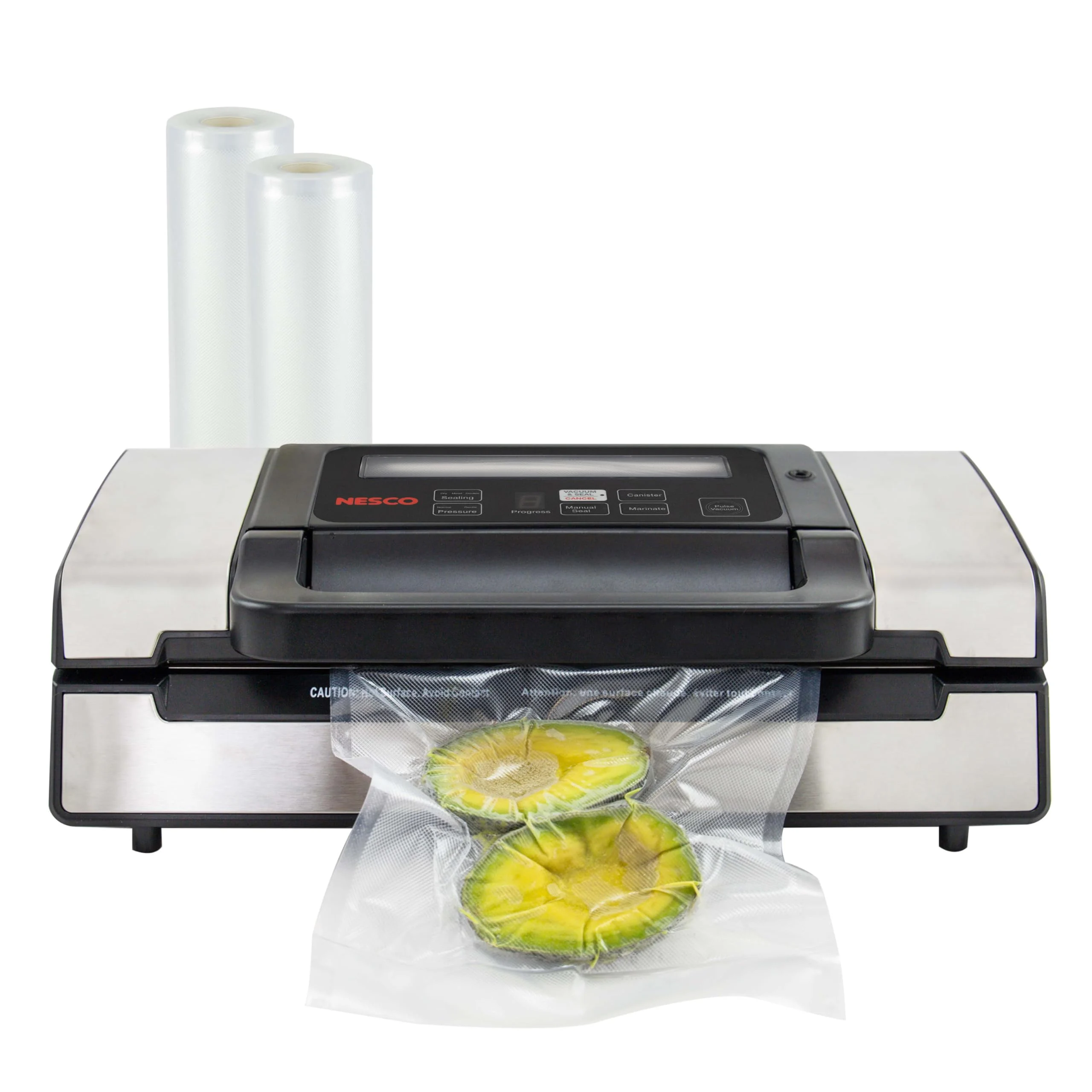
Buy this if you seal mostly dry cuts in modest batches and want a light machine you can put away.
Pros
- Double seal option for stronger seams
- Built-in roll storage and bag cutter
- About 6 lb and easy to store
Cons
- Wet packs can pull liquid toward the pump
- Textured bags cost more per pack
- Some owners report weaker suction after long use
The maker rates it at 130 watts with a double vacuum pump. You get dry, moist, and double seal modes, plus a gentle vacuum for soft items. It takes bags up to 11.8 inches wide and ships with two starter rolls.
This regular vacuum sealer performs great on dry food, jerky, and blotted steaks. It is also suitable for casual sous vide projects where marinades are minimal.
Pantry staples and everyday dry food items seal tightly without any risk of juice pulling into the seal area.
Owners often say it is easy to learn and that Nesco support helped when parts wore out. A recurring complaint is that the pump slowly loses vacuum strength after years of heavy use. Skip it if you plan to seal several deer every fall.
Buying Guide
Choose a chamber sealer if you seal more than about 50 lb of meat in a session or pack wet meat often. Choose an external sealer for smaller, drier batches.
Both styles elevate home food preservation, but moisture levels and batch size dictate which tool fits your kitchen.
We did not test either machine. We compared maker specs and manuals with recurring owner patterns from Amazon, retailer sites, Reddit, and forums. You can read more about how we research.
Sealing method
When comparing a chamber vacuum sealer vs vacuum sealer, sealing liquids is the biggest differentiator. A chamber unit equalizes pressure inside the vacuum chamber, preventing fluids from boiling over or escaping the pouch.
With an external vacuum sealer, suction can draw juices directly into the seal bar. That makes sealing liquids difficult without pre-freezing.
External units excel at packaging dry food and well-trimmed cuts that will not release moisture toward the seal channel.
| Factor | Chamber sealer | External sealer |
| Wet meat and brine | Handles well | Risk of liquid pulled into the seal |
| Bag type | Smooth pouches | Textured bags or rolls |
| Weight | Heavy, stays on counter | Light, easy to store |
| Upfront cost | Higher | Lower |
Capacity by season
A boned-out whitetail yields roughly 40 to 60 lb of meat. Plan about 1 cubic foot of freezer space for every 30 to 35 lb of flat packs.
| Your season | Pounds per batch | Freezer space | Sealer type |
| Small batches, no deer | Under 20 lb | 3 to 5 cu ft | External |
| 1 deer | 40 to 60 lb | 5 to 7 cu ft | External or chamber |
| 2 to 4 deer | 100 to 240 lb | 7 to 15 cu ft | Chamber |
Specs to check
- Seal bar length: 11 to 12 inches fits most 1 to 2 lb packs.
- Chamber size: A depth of 3 inches handles flat ground meat packs, but measure your cuts against the chamber size.
- Pump and vacuum strength: A heavy-duty vacuum pump pulls air faster and provides greater vacuum strength for dense packs.
- Sealing time: Adjustable sealing time settings allow you to use thicker vacuum sealer bags without weak seals.
- Replaceable parts: Seal bars and gaskets wear over time. Check that you can swap them easily.
Food safety callout
Strict food safety is essential when preparing wild game or fresh cuts for cold storage.
Keep meat cold the whole time. Seal at 40°F or below and prepare packs for freezing at 0°F. While vacuum-sealed food stays fresh longer, vacuum sealing does not stop anaerobic bacterial growth. Never store sealed raw meat at room temperature. Cured sausage needs the right cure in the right amount before sealing; see our sausage making guides.
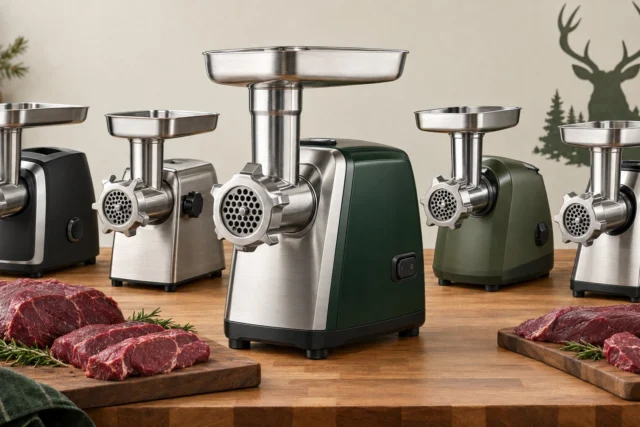
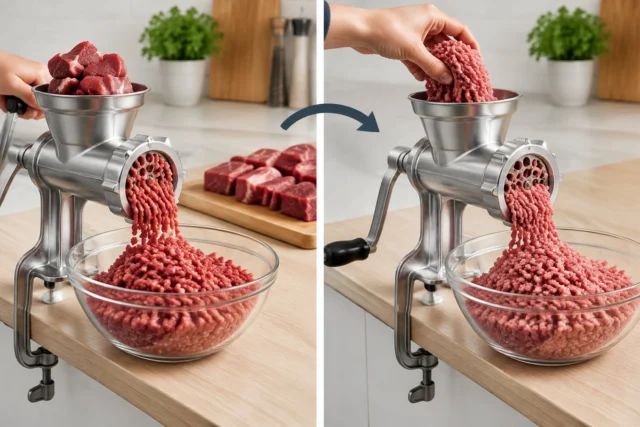
If you are setting up a full workflow, pair your sealer with good meat grinders so grinding and packing move at the same pace.
Frequently Asked Questions
How does a chamber vacuum sealer work compared with an external vacuum sealer?
A chamber sealer removes air from a sealed box holding the whole bag, so pressure stays equal inside and outside the bag. An external sealer pulls air straight out of the bag’s open end. That is why chamber machines keep liquid in the bag and external ones can draw it out.
What are the pros and cons of the Avid Armor USV20 compared with the Nesco VS-12?
The USV20 seals wet meat cleanly and uses cheaper pouches, but it is heavy and costs more. The VS-12 is light and affordable with handy roll storage. Its downside is weaker handling of liquids and a pump some owners say fades over years.
Which sealer is better for liquids and large batches?
The Avid Armor USV20 is better for both. Its design makes sealing liquids like soups and marinades effortless.
It also provides reliable packs for sous vide cooking and deep freezing. Its build easily suits long runs during deer season.
Can I use regular vacuum sealer bags in a chamber sealer?
Yes, textured bags work in a chamber sealer. Smooth pouches cost less, though, and they are what most chamber owners buy. Check that the pouch fits the 11 x 10 inch limit on the USV20.
Is a chamber vacuum sealer worth the higher upfront cost?
It pays off if you process two or more deer a year or seal wet meat often. Lower pouch costs offset the price over several seasons.
For one small batch a year or packing dry food in modest amounts, an external sealer is the better buy.