
You can grind meat twice to get a finer, more even texture. A second pass makes the grind finer and more uniform, which suits sausage, meatballs and venison burgers, but it is a texture choice and does nothing to make meat safer. A common setup is a 10 mm plate first, then a 4.5 mm plate.
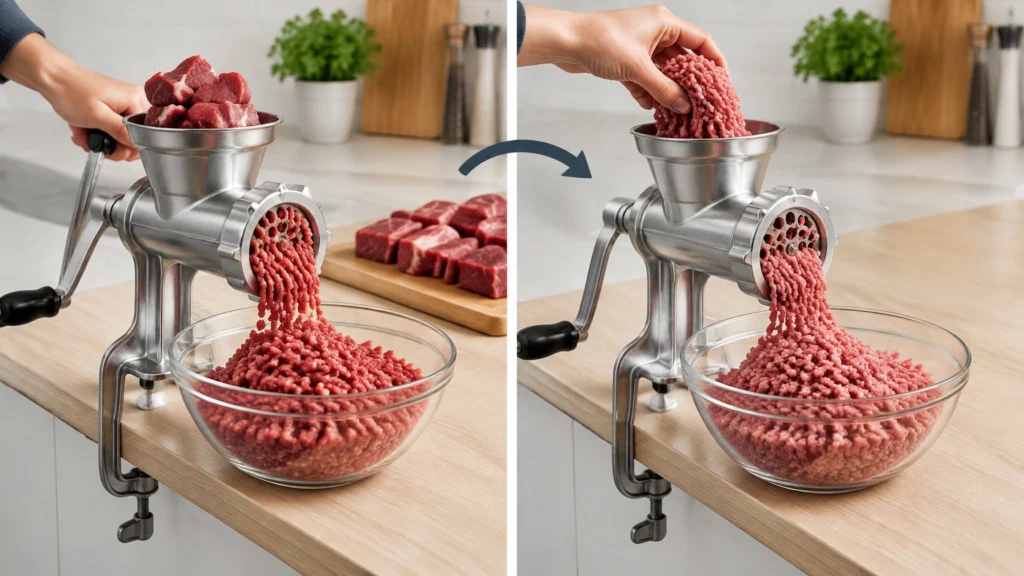
After reading, you will be able to decide whether a dish needs one pass or two and pick a plate pair for it. You will also learn key food safety habits and how to run both passes cold so the fat cuts cleanly.
You get plate sizes checked against maker specs, FSIS numbers, and fixes for common meat grinding problems.
How Kitchens Typically Decide
Many restaurants double grind burger blends. They often use a coarse plate first, then a medium plate such as 3/16″ or 1/4″. This improves consistency, fat distribution, and patty binding across large batches. Kitchens aiming for a loose, “steakhouse” texture often single grind on a coarse plate.
When Does a Second Pass Help?
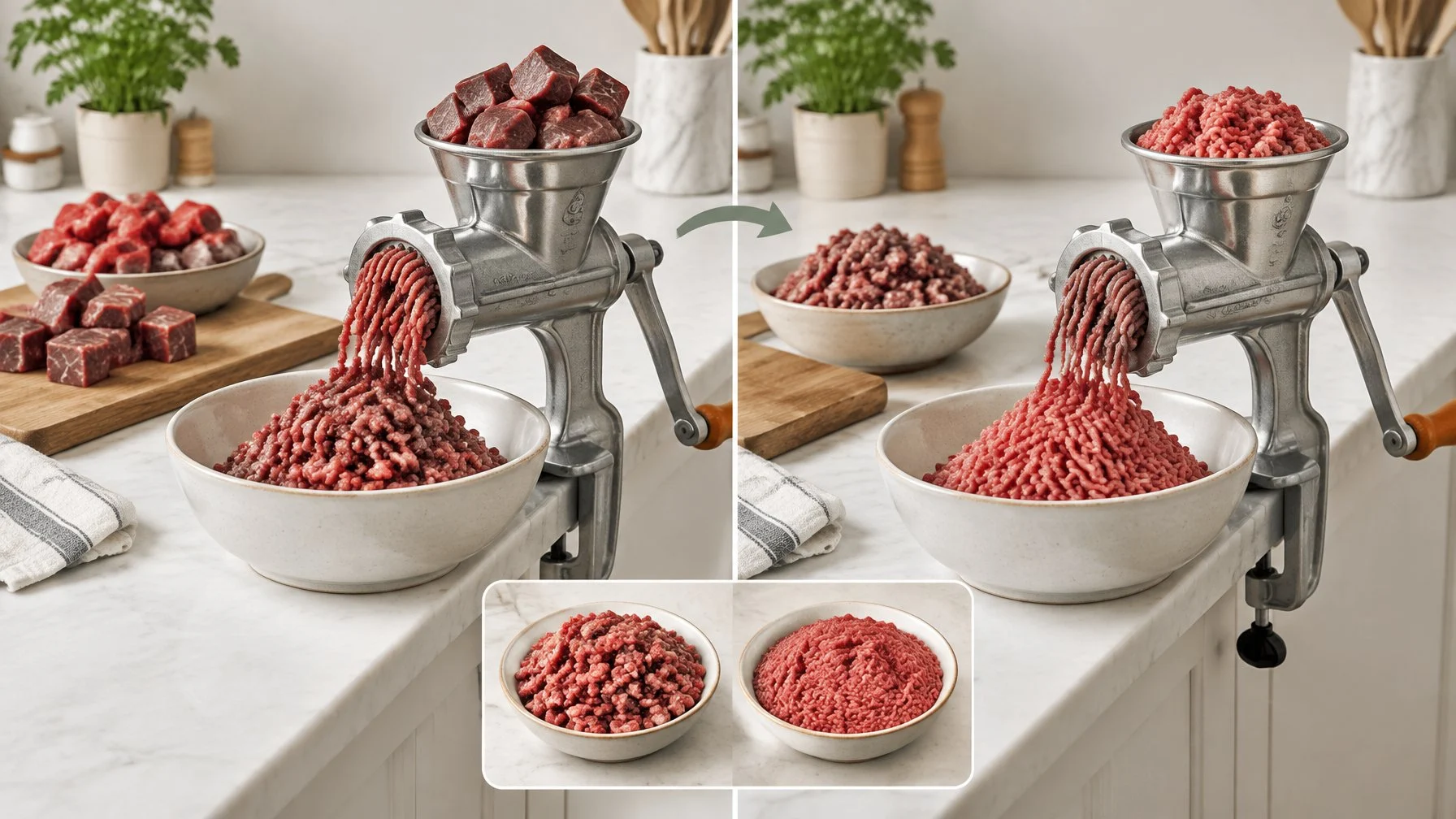
A second pass helps when the dish needs a tight, even bind. Burgers, meatballs and meatloaf each want something different, and sausage and venison have their own needs. A second grind also has firm limits on what it can fix.
A second grind is running meat that has already been ground back through the grinder, often through a smaller plate, to make the texture finer and more even.
Choose the Grind for Burgers, Meatballs, and Meatloaf
Burgers do well with a single coarse or medium pass. A looser grind keeps the patty open and tender. Many cooks still run burger blend twice to spread fat and lean more evenly.
Controlling your grind size gives you full command over the finished bite.
Meatballs and meatloaf hold together better with a finer, second-pass grind. Smaller particles bind more tightly with egg and breadcrumbs, so slices and balls keep their shape.
| Dish | Passes | Example plate pair |
|---|---|---|
| Steakhouse-style burgers | 1 or 2 | 10 mm, then 6 mm |
| Smash burgers | 2 | 10 mm, then 4.5 mm |
| Meatballs | 2 | 10 mm, then 4.5 mm |
| Meatloaf | 2 | 10 mm, then 4.5 mm or 6 mm |
| Chili meat | 1 | 10 mm or 12 mm |
Treat these pairs as starting points. Adjust after you cook a test patty.
Decide Whether Sausage or Venison Needs a Finer Texture
Fresh sausage like breakfast or Polish links usually gets two passes. LEM lists its 4.5 mm plate for the second grind and regular sausage such as breakfast, Polish or German. Coarse sausages like summer sausage and snack sticks use a 6 mm plate.
Venison benefits from a second pass when you add pork or beef fat. Lean deer meat and white fat look streaky after one pass. The second pass blends them so each patty cooks the same. Read the sausage making guides before you start cased links.
If you plan cured sausage, follow a validated recipe that weighs cure and salt in grams and shows its math. Plain grinding needs no cure or salt.
What a Second Pass Can and Cannot Change
A second pass can:
- Shrink particle size for a finer bite
- Spread fat, lean and seasoning more evenly for better flavor distribution
- Help a loose blend bind for meatballs and sausage
A second pass will not:
- Kill or remove bacteria
- Guarantee a juicier result
- Fix meat that was warm, old or poorly trimmed
Each extra pass also adds heat and handling time. Grind twice only when the dish calls for it.
What You Need Before You Start
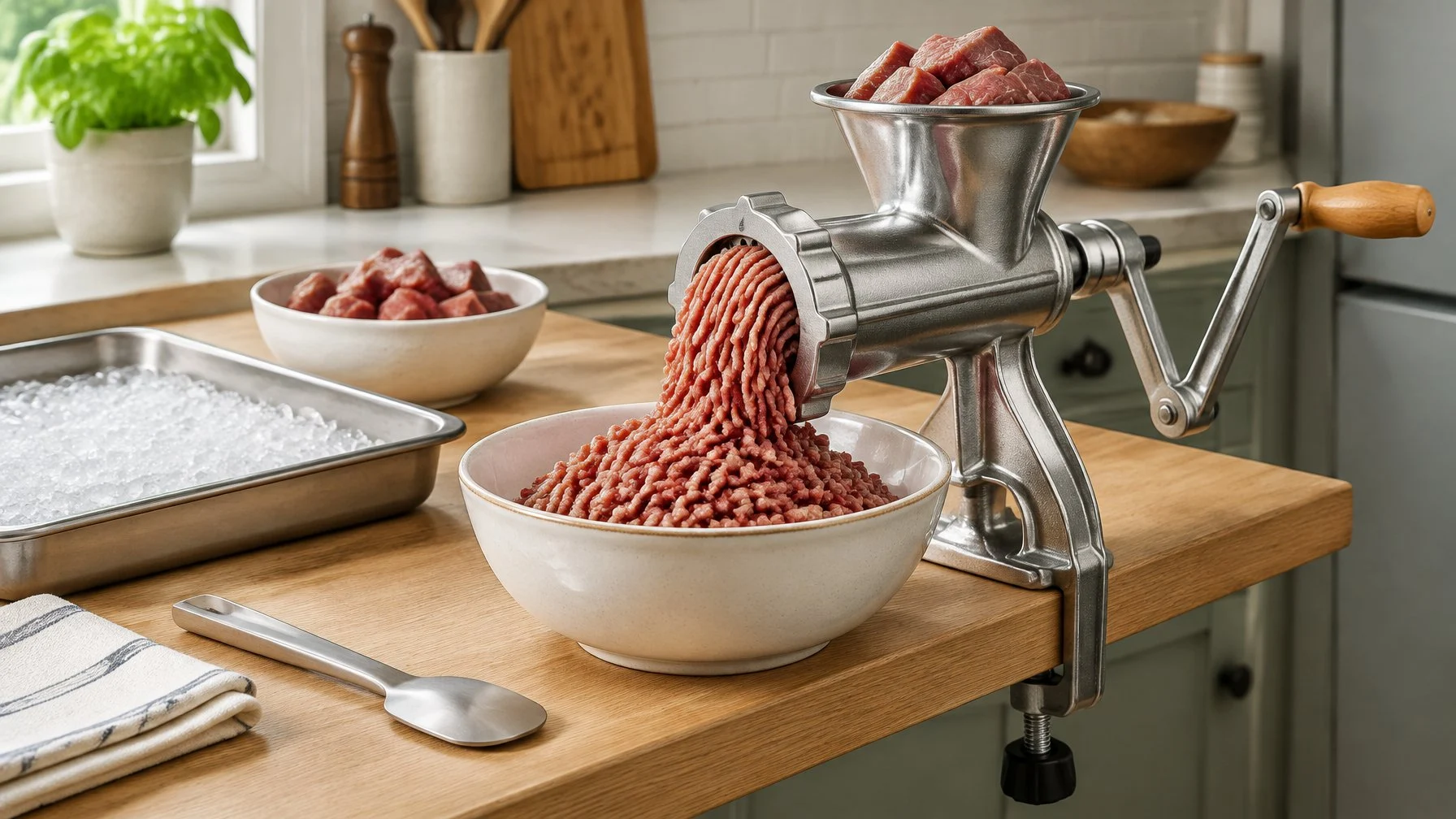
You need three things in place: a grinder with two plate sizes, meat portioned by weight, and a cold setup. Get all three ready before the first chunk goes in.
Choose a Grinder and Two Plate Sizes
Any meat grinder with swappable plates will do two passes. That includes manual grinders, electric countertop units and stand mixer attachments. A food processor chops with a spinning blade, so it cannot give you a true second grind.
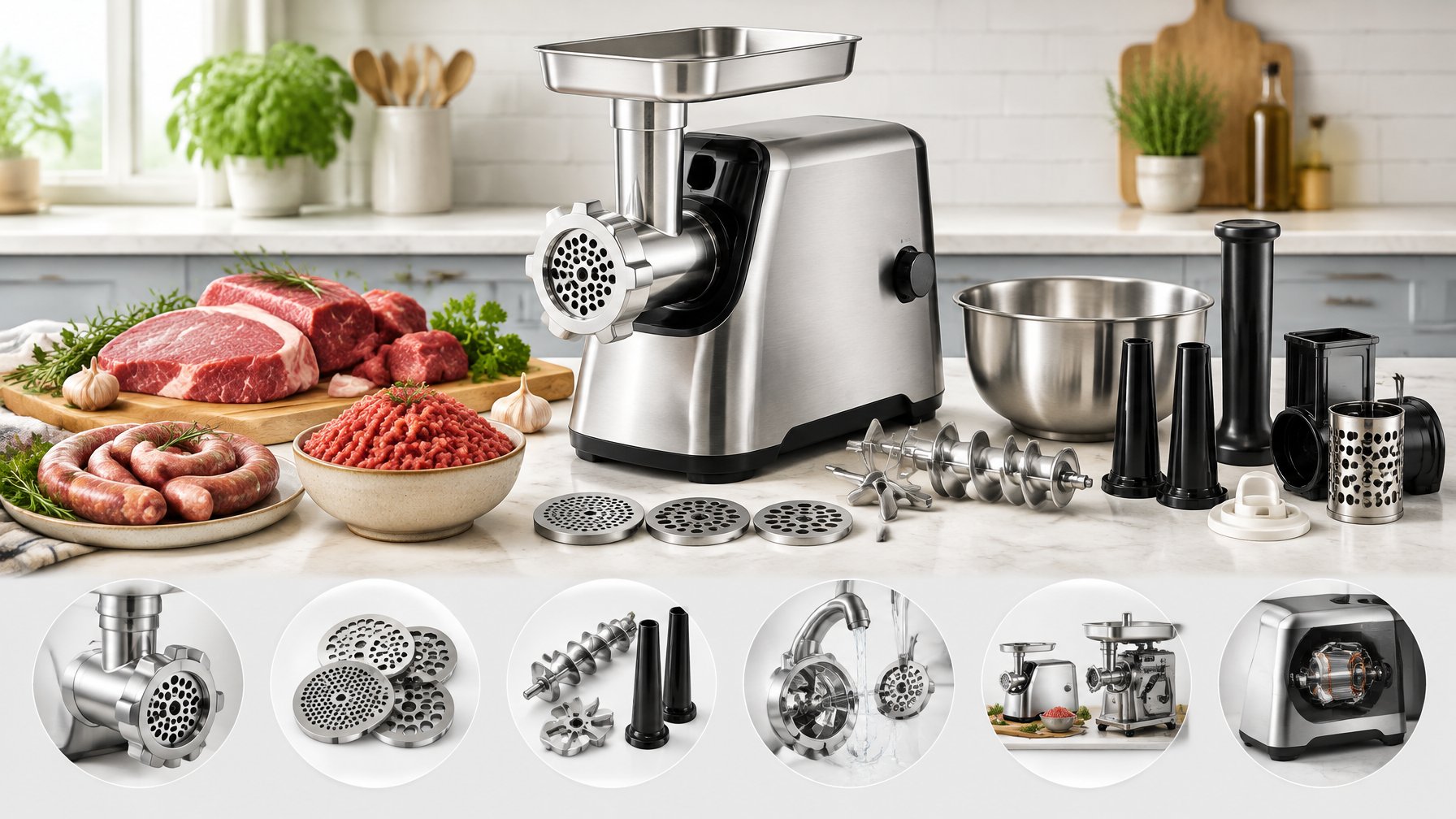
The holes in each plate determine the grind size of the meat. Plates are sized by grinder number. LEM’s #8 plates measure 2-3/8 inches across and sell for $22.99 to $29.99 each.
Match the plate to your grinder’s size before you buy.
| Plate | Hole size | Common use |
|---|---|---|
| 12 mm | 1/2 in | First grind, coarse chili, stew meat |
| 10 mm | 3/8 in | First grind, chili, chorizo |
| 6 mm | 1/4 in | Coarse sausage, snack sticks |
| 4.5 mm | 3/16 in | Second grind, breakfast sausage |
| 3 mm | 1/8 in | Hot dogs, bologna, jerky |
The maker also advises changing the knife when you change the plate. If you are still shopping, the meat grinder size guide explains how grinder numbers relate to batch size.
Prepare Beef Chuck, Pork Shoulder, or Venison by Weight
Work in batches you can grind before the meat warms. Five pounds is a sensible home batch for most countertop grinders.
- Beef chuck: has enough fat for burgers on its own. Trim heavy silverskin.
- Pork shoulder: fatty and forgiving. A good base for fresh sausage.
- Venison: very lean. Many hunters blend in pork or beef fat by weight.
Weigh lean and fat separately so you can repeat a blend you like. Trim sinew from venison before grinding; the how to butcher a deer guide covers trimming.
Set Up to Keep the Meat and Equipment Cold
Cold is the whole game. Proper chilling is crucial for both texture and food safety during meat grinding. Put the grinder head, auger, knife and both plates in the freezer for at least 30 minutes.
Set a metal bowl inside a larger bowl of ice to catch the grind. Keep a sheet pan free for spreading the first grind out to rechill.
How to Make Two Passes Through the Grinder
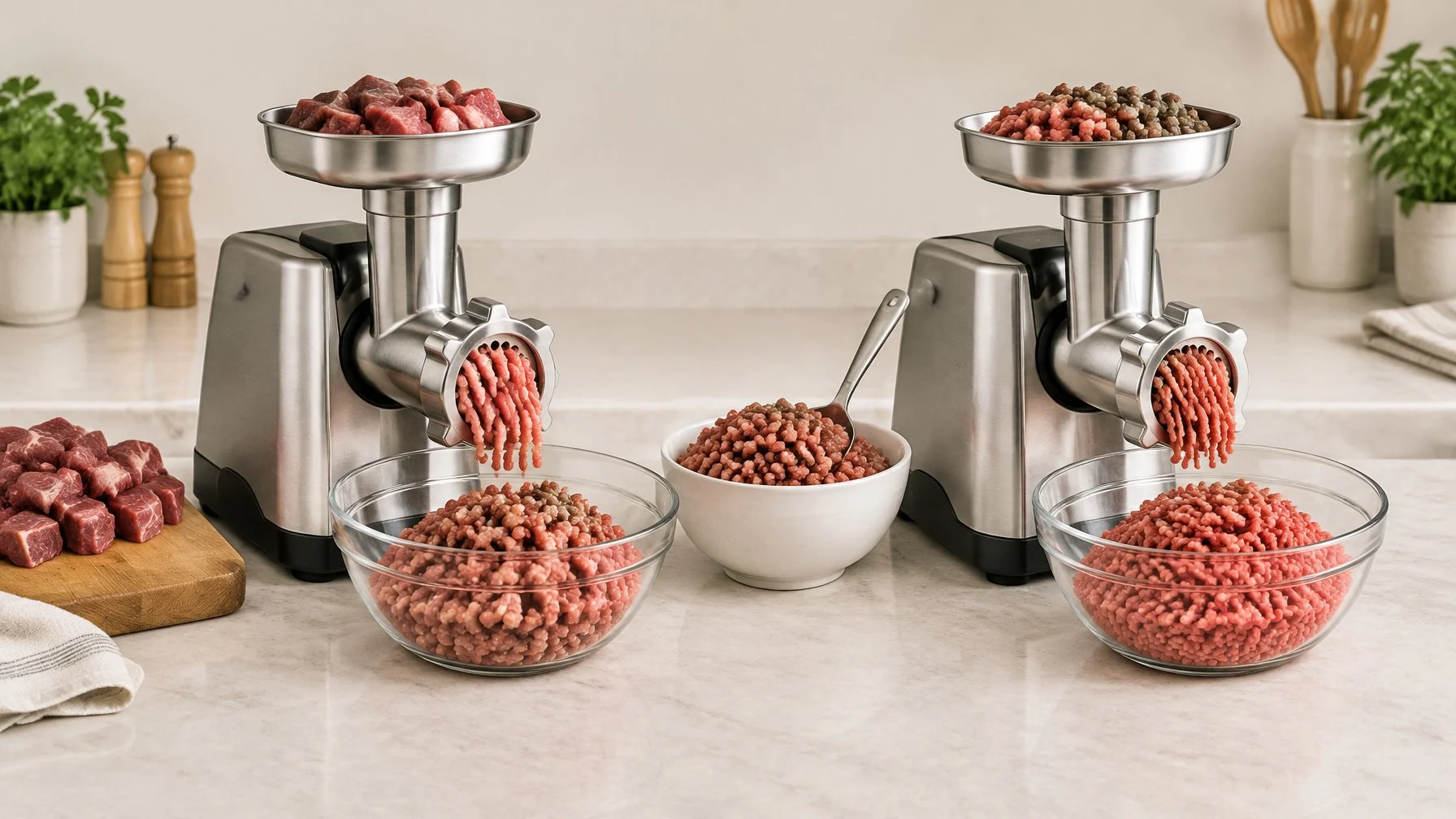
The process runs coarse to fine in five steps: cut and chill, grind coarse, rechill, grind fine, then cook or store. Here is the quick version, with detail under each step.
- Cut meat into 1 to 2 inch cubes and chill. Firm meat cuts instead of smearing.
- Grind through a 10 mm plate. Big holes move meat fast with less heat.
- Spread and rechill for 15 to 20 minutes. Cold fat cuts clean on the next pass.
- Grind through a 4.5 mm or 6 mm plate. The small plate sets the final texture.
- Cook to 160°F or refrigerate right away. Ground meat spoils faster than whole cuts.
1. Cut and Chill the Meat
Cube the meat into 1 to 2 inch pieces. Spread them in one layer on a sheet pan and freeze until the edges feel stiff but the center still gives.
Firm meat feeds cleanly. For timing by cut, see how long to freeze meat before grinding.
2. Grind Through the Coarse Plate
Fit the 10 mm or 12 mm plate. Feed cubes steadily without jamming the throat.
Let the auger pull the meat. Pushing hard with the stomper packs meat and builds heat.
3. Rechill and Check the First Grind
Spread the first grind thin on a sheet pan and freeze 15 to 20 minutes. Swap in the chilled fine plate while you wait.
Look at the strands. You want distinct bits of white fat and red lean. Gray, mushy strands mean the meat or head ran warm.
Rechill Times Between Passes for Venison Blends
Bottom line: The provided search results confirm that owners rechill between passes, but none of the snippets give specific owner-reported times. The typical ranges below come from general knowledge of common home-processing practice.
What Sources Say About Rechill Times
- Owners freeze both the meat and the equipment. One Rokslide owner puts all grinder parts in the freezer because it keeps fat from sticking to everything. Before stuffing, they return ground meat to the freezer in smaller batches so it stays partially frozen (Rokslide).
- Two passes with everything kept cold is the standard method. One guide says the difference between mushy, gamey burger and clean ground venison comes down to how cold everything stays, how thoroughly you trim, and whether you add fat (Gardening Beyond).
- Partial freezing before grinding is a common topic. Owners debate firming cubes to temperature versus fully freezing and thawing (Smoking Meat Forums). Detailed home grind reports exist, but the snippet doesn’t include timing (BBQ Brethren).
Typical Rechill Practice
| Stage | Common home-freezer time | Target |
|---|---|---|
| Cubed venison and fat before the first pass | 30–60 min | Firm edges, crunchy but not frozen solid (~28–32°F) |
| Between first and second pass | 15–30 min, spread thin on a sheet pan | Back to ~32°F, with no visible fat smearing |
| Grinder head, auger, knife, and plate | 30–60 min, or overnight | Metal cold to the touch |
| Ground meat before stuffing | 15–20 min in small batches | Partially firm |
Factors that change the time:
- Shallow trays chill faster than a deep bowl.
- Large batches and warm kitchens need longer rechills.
- Higher added-fat blends need more rechilling, because fat smears first.
- Rechill sooner if you see white smearing or the meat feels tacky.
4. Grind Through the Finer Plate
Fit the 4.5 mm or 6 mm plate and run the coarse grind through. Feed it loosely in small handfuls.
Mix seasoning in by hand just before this pass if you want it spread evenly. The grinder will finish the blending.
5. Cook Promptly or Refrigerate Safely
Portion right away. Practicing good food safety keeps bacteria from multiplying in fresh grind. Cook what you need and chill or freeze the rest.
SAFETY: USDA FSIS says to cook ground beef, pork, lamb and veal to an internal temperature of 160°F measured with a food thermometer. Ground poultry needs 165°F. Refrigerate perishable food within 2 hours (1 hour above 90°F), keep the fridge at 40°F or below and the freezer at 0°F or below, as listed in the FSIS steps to keep food safe. Use refrigerated ground meat within 1 to 2 days. FSIS also notes that USDA cautions against grinding beef at home because whole cuts are not tested for E. coli the way grinding trim is. A second grind does not remove bacteria.
What Went Wrong, and How Do You Fix It?
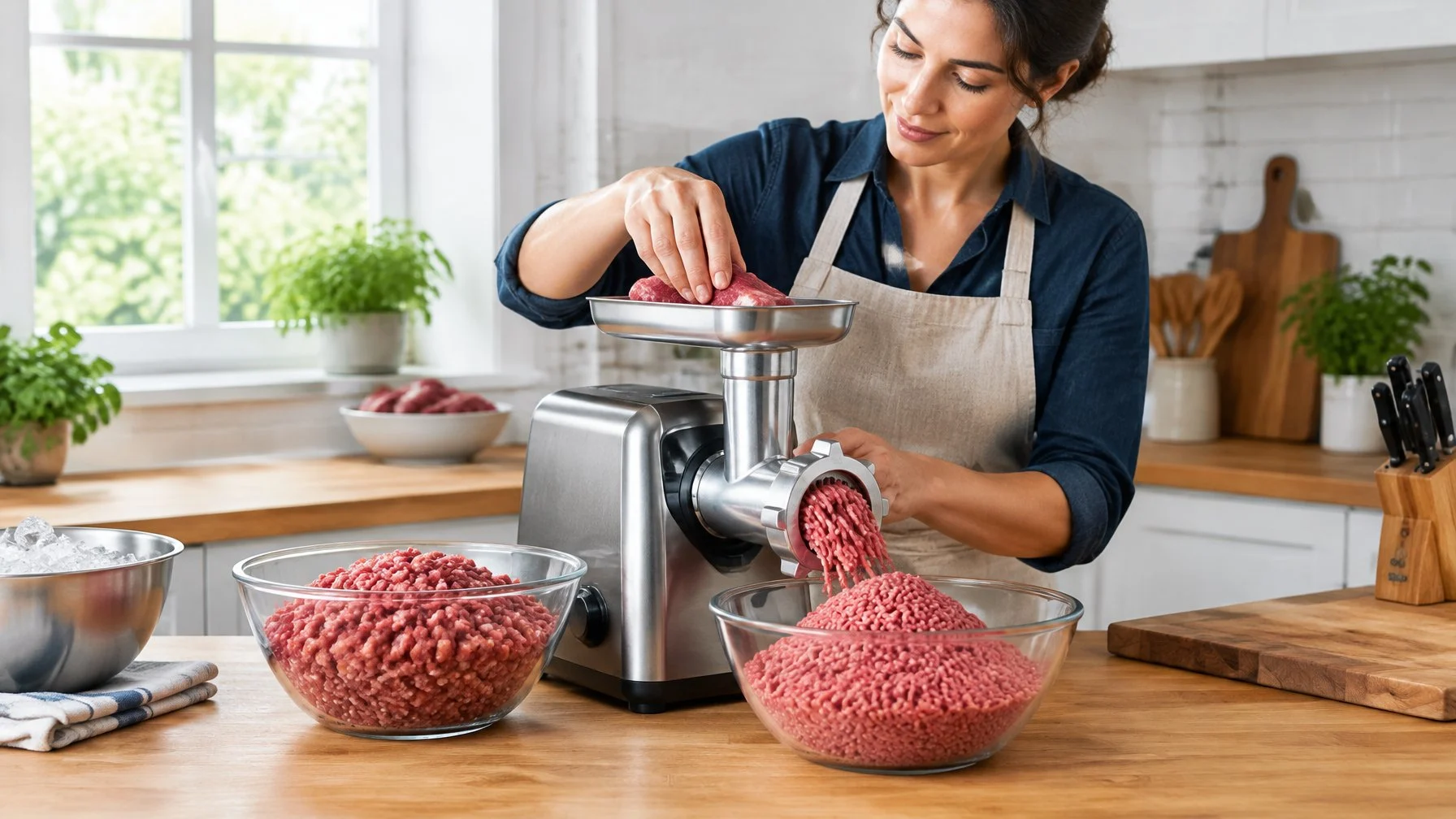
Four problems show up again and again in owner reports: smeared fat, a bogged-down grinder, a pasty mix and uneven fat. Each has a direct cause you can fix.
Fat Smears Instead of Cutting Cleanly
Problem: White fat coats the plate and the grind looks greasy.
Fix: Chill everything harder. Put the head and plates back in the freezer and rechill the meat 15 minutes. A dull knife or worn plate also smears; replace them as a pair.
The Grinder Bogs Down or Clogs
Problem: The motor strains or meat backs up behind the plate.
Fix: Stop and clear sinew wrapped around the knife. Trim more silverskin before grinding, and start with the larger plate. Owner reviews show that small motors struggle when you go straight to a 4.5 mm plate. Compare motor ratings in the meat grinder buying guide if this happens every batch.
The Mix Turns Pasty or Too Fine
Problem: The grind feels like paste and cooks up dense.
Fix: Use a 6 mm second plate in place of 4.5 mm, and stop after two passes. Warm meat also turns pasty, so check the chill first.
Fat and Lean Still Look Uneven
Problem: You see streaks of fat after both passes.
Fix: Cube fat and lean the same size and mix them by hand before the first pass. Feed them together, alternating pieces, so the grinder blends as it cuts.
Grinding Meat Twice: Quick Answers
These answers cover burgers, sausage, venison, plates, food processors and safety.
Should you grind meat twice for burgers?
You can, but burgers do fine with one pass. A single 6 mm or 10 mm pass gives a looser, tender patty. A second pass makes a tighter, more uniform patty that suits smash burgers and holds fat and lean evenly. Cook one test patty of each and pick the texture you prefer.
How many times should you grind meat for sausage?
Most fresh sausage gets two passes: a coarse plate like 10 mm, then 4.5 mm for breakfast or Polish style. Coarse sausages like summer sausage use a 6 mm final plate. More than two passes tends to make the mix pasty. For cured sausage, follow a validated recipe with cure and salt weighed in grams.
Should you grind deer meat twice?
Yes, when you blend venison with added pork or beef fat. One pass leaves visible streaks of fat and lean, which cook unevenly. A second pass through a 4.5 mm or 6 mm plate spreads the fat through the lean. Trim sinew first, since venison silverskin wraps the knife and clogs the plate.
Can you use the same plate for both passes?
Yes. Running meat twice through the same plate improves mixing without making it much finer. It works well when you like a medium grind but want fat and lean blended evenly. Rechill the meat between passes either way, because the second trip through adds friction heat to meat that is already partly warmed.
Can a food processor give you the same result?
No. A food processor chops with a spinning blade, so particle size varies from chunks to paste. Pulsing small batches of half-frozen cubes gets you closer, but you cannot control final grind size the way a grinder plate does. For regular meat grinding, a grinder with two plates gives repeatable results.
Does grinding meat twice make it safer?
No. A second grind does not kill or remove bacteria, and extra handling adds time at warmer temperatures. Everyday food safety comes from cold handling, clean equipment and cooking ground meat to 160°F, or 165°F for poultry, as USDA FSIS advises. Refrigerate within 2 hours and use raw ground meat within 1 to 2 days.
This is general guidance based on USDA recommendations. When in doubt, follow the USDA FSIS source linked above.
If you need a grinder that handles two passes without overheating, start with SaltRail’s best meat grinders roundup.