The CDC and University of Arkansas Extension treat wild hog as food if you dress and cook it with care. Feral swine can carry brucellosis even when they look healthy. Wear eye protection and rubber or latex gloves, keep blood and fluids off your skin, disinfect your tools, and cook the meat to 160°F. The CDC says freezing, smoking, drying and pickling do not kill the bacteria.
This guide uses the CDC’s Brucellosis and Animals page (June 2, 2026), the CDC brochure for feral swine hunters, University of Arkansas Extension fact sheet FSA8013 and the CDC’s trichinellosis prevention page (March 12, 2024). Texas A&M and UC ANR host copies of the same CDC brochure, so it counts once here. Where the sources word things differently, you see both. This is not medical advice.
What Is the Risk With Wild Hogs?
The CDC brochure says brucellosis spreads among feral swine through close contact and that infected swine carry the bacteria for life. You can get sick if blood, body fluid or tissues, such as meat, testicles, liver and other organs, from an infected animal touch your eyes, nose, mouth or cuts in your skin. The CDC lists wild hogs first among hunted animals that can have brucellosis, and says it is still possible for animals that look healthy to have it.
Arkansas Extension says Brucella suis has been shown to be endemic, present at a low level, in feral swine in Arkansas, Mississippi, Louisiana and Texas. That is Arkansas’s statement about those four states; it does not cover other states.
A second risk is Trichinella. The CDC’s trichinellosis page names undercooked pork and wild game, in particular bear and wild boar, among the meats at risk.
How Do You Field Dress a Wild Hog Safely?
These steps combine the CDC page, the CDC brochure and Arkansas Extension. Each line names its source.
- Skip sick or dead animals. Don’t touch sick or dead animals (CDC), and don’t approach or handle animals that look sick (brochure).
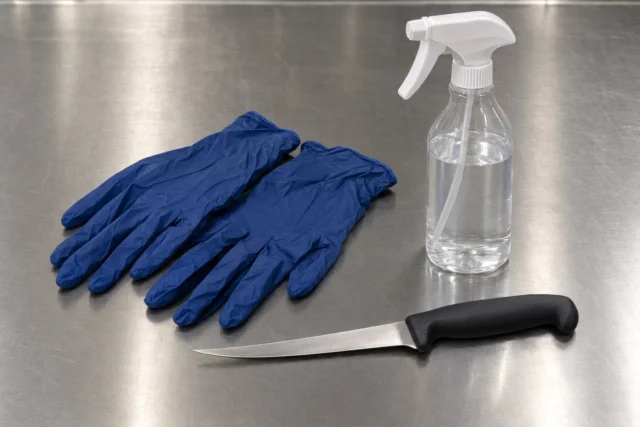
- Put on protective gear. Wear eye protection and latex or rubber gloves when handling carcasses (CDC). The brochure adds safety glasses or goggles and boots or other closed footwear that can be disinfected. Arkansas adds long sleeves and covering any scratches, open wounds or lesions.
- Keep children and dogs back. The brochure says children should be kept a safe distance from the field dressing site so they are not splashed with body fluids, and that adults and children should not touch the carcass with bare hands.
- Work where you can see. Prepare game in a well-ventilated area, such as outdoors, with enough lighting. Use clean, sharp knives and slow down so you make clean cuts (brochure).
- Don’t eat, drink or use tobacco while you work (brochure, Arkansas).
- Keep fluids off your skin. Don’t let your bare skin touch the animal’s fluid or organs (CDC). Arkansas says to avoid direct contact with blood, reproductive organs and fecal matter.
- Bag the waste. After butchering, bag and throw away disposable gloves and the parts of the carcass you will not eat (CDC). Check with your state hunting agency on proper disposal of field dressing waste (brochure).
- Disinfect tools and gear. Clean all tools and reusable gloves with a disinfectant such as dilute bleach, following the label (CDC). The brochure says a 10% bleach solution can be made with one cup of bleach for every nine cups of water. Arkansas also says to clean and disinfect the cleaning area and clothing.
- Wash your hands. As soon as you can, wash with soap and warm water for 20 seconds and dry with a clean cloth (CDC). If soap and water are not available, the brochure says to use an alcohol-based hand sanitizer or wipe. Clean any cuts or scratches with soap and warm water, treat them with an antiseptic and cover them (brochure).
SAFETY: The CDC says freezing, smoking, drying and pickling meat do not kill the bacteria that cause brucellosis. The brochure says to cook game meat to an internal temperature of 160°F, measured with a food thermometer. If you get a flu-like illness within 1 week to 6 months after contact with feral swine, the brochure says to tell your doctor about your hunt.
What Should You Do in the Kitchen?
The CDC brochure lists these steps for preparing the meat:
- Wash your hands with soap and warm water for at least 20 seconds before and after preparing the meat.
- Clean surfaces with hot, soapy water before and after butchering.
- Separate raw game meat from cooked game meat and other foods.
- Chill raw and cooked game meat immediately.
- Cook game meat to an internal temperature of 160°F as measured with a food thermometer.
The CDC’s trichinellosis page adds that cleaning meat grinders thoroughly after each use helps prevent the spread of trichinellosis and other foodborne diseases. See how to clean a meat grinder.
What Temperature Should Wild Hog Be Cooked To?
Both sources that give a number say 160°F. They differ on how to tell:
| Source | What it says |
|---|---|
| CDC brochure | Cook game meat to an internal temperature of 160°F as measured with a food thermometer |
| Arkansas Extension FSA8013 | Cook meat from these animals to 160ºF or until juices run clear |
| CDC trichinellosis page | Use a food thermometer to measure the internal temperature of cooked meat |
SaltRail’s suggestion, since both name 160°F: check with a thermometer. To make sure yours reads true, see how to calibrate a meat thermometer.
Does Freezing or Smoking Make Wild Hog Safe?
No source opened for this post says so. Here is what each says does not work:
| Method | Brucellosis (CDC) | Trichinella (CDC) |
|---|---|---|
| Freezing | Does not kill the bacteria | May not kill all worms in wild game; some are freeze-resistant |
| Smoking | Does not kill the bacteria | Does not consistently kill the worms |
| Drying | Does not kill the bacteria | Does not consistently kill the worms |
| Pickling | Does not kill the bacteria | Not covered |
| Curing (salting) | Not covered | Does not consistently kill the worms |
| Microwaving | Not covered | Does not consistently kill the worms |
For more on freezing and parasites, see does freezing kill parasites in wild game.
Can Your Dog Get Sick From a Wild Hog?
The CDC says hunting dogs can be at risk for brucellosis if they have close contact with infected animals, including eating the meat. It says not to feed dogs raw meat or other parts of the carcass. The brochure says dogs can become sick with brucellosis and spread it to humans, and not to let them play with the carcass. For signs in a dog, the brochure says to contact your veterinarian.
What If You Feel Sick After a Hog Hunt?
The brochure says that if you get sick with a flu-like illness within 1 week to 6 months after contact with feral swine, tell your doctor about your hunt, and that testing and treatment for brucellosis are available. Arkansas Extension says that if an unexplained fever occurs, seek a diagnosis and treatment from your physician right away and tell them about your history of hunting feral swine. SaltRail gives no other medical advice here.
What Do the Sources Not Say?
None of the sources opened for this post gives infection rates for any state, covers other diseases of feral swine, or gives butchering steps beyond safety. For the cuts and order of work on a domestic pig, see how to butcher a pig; for field dressing habits on a deer, see how to field dress a deer. The Arkansas fact sheet shows no date. For other game safety questions, see is wild rabbit safe to eat and is venison safe to eat with CWD.
Frequently Asked Questions
Can you get brucellosis from eating wild hog?
Yes. The CDC says you can get brucellosis when you eat meat from infected animals that is not properly cooked, or handle their skins, tissues or fluids unsafely. Wild hogs are on its list of hunted animals that can have it.
What temperature should wild hog meat be cooked to?
The CDC feral swine brochure says to cook game meat to an internal temperature of 160°F, measured with a food thermometer. University of Arkansas Extension also gives 160°F, or until juices run clear.
Does freezing wild hog meat kill bacteria?
No. The CDC says freezing, smoking, drying and pickling meat do not kill the bacteria that cause brucellosis. Its trichinellosis page adds that freezing may not kill all worms in wild game.
Do you need gloves to clean a wild hog?
Yes. The CDC says to wear eye protection and latex or rubber gloves when handling carcasses, and not to let your bare skin touch the animal’s fluids or organs.
Can dogs eat raw wild hog meat?
The CDC says not to feed dogs raw meat or other parts of the carcass, because hunting dogs can get brucellosis from close contact with infected animals, including eating the meat.
Planning to grind the meat? Clean the grinder after every batch; our guide on how to clean a meat grinder shows how.
This is general guidance based on CDC and university extension recommendations. It is not medical advice. When in doubt, follow the sources linked above and talk to your doctor.