Venison must be pressure canned, never water-bath canned. NCHFP, NDSU Extension and Clemson Extension give the same process: 1-inch strips, cubes or chunks, hot or raw pack, 1-inch headspace, then 75 minutes for pints and 90 minutes for quarts, at 10 to 15 pounds of pressure depending on your gauge and altitude.
This guide compares three sources: the National Center for Home Food Preservation’s Complete Guide to Home Canning, Guide 5 (USDA, revised 2015), NDSU Extension’s Home Canning Meat (FN188) (reviewed April 2024) and Clemson Extension’s Canning Venison fact sheet (HGIC 3246, revised May 16, 2025), plus Clemson’s Canning Meats & Poultry (April 30, 2018). Every time and pressure below comes from their tables. SaltRail adds none of its own.
Why Must Venison Be Pressure Canned?
Clemson says meats are low-acid foods (pH above 4.6) that give Clostridium botulinum, the cause of botulism, a good place to grow, and that they must be pressure canned for safety. Clemson’s meats and poultry page goes further: no safe way to use a boiling water canner for these foods exists. NDSU says the same for poultry, red meats, game and seafood: they must be processed in a pressure canner.
SAFETY: Use a pressure canner only. None of the sources gives a water-bath, oven, open-kettle, electric multicooker or Instant Pot method for venison, and this post doesn’t either.
What Do You Need?
- A pressure canner, dial gauge or weighted gauge. NDSU says to have dial gauges checked every year.
- Mason-type canning jars, pints or quarts. NDSU says to use jars no larger than the recipe specifies and not to use mayonnaise-type jars, which break too often in a pressure canner.
- New two-piece self-sealing lids, prepared as the maker directs.
- A jar lifter and a flat plastic (not metal) spatula to release air bubbles (NDSU).
How Do You Prepare Venison for Canning?
- Start with chilled, good-quality meat. NDSU says to chill home-produced meat soon after slaughter to 40°F or lower. For the field side, see how to cool a deer carcass.
- Can it soon or freeze it. Clemson says venison kept in the refrigerator in moisture-proof wrap or clean plastic bags should be canned within 2 or 3 days. NDSU says to freeze meat that must be held longer than a few days and keep it at 0°F or lower until canning. If it’s frozen, Clemson says to thaw it completely in the refrigerator, under cold running water or in the microwave.
- Trim it. Clemson says to remove sinew and excess fat. NDSU says to trim gristle, bruised spots and fat, because too much fat left on the meat can lead to sealing failures.
- Soak strong-flavored meat if you like. All three sources say to soak strong-flavored wild meat for 1 hour in brine made with 1 tablespoon of salt per quart of water, then rinse. For more on flavor, see how to get the gamey taste out of venison.
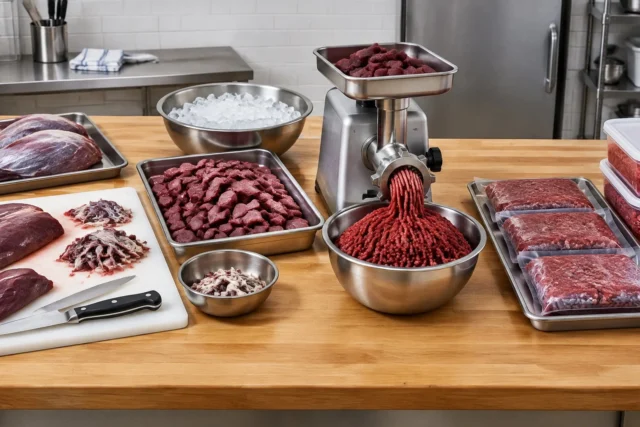
- Remove large bones and cut the meat. Clemson says to cut it into 1-inch-wide strips, cubes or chunks.
For breaking down the deer before this step, see how to butcher a deer.
Hot Pack or Raw Pack?
All three sources allow both. NCHFP prefers the hot pack: it says the hot pack gives the best liquid cover and quality during storage, and that the natural fat and juices in today’s leaner cuts are usually not enough to cover most of the meat in a raw pack.
| Hot pack | Raw pack | |
|---|---|---|
| Meat | Precooked until rare by roasting, stewing or browning in a small amount of fat | Raw pieces; NDSU says fill loosely and tap the jar to settle the meat, not press it in |
| Liquid | Boiling broth, meat drippings, water or tomato juice (“especially with wild game”) | None. Do not add liquid. |
| Headspace | 1 inch | 1 inch |
| Salt (optional) | NCHFP: 1 tsp per quart. NDSU and Clemson: ½ tsp per pint or 1 tsp per quart | NCHFP and NDSU: 1 tsp per quart. Clemson: 1 tsp per pint or 2 tsp per quart |
NDSU says salt seasons the meat but isn’t needed for safety, so the salt differences above are about taste. After filling, remove air bubbles, wipe the jar rims with a dampened clean paper towel and put on the lids.
How Long Do You Pressure Can Venison?
Pints take 75 minutes and quarts 90 minutes, for both hot and raw packs. The pressure depends on your gauge type and altitude. These are NCHFP’s tables for strips, cubes or chunks of meat:
Dial-gauge pressure canner
| Pack | Jar | Process time | 0–2,000 ft | 2,001–4,000 ft | 4,001–6,000 ft | 6,001–8,000 ft |
|---|---|---|---|---|---|---|
| Hot or raw | Pints | 75 minutes | 11 lb | 12 lb | 13 lb | 14 lb |
| Hot or raw | Quarts | 90 minutes | 11 lb | 12 lb | 13 lb | 14 lb |
Weighted-gauge pressure canner
| Pack | Jar | Process time | 0–1,000 ft | Above 1,000 ft |
|---|---|---|---|---|
| Hot or raw | Pints | 75 minutes | 10 lb | 15 lb |
| Hot or raw | Quarts | 90 minutes | 10 lb | 15 lb |
NDSU’s dial table stops at 6,000 feet (13 lb) and Clemson’s at 4,000 feet (12 lb). Their figures match NCHFP’s where they overlap. NDSU explains why altitude matters: water boils at lower temperatures as altitude rises, and higher pressure makes up for it.
How Do You Run the Pressure Canner?
These steps follow NDSU’s pressure canner directions:
- Put 2 to 3 inches of hot water in the canner, set the filled jars on the rack with a jar lifter, and fasten the lid.
- Leave the weight off the vent port (or open the petcock) and heat on high until steam flows out.
- Let the steam vent for 10 minutes, then put the weight on or close the petcock. NDSU says the canner pressurizes over the next three to five minutes.
- Start timing only when the dial gauge reads the right pressure, or when the weighted gauge begins to jiggle or rock.
- Adjust the heat to hold a steady pressure at or slightly above the target. NDSU says quick, large swings in pressure can cause liquid loss from the jars.
- When the time is up, turn off the heat and let the canner depressurize on its own. NDSU says not to force-cool it with cold water or by opening the vent early, because that can cause spoilage, liquid loss and seal failures.
- Once it is depressurized, remove the weight or open the petcock, wait two minutes, then lift the lid away from your face.
- Lift the jars out onto a towel or rack. Don’t retighten the lids. Let them cool 12 to 24 hours at room temperature.
How Do You Can Ground Venison?
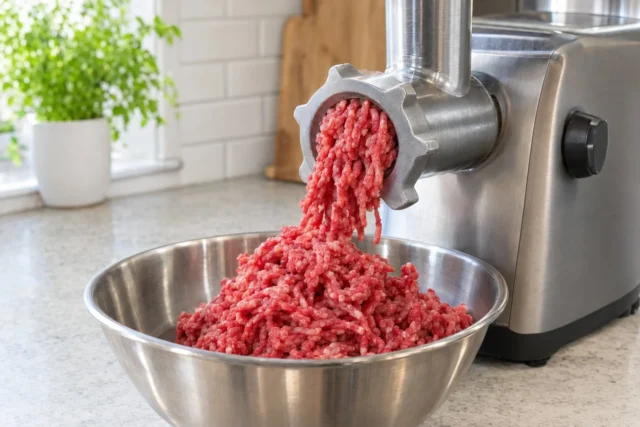
NCHFP and NDSU treat ground or chopped meat as its own recipe. With venison, both say to add one part high-quality pork fat to three or four parts venison before grinding. Shape the meat into patties or balls, or cut cased sausage into 3- to 4-inch links, and cook until lightly browned (ground meat may be sautéed without shaping). Remove excess fat, fill hot jars, add boiling broth, tomato juice or water, and leave 1-inch headspace. NCHFP says to season fresh sausage with salt and cayenne, because sage may cause a bitter off-flavor. For the grinding itself, see how to grind venison.
Ground meat is hot pack only. The times and pressures are the same as for strips and cubes: 75 minutes for pints and 90 minutes for quarts, at the pressures in the tables above. For a chili recipe, see how to can chili. For a meat sauce, see how to can spaghetti sauce with meat.
What if a Jar Doesn’t Seal?
If a lid doesn’t seal, NDSU says to check the jar rim for nicks, use a new prepared lid (and a new jar if needed), and reprocess within 24 hours using the same time. Or adjust the headspace to 1½ inches and freeze the jar instead. A single unsealed jar can go in the refrigerator and be eaten within several days. NDSU also says not to open a jar to add liquid if it lost liquid during processing.
How Long Does Canned Venison Last?
Clemson says canning produces a shelf-stable product that can be stored without refrigeration or freezing for up to one year. The NCHFP and NDSU pages used here don’t give a figure.
If you’d rather freeze, see how long does vacuum-sealed meat last in the freezer. For signs that meat has gone off, see how to tell if meat is spoiled. For poultry, see how to can chicken. For a venison pie filling, see venison mincemeat.
What Do the Sources Not Say?
- None of them says anything about chronic wasting disease or whether canning affects prions. For CWD, see is venison safe to eat with CWD.
- None gives a time for bone-in venison. All three say to remove large bones.
- None gives a method for electric pressure cookers or multicookers.
- Only Clemson gives a storage time.
Frequently Asked Questions
Can you water bath can venison?
No. Clemson says no safe way to use a boiling water canner for meats exists, and NDSU says meat must be processed in a pressure canner.
Do you have to brown venison before canning?
No. The raw pack uses raw meat with no liquid. The hot pack precooks the meat until rare by roasting, stewing or browning. Ground venison is hot pack only and is browned first.
How much salt do you add to canned venison?
Salt is optional. NDSU says it seasons the meat but isn’t needed for safety. NCHFP uses 1 teaspoon per quart; Clemson’s raw pack uses 1 teaspoon per pint or 2 per quart.
Can you can venison with the bone in?
The sources say to remove large bones and give no time for bone-in red meat.
How long does home-canned venison last?
Clemson Extension says canned venison can be stored without refrigeration or freezing for up to one year.
This is general information based on NCHFP and university extension guidance. Follow the linked sources for your canner and altitude.