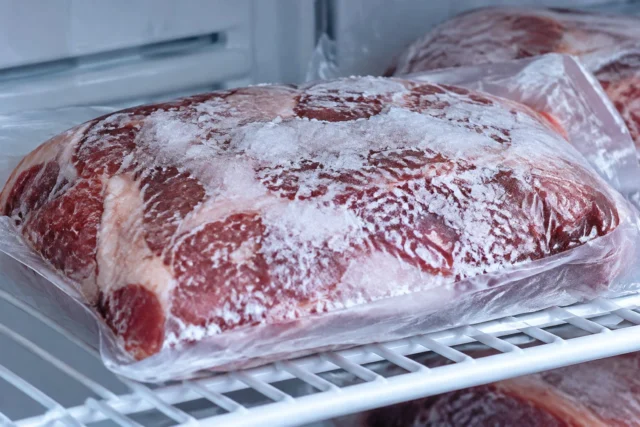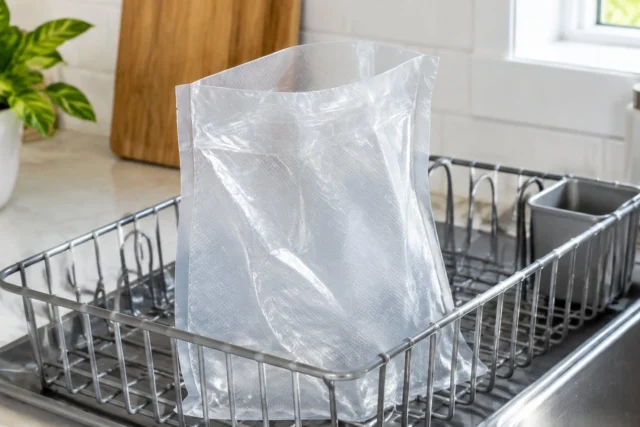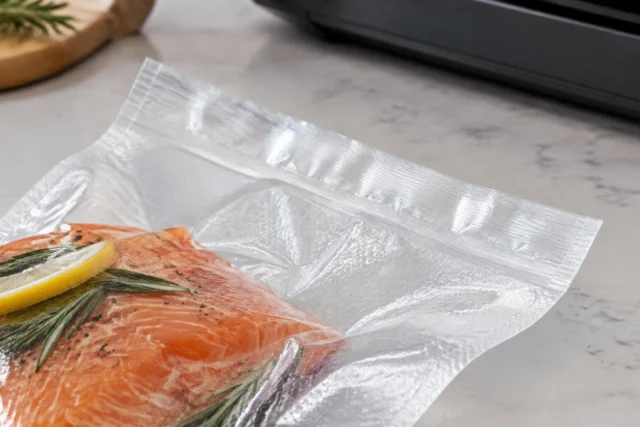

Meat kept frozen at a constant 0°F stays safe indefinitely, and USDA freezer times exist for quality only. When asking how long does vacuum sealed meat last in the freezer, the timeline depends on flavor and texture rather than spoilage. Most raw steaks, chops and roasts keep their best quality for 4 to 12 months at 0°F.
Vacuum sealing protects quality, but USDA publishes no separate time for sealed packs and the sources we read give no multiplier. It does not add a fixed number of months.
Freezer Storage Times by Meat Type
USDA FSIS sets quality times for each type of meat at 0°F. The FSIS chart does not list a separate time for vacuum-sealed packs.
What Storage Times Does USDA FSIS Recommend?
USDA FSIS states that “freezer storage is for quality only. Frozen foods remain safe indefinitely.” Food kept constantly at 0°F will always be safe. Only quality suffers with long storage.
A freezer storage time is the window in which frozen meat keeps its best flavor, texture and color at a steady 0°F.
| Type of meat | Months at 0°F |
|---|---|
| Bacon and sausage | 1 to 2 |
| Ham, hot dogs and lunchmeats | 1 to 2 |
| Uncooked roasts | 4 to 12 |
| Uncooked steaks or chops | 4 to 12 |
| Uncooked ground meat | 3 to 4 |
| Cooked meat | 2 to 3 |
| Uncooked whole poultry | 12 |
| Uncooked poultry parts | 9 |
| Uncooked giblets | 3 to 4 |
| Cooked poultry | 4 |
| Uncooked wild game | 8 to 12 |
| Soups and stews | 2 to 3 |
Plan your eating order around this chart. Ground meat and sausage come out first, and whole birds and roasts can wait.
For venison and other wild game, University of Minnesota Extension gives shorter quality times than the FSIS 8 to 12 months: 2 to 3 months for ground game meat, 6 to 9 months for roasts and steaks, and 2 to 3 months for stew meat. It also says to trim fat to reduce strong flavor changes during freezer storage. The two pages use different categories, so the numbers are not a direct contradiction. Both are quality guides; FSIS says meat held constantly at 0°F stays safe.
If you cure your own bacon, the 1 to 2 month window above is the FSIS figure for bacon and sausage. See how to cure bacon at home.
Do These Times Change for Vacuum-Sealed Packages?
The FSIS chart lists no separate time for vacuum-sealed meat. The sources we read give no vacuum-specific figure either, so this guide gives no multiplier.
What the FSIS guidance does say is useful. Freeze unopened vacuum packages as they are. Meat in its original store wrap lets air through, and quality can drop, so overwrap it for long storage. FSIS does not name vacuum sealing as the overwrap; University of Maine Extension lists reduced freezer burn as a benefit of sealing.
Treat the chart as your rotation plan. Past 12 months, meat is still safe at 0°F, but the chart no longer promises top quality.
FSIS says food thawed in the refrigerator can be refrozen without cooking, although there may be some loss of quality (The Big Thaw).
Does Vacuum Sealing Protect Frozen Meat Quality?
Yes. Clemson Extension says removing oxygen slows fat going rancid and colour changes, and University of Maine Extension lists reduced dehydration and freezer burn as benefits. Each one is covered in turn, along with what freezer burn means for safety.
Why Does Removing Oxygen Help?
Oxygen is what turns frozen fat stale. Clemson Extension notes that removing oxygen extends storage quality because oxygen makes fats rancid and changes colors. That matters most for fatty cuts, pork and ground meat.
A tight bag also stops moisture loss. University of Maine Extension says vacuum sealing reduces dehydration and freezer burn but does not kill pathogens already in the food. It is not a preservation method on its own. The cold does the safety work. The bag protects quality.
Your sealer type affects how tight the bag stays. The trade-offs between a chamber vacuum sealer vs. an edge-style vacuum sealer include how well each one handles wet meat and how many packs you can run in one session.
What Does Freezer Burn Look Like, and Is It Unsafe?
Freezer burn is a quality defect only. FSIS describes it as grayish-brown, leathery spots caused by air touching the meat surface. It does not make food unsafe. It only makes the meat dry in those spots. For what to cut away and when to discard, see vacuum-sealed meat and freezer burn.
Here is how to handle it:
- Check the surface after thawing. Look for gray-brown, dry patches.
- Trim the spots away, before or after cooking.
- Cook the rest as normal.
- Throw out heavily burned packs for quality reasons. The taste will be poor even though the meat is safe.
What Temperatures Do Vacuum-Sealed Meats Need?
Maintaining a steady freezer temperature of 0°F or below is critical for long-term storage, while refrigerator temperatures should stay between 34 and 40°F. A warm freezer shortens your options, the fridge has its own rules, and no bag makes raw meat safe on the counter.
| Storage spot | Temperature | Guidance |
|---|---|---|
| Freezer, long-term | 0°F or below | USDA FSIS |
| Refrigerator | 34 to 40°F | Clemson Extension; FSIS says 40°F or below |
| Any storage | Above 40°F | Discard food held above 40°F for more than 2 hours (Clemson HGIC) |
What if Your Freezer Cannot Maintain 0°F?
If your freezer cannot hold 0°F, use it for short-term storage only. FSIS gives that advice for refrigerator freezing compartments that cannot reach 0°F. For long-term storage, FSIS recommends a free-standing freezer set at 0°F or below.
FSIS advises keeping an appliance thermometer in the freezer. Our chest freezer picks for meat cover sizes for bulk buyers.
What Rules Apply in the Refrigerator?
Set the refrigerator at 40°F or below, per FSIS. Clemson Extension says perishable vacuum-packed foods must stay between 34 and 40°F, or go in the freezer at 0°F or below for longer storage.
If you plan to grind, see how long to freeze meat before grinding.
Safety: Vacuum Packaging Does Not Make Meat Shelf-Stable
SAFETY: Clemson Extension says vacuum packaging does not allow storage at room temperature, and some disease-causing bacteria prefer low-oxygen environments (Clemson HGIC 3865). Discard foods held over 40°F for more than two hours. University of Maine Extension adds that sealing does not kill pathogens already in the food. Keep packs at 34 to 40°F in the fridge or 0°F or below in the freezer, per USDA FSIS.
How Should You Label and Protect Frozen Packages?
A clear label and an intact bag keep you on schedule with the FSIS chart. You need a short list of facts on every pack and a fix for torn or unopened store packages.
What Should You Write on Each Pack?
Clemson Extension says to date foods before storing and use them within recommended times. Write on the bag before it goes into the freezer. A frozen, frosty bag takes ink poorly.
Put these on every pack:
- Date sealed. This starts the FSIS quality clock.
- Cut or product. Write “venison backstrap” or “pork shoulder, 2 roasts.” “Meat” tells you nothing.
- Weight. It helps you plan meals and thaw the right amount.
Store the oldest packs on top or in front. Then the 3 to 4 month ground meat gets used before the 8 to 12 month wild game. Our guide on how to label frozen meat covers markers and tape that stay on at 0°F.
Should You Rewrap an Unopened or Torn Package?
Leave unopened store vacuum packs alone. FSIS says to freeze them as they are.
If a package tears or opens in the freezer, the food is still safe, according to FSIS. Overwrap or rewrap it to protect quality. The same goes for meat in thin store wrap headed for long storage. That wrap lets air through.
Check packs when you rotate stock. A loose bag may mean air got in. Reseal it, or move it to the front and use it soon.
Vacuum-Sealed Meat in the Freezer: Quick Answers
Is vacuum-sealed meat safe indefinitely in the freezer?
Yes, as long as it stays at a constant 0°F or below. USDA FSIS says frozen foods remain safe indefinitely and that freezer times are for quality only. The bag does not change that safety rule. Quality still drops over time, so eat packs within the FSIS chart times, such as 4 to 12 months for raw steaks.
Does vacuum sealing prevent freezer burn?
It reduces freezer burn by keeping air off the meat surface. University of Maine Extension notes it limits dehydration and freezer burn. A torn or loose bag lets air back in, and gray-brown leathery spots can form. Those spots are safe to eat. Trim them before or after cooking, or discard heavily burned packs for quality.
What temperature should a freezer hold for long-term meat storage?
Hold it at 0°F or below. USDA FSIS recommends a free-standing freezer set at 0°F for long-term storage, with an appliance thermometer inside to confirm it. If a fridge freezer compartment cannot hold 0°F, use it only for short-term storage.
Can vacuum-sealed meat be stored at room temperature?
No. Clemson Extension states that vacuum packaging does not allow room-temperature storage, and some harmful bacteria do well with little oxygen. Keep perishable vacuum-packed meat at 34 to 40°F in the fridge or 0°F or below in the freezer. Discard any pack held above 40°F for more than two hours.
This is general guidance based on USDA recommendations. When in doubt, follow the USDA FSIS source linked above.