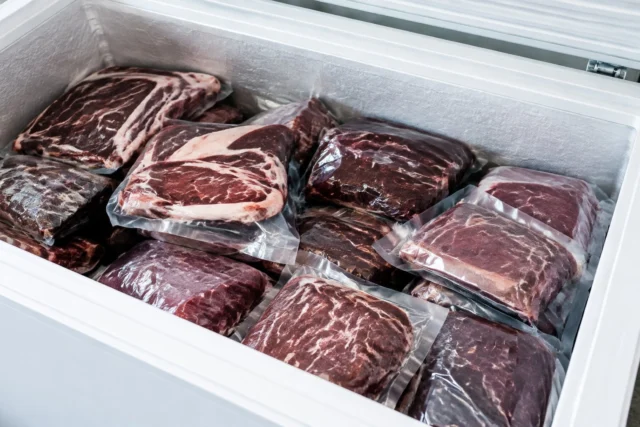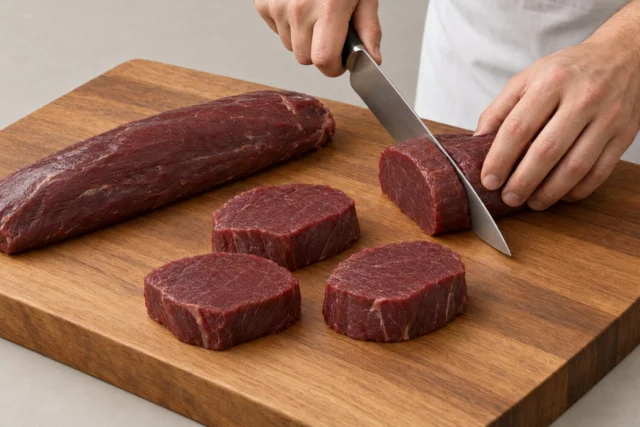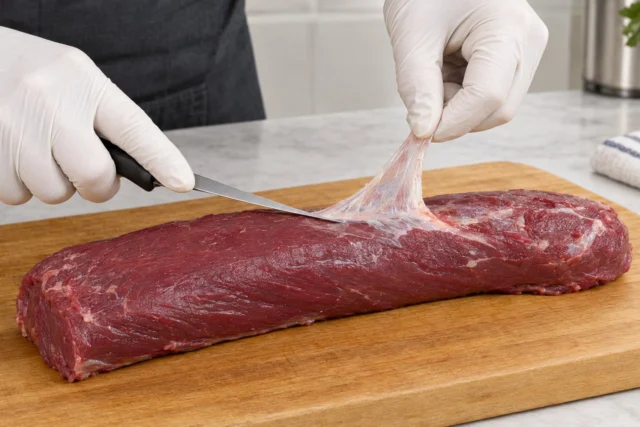

In air at 40°F or below, hang a deer no more than 2 to 3 days at home. With a reliable 34 to 37°F cooler, you can go up to about 7 days, and never past 14. If the air is above 40°F, skip hanging. Quarter the deer and refrigerate or ice it the same day.
After reading, you will know how long to hang a deer in the air you have, whether that’s a garage, a shed or a walk-in. You’ll also know when to stop aging and start cutting. Every number below comes from USDA FSIS, NCHFP or university extension guides. Where those sources disagree, you’ll see why, so you can choose the safe limit for your setup.
What Does the Temperature Allow?
Air temperature sets your hang time. The table matches each temperature band to a limit. A second point explains why a cooler earns you more days than a garage.
Hanging Time and Action by Air Temperature
Aging venison means holding the carcass at 30 to 37°F for 1 to 14 days so natural enzymes can tenderize the meat. Per NCHFP, aging a deer this way also reduces gamey taste and improves cutting quality, two big parts of venison quality.
Oregon State University Extension defines aging as holding carcasses at 30–37°F for 1 to 14 days. It puts the suggested maximum for deer at 7 days when the carcass goes into a 34°F cooler on the day of the kill.
| Air temperature | What to do | Max hang time |
|---|---|---|
| Above 50°F | Refrigerate the carcass | Within 3 to 4 hours of the kill |
| Above 40°F | Take it to a cooler, or quarter and ice | Same day, no aging |
| 40°F or below, no control | Clean, dry, ventilated space | 2 to 3 days |
| 34 to 37°F, controlled cooler | Age with daily checks | About 7 days, 14 at most |
| 28 to 35°F | Hang to chill in a ventilated shed | Watch for freezing |
Have no cold space? Run a fridge or cooler into your numbers with the home processing cost calculator.
Clemson HGIC sets the outer limit: limit aging to 2 weeks at 34–37°F. Above 50°F air, Clemson says to refrigerate within 3 to 4 hours. Over 40°F, get the carcass to a cooler the day of the kill.
Why Does a Controlled Cooler Allow More Time Than a Garage?
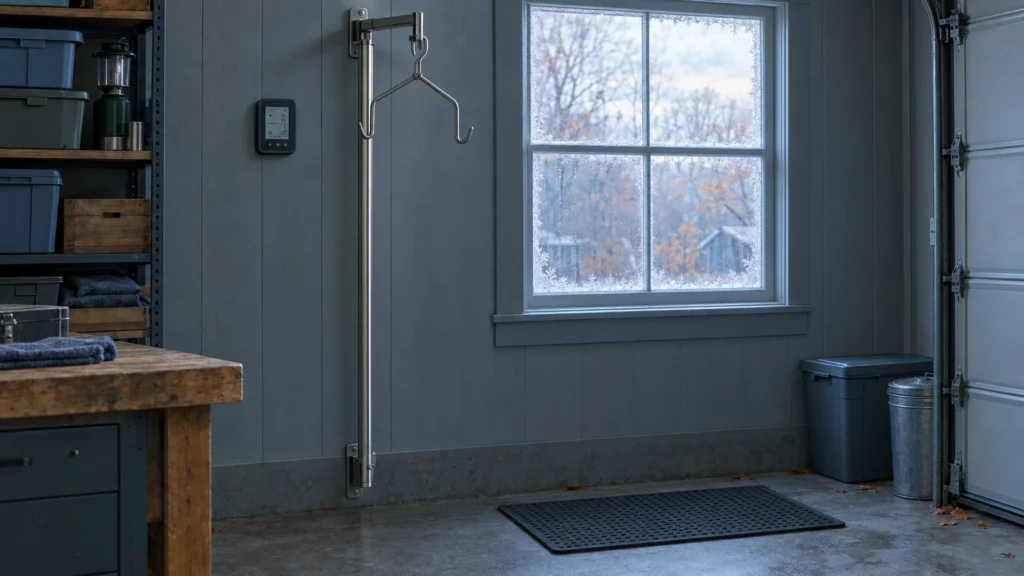
A walk-in cooler holds one temperature day and night. A garage swings with the weather. That is why NCHFP gives home hunters a short window and Oregon State allows more for a cooler.
NCHFP advises aging at 40°F or less for no more than 2 to 3 days in a clean, dry, well-ventilated space. It also says never to age meat at room temperature. Oregon State adds that home aging should be shorter, especially if the space rises above 34°F.
Bacterial growth speeds up each time the garage warms in the afternoon. A cooler keeps the meat below that line, so the enzymes work while bacteria stay slow. Steady cold is how you get properly aged venison while keeping bacterial growth in check.
If you can’t hold 34 to 37°F around the clock, use the 2 to 3 day home limit.
SAFETY: USDA FSIS warns that bacteria grow fastest between 40°F and 140°F, the Danger Zone. Keep the meat below 40°F the whole time it hangs. Never age venison at room temperature.
What You Need to Chill and Hang the Carcass
You need two things: a way to keep the meat cold and check it, and a clean place with moving air. Neither has to cost much.
Cold Storage and Temperature Checks
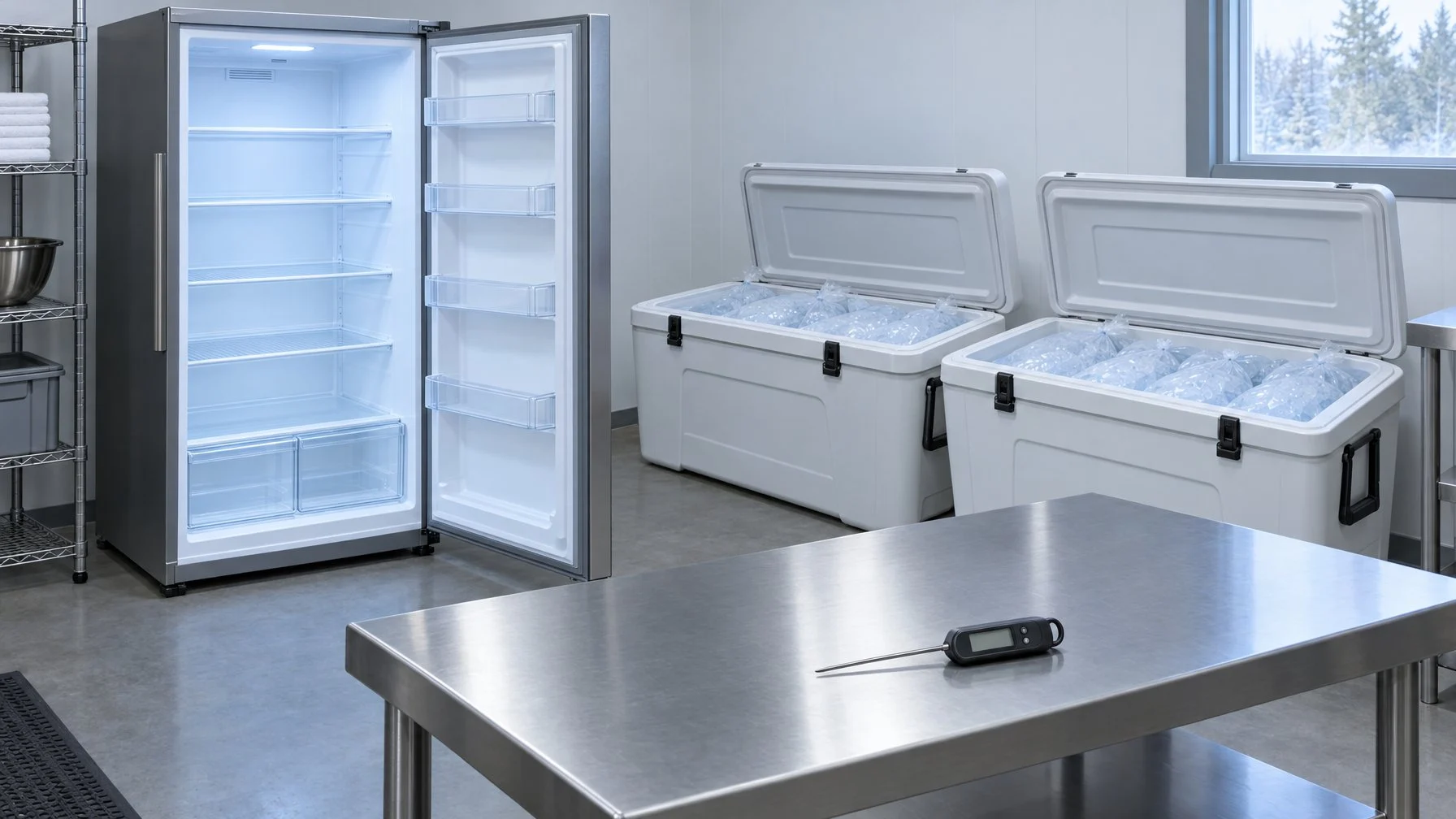
Pick one cold option before the hunt:
- Walk-in cooler set to 34 to 37°F, for the longest safe aging.
- Spare fridge for quartered meat when the weather runs warm.
- Ice chests and bagged ice for quarters, or to fill the chest cavity and speed cooling.
- Digital meat thermometer to read the meat itself.
- Air thermometer with a min/max reading, so you see the overnight low and afternoon high.
Read both numbers. The air tells you the trend. The meat tells you whether it is safe. NCHFP says to cool wild game meat to 35 to 40°F as quickly as possible. In a commercial kitchen, a walk-in with no thermometer gets no trust, and the same goes for a garage.
Clean Hanging Space and Airflow
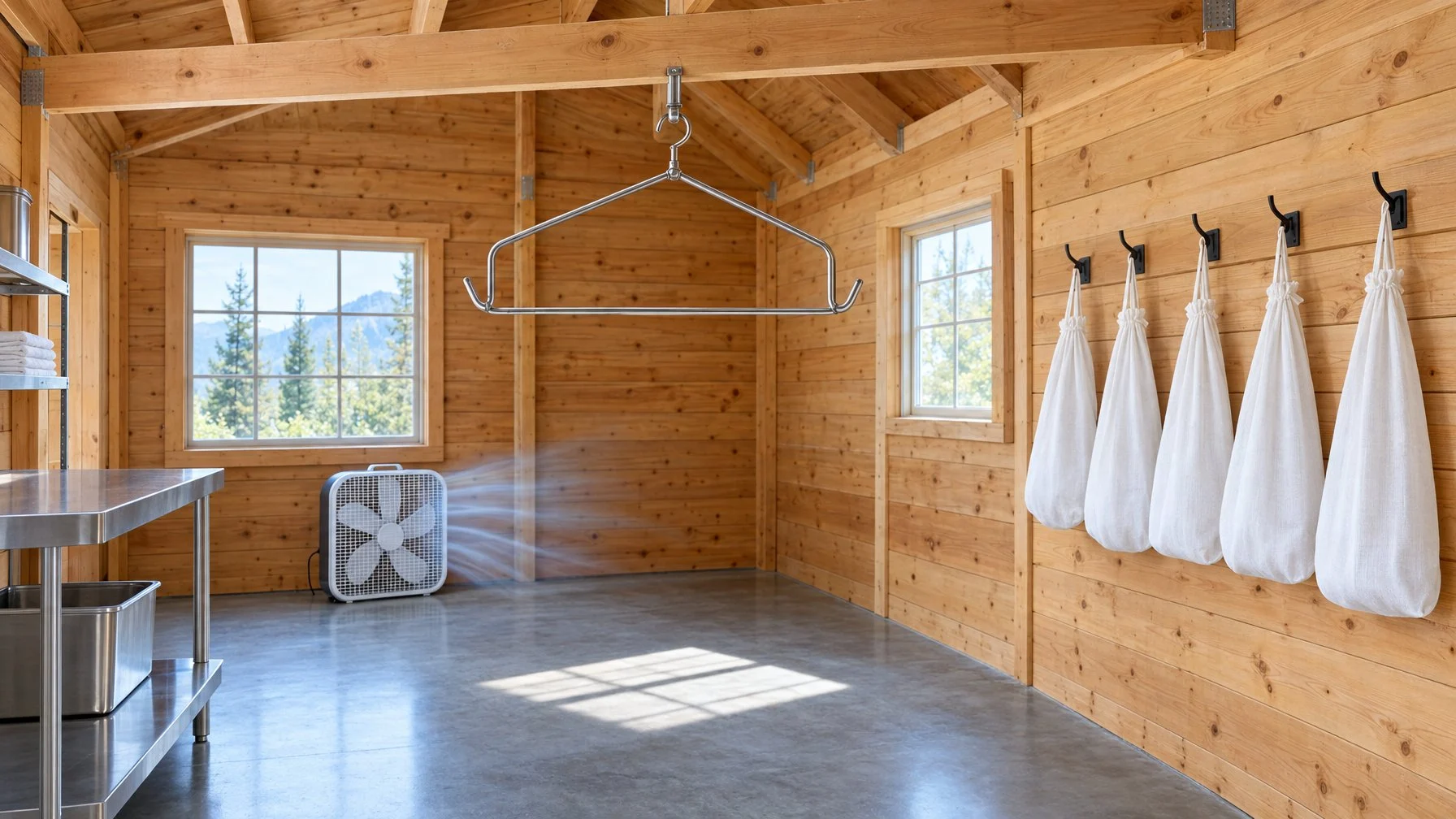
Hang the deer from a meat pole, gambrel or rail where air moves on every side. Oregon State asks for a clean, cool, well-ventilated place free from strong odors. Paint, fuel and mower smells don’t belong next to meat.
Keep these on hand:
- Breathable cotton game bags or cheesecloth to keep dirt and flies off.
- A clean floor or tarp under the carcass, not touching it.
- Gloves and a clean, sharp knife (the best knife for processing deer roundup covers blade types).
Skip airtight plastic bags and tarps. Clemson warns that they hold heat and spoil meat.
How Do You Chill, Hang, and Break Down the Deer?
Four steps take you from the field to the cutting table: start cooling, choose hanging or the fridge, check the meat daily, and butcher before conditions slip. Getting these steps right is the core of home deer processing.
1. Field-Dress and Start Cooling
Start cooling within a couple of hours of harvest. University of Wisconsin Extension says to start cooling within a couple of hours, because bacteria grow fastest above 40°F.
- Prop the chest open. Air reaches the inside and heat escapes.
- Move the carcass to shade. Sun keeps the meat warm.
- Fill the cavity with bags of ice if the air is warm. Clemson recommends this to speed cooling.
2. Choose Hanging or Immediate Refrigeration
Check the forecast, then decide. If the air will stay at 40°F or below, you can hang. Above 40°F, skip hanging and go to a cooler the same day.
Game shot in warm weather and not chilled fast should not be aged at all, per Oregon State. Quartering is the faster fix: smaller pieces fit a fridge and chill quickly. The steps are in how to quarter a deer.
Also decide on the hide now. At home without control over temperature and humidity, Oregon State says to leave the hide on to protect the meat from drying and dirt.
3. Check Temperature and Carcass Condition
Check the meat every morning and evening. Push the thermometer into the thick hindquarter, where heat hangs on longest.
- Meat below 40°F: keep going.
- Meat at or above 40°F: stop aging and move it cold.
- Wet surface, slime or sour smell: stop and cut.
Oregon State University Extension notes there is less toughening from rigor mortis in warm weather than when temperatures drop below freezing, one more reason to keep the carcass from freezing early. Wisconsin Extension notes that steaks can need 7 to 10 days of aging for a noticeable difference, which takes a controlled cooler to reach.
Properly aged venison is more tender and less gamey, per NCHFP. However, aging a deer beyond what your temperature allows quickly compromises venison quality.
4. Butcher or Quarter Before Conditions Deteriorate
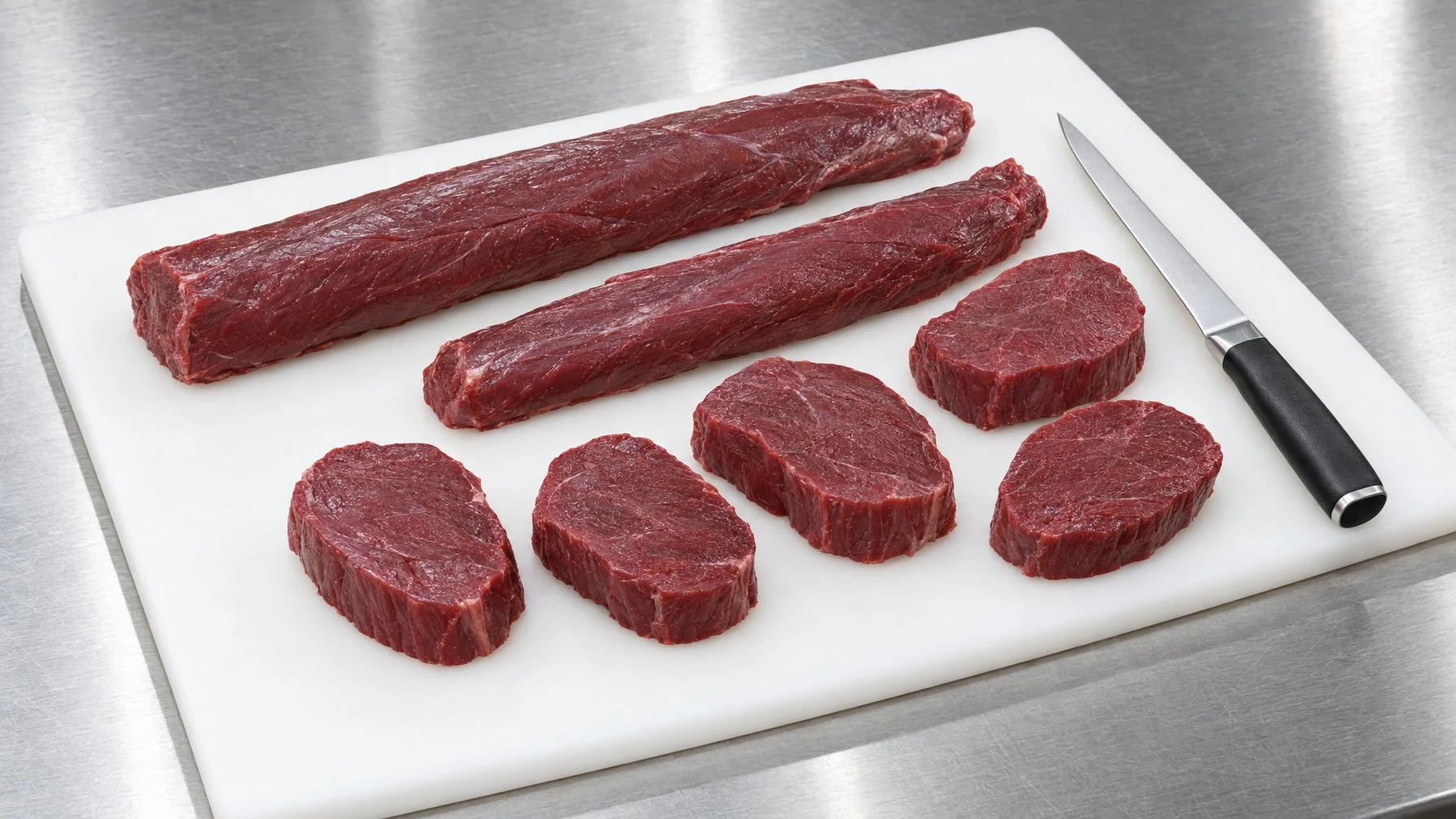
Cut when you hit your time limit or the weather turns, whichever comes first. Take the backstraps and tenderloins first.
Meat bound for burger or sausage needs no aging, per NCHFP, so you can trim and grind it early. In home deer processing, chill trim near freezing before it goes through the grinder; how long to freeze meat before grinding has the timing. For the full cut sequence, follow how to butcher a deer.
What Should You Do When Hanging Conditions Fail?
Four problems end most hangs early: warm air, freezing cold, a wet or dirty space, and a drying surface. Each has a quick fix.
Warm Air or Slow Cooling: Quarter and Refrigerate
Stop aging when the air goes above 40°F. Quarter the deer and get the pieces into a fridge or onto ice that day. Above 50°F, you have 3 to 4 hours from the kill.
Thick hindquarters cool slowest. Pull them off first and give them the coldest spot in the fridge or chest.
Freezing Carcass: Move It to Controlled Cold Storage
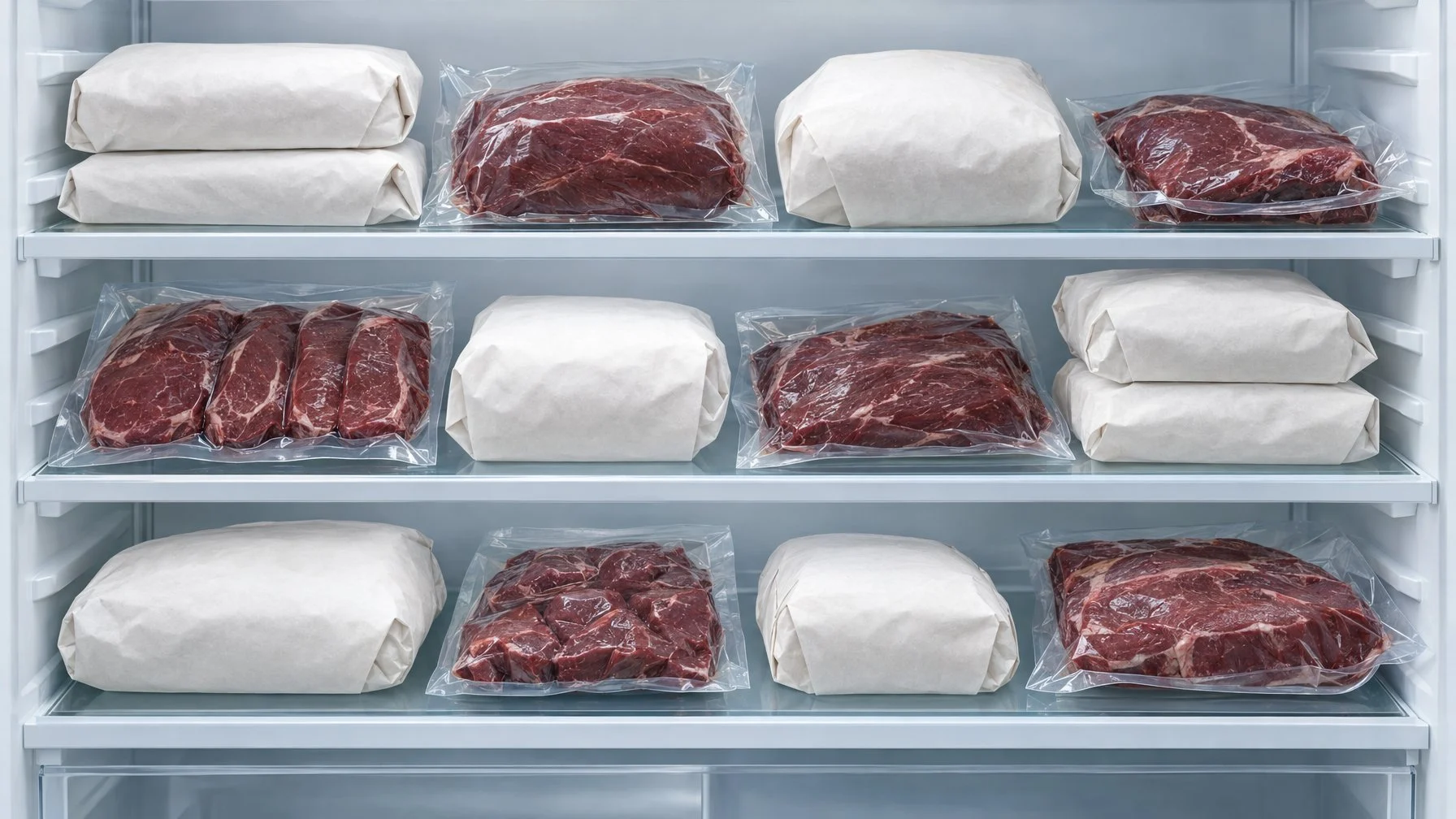
Move the deer somewhere above freezing. Tenderizing stops when the carcass freezes, and freezing in the first 6 hours after harvest can toughen the meat, per Wisconsin Extension.
A 28 to 35°F shed works for chilling. A night in the teens is too cold for proper aging. Bring the carcass into a garage or cooler that holds above 32°F, or butcher it and wrap the cuts for the freezer.
Wet or Dirty Hanging Space: Stop Aging
End the hang if the space is damp or dirty. NCHFP and Oregon State both call for a clean, dry, ventilated room. Moisture on the meat helps bacteria grow.
Wipe off any dirt, trim stained spots, and butcher. Don’t rinse the carcass and hang it back up wet.
Drying Surface: Protect Clean Meat From Air and Dirt
Some surface drying is normal, and you trim it off at cutting time. Lean deer with little fat dry out more during aging, per Clemson.
To limit waste:
- Leave the hide on during a home hang.
- Cover exposed meat with a breathable game bag.
- Cut the deer sooner if the dry crust grows thick.
If home aging keeps costing you meat, weigh whether processing your own deer is worth it against paying a shop with a walk-in.
Hanging a Deer: Quick Answers
These answers cover how long to hang a deer on a 50°F night or in 60-degree weather, the hide question, walk-in limits and butchering without a hang.
Can a deer hang overnight if the temperature reaches 50°F?
No. At 50°F the air is well above the 40°F line where bacteria start growing fast. Clemson HGIC says to refrigerate the carcass within 3 to 4 hours of the kill when the air is above 50°F. Quarter the deer and put it in a fridge or on ice instead of leaving it out overnight.
How long can a deer hang in 60-degree weather?
It shouldn’t hang at all at 60°F. That temperature sits inside the USDA Danger Zone, where bacteria grow fastest. Cool the carcass right away, fill the cavity with bagged ice if you need time, and get it into refrigeration within 3 to 4 hours of the kill. Quartering speeds up cooling and lets the meat fit a fridge.
Should I hang a deer with the skin on or off?
Leave the skin on if you hang at home without control over temperature and humidity. Oregon State University Extension says the hide protects the meat from drying out and from dirt. Oregon State notes that commercial lockers must skin the carcass, which can cause extra drying. Either way, keep the meat clean, dry and below 40°F.
How long can a deer hang in a walk-in cooler?
About 7 days in a cooler held at 34°F, starting on the day of the kill, per Oregon State University Extension. Clemson HGIC sets 2 weeks at 34 to 37°F as the outer limit. Check the meat temperature daily, and cut sooner if the cooler warms or the surface turns wet.
What happens if I butcher a deer without hanging it?
Your venison is safe, and it may be a bit less tender as steaks. Aging a deer lets natural enzymes soften the muscle and cut gamey taste, enhancing venison quality. Meat going into burger or sausage doesn’t need aging, per NCHFP. Going straight to deer processing without a hang is common when the weather turns warm. Keep everything below 40°F.
Next, pick the right grinder for your trim in our best meat grinder for deer roundup.
This is general guidance based on USDA recommendations. When in doubt, follow the USDA FSIS source linked above.