
Learning how to grind venison is a core skill in deer processing that lets you turn tough cuts into clean, tender burgers. Grinding venison starts with trimming your venison meat of silver skin and tendon, then cubing it.
Chill the meat and grinder parts until the meat is firm but not solid. Grind once through a coarse plate. To grind venison well, keep the meat near freezing, make one coarse pass, and add a second, finer pass only when the recipe needs it.
After reading, you will be able to set up your grinder, pick the right plate, and weigh out a fat blend with the math shown. You will also know how to package ground venison for the freezer and fix smearing or clogging on the spot. The food-safety numbers come from USDA FSIS and university extension guides, and the gear advice draws on patterns in owner reports.
What You Need
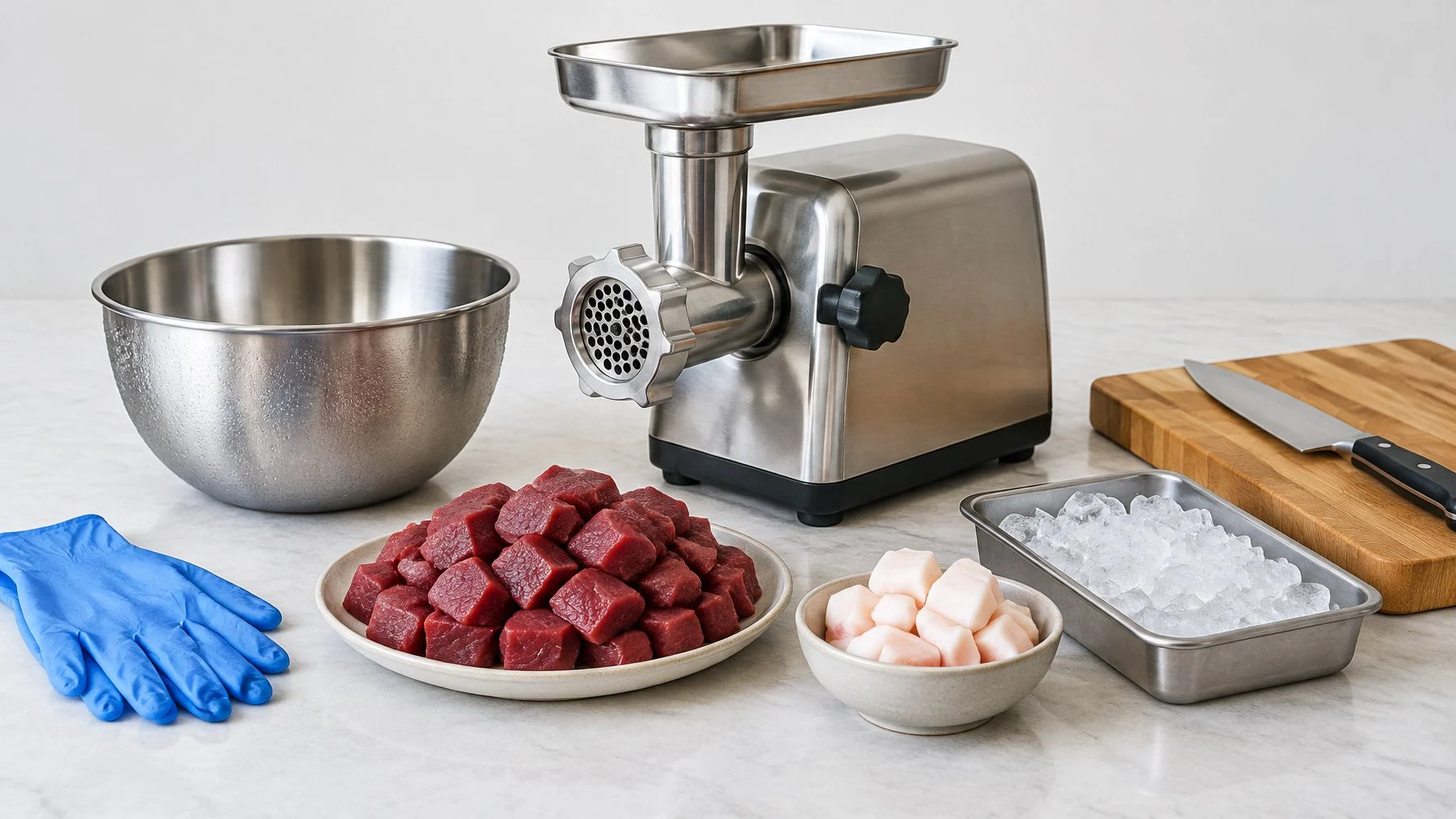
When grinding venison at home, you need a grinder with at least two grinding plates, a few cold-handling tools, and a fat plan worked out by weight.
A food processor can stand in for very small batches.
Which Grinder, Plates, and Other Tools Do You Need?
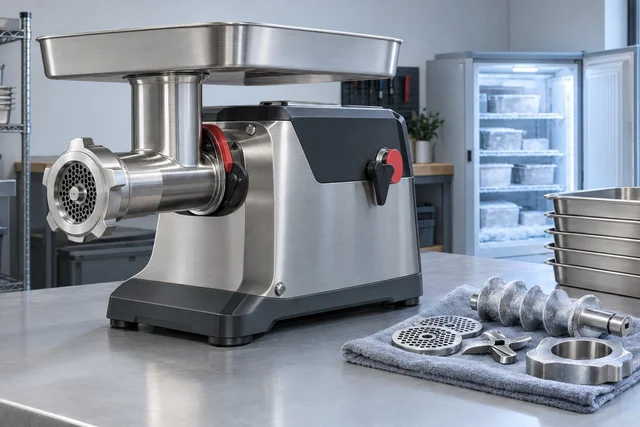
An electric meat grinder with a coarse and a fine plate handles most home batches. A hand-crank grinder works for a few pounds, but it gets slow and tiring past that. If you are grinding a whole deer, motor size and head size start to count. The meat grinder size guide explains the head numbers, and the best meat grinders for deer roundup lists models that owners report hold up to a full season. For a general roundup across sizes, see the best meat grinders, or best meat grinders under $200 if budget is the limit.
| Plate hole size | Grind | Best use |
|---|---|---|
| 3/8 in (10 mm) | Coarse | First pass, chili, stew |
| 1/4 in (6 mm) | Medium | Burgers, meatloaf |
| 3/16 or 1/8 in (4.5 to 3 mm) | Fine | Venison sausage, breakfast sausage, second pass |
Equipment by type:
- Grinder with sharp knife and two or three grinding plates
- Boning knife and a large cutting board
- Kitchen scale that reads in pounds and ounces
- Sheet pans that fit in your freezer
- Two large bowls, one set in ice
- Disposable gloves and paper towels
- Packaging: vacuum bags, freezer bags or freezer paper
- Permanent marker for labels
How Much Fat Should You Add?
Venison is very lean, so most cooks add pork fat, such as pork fatback, or beef fat for burgers and venison sausage. Unlike beef marbling, natural venison fat turns chalky and leaves a waxy coating in your mouth.
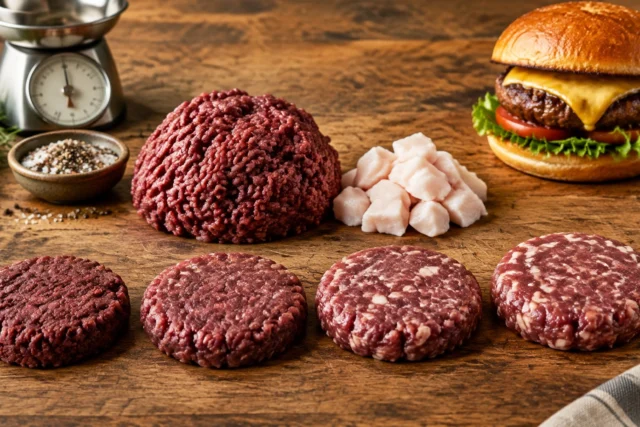
A common rule is 10 to 15% fat for burgers and 20% or more for sausage. Making rich breakfast sausage or link sausage often calls for this higher ratio. Utah State University Extension suggests 1 part pork or beef fat to 3 or 4 parts venison and advises against using game fat trimmings, which carry a strong flavor.
Figure the percent on the final weight. Here is the math for a 20% blend:
| Lean venison | Added fat | Total | Fat share |
|---|---|---|---|
| 4 lb | 1 lb | 5 lb | 20% |
| 4.25 lb | 0.75 lb | 5 lb | 15% |
| 4.5 lb | 0.5 lb | 5 lb | 10% |
Pork fatback tastes mild. Beef fat gives a burger flavor. The venison burger fat ratio guide covers each option in more detail.
Skip the fat when the meat goes into sauces, chili or tacos. The liquid and oil in the pan keep it moist. Add fat when the meat must hold together and stay juicy on its own, as with patties or links.
Can You Use a Food Processor for a Small Batch?
Yes, for a pound or two. Cut the meat into 1-inch cubes and freeze them until firm. Pulse in short bursts, eight to ten times, with no more than half a pound in the bowl at once.
A food processor chops by spinning. A grinder pushes meat through holes. Long runs in a processor turn venison to paste, so stop as soon as the pieces look like coarse crumbs. For anything larger than a meal, use a grinder.
The Six-Step Grinding Workflow
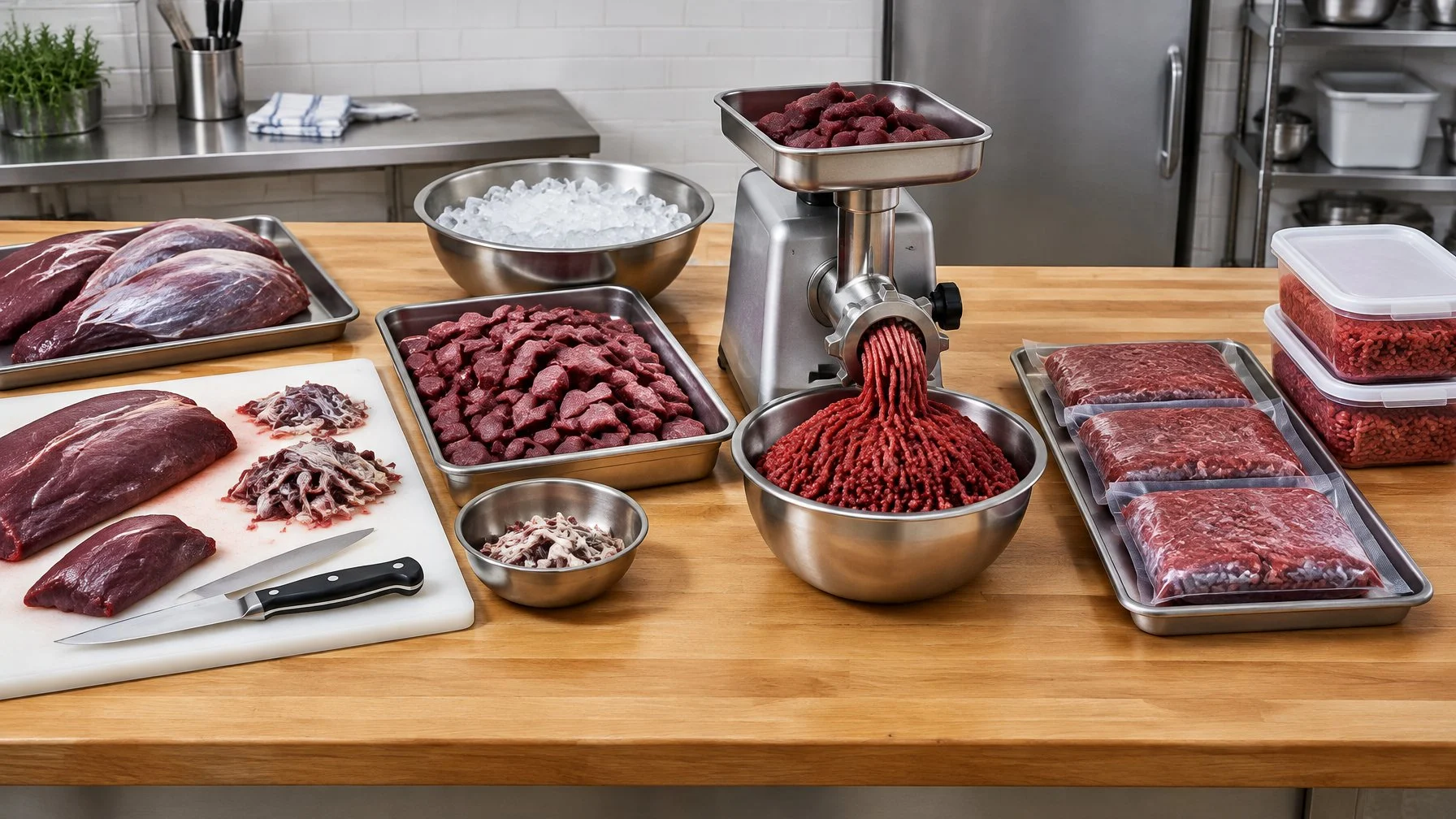
When grinding deer meat, following a set sequence prevents smearing and motor strain. The order is trim, weigh, chill, assemble, coarse grind, then an optional fine grind. Each step gives the action and the reason.
1. Inspect and Trim the Meat
Look over each piece of wild game meat before it touches the grinder. Cut away anything that looks bruised, dried out or dirty.
Silver skin is the thin, shiny connective tissue on venison muscle that does not break down in cooking and wraps around grinder knives.
- Remove silver skin and tendons. They wrap the auger and clog the plate.
- Trim off all deer fat and venison fat. It tastes waxy and gamey once cooked.
- Cut out hair and any bloodshot spots. They spoil flavor in the whole batch.
2. Cut and Weigh the Meat and Fat
Cut the venison meat and fat into 1- to 2-inch cubes. Pieces this size feed evenly and drop down the throat without a push.
Weigh the lean venison meat first, then weigh the fat to your target ratio. Write both numbers down. You will want them when you label packages.
3. Chill the Meat and Grinder Parts
Spread the cubes on sheet pans in a single layer. Freeze them until the edges are stiff and the centers are still soft, which takes about 30 to 60 minutes for cubes this size. The guide on how long to freeze meat before grinding covers larger loads.
Put the head, auger, knife and plate in the freezer for at least 30 minutes. Cold steel and firm meat keep fat from melting, which is what keeps your grind clean.
4. Assemble the Grinder
Build the head in this order: auger, knife, plate, ring.
- Slide the auger into the head.
- Set the knife on the auger with the flat cutting side facing out, toward the plate.
- Press the coarse plate over the knife.
- Screw the ring on snug by hand. Too loose lets meat smear; too tight strains the motor.
Set a bowl in a larger bowl of ice under the outlet.
5. Make a Coarse Grind
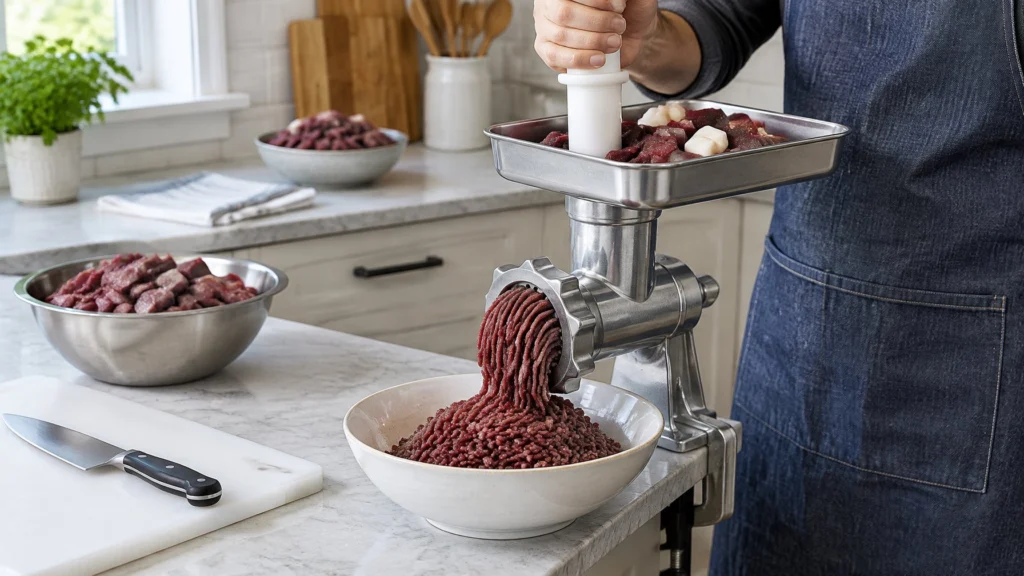
Feed cubes steadily without forcing them. Use the stomper only to keep meat moving. Mix fat in as you feed, alternating meat and fat cubes, so it spreads evenly.
Clean grinding looks like separate strands that hold their shape. If strands blur into paste, stop and chill everything again. For chili or tacos, one coarse pass of fresh ground venison is done.
6. Rechill and Make a Fine Grind Only If Needed
Making venison sausage or smooth burgers calls for a second pass. Spread the coarse grind on a sheet pan and freeze it for 10 to 15 minutes. Swap to the fine plate and grind again.
Season sausage between the two passes so the spices mix in evenly. A coarse grind gives a looser bite, and a fine grind gives a tighter one. The tradeoffs of a double grind depend on the dish.
Keep the Grind Safe and Store It
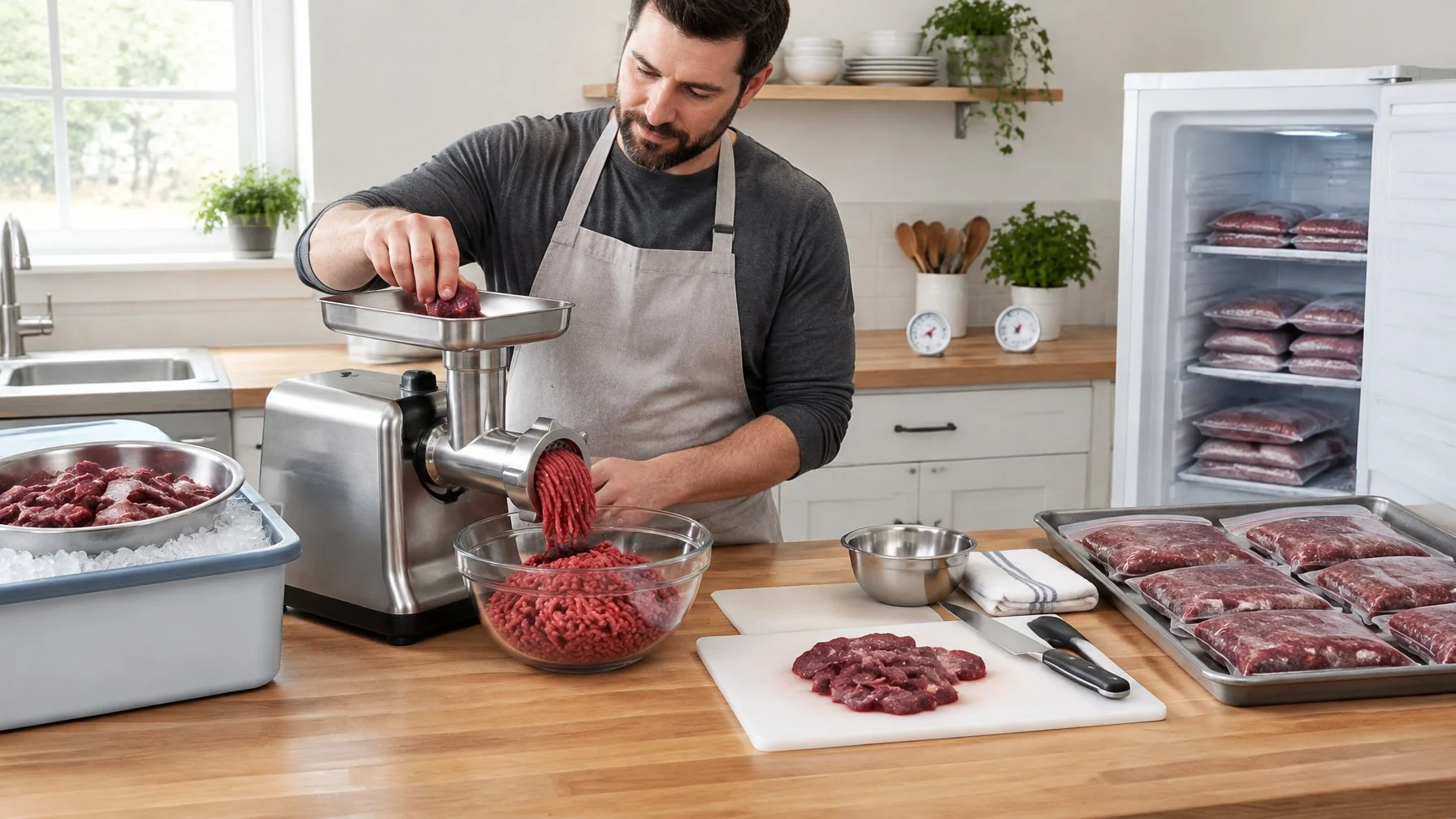
Safe grinding comes down to CWD checks before you start, cold handling and clean parts during the work, and good packaging after. Cooking to 160°F covers the last step.
Check CWD Guidance Before Processing
Chronic wasting disease is a prion disease of deer, elk and moose. The CDC reports it in wild deer in 36 U.S. states and advises against eating meat from an animal that tests positive.
Check your state wildlife agency’s site before you grind. Rules for CWD testing and carcass movement differ by state and by hunting zone. If you are waiting on a result, keep that deer’s meat separate and labeled. Avoid mixing meat from more than one animal until all tests come back.
Safety: Keep Meat Cold, Clean the Grinder, and Cook It Thoroughly
SAFETY: Grinding spreads any surface bacteria through the whole batch. USDA FSIS says bacteria multiply fast between 40°F and 140°F. Keep raw meat out of that range, refrigerate within 2 hours (1 hour above 90°F), and hold the fridge at 40°F or below. Cook or freeze fresh ground meat within 2 days. Cook ground venison to 160°F, checked with a food thermometer. Follow USDA FSIS safe-handling guidance for full details.
Penn State Extension advises that you clean and sanitize the meat grinder before and after use. Take the head fully apart. Wash every food-contact part in hot, soapy water, then dry it right away so the steel does not rust. The steps for cleaning a meat grinder cover the auger and plate holes.
Work in batches. Leave most of the meat in the freezer and pull out only what you can grind in about 20 minutes.
Package and Freeze Meal-Size Portions
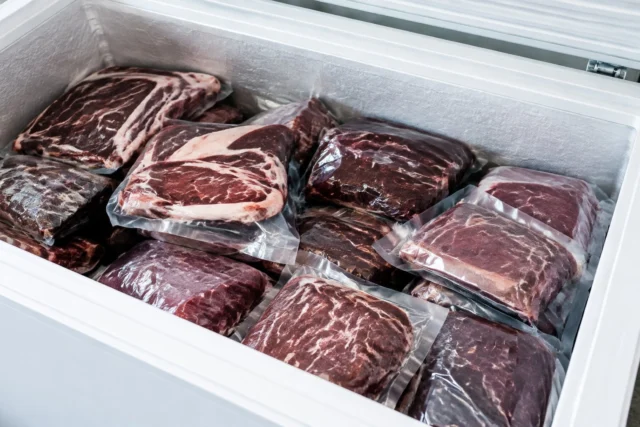
When freezing ground venison, minimizing air contact protects the quality for months. Pack ground venison in 1-pound portions, pressed flat to about 1 inch thick.
Using a vacuum sealer provides the best barrier against freezer burn for wild game meat. Flat packs freeze fast, stack well and thaw evenly.
| Packaging | Air removal | Strengths | Watch for |
|---|---|---|---|
| Vacuum sealer bags | Best | Least freezer burn, easy to stack | Moist meat can stop a seal; prefreeze 30 min |
| Freezer bags | Good if pressed flat | Cheap, reusable for the zipper type | Air pockets lead to freezer burn |
| Freezer paper | Fair | Good for big batches, writes easily | Wrap tightly; double-wrap with plastic first |
Freezing at 0°F keeps meat safe for as long as it stays frozen. Packaging affects quality, not safety. FSIS lists ground meat as best within 3 to 4 months. A tight seal slows quality loss, but it does not stop it. Write the contents, fat ratio and date on every pack. How to label frozen meat shows a simple format.
Fix Common Grinding Problems
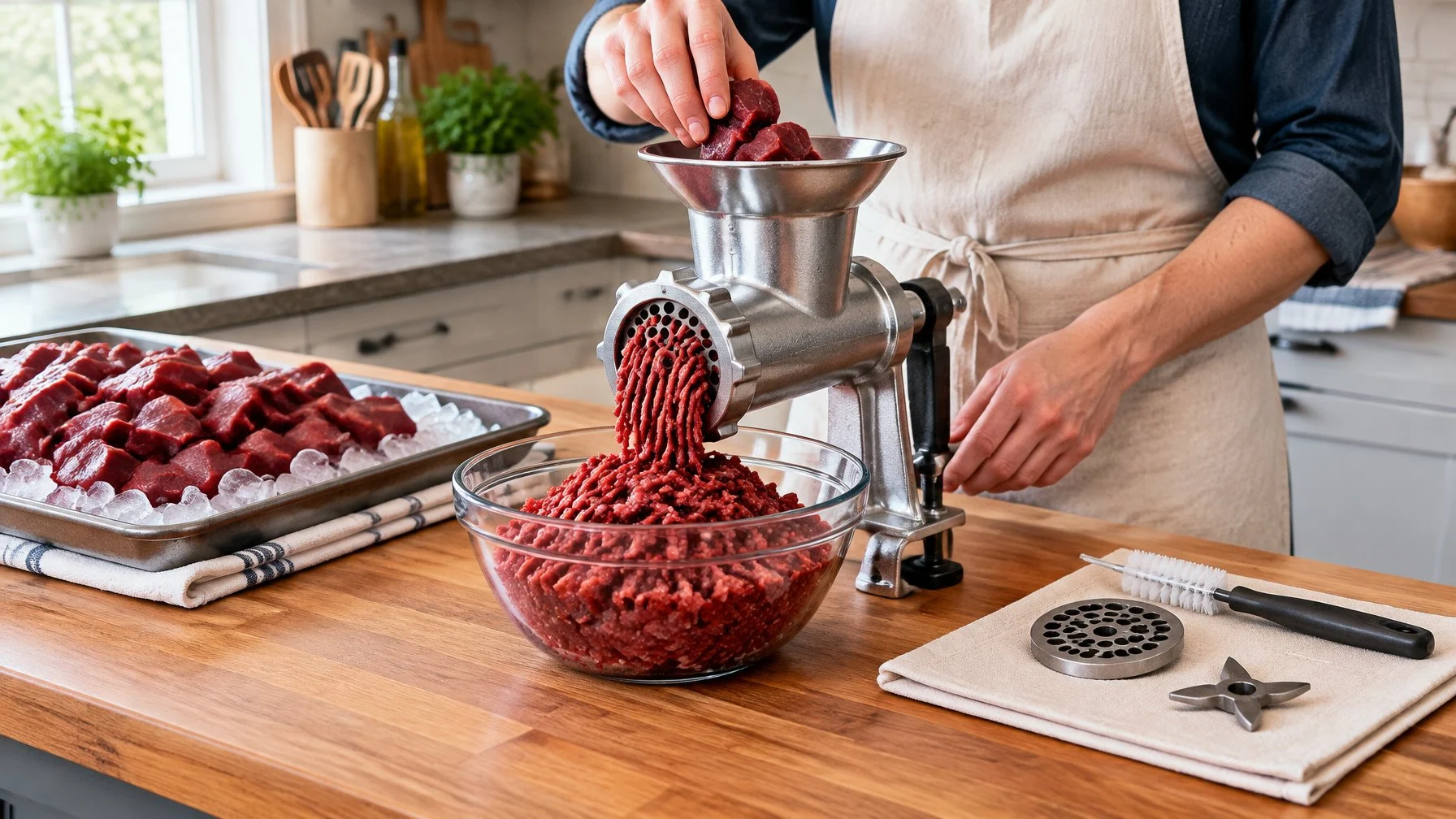
Four problems show up most: smearing, clogging, the wrong texture, and dry burgers or sausage. Each has a cause you can check in under a minute.
Meat Smears Instead of Forming Strands
Smearing means melted fat. The meat, the head or both got too warm. Stop grinding. Put the head and the remaining cubes back in the freezer for 15 to 20 minutes.
A dull knife or plate also smears, because it tears meat instead of cutting it. Rub a fingertip across the knife edge. If it feels rounded, it needs work. The guide to sharpening meat grinder blades covers both parts.
The Grinder Clogs or Feeds Slowly
Clogs nearly always come from silver skin or tendon wrapped around the knife. Unplug the grinder, take off the ring and pull the strands free. Check the ring too; a loose ring lets tissue slip between knife and plate.
Slow feeding can also mean the cubes are too big or frozen solid. Keep them at 1 to 2 inches and stiff, not rock hard.
The Grind Is Too Coarse or Turns Pasty
Too coarse means the wrong plate for the dish. Rechill and run it once through the fine plate.
Pasty texture has three common causes. Warm meat is one, a second pass on warm meat is another, and overmixing after grinding is the third. Mix by hand only until seasoning spreads through, about one minute.
Burgers Crumble or Sausage Feels Dry
Venison burgers crumble when the grind is too lean. Raise fat to 15% for patties. Venison sausage and breakfast sausage need 20% or more fat to stay juicy.
Salt binds sausage. Add it after the first grind and mix until the meat turns slightly tacky. Ideas for seasoning and stuffing are in the sausage making section. For lean venison recipes like chili, keep the 0% grind and add oil in the pan.
Grinding Venison: Quick Answers
These cover the questions home processors ask most often at the grinder.
What is the best way to grind venison?
Grind trimmed venison while it is partially frozen, using a chilled grinder head and a coarse plate first. Keep cubes at 1 to 2 inches and feed them steadily. Watch for clean strands. If the meat starts to smear, stop and rechill the meat and parts for 15 minutes before you continue.
Do I need to grind venison twice?
No, a single coarse pass works for chili, tacos and most sauces. Grind twice when you want a finer, tighter texture for venison sausage or smooth burgers. Rechill the coarse grind for 10 to 15 minutes before the second pass, and switch to a smaller plate, such as 3/16 inch.
What is best to grind with deer meat?
Pork fat, especially pork fatback, is the most common choice because it tastes mild and lets the venison flavor come through. Beef fat works well for burgers and gives a classic hamburger taste. Avoid venison fat, which turns waxy on the palate. Aim for 10 to 15% added fat in burgers and 20% or more in sausage.
Can I grind venison without adding fat?
Yes. Lean ground venison works well in sauces, chili, soups and tacos, where pan oil and liquid keep it moist. Grind it extra cold, since lean venison meat smears easily once it warms. Expect patties made from pure venison to crumble and dry out, so add fat if you plan to make burgers.
Should I grind venison before or after freezing it?
Either works safely. Many processors cube and freeze the meat first, then grind later when they have time. Half-thawed meat grinds cleanly. Frozen and thawed ground meat releases more juice when cooked, so grinding close to cooking gives slightly better texture. Do not refreeze raw ground meat thawed in cold water or a microwave unless you cook it first.
If you are choosing your first grinder or upgrading, the meat grinder buying guide is the next useful step.
This is general guidance based on USDA recommendations. When in doubt, follow the USDA FSIS source linked above.