A common way to clean doves is breasting: cut off the wings, peel the skin and feathers off the breast with your thumbs, pull out the crop, then lift the breast meat away from the body. Texas Parks and Wildlife does this in the field and ices the breasts. Before you breast doves in the field, check your state’s rules on keeping a wing or head attached, because the sources disagree. Cook dove to 165°F.
The steps come from Texas Parks and Wildlife’s Field to Freezer: Dove (PWD BR W7000-1689, 2011), the one dove-specific cleaning guide we found. Handling and storage come from NDSU Extension’s A Pocket Guide to Care and Handling of Game Birds from Field to Table (FN537, reviewed August 2022) and Kansas State’s MF-2177, which gives the same guidance. Cooking temperature comes from the USDA FSIS Safe Minimum Internal Temperature Chart.
What Do You Need?
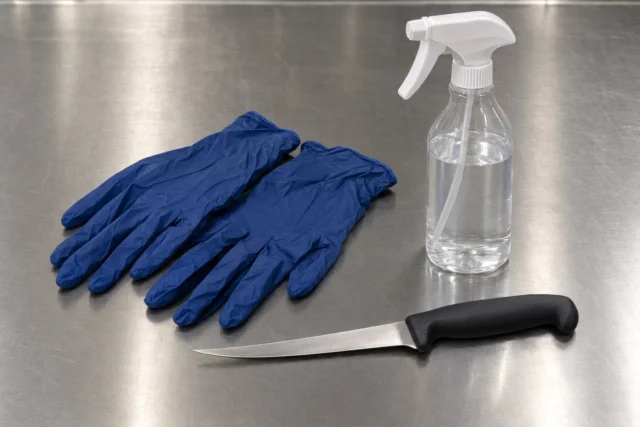
TPWD lists good scissors or shears, sealable plastic bags, an ice chest with ice, water and paper towels. NDSU adds a sharp knife and says to wear latex or rubber gloves when field dressing and cleaning birds.
How Do You Clean a Dove in the Field, Step by Step?
- Remove one wing with scissors at the joint that connects it to the body, then the other wing (TPWD).
- With a thumb on either side of the breastbone, push down and to the side to tear and peel off the skin along with the feathers, exposing the front of the breast (TPWD).
- Remove the crop, the seed-filled pouch below the head, by grasping its base and pulling it away from the breast. Remove any seeds left on the meat (TPWD).
- With the scissors, make a small cut at the bottom of the breast, then cut along each side toward the head, stopping halfway up the bird (TPWD).
- Put your thumb in the first cut just below the breast meat and pull the breast up and away from the body (TPWD).
- Discard the entrails. TPWD notes some hunters keep the heart to eat.
- Remove any feathers left on the breast, including pin feathers on younger birds, which TPWD says won’t be seen until the other feathers are off.
- Put the breast in a plastic container or resealable bag, repeat with every dove, and keep them in the ice chest until you get home (TPWD).
NDSU’s general game-bird advice is to remove the entrails and crop as soon as possible, because grain in the crop may ferment. For plucking a whole bird instead, see how to clean a duck.
Can You Breast Doves Before You Get Home?
The sources don’t agree, and the answer depends on where you hunt. SaltRail doesn’t give a verdict; check your state’s current hunting regulations before you breast doves in the field.
| Source | What it says |
|---|---|
| 50 CFR 20.43 (federal) | Migratory game birds must keep the head or one fully feathered wing attached while transported home, “except doves and band-tailed pigeons.” |
| Illinois Learn to Hunt (Illinois Natural History Survey) | If you field dress a dove, leave one fully feathered wing or the head attached, “so you cannot breast out the bird in the field.” It says most hunters don’t clean doves in the field unless it is very hot or a long day. |
| Texas Parks and Wildlife | Removes both wings and breasts the birds in the field. |
NDSU also says to leave an identification mark on the bird as required by state game regulations. For keeping birds cold on the way home, see how to pack a cooler with meat.
How Do You Keep Doves Cool?
- Cool the birds quickly; NDSU calls a temperature above 40°F meat’s worst enemy.
- In hot weather, put birds individually in plastic bags on ice, and don’t pile warm birds together (NDSU, KSU).
- Keep the cooler out of the sun, and don’t carry birds in the trunk, where heat can’t escape (NDSU, KSU).
How Do You Debone Dove Breasts at Home?
TPWD notes that many hunters store and cook dove bone-in. To take the meat off the bone:
- Remove the wing joints with scissors, and rinse the meat and your hands with water (TPWD).
- With a sharp knife, separate the breast meat from the concave part of the breastbone along the whole length of the breast (TPWD).
- With the knife tip, detach the meat from the keel, the sharp ridge where the two halves of the breastbone meet. Cut the length of the keel, stop at the tip and leave the meat attached; repeat on the other side (TPWD).
- Hold the keel with the thickest part of the breast facing you, pinch the meat below the keel where the tail would be, and pull it gently from the keel, working from the tail toward the head (TPWD).
NDSU says to wash your hands, knife and cutting board with hot soapy water and not to cross-contaminate; see how to sanitize a cutting board after raw meat. The same keel-and-rib idea on a bigger bird is in how to debone a chicken breast.
How Do You Store and Freeze Doves?
NDSU says to refrigerate cleaned birds at 40°F or lower and use them within three days, or freeze them at 0°F or lower. The two freezing methods differ:
| Source | Freezing method |
|---|---|
| TPWD | Fill a plastic bag a little less than ¾ full with doves, fill it with water, remove the air and seal. Don’t overfill, or the container may not seal or the bag may burst. Label each bag with the date of kill and the number of birds. |
| NDSU and KSU | Use moisture- and vapor-proof wrap or freezer-weight bags, wrap tightly and press out as much air as possible, label with the contents and date, and use frozen packages within a year. |
NDSU and KSU say to thaw birds in the refrigerator or microwave, cook microwave-thawed meat right away, and use other thawed meat within one to two days. See how to label frozen meat and how to wrap meat in freezer paper.
SAFETY: Cook dove to at least 165°F. That is the USDA FSIS figure for all poultry, and NDSU and KSU give the same for game birds. TPWD warns to watch for shot pellets that may be lodged in the meat. NDSU says not to harvest or eat sick or abnormal-acting birds. See how to calibrate a meat thermometer.
What Do the Sources Not Say?
- How to pluck a whole dove; no dove-specific plucking source was found.
- Whether to age doves. NDSU says game birds generally don’t need aging, but gives nothing dove-specific.
- How many breasts make a serving.
- State-by-state rules for doves or for Eurasian collared-doves; check your own state. For other small game, see how to clean a squirrel and how to clean a wild turkey.
Frequently Asked Questions
Do you have to leave a wing on a dove?
It depends on where you hunt. The federal rule, 50 CFR 20.43, exempts doves from keeping a wing or head attached in transport, but the Illinois Learn to Hunt page says to keep one on if you field dress a dove. Check your state’s regulations.
How long can you keep cleaned doves in the fridge?
NDSU says to store cleaned game birds at 40°F or lower and use them within three days.
How do you freeze dove breasts?
TPWD bags the doves, covers them with water, removes the air and seals the bag. NDSU and KSU wrap tightly, press out the air and use the packages within a year.
What temperature should dove be cooked to?
At least 165°F, the USDA FSIS figure for all poultry; NDSU and KSU give the same for game birds.
Do you need to gut a dove in the field?
TPWD breasts doves in the field and discards the entrails there, and NDSU says to remove the entrails and crop as soon as possible. The Illinois page says most hunters don’t clean doves in the field unless it is very hot or a long day.