
As an Amazon Associate I earn from qualifying purchases.
Mastering home meat grinding gives you control over fat ratio, texture, and what actually goes into the package. For hunters and bulk buyers, it turns a whole deer or a case of chuck into fresh ground beef, burger, sausage, and freezer-ready packs on your own schedule.
Whether you need fresh ground meat for weeknight meatballs or big batches for weekend sausage making, grinding meat at home ensures superior quality.
For most home processors handling a deer or two per season, the LEM Products stainless steel Big Bite #8 is the grinder we recommend. LEM rates the LEM Big Bite at roughly 7 pounds per minute with a 0.5 HP motor, stainless construction, and a five-year factory warranty.
Smaller kitchens that grind a few pounds at a time will be happier with a lighter machine. High-volume processors, on the other hand, should consider stepping up to a #12 head or even looking into a commercial meat grinder.
A few things decide whether a grinder fits your workload. Head size sets throat diameter, while rated throughput, motor horsepower, and grinding plates dictate processing speed.
Accessories also matter, including whether sausage stuffer tubes and a sturdy food pusher come in the box. Weight counts too, since a 32-pound machine needs a dedicated storage spot.
At SaltRail we focus on the whole chain of home processing. The grinder you pick sets the pace for everything downstream from trimming to freezer packs.
Best Meat Grinders for Home Processing
Best for a deer or two per season: LEM BigBite #8 Meat Grinder
Best for high-volume batches and accessories: STX Turboforce 3000 Series #12
Best for small kitchen batches: Cuisinart MG-100 Electric Meat Grinder
Best compact grinder for occasional use: LEM MightyBite #8
Best for sausage makers who want two speeds: Weston #12 Grinder & Sausage Stuffer
LEM BigBite #8 Meat Grinder
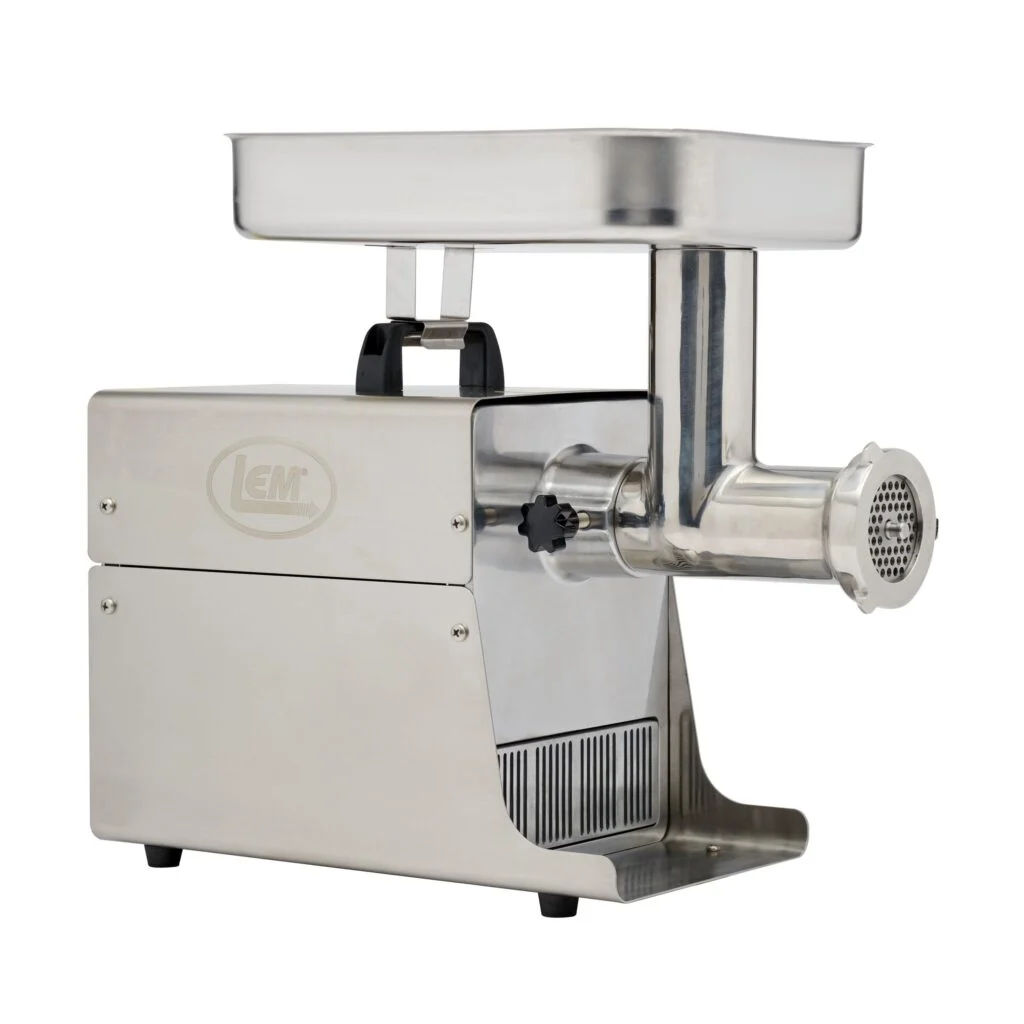
Buy this one if you process a deer or two each season and want a stainless machine with a long warranty.
Pros
- LEM rates it at about 7 lb per minute with a 0.5 HP motor
- Stainless steel build with a permanently lubricated motor
- Five-year factory warranty and replacement parts support
Cons
- At 32.6 pounds, it needs a permanent shelf or cart
- Costs more than most #8 grinders
- Not made for bones
The BigBite sits at the top of our list because of the combination of head size, rated throughput, and support. A #8 head is the common home-processing size, and 7 pounds per minute is enough to move a quartered deer through in an afternoon without stopping to let the motor cool.
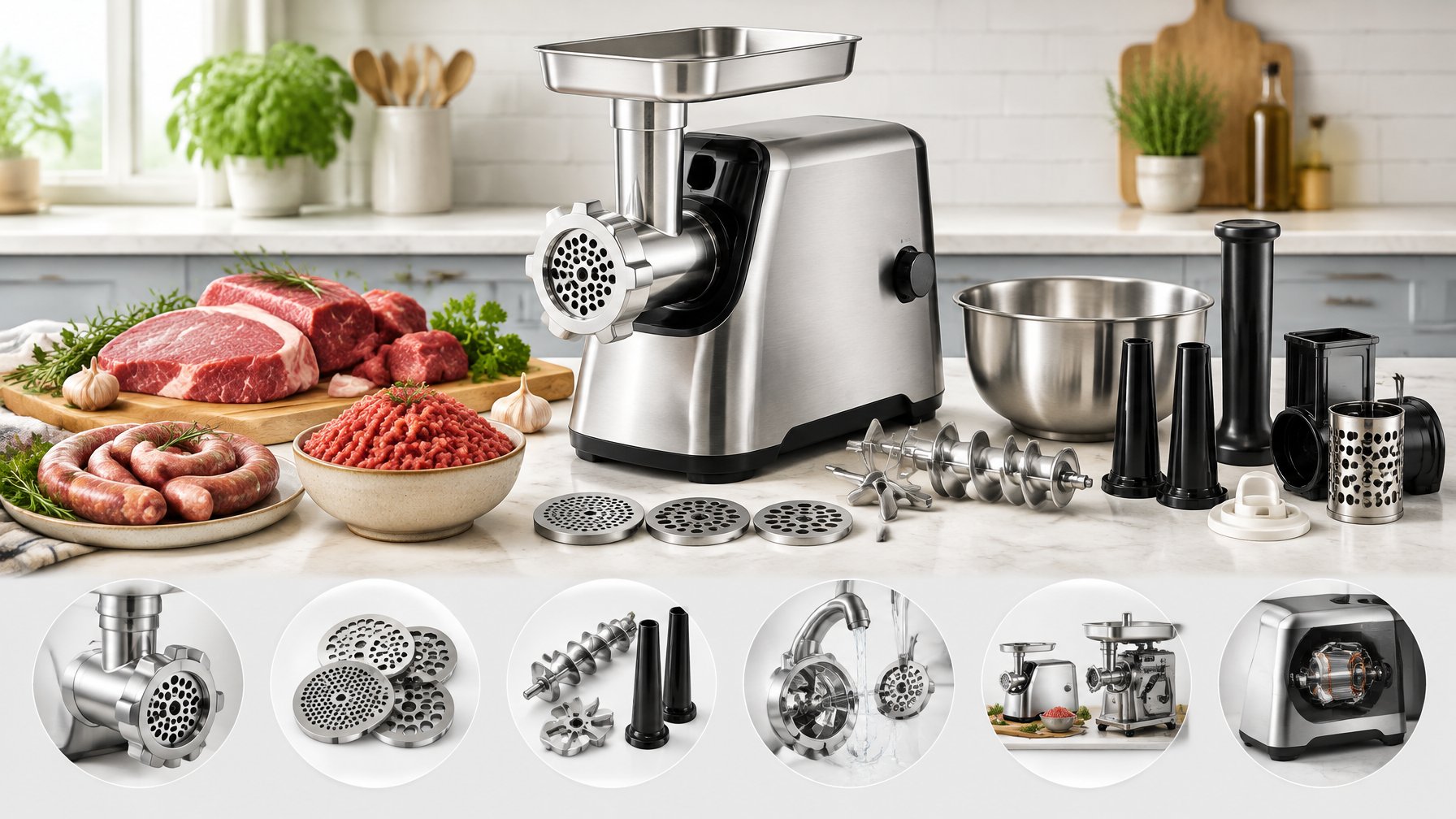
Three stainless steel grinding plates, a knife, a food pusher or meat stomper, and sausage stuffer tubes come in the box. You can grind burger and stuff sausage without buying add-ons. High-volume processors can also attach an optional foot pedal to control feeds hands-free.
The unit features internal metal gears and a built-in circuit breaker to prevent motor strain during heavy processing sessions. Its included sausage stuffing tubes also make link stuffing simple.
LEM lists a noise-dampening design, which owners tend to describe as quieter than cheap import grinders.
The weight is the trade-off. This is not a machine you lift in and out of a cabinet each weekend.
STX Turboforce 3000 Series #12 Grinder
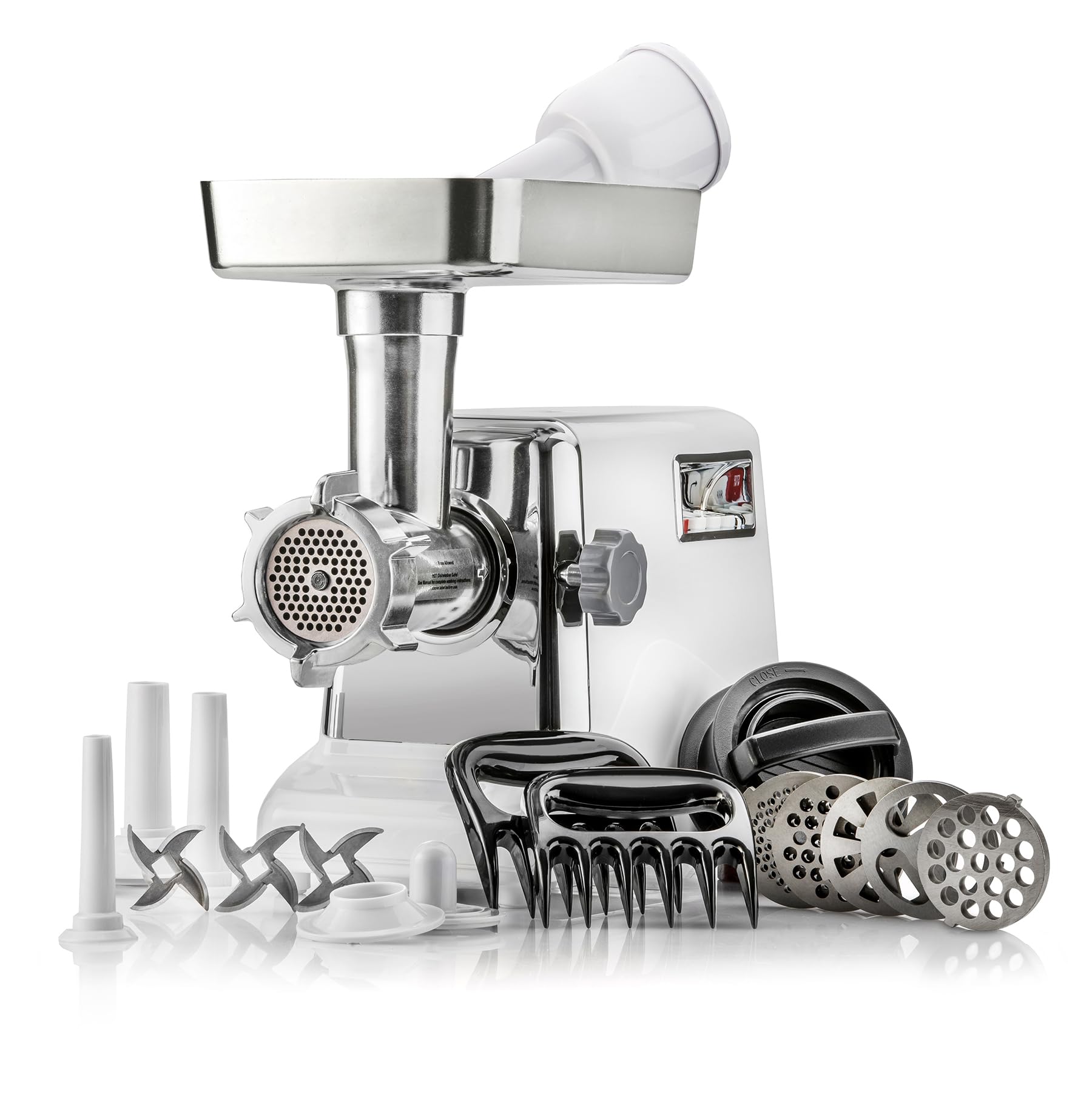
Get this if you grind large volumes and want the widest accessory kit for the money.
Pros
- STX rates it at 180 to 240 lb per hour when meat is properly prepped
- Size #12 head with a 2-1/8″ throat and a 3 lb hopper
- Five grinding plates, three stainless steel blades, sausage stuffer tubes, food pusher, kubbe maker attachment, and a burger press
Cons
- Aluminum grinding head, not stainless
- The 3000W figure is locked-motor, and STX lists 800 to 1200W under load
- Three-year warranty is shorter than LEM’s on the BigBite
The #12 head is the real advantage here. A wider throat takes larger chunks, so you spend less time cubing meat before it goes in the hopper.
Read the wattage claim carefully. STX is upfront that the machine draws 800 to 1200 watts while grinding, and the 3000W number describes a locked motor. Judge it on the pounds-per-hour rating instead.
Owner reports commonly praise the accessory count and the value. STX even includes a dedicated kubbe maker for hollow meat pockets. Complaints center on plastic parts under heavy abuse, leading users with large batches to prefer metal gears.
The included burger press makes quick work of shaping uniform patties from your seasoned ground meat. Its sharp stainless steel blades stay keen through pounds of beef chuck.
Cuisinart MG-100 Electric Meat Grinder
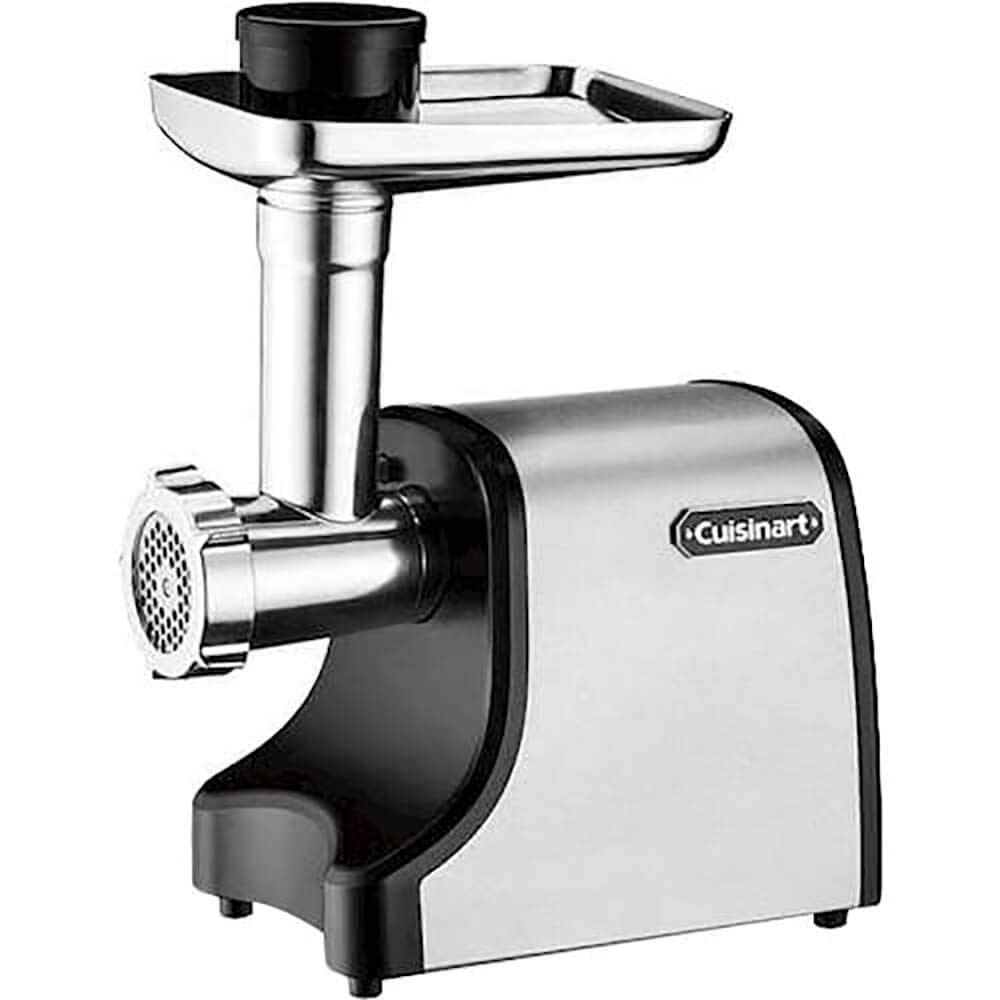
Pick this if you grind a few pounds at a time for meatballs, chili, or fresh burgers ready for grilling.
Pros
- At 8.5 pounds, it stores in a normal cabinet
- Cuisinart rates it at 3 lb per minute from a 300-watt motor
- Reverse function clears clogs
Cons
- Only two cutting plates, medium and coarse
- 300 watts limits it to small batches
- Three-year limited warranty
This is the kitchen-counter option. Cuisinart built the Cuisinart MG-100 around weeknight jobs: grinding chuck for burgers, turkey for meatloaf, or trimmings for chili.
It quickly turns cuts into fresh ground meat for homemade meatballs and quick skillet dinners.
Two sausage attachments are included for breakfast links and homemade sausage, which covers casual sausage making. Serious sausage volume will outrun it.
Keep in mind that few compact electric grinders feature dishwasher-safe parts. Washing the hopper, auger, and stainless steel blades by hand protects their performance.
Owner feedback splits along volume lines. People grinding a couple of pounds report clean results, while those pushing venison quarters through report slow going and heat buildup. Match it to the job and it holds up.
LEM MightyBite #8 Meat Grinder
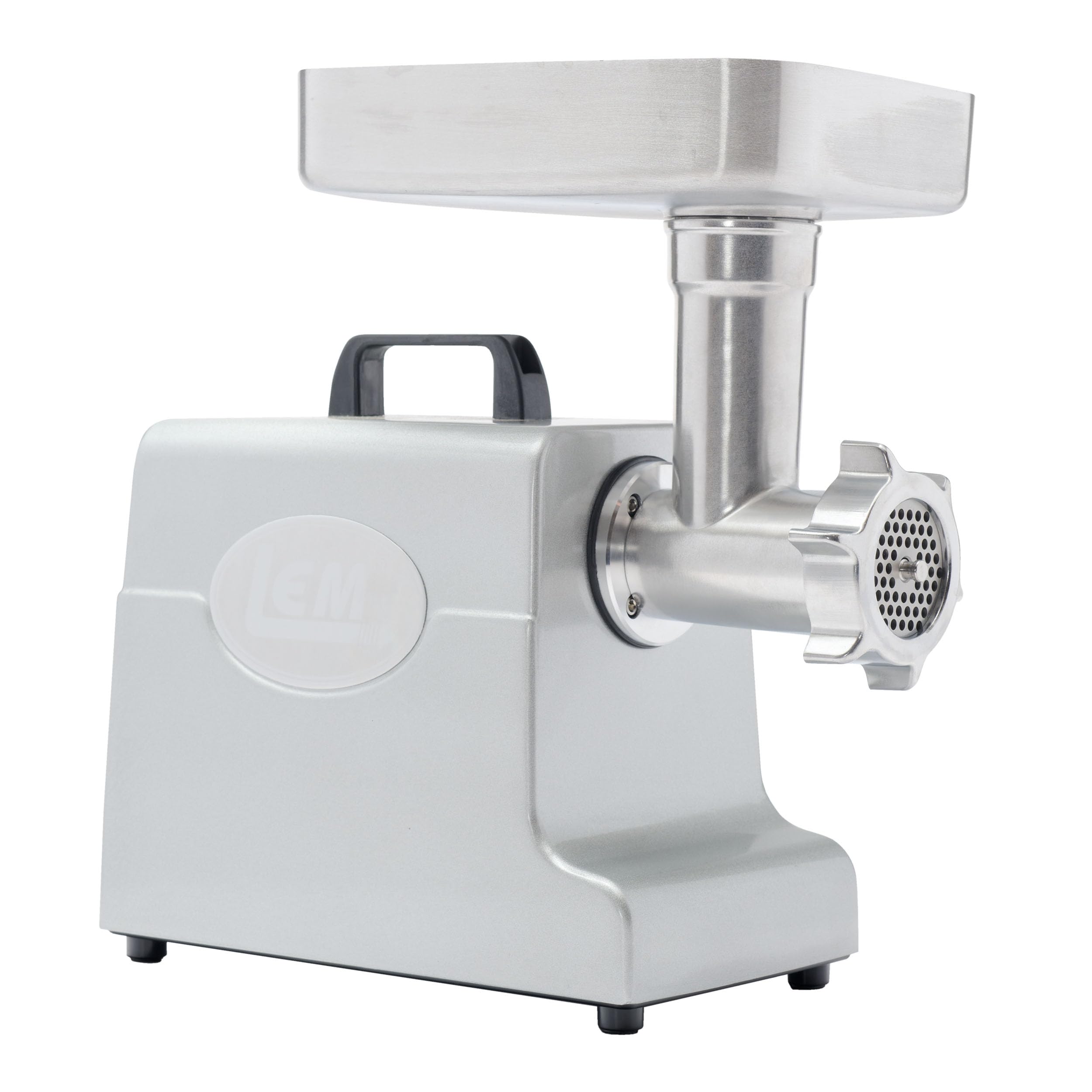
Choose this if you want LEM’s #8 head and parts support at a lower price and lighter weight.
Pros
- LEM rates it at 4 to 5 lb per minute from a 500-watt motor
- 16.5 pounds, half the weight of the BigBite
- Stainless steel grinding plates, knife, food pusher, and three sausage stuffer tubes included
Cons
- Aluminum body instead of stainless
- Two-year warranty versus five on the BigBite
- Slower than the BigBite on large batches
The MightyBite is the sensible middle ground. You get the same #8 plate size as the BigBite, so accessories and replacement parts are easy to source, but the aluminum housing keeps the weight and price down.
A circuit breaker and a permanently lubricated motor are listed by LEM, which is reassuring on a machine that will see occasional heavy sessions.
Rugged metal gears handle tough sinew when grinding meat for deer chili or bulk freezer portions. LEM also provides sausage stuffing tubes for weekend sausage making.
Where it gives ground is sustained work. At 4 to 5 pounds per minute, one deer is realistic; three deer in a weekend is asking a lot.
Weston #12 Grinder & Sausage Stuffer
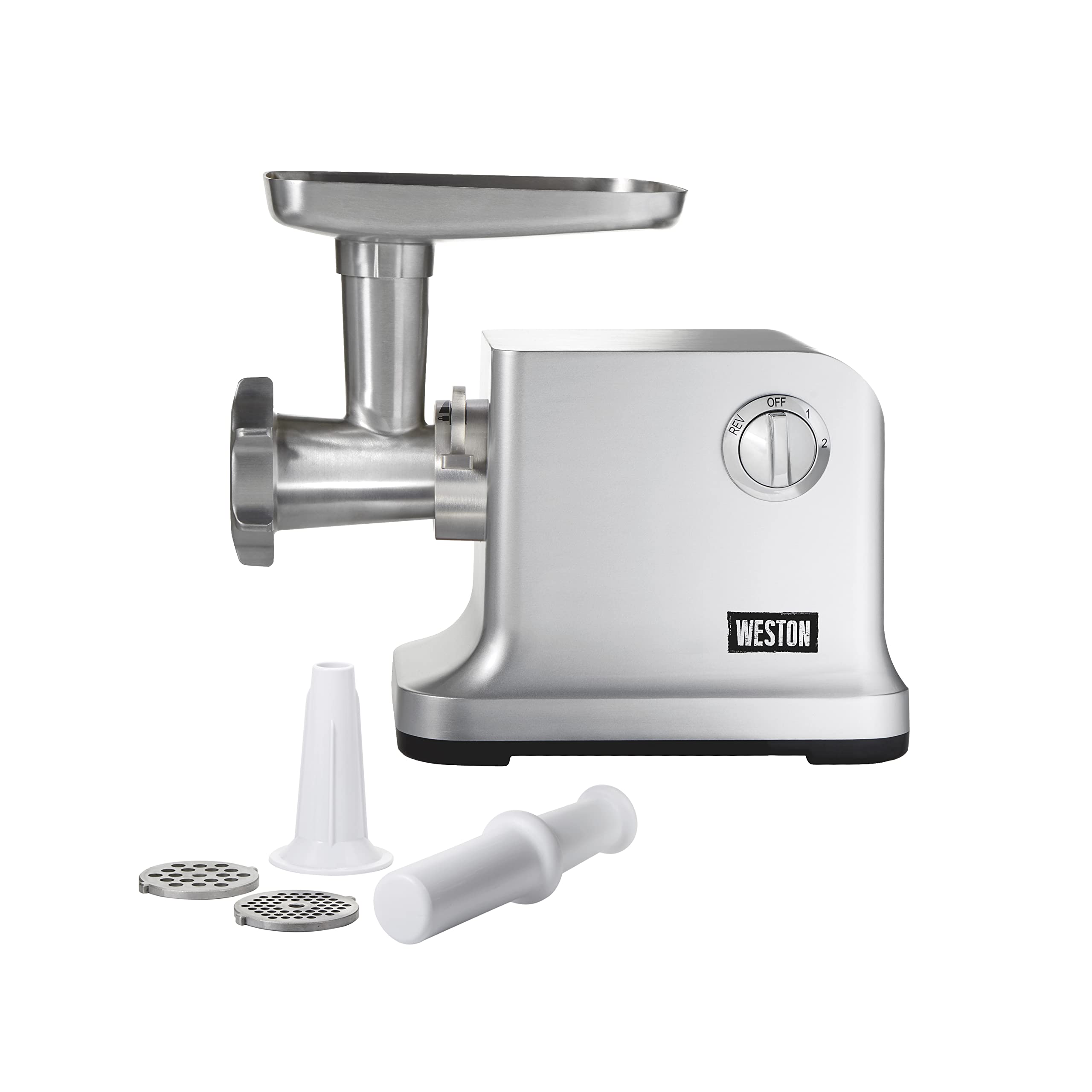
This is the one to get if sausage is the main event and you want a slow speed for stuffing.
Pros
- Two speeds, with the slow setting meant for stuffing casings
- Weston rates it at 4 to 5 lb per minute from a 750-watt, 1 HP motor
- Cam-action headlock speeds up assembly and teardown
Cons
- One-year warranty, the shortest here
- Die-cast aluminum body
- Ships with two grinding plates, medium and coarse
Stuffing sausage through a grinder head works best at low speed, and Weston is one of the few machines on this list that gives you a dedicated slow setting. Faster augers push air into casings.
You can choose a coarse grind for hearty bratwurst or a fine grind for tender franks. An internal circuit breaker safeguards the motor when grinding meat in large volumes.
The cam-action headlock is a small feature that pays off during cleanup. You are breaking the head down after every session, and a lever beats a threaded ring at the sink.
The one-year warranty is worth weighing against LEM’s coverage if you plan to keep this machine for a decade.
Buying Guide
Match the grinder to the pounds you will move in a single session, then check whether the head size and accessories support the rest of your process.
1. Start with volume, not wattage
Wattage alone tells you little. A locked-motor rating and an under-load draw can differ by a factor of three. Use the maker’s pounds-per-minute or pounds-per-hour figure as your primary number.
| Your workload | Rated throughput to look for | Practical head size |
|---|---|---|
| A few pounds at a time, weeknight cooking | 3 lb/min | #5 to #8 |
| One deer per season, occasional bulk buys | 4 to 5 lb/min | #8 |
| Two or more deer per season, regular bulk | 7 lb/min or more | #8 heavy duty or #12 |
| Multiple animals, sausage runs for a group | 180 lb/hr or more | #12 or #22 meat grinder |
2. Understand #8 versus #12
The number sets the plate diameter and throat opening. A #8 head takes plates around 2-1/4 inches; a #12 head takes plates near 2-5/8 inches with a wider throat.
A wider throat swallows bigger chunks. That cuts your cubing time, which is often the slowest part of a processing day. Hunters tackling several elk or hogs may step up to a #22 meat grinder for commercial throughput.
Many beginners start with a stand mixer food grinder attachment. While a meat grinder attachment handles casual meals, dedicated machines excel when grinding meat in large batches.
A food grinder attachment works fine for light batches like meatballs. However, standalone machines with metal gears handle continuous grinding meat without motor strain.
3. Check the grinding plates you get
Most meat grinders include multiple grinding plates. A coarse grinding plate is essential for chili meat and initial prep passes, producing an open coarse grind.
A fine grinding plate delivers the tighter texture required for hot dogs and cured sausages. Achieving a clean fine grind requires cold meat and sharp edges so nothing turns to paste.
Many butchers use double grinding, running meat through the coarse grinding plate before a second pass through the fine plate.
Whenever possible, seek out machines with stainless steel grinding plates for rust resistance and easy sanitation.
Pairing plates with sharp stainless steel blades ensures clean shearing. A coarse grind works nicely for chili, while a fine grind creates uniform ground meat for meatballs.
4. Judge sausage stuffing honestly
A grinder head can package homemade sausages, but it also keeps working the meat as it pushes. Most packages provide sausage stuffing tubes in varying diameters to match snack sticks or bratwurst.
A slow speed setting or a reverse function helps keep air pockets out. Models equipped with forward and reverse controls also make clearing stubborn auger jams simple. For large sausage runs, a dedicated vertical stuffer does a cleaner job.
Connecting a foot pedal gives you hands-free control while guiding casing onto the sausage stuffing tubes during intense sausage making sessions.
5. Weight, storage, and cleanup
A 30-pound stainless grinder lives on a cart. A 9-pound unit lives in a cabinet. Decide which is realistic before you buy.
Every part that touches meat has to come apart and go to the sink. Very few consumer models feature dishwasher-safe parts, so plan on hand washing to preserve internal metals.
Even if an accessory claims to have dishwasher-safe parts, washing stainless steel blades and plates by hand keeps them sharp.
Once your ground meat is prepared, using a burger press helps press tight, consistent patties for the grill or freezer.
Routine meat grinder maintenance keeps equipment running smoothly. Dry all metal parts immediately after washing, then apply food-grade silicone or mineral oil before storage.
Food safety and raw meat handling. Proper food safety prevents bacterial growth and keeps meat fresh during processing. Keep meat and grinder parts at or below 40°F during meat grinding.
Chill the head and auger in the freezer for 30 minutes before starting, since warm metal smears fat. Wash all contact parts in hot soapy water immediately after use, and cook ground meat to 160°F internal.
6. Plan freezer space before you grind
Roughly 35 to 40 pounds of packaged meat fits in one cubic foot of freezer space. An average whitetail yields 50 to 70 pounds of boneless meat, so budget about two cubic feet per deer.
Frequently Asked Questions
What is the best meat grinder for home use?
The LEM Big Bite #8 is our top pick for most home processors, offering a maker-rated 7 pounds per minute and stainless construction. If you grind only a few pounds at a time, lighter options like the Cuisinart MG-100, the Sunmile SM-G50, or the Altra stainless steel electric meat grinder fit standard cabinets well.
For hand-powered processing without electricity, a manual meat grinder such as the Huanyu manual meat grinder is a durable tabletop option.
What brand makes the best meat grinder?
LEM has the strongest combination here: longer warranties, stainless options, and stated replacement-part availability for current and past models. STX competes on accessories and #12 capacity, while Weston stands out for its two-speed stuffing setup.
Is a #8 or #12 meat grinder better for home processing?
A #8 is enough for one or two deer per season and most bulk beef buys. Move to a #12 when you regularly process multiple animals or grind for several households, since the wider throat takes larger chunks and cuts your prep time.
Which meat grinder is best for hunters who process larger batches of venison?
For multiple deer per season, the STX Turboforce 3000 handles high volume, and its #12 head accepts bigger pieces. Serious hunting camps processing bulk game might consider a heavy-duty commercial meat grinder for nonstop output.
Hunters doing one or two deer will find the LEM Big Bite #8 at 7 pounds per minute more than sufficient.
What should you look for when buying an electric meat grinder and sausage stuffer?
Look for a slow speed or reverse function for stuffing, sausage stuffer tubes in multiple diameters, and a safe food pusher. Confirm that durable grinding plates are included and replacements are easy to source.
Check the maker’s throughput rating instead of peak wattage, and confirm the unit fits your space. Prices shift often on Amazon, so check today’s listing before you buy.