Custom exempt meat is processed for the animal’s owner only. 9 CFR 303.1 limits it to the owner’s household and nonpaying guests and employees, and it must be marked “Not for Sale.” USDA inspected meat has passed federal inspection. The FSIS guideline (May 24, 2018) says an animal can have more than one owner, with proof of ownership.
This guide quotes the federal regulation and the FSIS guideline. It is not legal advice, and we did not open any state rules, so check your state before you buy. If you are weighing a share of an animal, see also is buying half a cow worth it.
What Is the Difference Between Custom Exempt and USDA Inspected Meat?
Under 9 CFR 303.1(a)(2), custom slaughter of cattle, sheep, swine or goats delivered by the owner, and preparation of the products “exclusively for use by him and members of his household and his nonpaying guests and employees,” is exempt from the inspection requirements. The same section covers custom preparation of game animals delivered by the owner. FSIS says it currently requires inspection, unless exempted, for meat from cattle, sheep, swine and goats. FSIS says rabbit inspection is voluntary; see how to butcher a rabbit. For goats, see how to butcher a goat.
| Question | Custom exempt | USDA inspected |
|---|---|---|
| Inspection | Exempt from FSIS inspection; FSIS has no registration or approval process for the exemption | Required by FSIS unless exempted |
| Who may eat it | The owner, the owner’s household, and nonpaying guests and employees (9 CFR 303.1) | Not addressed by the pages we opened |
| Sale or donation | FSIS guideline: the custom exempt product cannot be sold or donated | Not covered by the custom exemption |
| Marking | “Not for Sale” (9 CFR 303.1, 316.16) | Not applicable to the exemption |
| Records | Custom operators keep records of livestock slaughtered, products prepared and owners’ names and addresses (9 CFR 303.1) | Not covered here |
What Does “Not for Sale” Mean on the Package?
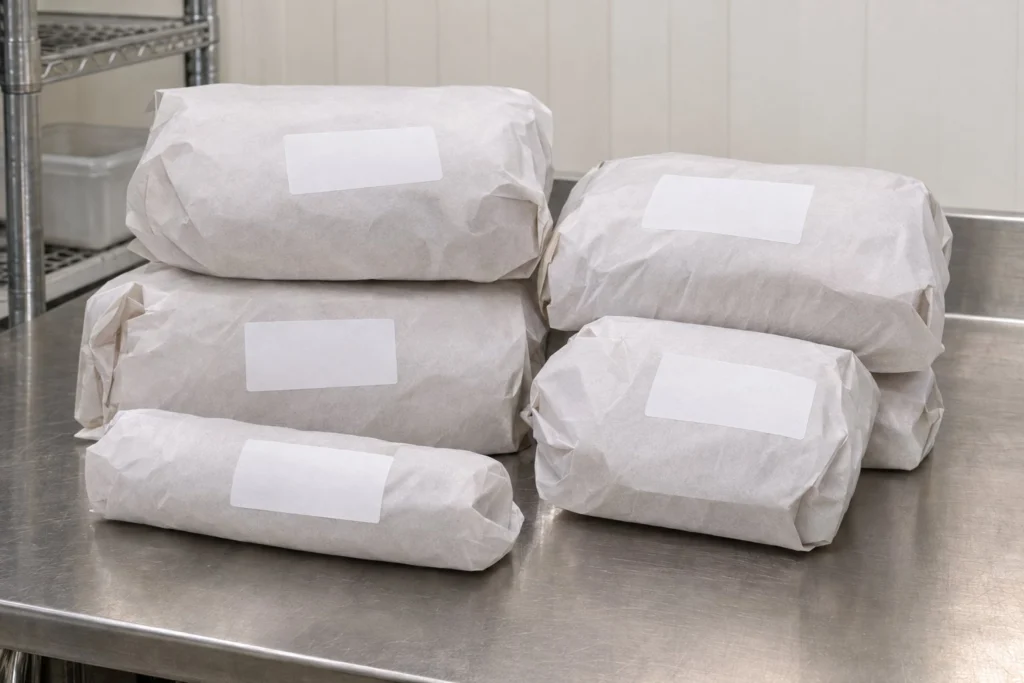
9 CFR 316.16 says custom prepared products must be marked at the time of preparation with “Not for Sale” in letters at least three-eighths inch in height. They need not be marked that way if they are in immediate containers properly labeled under 9 CFR 317.16. Under 303.1, the products must be marked immediately after preparation and kept identified until delivered to the owner. The FSIS guideline says carcasses and parts are marked “Not for Sale,” or placed in immediate containers labeled “Not for Sale,” until delivered to the owner.
Who Can Eat Custom Exempt Meat?
Per 9 CFR 303.1, the owner’s household, nonpaying guests and employees. The FSIS guideline says the custom exempt product cannot be sold or donated because it is exclusively for use by the owner in their household. It also says there is no limit on the number of livestock an owner may slaughter and process for personal use. If you plan to slaughter your own hog at home, see how to butcher a pig.
Can Two Families Split an Animal?
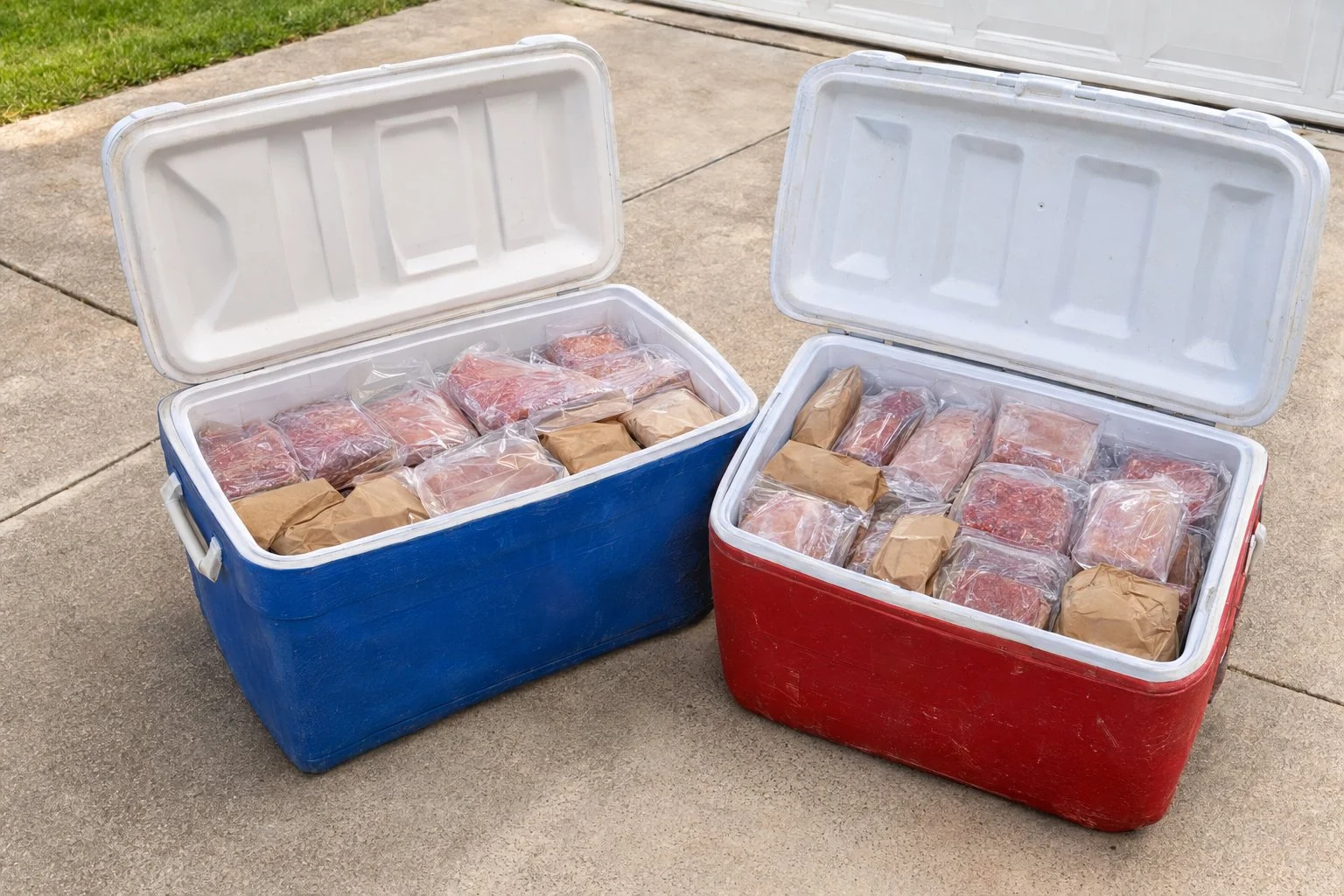
The FSIS guideline (May 24, 2018) says there may be more than one owner of the live animal and that sharing a live animal is acceptable if proof of ownership is available on request. For more than one owner, it says a list of the individual owners’ names is required before slaughter. The guideline itself says FSIS guidance documents lack the force and effect of law, and we did not check how herd shares are treated by regulators. For cut and yield planning, see how much meat from a half hog. For labeling the packages you bring home, see how to label frozen meat.
How Are You Charged?
The guideline says the custom exempt operator can only charge the owner a service fee for the livestock slaughtered or prepared on a custom basis, not for the meat food product itself. It describes the sale of the live animal as based on live weight, price per head or another quantity pertaining to the live animal. We do not say how any farm prices its shares; ask the seller what you are buying.
What Can a Customer Ask the Processor?
- Whether the operator keeps the owner records and a list of owners’ names that the regulation and guideline describe.
- Whether trimmings will be commingled. The guideline says commingling for ground product or sausage is allowed with each owner’s written consent, and the result must be marked “Not for Sale.”
- Which state or local permit the operator holds. FSIS recommends exempt operations be appropriately permitted through State and local authorities.
- How specified risk materials are handled. The guideline says custom exempt product cannot contain them, such as the skull, brain and spinal cord of cattle 30 months and older.
What Do the Sources Not Say?
- Any state’s rules, licenses or permits.
- How regulators treat herd shares. We cite only the dated guideline sentence.
- Penalties or enforcement.
- Whether custom exempt or inspected meat is safer. Neither page we opened compares them.
SAFETY: This is not a safety ranking. The pages we opened describe who may eat custom exempt meat and how it is marked; they do not say it is safer or less safe than inspected meat.
Custom Exempt vs USDA Inspected: Quick Answers
Is custom exempt meat safe?
The pages we opened describe the exemption’s rules, including the specified risk materials limit, but do not compare custom exempt with inspected meat, and we do not rank them.
Can I sell custom exempt meat?
No. The FSIS guideline says custom exempt product cannot be sold or donated.
Can I have a deer processed custom exempt?
9 CFR 303.1 covers custom preparation of game animals delivered by the owner. The guideline we opened lists cattle, sheep, swine and goats for slaughter, so the game text applies to preparation only.
Can I get inspected meat from my own animal?
The guideline says an owner’s animal may be slaughtered under USDA inspection if the owner wants, at a plant that also has an official USDA inspected operation, and returned after it passes inspection.