
Remove silver skin from venison by lifting one edge with the knife tip, gripping that tab, and pulling the membrane taut. Then guide a sharp, thin blade along the underside of the membrane, angled slightly up into it. The tough membrane resists the edge, so the meat stays on the cut. Work cold, at 40°F or below.
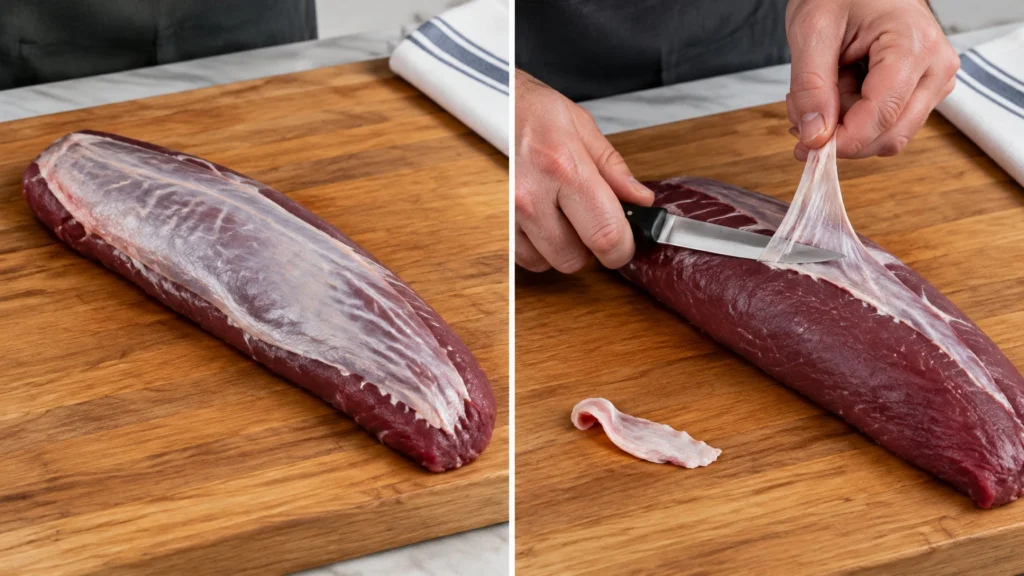
You will be able to clean a backstrap or roast without leaving strips of good meat on the trim pile. You will also know which cuts need a full trim and which can keep some tissue for a slow braise. The method is simple: lift an edge, pull it tight, and keep the blade angled into the membrane so the meat stays on the cut. You also get fixes for torn strips and slipping grips, plus the food-safety numbers that apply while venison sits on the board.
What You Need Before You Cut
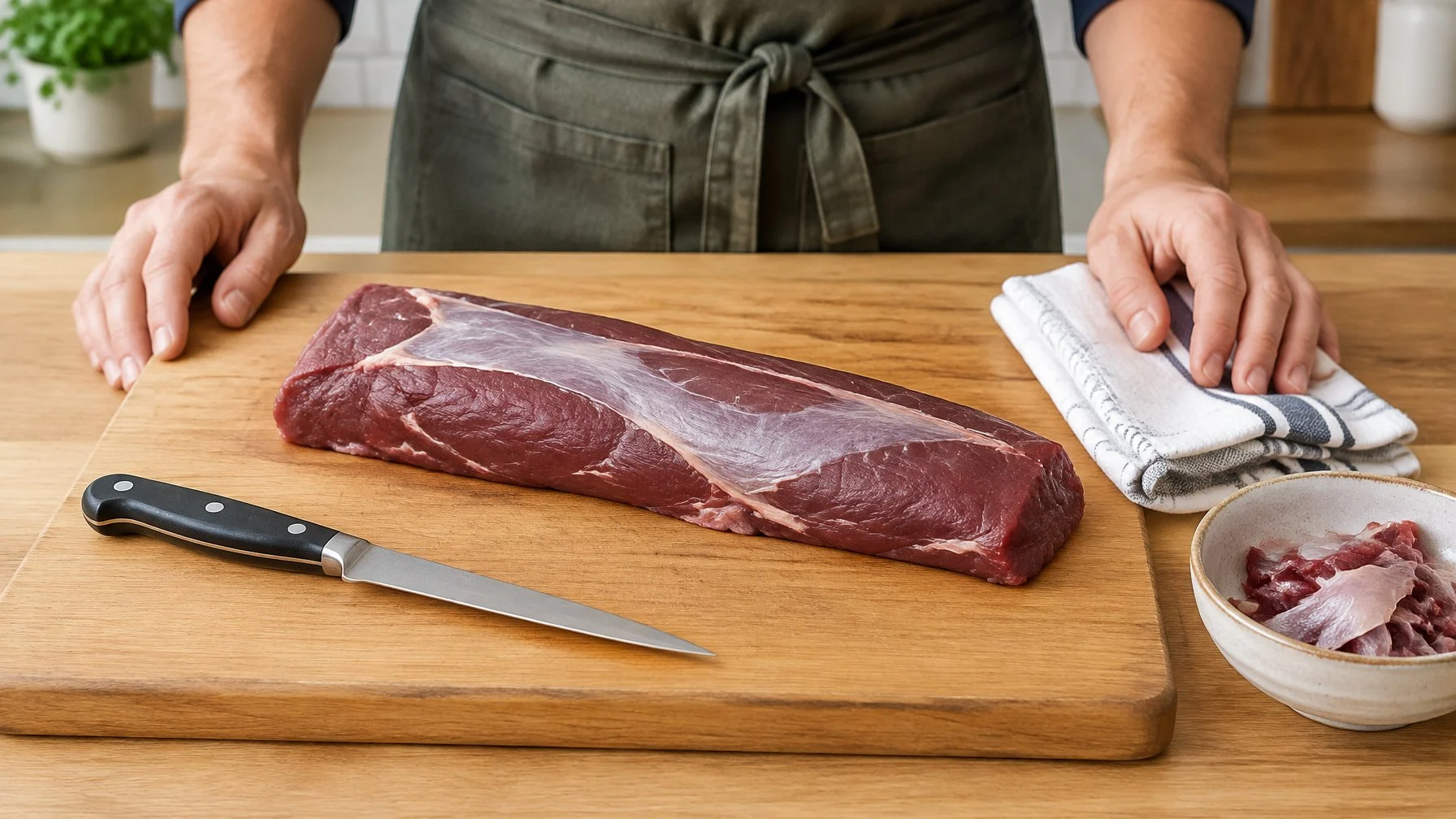
You need two kinds of preparation. The first is the right blade on a stable board. The second is cold meat on a clean station.
Which Knife and Cutting Surface Work Best?
A sharp knife with a thin, narrow blade does this job best. A 6-inch boning knife with some flex fits most hands and most cuts. It bends just enough to follow the curve of a loin. The narrow tip slips under the membrane without digging into the meat.
New Mexico State University’s deer processing guide lists a sharp narrow-bladed knife as core equipment for boning venison. Ours is the same advice. A dull edge tears the membrane and pushes meat around. A sharp edge slides.
| Equipment type | What to look for | Why it helps |
|---|---|---|
| Boning knife | 5 to 6 in., narrow, semi-flexible | Follows the muscle curve and fits under the membrane |
| Honing rod | Steel or ceramic | Keeps the edge straight between cuts |
| Cutting board | Plastic or solid wood, 12 x 18 in. or larger | Gives room to lay a full backstrap flat |
| Damp towel or mat | Under the board | Stops the board from sliding |
| Paper towels | Plain, unscented | Dries the tab so you can grip it |
| Disposable gloves (optional) | Textured nitrile | Adds grip and protects cuts on your hands |
If you are shopping, our roundup of the best knife for processing deer sorts boning knives by blade length and flex.
Keep the Meat Cold and the Work Area Clean
Cold meat is firm, and firm meat separates cleanly from the membrane. Warm venison goes soft and moves under the blade. That leads to ragged cuts and lost meat.
Set up your station in this order:
- Clear and wash the counter with hot, soapy water.
- Lay a towel, then the board, then your knife and a trim bowl.
- Pull one cut at a time from the fridge. Leave the rest at 40°F or below.
- Return each cleaned cut to the fridge before you take out the next.
SAFETY: USDA FSIS says your refrigerator should hold 40 °F or below, and perishable meat should not sit out longer than 2 hours (1 hour above 90 °F). Wash your hands with warm, soapy water for 20 seconds before and after handling raw venison. After trimming, wash the board, knife, and counter with hot, soapy water. You can sanitize boards with 1 tablespoon of unscented liquid chlorine bleach per gallon of water. For the full guidance, see USDA FSIS.
Trim the Membrane in 5 Steps
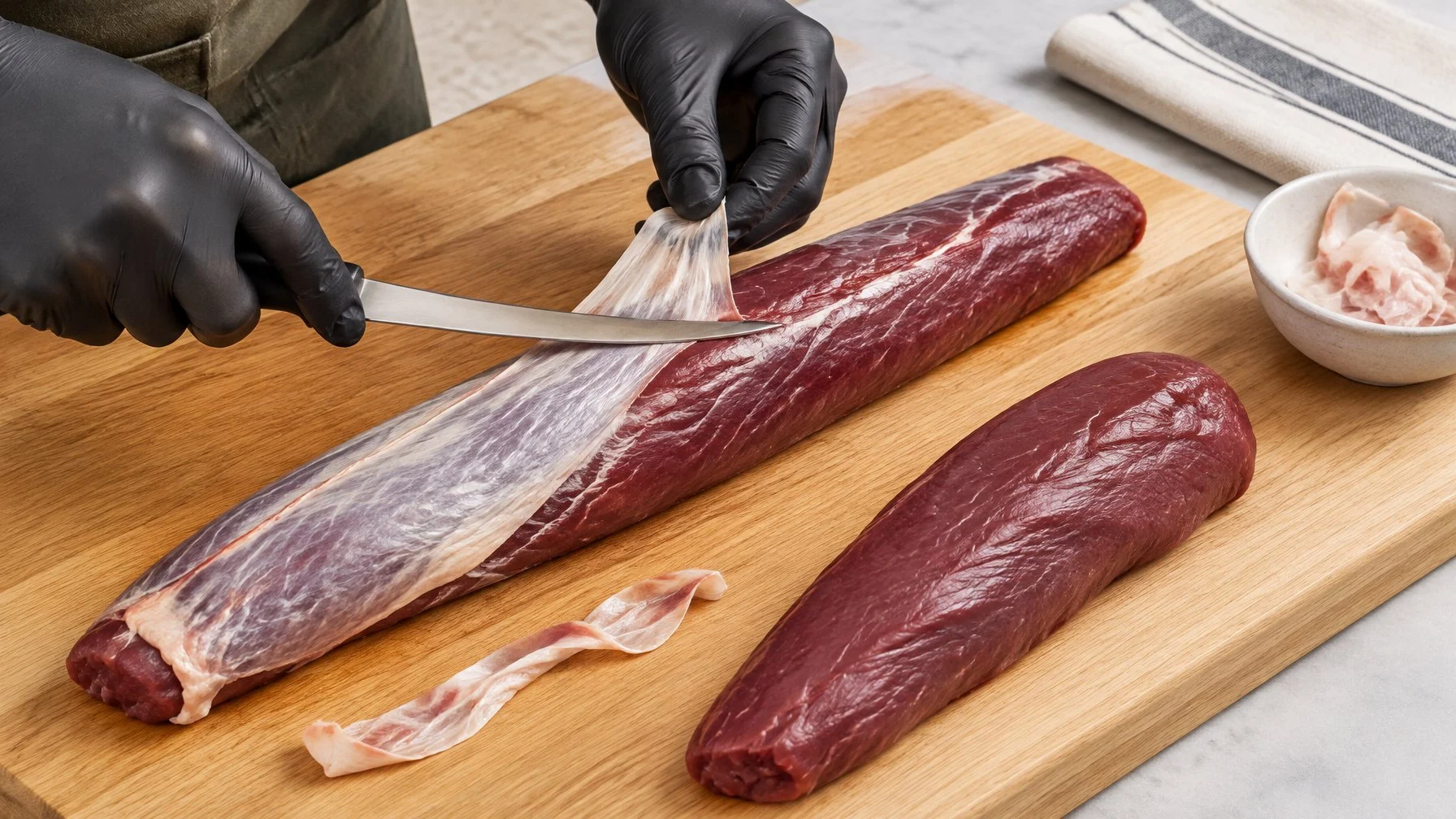
Silver skin is a thin, shiny layer of connective tissue that wraps certain muscles and stays tough and chewy when cooked quickly. Working with a sharp knife makes the job fast and clean. The five steps run in order: chill, find an edge, cut a tab, peel with the blade, and clean up what is left.
1. Chill and Position the Cut
Start with venison straight from the fridge, silver side up. Firm meat holds its shape while you cut.
Pull off any loose fat by hand first. It comes away easily and clears your view of the membrane. Lay the cut long side toward you so your knife strokes run its full length. If you are right-handed, start at the left end so your knife hand moves away from the hand doing the gripping.
2. Find an Edge You Can Lift
Look for the spot where the membrane ends or thins out. A starting edge gives the knife tip a way in.
On a backstrap, the ends are the easiest place to start. Run a fingertip along the surface. The silver skin feels slick and tight, and the meat feels softer. Pick a spot where the shiny layer is wide and in one piece.
3. Cut a Tab to Grip
Slip the knife tip under the membrane and cut toward the end to free a strip about 1 inch long. That strip is your handle.
Keep the blade edge angled up against the silver skin as you cut. The tab only needs to be long enough to pinch between thumb and finger. If it feels wet, dry it with a paper towel.
4. Pull Taut and Guide the Blade Along the Membrane
Hold the tab and pull it up and back. Then slide the blade the other way, edge tilted slightly up into the membrane. Tension keeps the membrane flat against the edge.
Use long, smooth strokes. The silver skin is tougher than the meat, so the edge rides along it and pushes the meat off. Let the knife do the work. Pressing down drives the blade into the muscle.
Some cooks flip the cut and work membrane-side down, like skinning a fish fillet. Hold the tab, angle the blade down toward the board, and draw the meat across the edge. A longer flexible blade suits that method.
5. Reposition and Remove Remaining Strips
Silver skin on a wide loin comes off in two or three strips, one for each blade width. Shift your grip and start the next strip right beside the last one.
Run your thumb over the cleaned meat. Any slick spot is leftover membrane. Lift it with the knife tip and remove it. The trim goes in a separate bowl, since most of it is too tough for the grinder.
Which Cuts Need Thorough Trimming?
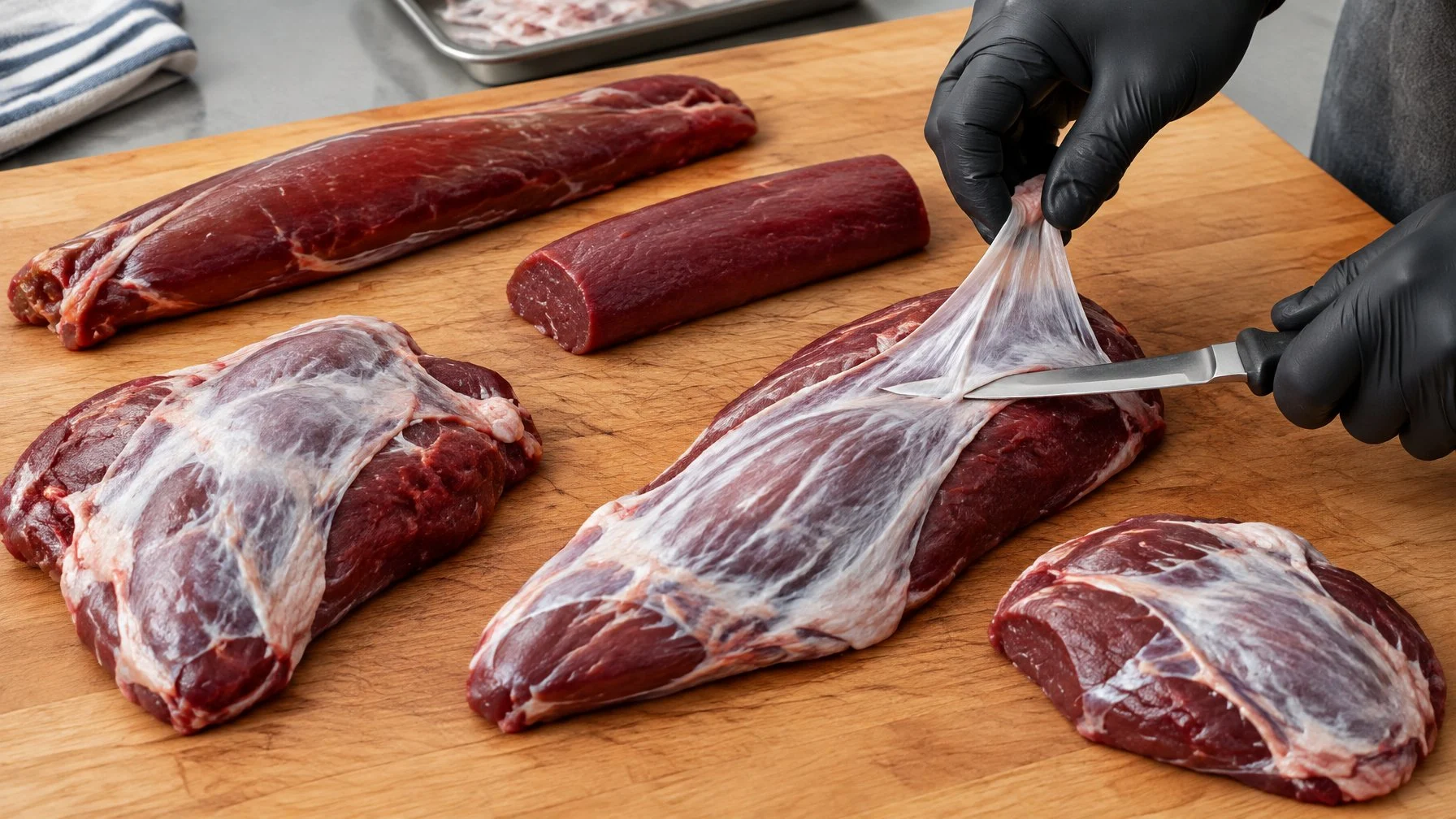
Fast-cooking cuts like backstrap need every bit of membrane removed. Meat headed for the grinder needs nearly as much care. Slow-cooked roasts can keep some connective tissue.
Backstrap and Other Quick-Cooking Cuts
Anything cooked hot and fast needs a full trim. That includes backstrap, tenderloin, and steaks from the hindquarter. Silver skin shrinks under high heat. It curls steaks and turns bites chewy.
The backstrap comes with a thick outer sheath of silver skin, and all of it should come off before searing. Trimmed silver skin also lets rubs and marinades reach the meat. Some hunters leave the sheath on during freezing as a protective layer, then trim right before cooking.
If you are breaking down a whole deer, our guide on how to butcher a deer shows where each of these cuts sits.
Grinding Trim and Slow-Cooking Cuts
Grinding trim needs most of the silver skin removed. Sinew wraps around the grinder knife, clogs the plate, and smears the meat. A sharp plate and cold meat help. For tips on chilling, see how long to freeze meat before grinding. For grinder picks, see our roundup of the best meat grinder for deer.
Shoulder roasts, neck, and shanks are a fair place to accept a trade-off. Long, moist cooking breaks connective tissue down into gelatin. Trim the thick outer layers and leave the thin seams inside.
| Cut | Cooking method | How much to trim |
|---|---|---|
| Backstrap / loin | Sear, grill | All silver skin |
| Tenderloin | Sear, grill | All silver skin |
| Hindquarter steaks | Pan, grill | All silver skin |
| Grinding trim | Burger, sausage | Most silver skin and all thick sinew |
| Shoulder, neck | Braise, slow cook | Thick outer layers only |
| Shank | Braise | Light trim; leave inner tissue |
Fix Common Trimming Problems
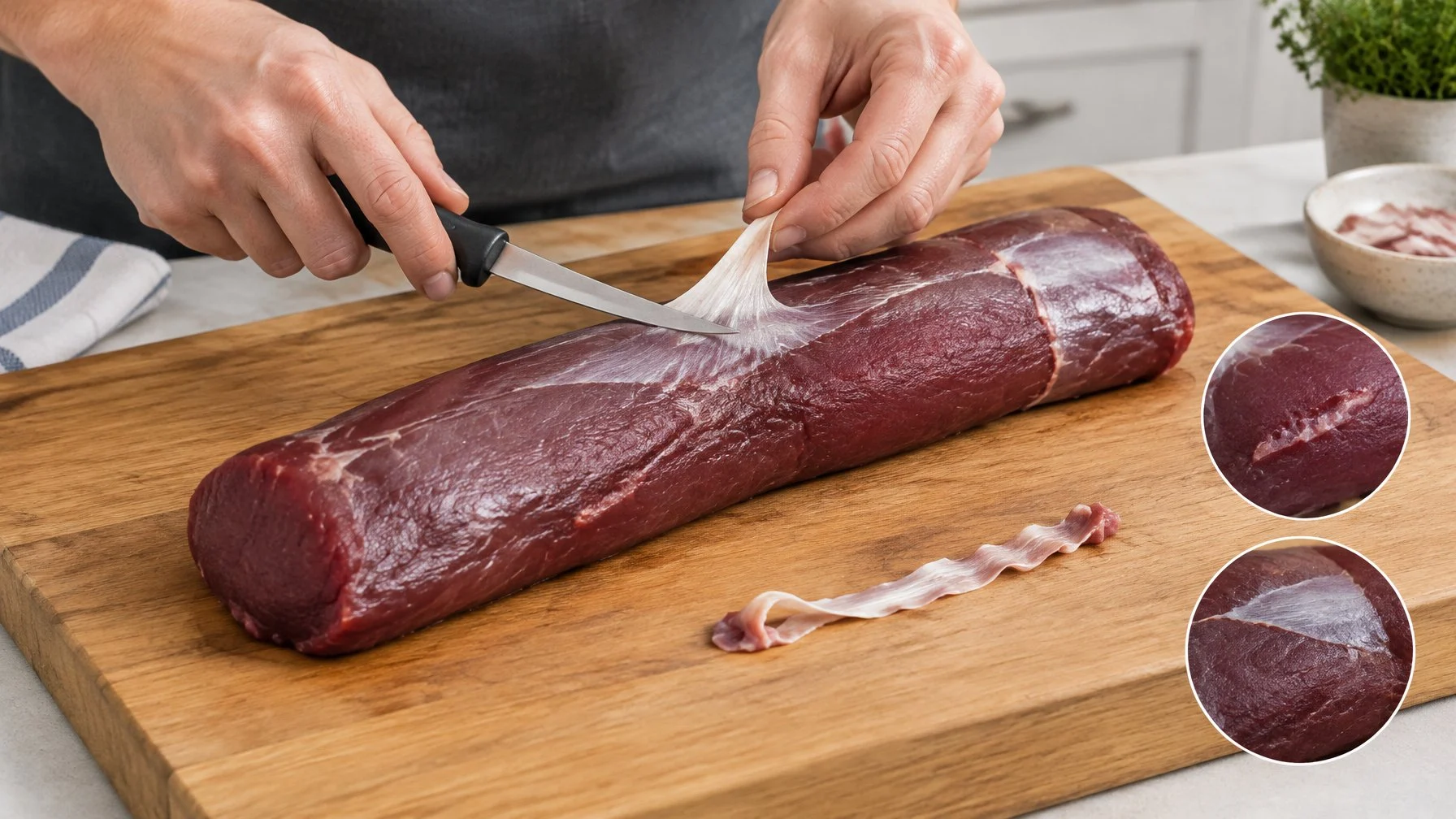
Most trimming trouble traces to blade angle, grip, or the type of tissue in front of you. The four fixes cover torn strips, meat left on the trim, a slipping tab, and thick tendons.
The Membrane Tears Before the Strip Comes Off
A torn strip usually means the blade tilted up too far and cut through the silver skin. Lower the angle until the edge just rides against the membrane.
A dull edge causes the same tear. Switching to a truly sharp knife prevents ragged snagging. Hone the edge before you go back to work, then cut a fresh tab from the torn end and keep going.
Too Much Meat Stays on the Removed Strip
Meat on the strip means the blade angle points down into the muscle. Tilt the edge up toward the membrane so it pushes meat away.
Ease up on downward pressure, too. Pull the tab a bit harder and let tension lift the silver skin off the meat. If a strip already carries a thick layer, lay it flat and shave the meat off for the grind bowl.
The Tab Slips Out of Your Fingers
A slipping tab is almost always a wet tab. Dry it and your fingers with a paper towel before you grip again.
Two other fixes help:
- Pinch the tab inside a folded paper towel for extra grip.
- Wear textured nitrile gloves, which also cover any small cuts on your hands.
Make the tab a little longer too. About 1 inch gives you enough to hold firmly.
A Thick Tendon Will Not Peel Away
Thick tendons are tougher than silver skin and do not peel like a membrane. Cut them out instead.
Slice along both sides of the tendon, then lift it out with the meat attached and trim the meat off on the board. On shanks and lower legs, the meat between tendons is good for grinding once you remove the heavy tissue. Collect those pieces for burger or sausage making.
Venison Silver Skin: Quick Answers
These answers cover the questions hunters ask most about removing, eating, grinding, freezing, and picking a knife for silver skin.
Do you have to remove silver skin from deer meat?
You should remove silver skin from any venison you plan to cook quickly, such as backstrap, tenderloin, and steaks. It shrinks and stays chewy under high heat. On roasts headed for a long braise, you can leave the thin inner seams, since slow cooking softens connective tissue. Trim thick outer layers either way for better texture.
Can you eat the silver skin on venison?
Yes, silver skin is safe to eat. The issue is texture. It does not melt like fat, so on a seared steak it stays tough and makes the meat curl as it cooks. Long, moist cooking breaks it down. For grilled or pan-seared cuts, trim it off for a tender bite.
Can you leave silver skin on venison before grinding it?
You can leave small, thin bits, but remove most of it and all thick sinew. Silver skin wraps around the grinder knife and clogs the plate. That causes smearing and slows the job. Cold meat and a sharp plate help, and a careful trim before grinding saves you from stopping to clean the head.
Should you remove silver skin before freezing venison?
Either way works. Some hunters leave the silver skin on backstraps during freezing as an extra protective layer, then trim it once the meat thaws. Others trim first so cuts are ready to cook. Trimmed or not, wrap venison tightly to keep air out, and keep your freezer at 0°F or below.
What is the best knife for removing silver skin from a backstrap?
A sharp knife such as a 5- to 6-inch boning knife with a narrow, semi-flexible blade suits most backstraps. The narrow tip slides under the membrane, and the slight flex follows the curve of the loin. Keep it honed between cuts. A longer flexible blade suits the fish-fillet method, working with the membrane facing down.
This is general guidance based on USDA recommendations. When in doubt, follow the USDA FSIS source linked above.
Once your cuts are clean, our guide to the venison burger fat ratio shows how to turn the grinding trim into burger.