
For 80/20 venison burgers, add 0.25 lb (4 oz, about 113 g) of fat to every 1 lb of lean venison. That makes a blend that is 20% added fat by weight. Pork fatback is the cleanest choice because it is close to pure fat. Grind it cold, form loose patties and cook them to 160°F in the center.
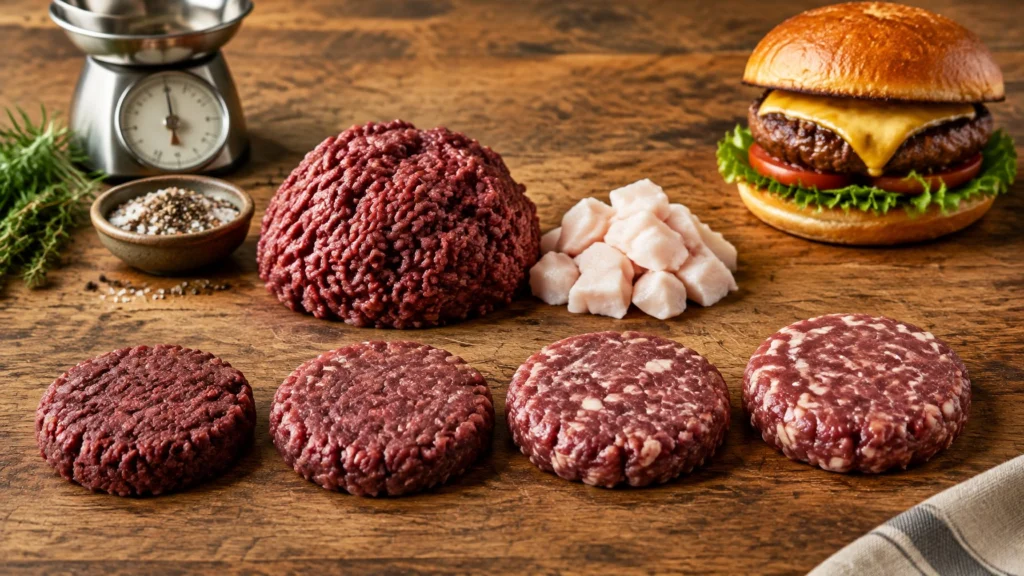
You will be able to work out the fat weight for any batch size, from 1 lb to a full deer. The guide gives the formula, a batch table, and the gear to set out. It also covers a cold-grind workflow and the USDA cooking temperature. It explains why pork belly and bacon throw off the math, and how to fix dry, greasy, crumbly or smeared patties in the next batch.
How Much Fat Should You Add to Venison Burgers?
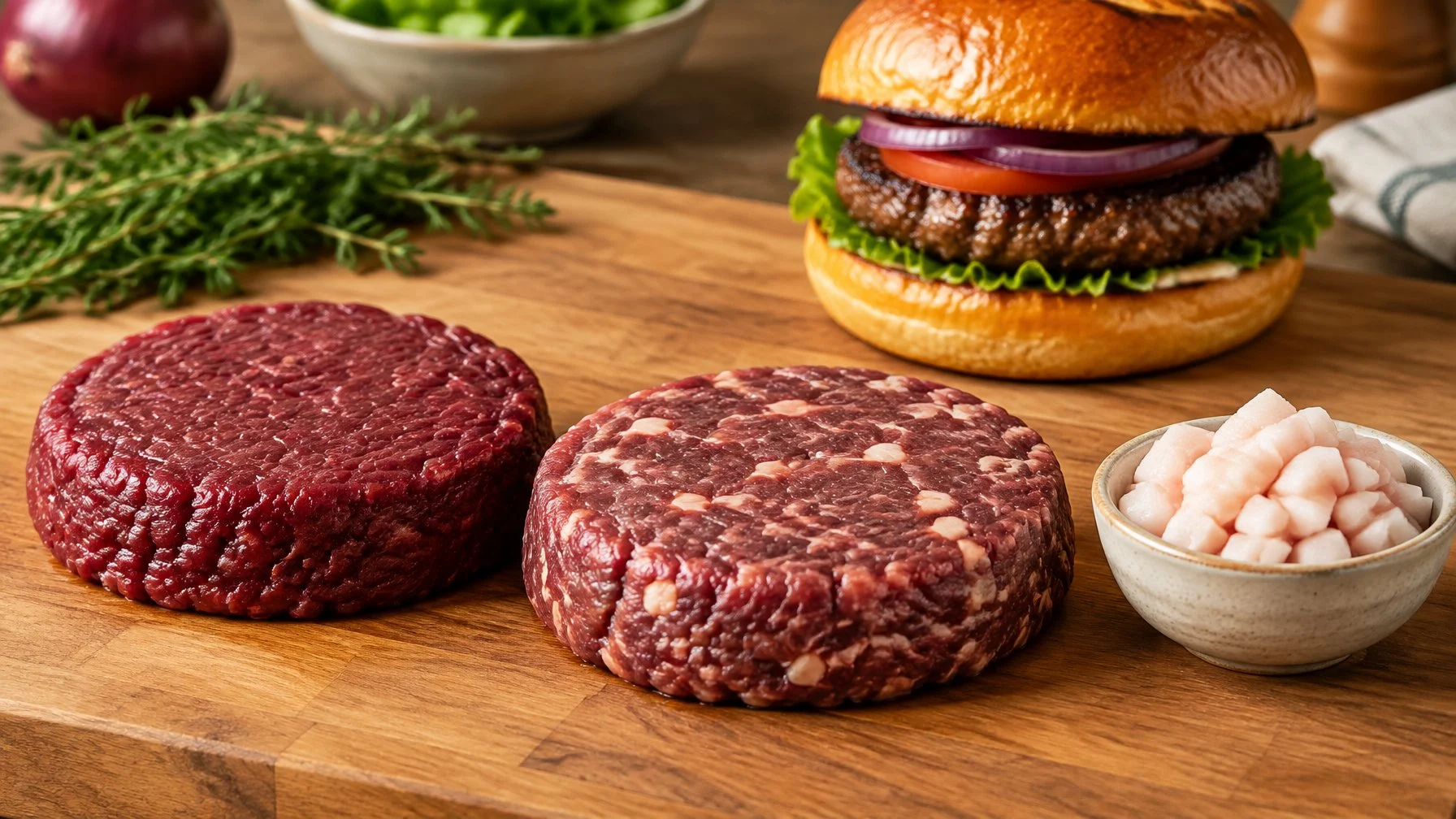
Start at 80/20, use one formula to scale any batch, and move to 85/15 or 90/10 only when the cooking method calls for it.
Start with 80/20 for Burgers
An 80/20 blend is 80% lean meat and 20% fat by total weight, the standard ratio for a juicy, well-bound burger patty.
Trimmed venison is very lean. On its own, it dries out fast on a hot grill and falls apart when you flip it. Fat carries moisture and flavor, and it helps the patty hold together.
At 80/20, a patty has enough fat to stay juicy at 160°F. That matters with venison, because you cannot stop at medium-rare with ground meat.
How Much Fat Do You Add per Pound of Lean Venison?
Use this formula:
Fat to add = lean venison weight × target fat fraction ÷ (1 − target fat fraction)
For 80/20, that is 1 lb × 0.20 ÷ 0.80 = 0.25 lb. Many people make the mistake of adding 20% of the venison weight (0.2 lb). That gives you about 83/17.
| Lean venison | 80/20 fat to add | 85/15 fat to add | 90/10 fat to add |
| 1 lb (454 g) | 4 oz (113 g) | 2.8 oz (80 g) | 1.8 oz (50 g) |
| 5 lb | 1.25 lb | 0.88 lb | 0.56 lb |
| 10 lb | 2.5 lb | 1.76 lb | 1.11 lb |
| 25 lb | 6.25 lb | 4.41 lb | 2.78 lb |
This math treats the venison as lean and the added fat as pure fat. Trimmed venison carries a little fat of its own, so your real blend runs slightly richer than the label.
When Should You Choose 85/15 or 90/10 Instead?
Pick 85/15 for smash burgers or thin patties on a flat-top. Rendered fat pools fast on a griddle, and less fat means less spatter.
Pick 90/10 for ground venison you will brown for chili, tacos or sauce. You drain most of the fat in those dishes anyway.
Stay at 80/20 for thick grilled patties. The fire pulls fat out through the grates, and that patty needs the most help staying moist.
What You Need Before Mixing
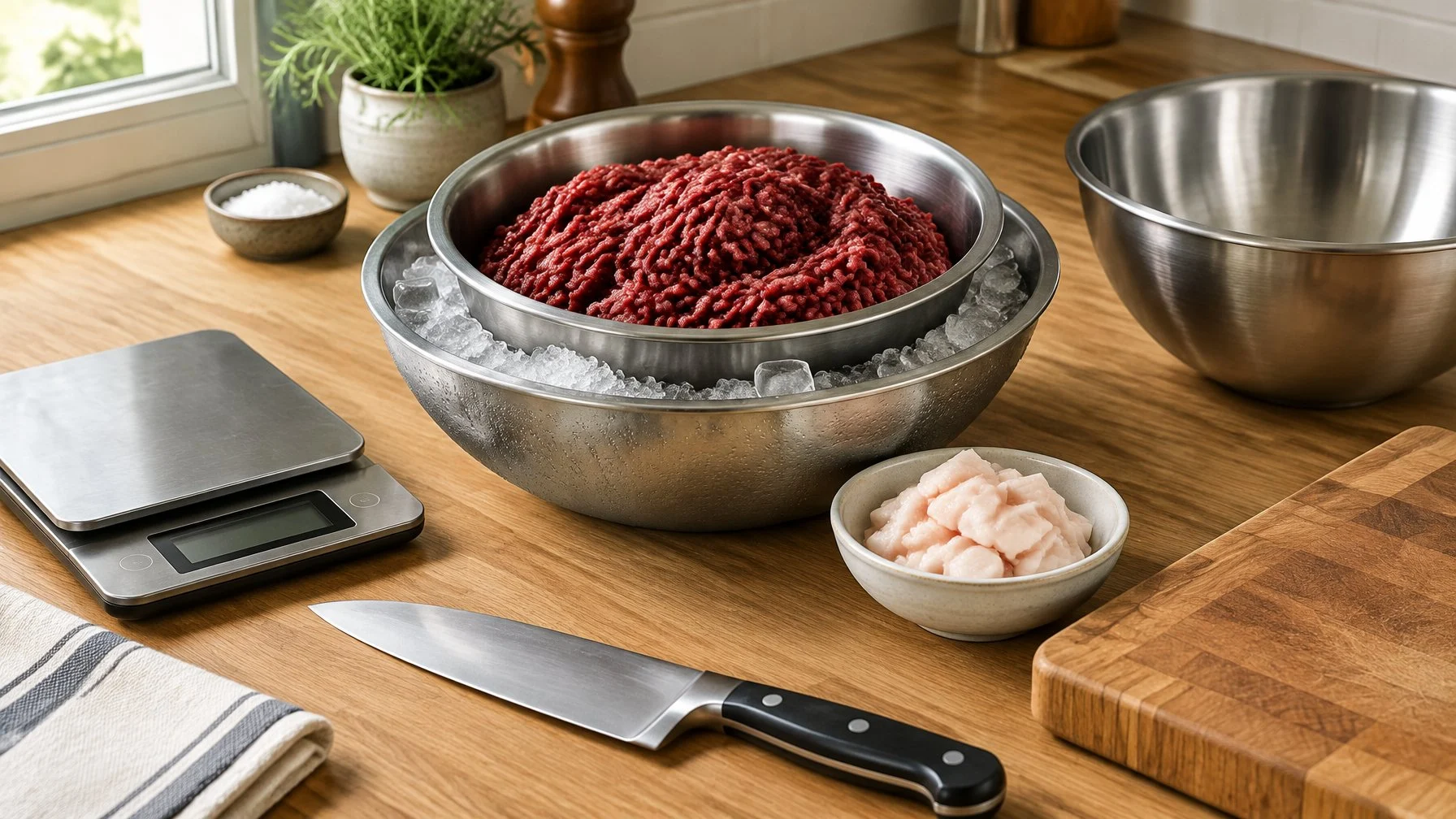
Your fat choice sets the flavor, a scale sets the ratio, and a short list of chilled gear keeps the grind clean.
Choose a Fat That Fits the Flavor You Want
Pure fat makes the math work. Fatty cuts with lean meat in them do not count at full weight.
| Fat | Pure fat? | Flavor | Math note |
|---|---|---|---|
| Pork fatback | Yes, close to it | Mild, neutral | Count full weight |
| Beef fat trim | Mostly | Beefy | Count full weight if trimmed clean |
| Pork belly | No | Rich, porky | Has lean layers; count only the fat portion |
| Bacon | No | Smoky, salty | Has lean meat and cure; adds salt |
If a piece of belly looks about half fat, count only half its weight toward the fat target. That means you need roughly twice as much belly to reach 80/20. Bacon also brings cure and salt, so season the blend lightly.
Weigh Ingredients for a 1 lb Venison Batch
This batch yields 1.25 lb, or four 5 oz patties.
- 1 lb (454 g) trimmed lean venison, cut into 1-inch cubes
- 4 oz (113 g) pork fatback, cut into 1-inch cubes
- Kosher salt and black pepper, to taste, added at cooking
Prep time is about 20 minutes plus 30 minutes of chilling. Cook time is 8 to 12 minutes.
Weigh by grams when you can. A kitchen scale that reads in 1 g steps makes small batches exact.
Set Out a Scale, Grinder, Bowl, and Thermometer
Set up this short list before you cut anything:
- Digital kitchen scale with a tare button
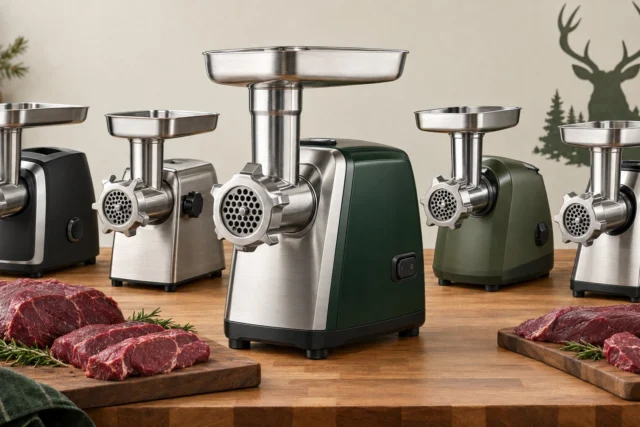
- Meat grinder with a sharp knife and a 3/16-inch (4.5 mm) or 1/4-inch plate
- Metal mixing bowl, chilled in the freezer
- Instant-read thermometer with a thin probe
- Sheet pan and parchment for freezing cubes and patties
In a commercial kitchen, a grinder head that runs warm smears fat by the second batch. Owner reviews show the same pattern on small home units. Metal heads that go in the freezer hold up better than plastic parts.
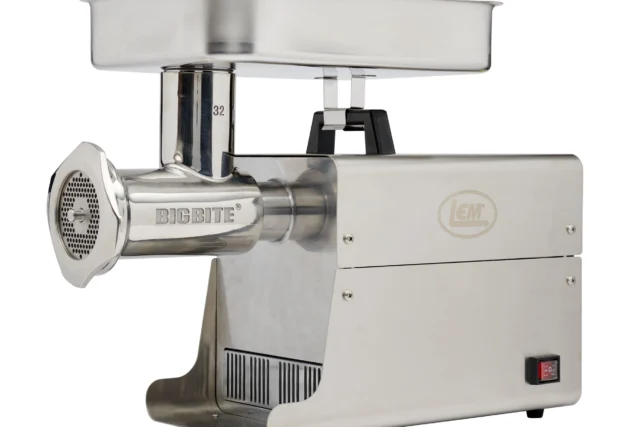
Cold parts help as much as cold meat. In its grinding FAQ, LEM says to put the head, auger, plates and meat pan in the freezer for 30 minutes before you grind. LEM’s Big Bite manual says meat should be 40°F or colder; if it mashes, chill it again. Most home grinders come with a coarse plate of about 10 mm (3/8 inch) and a fine plate of about 4.5 mm (3/16 inch), and the LEM #12 ships with that pair. Run venison through the coarse plate first, then the fine plate.
How to Grind, Mix, and Cook the Patties
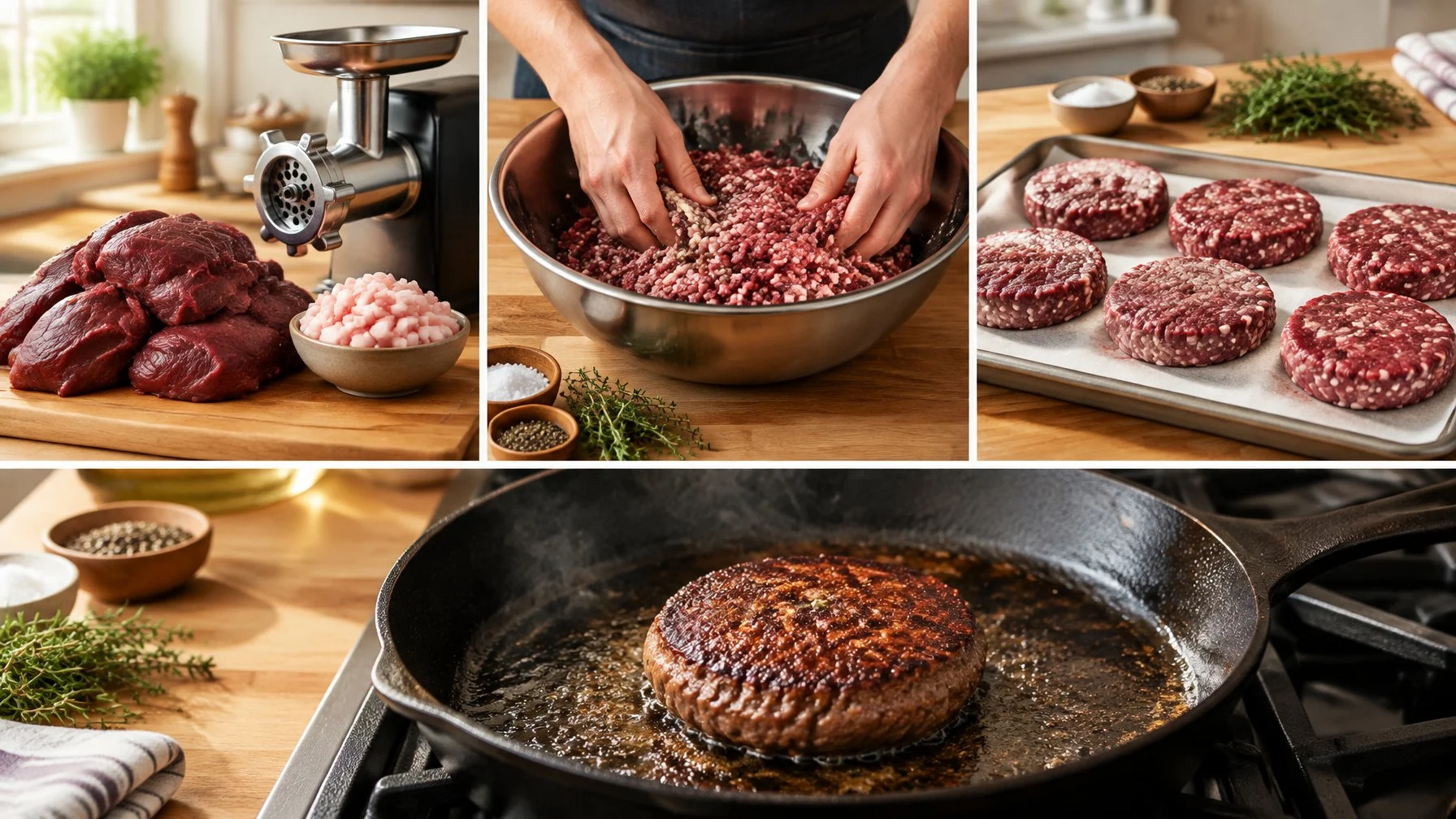
The workflow runs cold to hot: chill, grind, shape gently, then cook to a measured center temperature. Each step has one job.
1. Chill and Cube the Venison and Fat
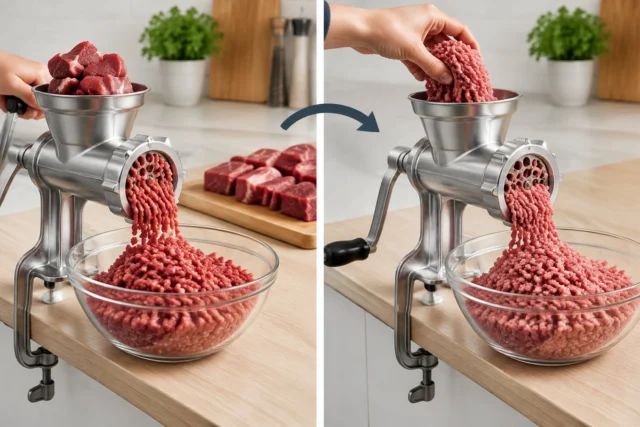
- Cut venison and fat into 1-inch cubes. Even cubes feed the grinder evenly.
- Spread the cubes on a sheet pan and freeze for 20 to 30 minutes, until firm at the edges. Firm fat cuts clean.
- Put the grinder head, auger, knife and plate in the freezer at the same time. Cold steel keeps fat from melting.
Keep raw meat at 40°F or below whenever it is not being worked. The USDA explains that bacteria grow fastest between 40 and 140°F.
2. Grind and Distribute the Fat Evenly
- Toss the venison and fat cubes together in the chilled bowl. Mixing first spreads the fat through the whole grind.
- Grind once through a 3/16-inch or 1/4-inch plate into the cold bowl. One pass keeps the texture loose.
- Check for white streaks spread evenly through the red meat. Clumps of fat mean the cubes were not mixed well.
For a finer texture, chill again for 10 minutes and grind a second time.
3. Shape Patties Without Overworking the Mix
- Weigh 5 oz portions. Equal weight means equal cook time.
- Press each into a patty about 3/4 inch thick. Thick patties stay juicy longer at 160°F.
- Press a shallow dimple in the center with your thumb. It stops the patty from puffing up in the middle.
- Chill the patties for 15 minutes before cooking. Cold patties hold their shape on the grate.
Handle the meat as little as you can. Warm hands melt fat.
4. Cook and Check the Center Temperature
- Salt and pepper the outside right before cooking. Salt mixed in early firms the texture.
- Cook over medium-high heat, about 4 to 6 minutes per side. Flip once.
- Slide an instant-read probe in through the side to the center. For thin foods like patties, USDA says the probe’s 2 to 3 inch sensing area must reach the center.
- Pull the patty at 160°F. Color does not tell you a burger is safe.
Safety: Follow USDA FSIS Ground-Meat Guidance
Chronic wasting disease (CWD) is a separate risk, and cooking and freezing do not deal with it. If you hunt where CWD is found, the CDC advises getting the animal tested before you eat it, and not eating meat from any animal that tests positive. Wear latex or rubber gloves while you dress and handle the meat, handle the brain and spinal cord as little as possible, and keep your kitchen knives out of field work. If a processor does the work, ask for your deer to be processed separately. Rules differ by state, so check your state wildlife agency’s CWD guidance before the season.
Troubleshoot Dry, Greasy, or Crumbly Burgers
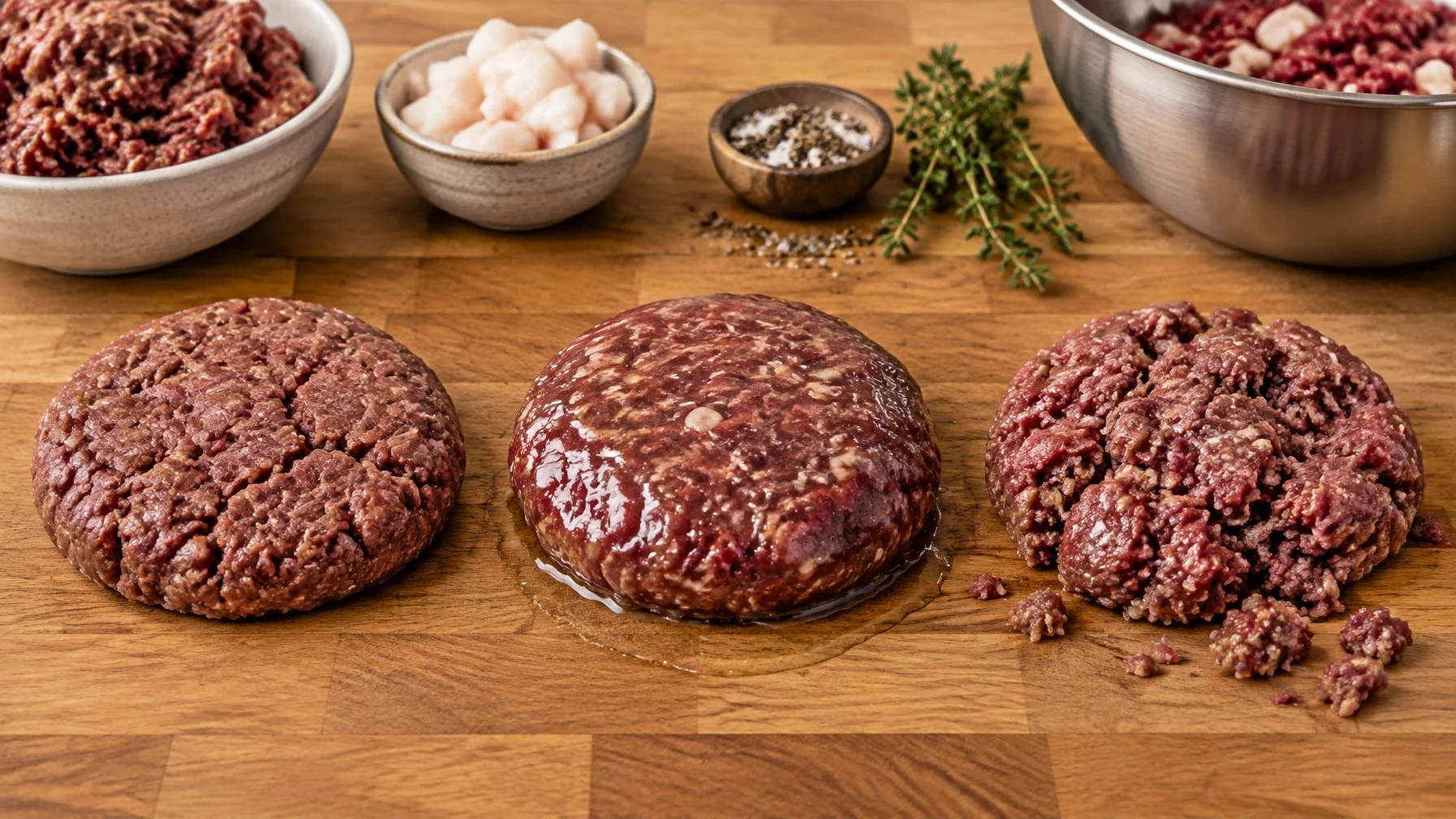
Dry, greasy, crumbly and smeared patties each trace back to one or two causes. Fix them in the next batch.
Dry Patties: Check the Ratio and Cooking Temperature
Dry burgers come from too little fat or too much heat. Recheck your math first. If you added 20% of the venison weight, you made about 83/17.
Next, check your pull temperature. Patties left on the grill past 160°F keep losing juice. Pull at 160°F and serve right away. If thick patties still run dry, move from 85/15 to 80/20.
Greasy Patties: Reduce the Fat in the Next Batch
Greasy burgers mean the fat is high for your cooking method. Drop one step, from 80/20 to 85/15. For 1 lb of venison, that cuts the fat from 4 oz to 2.8 oz.
Check whether you counted pork belly or bacon as pure fat. That mistake pushes the ratio off, and bacon adds salt too. Cook on a grate or rack if you want more fat to drip away.
Crumbly Patties: Check the Grind and Shape Gently
Crumbly patties come from low fat, a coarse plate or loose shaping. A 3/16-inch plate binds better than 3/8-inch.
Press the patty firm enough to hold its edges, then stop. Chill patties for 15 minutes before cooking. Flip once, with a wide spatula.
Smeared Fat: Chill the Meat and Grinder Parts
Smeared fat looks pasty and gray, with no clear white flecks. Warm meat, a warm head or a dull knife causes it. Freeze the cubes and grinder parts for 20 to 30 minutes.
Sharpen or replace a dull knife and plate. A dull knife pushes fat through the holes and mashes it.
Frequently Asked Questions
These answers cover the most common ratio, fat source and sourcing questions.
What is the best fat ratio for venison burgers?
80/20 is the best starting ratio for venison burgers. It gives thick patties enough fat to stay juicy at the 160°F safe temperature for ground meat. Use 85/15 for thin smash burgers on a griddle and 90/10 for ground venison you brown and drain for chili or tacos. Adjust one step at a time based on how the last batch cooked.
How much pork fat do I add to 1 lb of venison for an 80/20 burger?
Add 4 oz (0.25 lb, about 113 g) of pork fat to 1 lb of lean venison. That makes 1.25 lb of blend that is 20% fat by weight. The formula is venison weight × 0.20 ÷ 0.80. Adding only 0.2 lb is a common mistake, and it gives you closer to 83/17. Weigh the fat on a kitchen scale.
Can I use beef fat instead of pork fat in venison burgers?
Yes, beef fat works well in venison burgers and gives a beefier flavor. Use clean beef fat trim and count it at full weight, the same 4 oz per pound of venison for 80/20. Beef fat firms up more when cold, so serve patties hot. Pork fatback tastes milder and lets more venison flavor come through.
Does pork belly or bacon count as pure fat in the ratio?
No. Pork belly and bacon both contain lean meat, so they do not count at full weight. Count only the fat portion. If belly looks about half fat, you need roughly twice the weight to reach 80/20. Bacon also adds cure and salt, so cut back on seasoning when you grind it in.
Where can I get pork fatback for venison burgers?
Ask at a local butcher shop or the meat counter of a full-service grocery store. Many deer processors sell pork fat during hunting season, and some will sell it by the pound. Farms that raise hogs and sell direct are another good option. Call ahead, because many stores keep fatback in the back and do not set it out.
Can I make venison burgers without adding fat?
Yes, but straight venison patties dry out fast and crumble at 160°F. If you skip added fat, keep patties thick, cook over medium heat and pull them right at 160°F. Mixing in a binder like an egg or breadcrumbs helps them hold together. For consistent juicy burgers, add fat at 85/15 or 80/20.
For your next step, see SaltRail’s Meat Grinders guides in the Processing section to match a grinder to your batch size.
This is general guidance based on USDA recommendations. When in doubt, follow the USDA FSIS source linked above.