
To cut backstrap, remove the front shoulder, cut down along the spine, cut along the top of the ribs, then lift the loin free from neck to pelvis. Trim fat and silver skin, then slice steaks 1 to 1.5 inches thick. Keep the meat at 40°F or below the whole time.
Knowing how to cut backstrap cleanly ensures you leave almost nothing on the bone. A fresh venison backstrap provides the finest steaks on the animal when handled properly.
You will learn the differences in backstrap vs. tenderloin, decide when to trim silver skin, and package portions that hold up in the freezer. The steps follow the carcass all the way to the steak, with cold-handling numbers from USDA FSIS.
What You Need at the Cutting Table
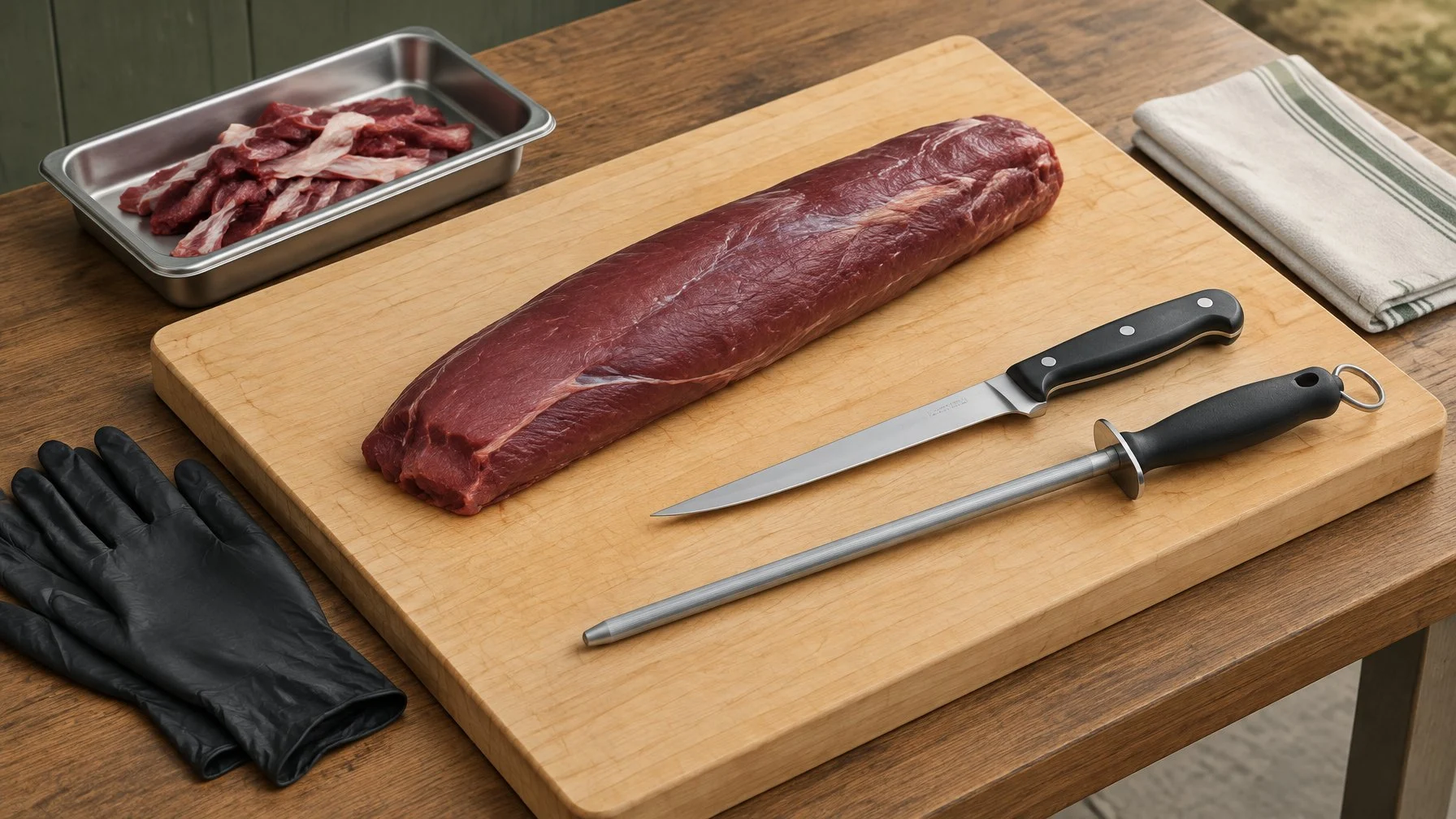
You need two things set up before you start: the right knife on a stable surface, and a plan for keeping the meat cold and clean. Both decide how much meat you save.
Which Knife and Work Surface Do You Need?
Use a 5- to 6-inch boning knife with a semi-flexible blade. The flex lets the edge follow the curve of the ribs. A stiff chef’s knife fights the bone and leaves meat behind.
Owners on hunting forums keep returning to a few points. The knife should have a grippy handle that stays secure when wet, and steel that you can touch up quickly. We compare options in our guide to the best knife for processing deer.
| Item | What to look for | Why |
|---|---|---|
| Boning knife | 5–6 in., semi-flexible | Follows ribs and spine |
| Honing rod | Steel or ceramic | Restores the edge mid-job |
| Cutting board | Large, non-porous, with a wet towel underneath | Stays put and cleans fast |
| Trim containers | Food-safe, lidded | Keep grind trim separate |
| Gloves | Food-safe, cut-resistant | Grip and protection |
In a commercial kitchen, a board that slides causes more cuts than a dull knife. Set a damp towel under yours before you pick up the blade.
How Should You Keep the Meat Cold and Clean?
Work in short batches and send everything back to cold storage between steps. Cold meat is firm, so it cuts cleaner and the silver skin peels in one piece.
SAFETY: USDA FSIS says perishable meat should be refrigerated within 2 hours, or 1 hour above 90°F. Keep your fridge at 40°F or below and your freezer at 0°F or below. Wash your hands with soap for 20 seconds before and after you handle raw meat. Sanitize boards with 1 tablespoon of unscented liquid bleach per gallon of water. Full rules are in the USDA FSIS safe-handling guidance.
If the carcass has been aging, check our notes on how long to hang a deer so the meat comes to the table at a safe temperature.
Remove the Backstraps From the Deer
Removal takes three moves: find the loin’s limits, make two guide cuts along the bones, then lift the muscle free and set the tough neck end aside. Each move protects the meat from the one before it.
1. Find the Spine, Ribs and Ends of the Loin
Locate the loin before you cut. Then every cut has a target.
A backstrap is the long, round muscle that runs along each side of the spine, on top of the ribs, from pelvis to neck. Every deer has two. The bony “fins” sticking up from the spine form the inside wall, and the ribs form the floor.
When evaluating backstrap vs. tenderloin, note where each sits on the carcass. The tenderloin is a different muscle that rests inside the body cavity, under the spine.
| Backstrap | Tenderloin | |
|---|---|---|
| Location | Outside, along top of spine | Inside cavity, under spine |
| Size | Long and thick | Short and narrow |
| Removed with | Outside cuts along the bone | Fingers and short cuts inside |
Many hunters remove the front shoulder first. That clears your view of the forward end. If you take a deer down in stages, our guide on how to quarter a deer shows where the shoulder comes off.
2. Cut Along the Spine and Follow the Ribs
Make two guide cuts that meet in an L. That frees the loin with the least waste.
- Start at the middle of the back. Cut down along the spine to where the ribs meet it. This sets your depth.
- Work forward along the spine. Keep the blade against the bone so meat stays on the loin.
- Cut shallow along the ridge where the ribs bend. Look for a white line of silver skin, since it marks the edge.
- Run both cuts back to where the spine meets the pelvis. That is the rear end of the loin.
Slice in the direction the ribs run. Dragging the edge across bone dulls it fast.
3. Lift the Muscle Free and Separate the Tough Neck End
Start where your two cuts meet. Lift the loin with your free hand and slice it off the bone with short strokes. Lifting puts tension on the muscle and shows you the bone line.
Follow the curve of the short ribs toward the rear. Then carve along the pelvic bone to finish the cut and pull the loin free.
Up front, the backstrap blends into the neck meat. The section from neck to shoulder is sinewy and tough. Cut it off and send it to the grind pile. If you are making burger, add fat; our guide on where to buy beef fat for venison covers it. Save the middle and rear sections for steaks and roasts.
Trim and Portion the Loin
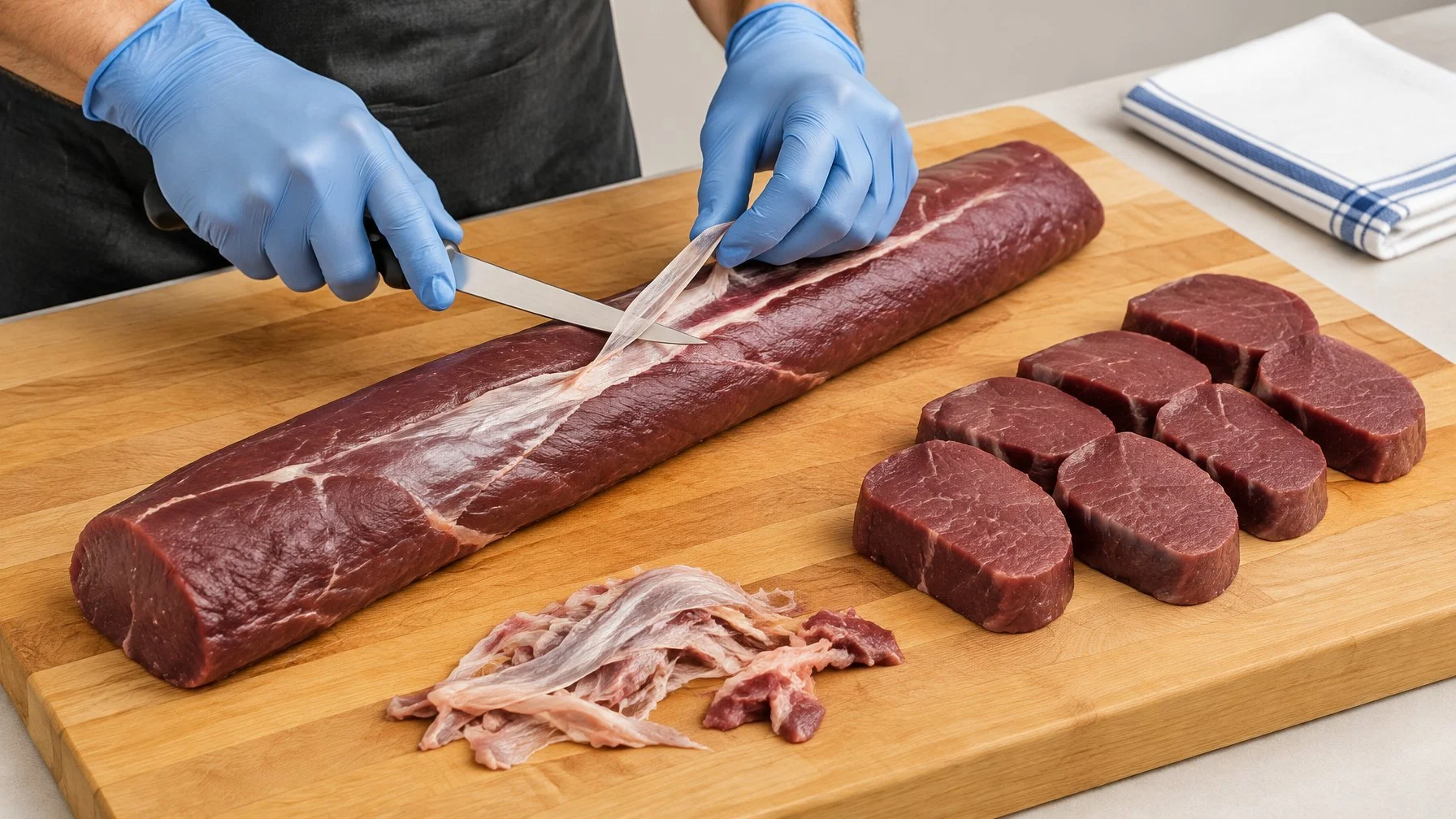
Trimming a venison backstrap comes down to silver skin removal, steak thickness, and freezer packaging. Do them in that order on cold meat.
4. Remove Silver Skin Without Wasting Meat
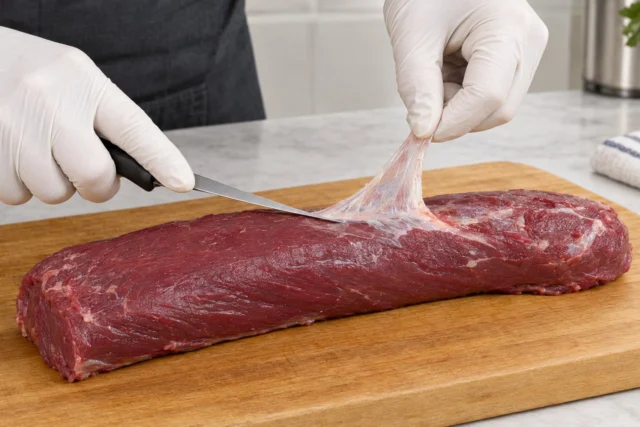
Silver skin is the thin, shiny membrane on top of the loin. It does not soften when cooked, so remove it before you cook.
Slide your knife under one end. Grip the free tab of skin. Tilt the blade slightly up toward the skin and pull the skin back as you push the knife forward. The edge rides the membrane, not the meat.
You can leave it on for freezing. The casing protects the meat in the freezer, and you can trim it later. Trim first if you are giving the meat away, so it is ready to cook.
5. Cut Even Steaks or Leave a Section Whole
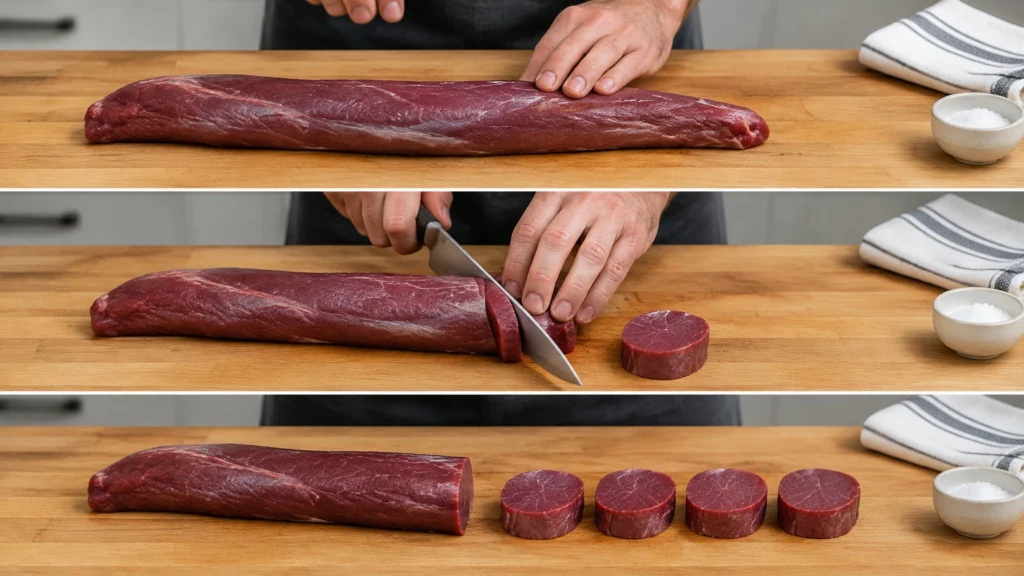
Cut backstrap steaks 1 to 1.5 inches thick. Thinner steaks overcook before they brown.
Use the middle section for steaks, because it is round and even. The flatter rear section works well as a whole roast. Leave a 6- to 10-inch piece whole if you plan to sear it and slice it at the table with garlic and thyme.
A slightly firm, partly chilled loin gives the straightest cuts. Use one long stroke per steak and avoid sawing.
6. Package the Portions for the Freezer
Wrap tight and remove air. Air causes freezer burn.
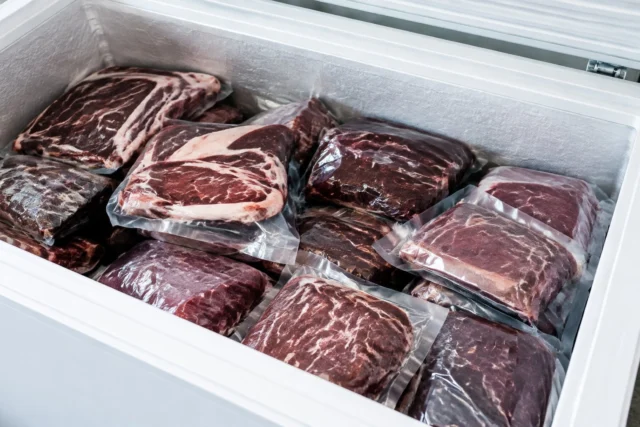
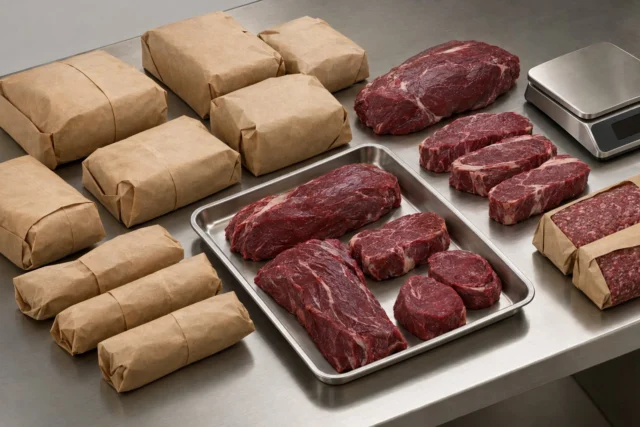
Vacuum sealing gives the best seal. Freezer paper over plastic wrap also works. FSIS advises wrapping meat securely to keep quality and stop juices from reaching other food. Label each pack with the cut, weight and date. Freeze at 0°F or below.
Fix Common Cutting Problems
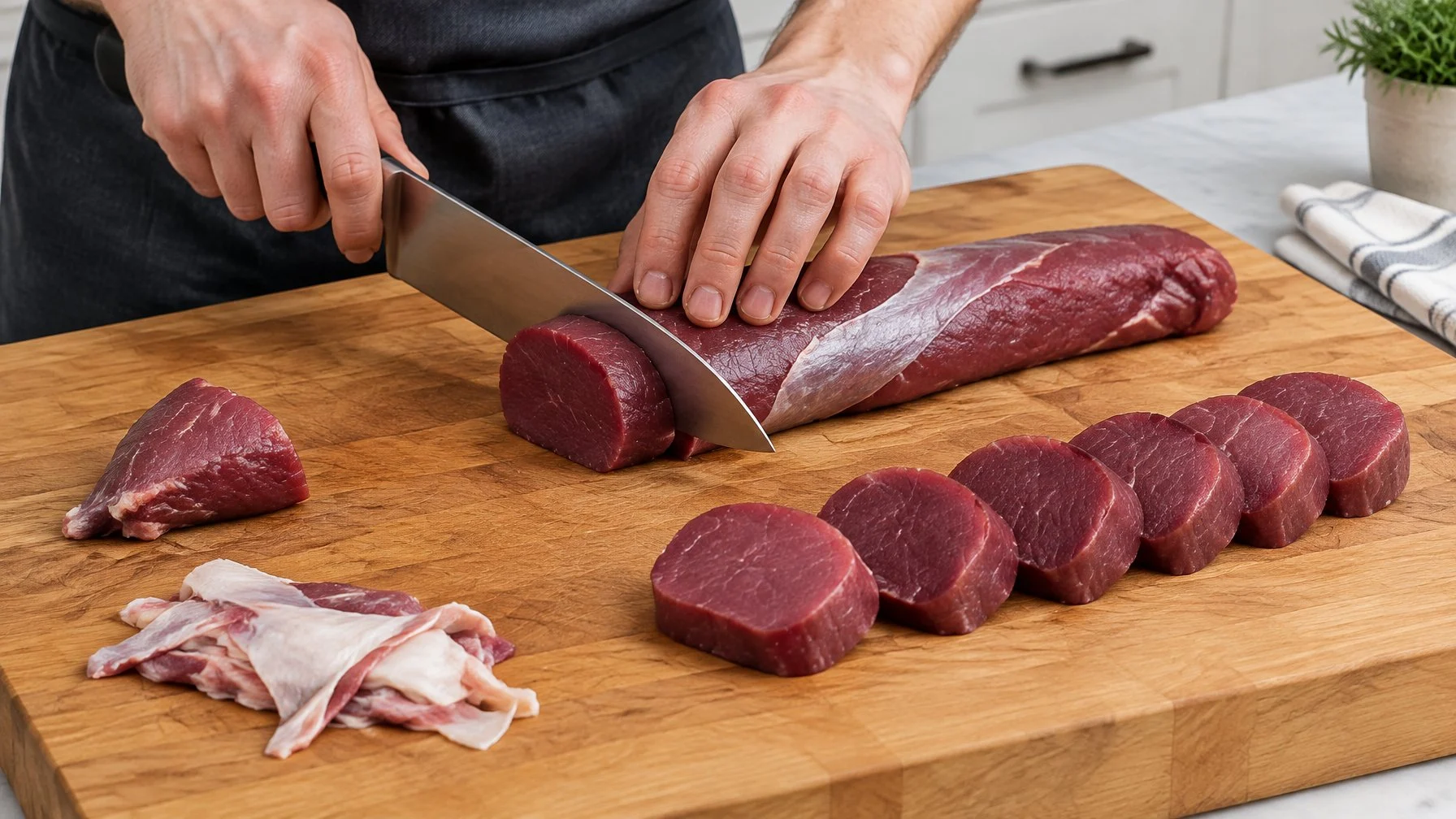
Four problems come up most: meat left on the bone, uneven steaks, torn silver skin and a sinewy section that cooks tough. Each has a direct fix.
Meat Left on the Ribs or Spine
The cause is a blade held away from the bone. Keep the flat of the knife pressed against the spine and ribs. Lift the loin as you cut so you can see the bone line.
Scrape what is left into your grind container. Clean your grinder well afterward; see how to clean a meat grinder.
Steaks That Vary in Thickness
Warm meat squishes under the knife. Chill the loin for 30 to 45 minutes until firm. Mark your cuts with the knife tip first, then slice in one long stroke.
Silver Skin That Tears or Pulls Meat Away
A dull edge or a blade angled down causes this. Hone the knife. Angle the edge slightly up into the skin. Pull the skin tight and keep it flat to the board.
A Sinewy Section That Cooks Tough
You likely kept the neck end. That section is full of connective tissue. Grind it, use it for stew, or turn it into links with our sausage making guides.
Frequently Asked Questions
How many backstraps do you get from a deer?
You get two backstraps from every deer, one on each side of the spine. Each runs from the pelvis to the neck along the top of the ribs. Many hunters also take the two smaller tenderloins from inside the body cavity. That gives you four premium pieces from one animal. Cut both loins the same way so your portions match.
Where do you start when cutting a backstrap off a deer?
Start in the middle of the back, after the front shoulder is off. Make your first cut down along the spine to where the ribs meet it. Then cut along the bend of the ribs. Where the two cuts meet is where you begin lifting the loin free. Work toward the neck and the pelvis from there.
How thick should you cut deer backstrap steaks?
Cut backstrap steaks 1 to 1.5 inches thick. That gives enough depth to brown the outside before the center overcooks. Lean venison dries out fast in thin cuts. If you want thinner pieces for quick frying, cut half-inch medallions and cook them hot and briefly. Chill the deer backstrap first so your thickness stays even.
Should you remove silver skin before freezing backstrap?
You can leave the silver skin on before freezing. The membrane shields the meat from freezer burn, and you can trim it after thawing. Trim it first if the meat is a gift or if you want packs that are ready to cook. Either way, it must come off before cooking because it stays chewy.
Is backstrap the same cut as tenderloin?
No, they are separate muscles. In the comparison of backstrap vs. tenderloin, the backstrap runs along the outside of the spine on top of the ribs and is long and thick. The tenderloin sits inside the body cavity under the spine and is shorter and narrower. Both are tender, but the tenderloin pulls free with fingers and short strokes.
If you are processing the whole animal, your next step is our guide on how to butcher a deer.
This is general guidance based on USDA recommendations. When in doubt, follow the USDA FSIS source linked above.