
An average field-dressed deer gives you about 52 lb of venison, which is roughly 48.5% of its field-dressed weight. That figure comes from 115 deer that were weighed, butchered and weighed again.
For a quick estimate, multiply field-dressed weight by 0.48. Expected boneless venison yield from a chest-girth chart runs a little over half of field-dressed weight.
In deer hunting, knowing how much meat from a deer you can expect helps you plan freezer space and butcher gear. When you finish this guide, you can estimate your venison before you cut and weigh what you package.
You can also explain why your number came out higher or lower than a friend’s. You get a chest-girth chart, worked math, safe holding temperatures and a jerky adjustment that most yield charts skip.
How Much Venison Should You Plan For?
To answer how much meat do you get from a deer, plan on about half of field-dressed weight. Use the chest-girth chart if you have no scale, and check which weight you are starting from. Expect published figures to differ, because each one measures something slightly different.
Deer Meat Yield Chart by Chest Girth

Wrap a soft tape around the chest just behind the front legs. Then read across the chart. The Pennsylvania Game Commission built its deer weight estimating chart with Penn State, and its “edible meat” column means boneless edible venison.
| Chest girth (in.) | Live weight (lb) | Field-dressed (lb) | Boneless edible (lb) |
|---|---|---|---|
| 30 | 90 | 70 | 39 |
| 34 | 118 | 91 | 54 |
| 36 | 135 | 104 | 61 |
| 38 | 157 | 126 | 71 |
| 40 | 182 | 144 | 80 |
| 44 | 244 | 198 | 110 |
| 48 | 340 | 272 | 153 |
Once you have a boneless estimate, enter it in the break-even calculator to compare doing the work yourself with paying a processor.
Which Weight Are You Starting With?
Your math only works when you know which weight you have. A deer loses weight at each stage, from live animal to hanging weight to packaged cuts.
- Live weight: the whole animal before field dressing.
- Field-dressed weight: after the organs are removed. This is the number Ohio’s study and Pennsylvania’s chart both use.
- Carcass weight: the hanging weight after skinning with head and lower legs removed.
- Boneless weight: trimmed boneless venison with bone, fat and damaged meat removed.
If you have live weight, use the chart’s middle column to convert to field-dressed weight first. A 157 lb live deer is about 126 lb field dressed.
Why Do Published Yield Figures Differ?
Published yields differ because each one weighs a different end product. Ohio’s Division of Wildlife weighed 52.19 lb of venison from an average 107.56 lb field-dressed deer, a 48.52% yield. Pennsylvania counts boneless edible meat only.
Utah State University Extension puts the yield at only 20 to 25 percent of the carcass as boneless steaks, roasts and ground trim. Treat that as your low-end planning number. Shot placement and butchering skill move the result too, so two deer from the same weight class can land in different places. Both studies weighed white-tailed deer, not mule deer, so treat these numbers as a starting point for a mule deer.
What You Need to Measure Your Yield
You need a scale, a tape, cold storage and a plan for what counts. Get the gear ready first, then decide which meat goes in the final weight.
Equipment and Measurements to Have Ready
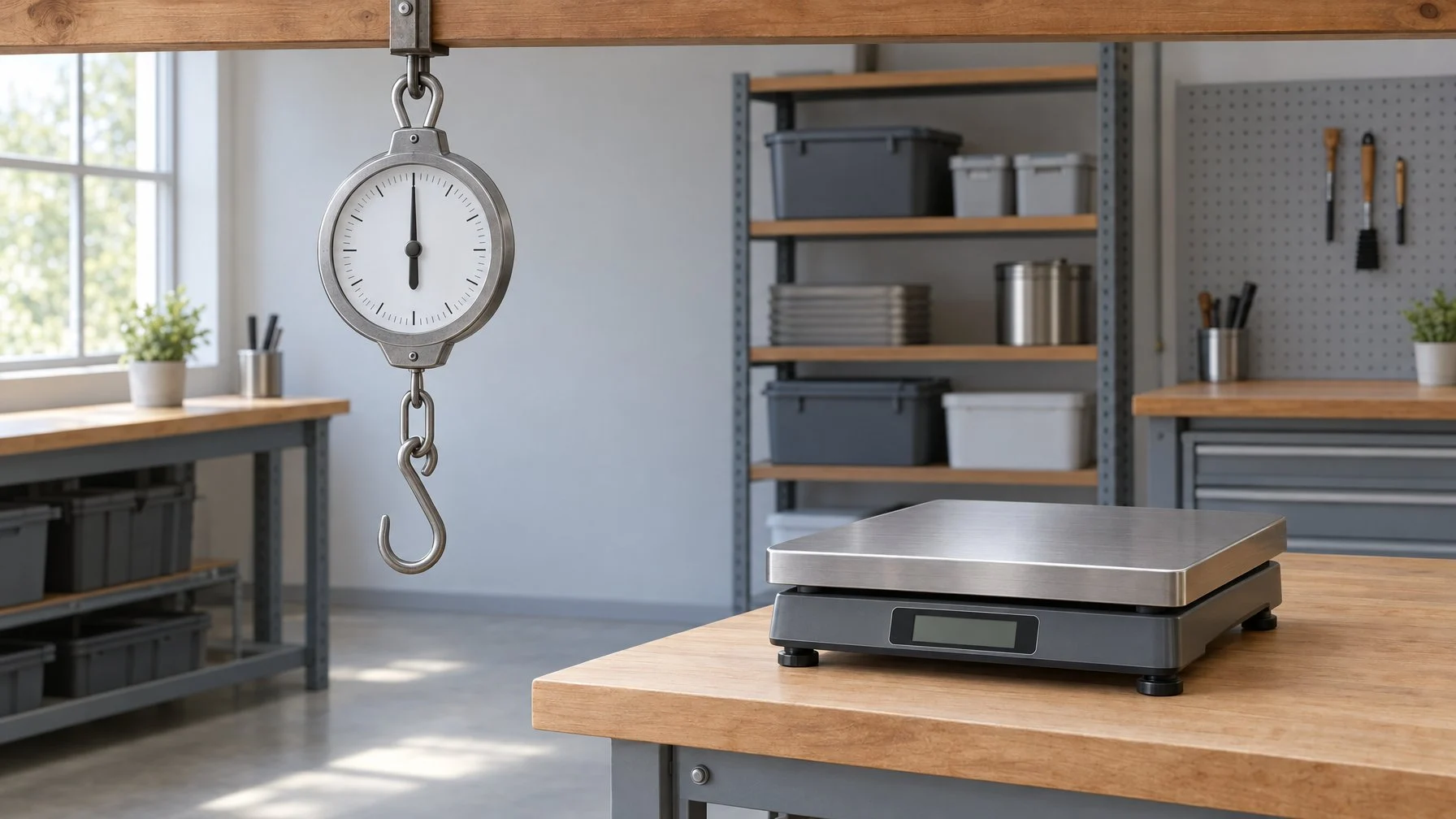
Set these out before the meat reaches the table:
- Hanging or platform scale for field-dressed weight.
- Kitchen or shipping scale that reads to 0.1 lb for finished packages.
- Soft tape measure for chest girth if you have no big scale.
- Sharp boning knife. A knife built for processing deer leaves less meat on the bone.
- Refrigerator or cooler that holds 40°F or below.
- Notepad or phone to log every weight.
Weigh empty trays and bags first. Subtract them later so you weigh meat only.
Which Meat Goes in the Final Weight?
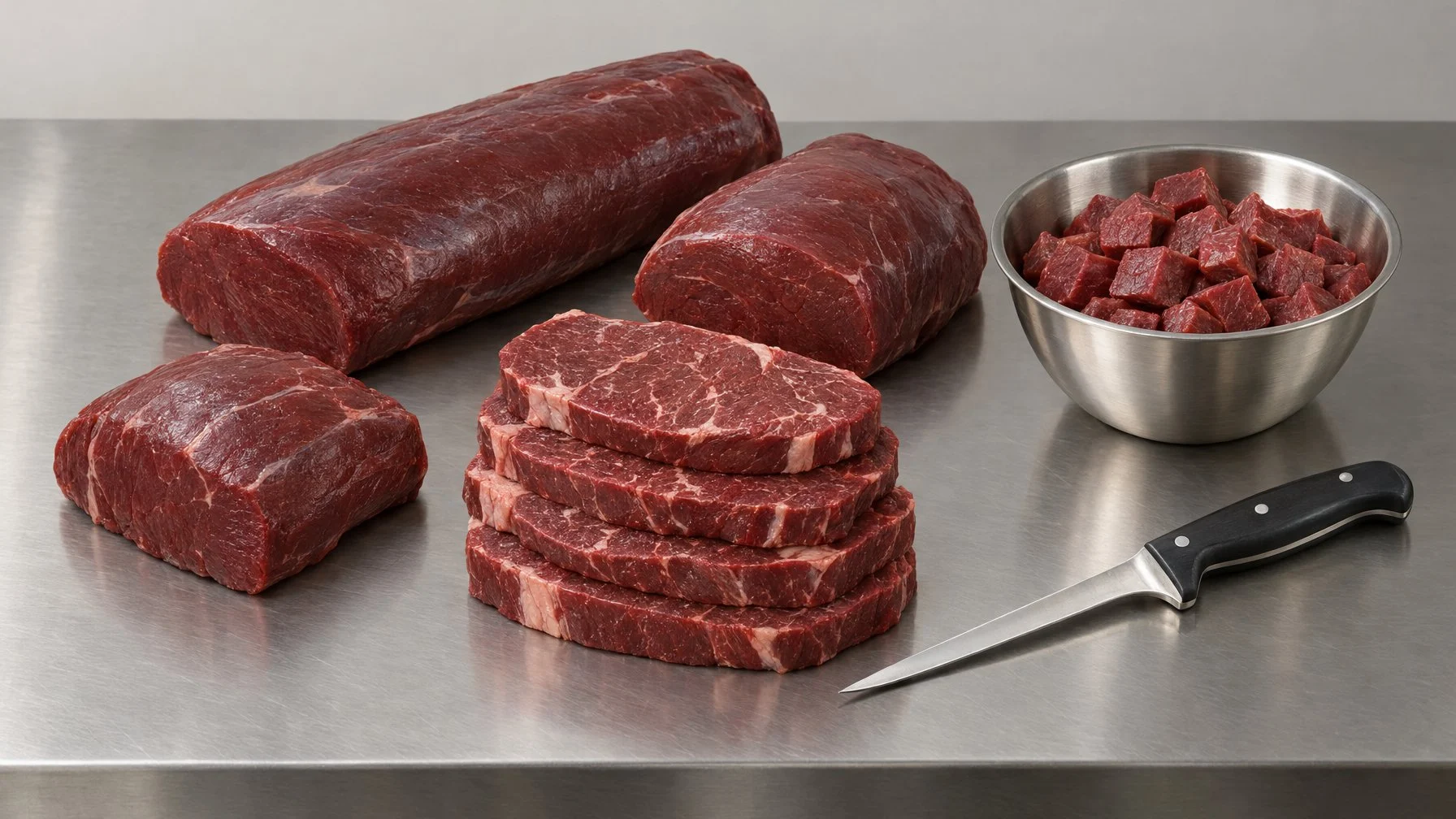
Count every piece of trimmed meat you plan to eat, from each backstrap and tenderloin to the trim headed for ground venison. That includes backstraps, tenderloins, roasts, steaks, stew meat and trim headed for ground venison. Every trimmed backstrap and tenderloin belongs on the scale.
Leave out bone, silver skin, bloodshot meat and any beef or pork fat you add while grinding. Added fat raises package weight without adding venison. If you mix in fat, log the venison weight before it goes in the grinder, and use the venison burger fat ratio guide to set the blend.
Meat yield is the share of a deer’s field-dressed weight that ends up as usable venison, stated as a percentage.
How to Calculate and Protect Your Take-Home Yield
Four steps cover the whole job: record the real weight, estimate with the math, handle the meat cold and clean, then weigh the finished cuts. Good shot placement and patient butchering skills protect the number at every stage.
1. Record the Weight You Actually Have
Weigh the deer after field dressing, or measure chest girth and use the chart. A real deer weight beats a guess from antler size.
Write down which weight you used. Mixing live and field-dressed numbers is an easy way to throw off the estimate.
2. Estimate Venison and Show the Math
Multiply field-dressed weight by 0.4852 to estimate how much meat from a deer you will package. That is the Ohio average across 115 deer.
Worked example for a 120 lb field-dressed deer:
- Start with 120 lb field dressed.
- Multiply: 120 × 0.4852 = 58.22.
- Round to about 58 lb of venison.
- For a low-end planning number, take 20 to 25 percent of the carcass, per Utah State.
| Field-dressed weight | × 0.4852 | Estimated venison |
|---|---|---|
| 80 lb | 38.8 | about 39 lb |
| 100 lb | 48.5 | about 49 lb |
| 120 lb | 58.2 | about 58 lb |
| 150 lb | 72.8 | about 73 lb |
3. Handle and Trim the Meat Safely
Keep the meat at 40°F or below from field to freezer. Warm meat spoils, and spoiled meat comes off your yield.
Break the carcass into smaller pieces so it cools fast. The steps in how to quarter a deer get it into a fridge or cooler sooner. Then trim and bone it using how to butcher a deer.
SAFETY: USDA FSIS says bacteria grow fastest between 40°F and 140°F, and some double in as little as 20 minutes. Hold raw venison at 40°F or below. Discard meat held above 40°F for more than 2 hours. Use raw ground meat within 1 to 2 days refrigerated, or freeze it.
4. Weigh the Finished Cuts and Account for Jerky
Weigh each package after trimming and before freezing. Write the weight and cut on the label; the guide to labeling frozen meat covers what to include.
Weigh jerky meat raw. Utah State notes jerky dries to about one-fourth of its starting weight, so 10 lb of lean strips becomes about 2.5 lb. Count the raw 10 lb toward your yield.
Why Is Your Packaged Yield Different?
Four things account for most gaps: shot damage, meat left on bone, added fat or bone in the package, and jerky drying. Each one shows up clearly once you log your weights.
Shot Damage Reduced the Usable Meat
Shot placement can change front-quarter yield a lot. Ohio’s staff found a shot behind the shoulder blade allows greater yield, while a shot directly at the shoulder blade greatly reduces the front quarter.
Severe meat damage from impact or shattered bone requires aggressive trimming. Bloodshot meat must always be cut away.
Your fix comes next deer hunting season: aim behind the shoulder. That is also the ethical hunting choice for a clean kill.
Too Much Meat Was Left on the Bones
Ohio reports that yield depends on butchering effort, skill and experience. Neck and shank meat take time, and many first-timers skip them.
- Work the neck, ribs and shanks for grind trim.
- Keep your knife sharp.
- Use a grinder sized for deer so small trim is worth saving.
Bone-in Cuts or Added Fat Changed the Package Weight
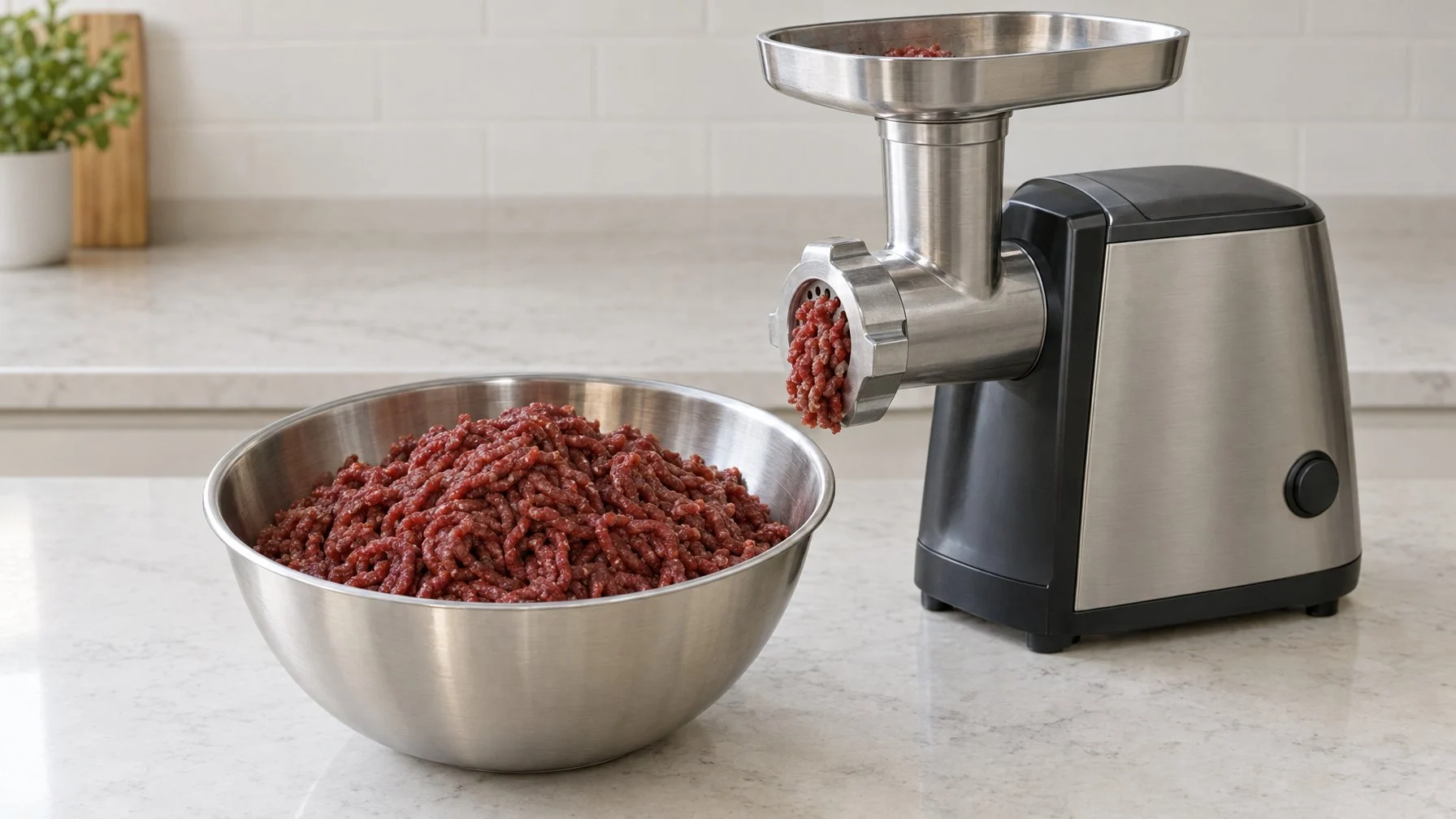
Bone-in roasts and added fat make packages heavier than the venison inside. Pennsylvania’s chart counts boneless meat only, so bone-in packages will look like a higher yield.
Subtract added fat before you compare. If you grind 40 lb of venison with 10 lb of fat, your venison yield is 40 lb.
Jerky Weighed Less After Drying
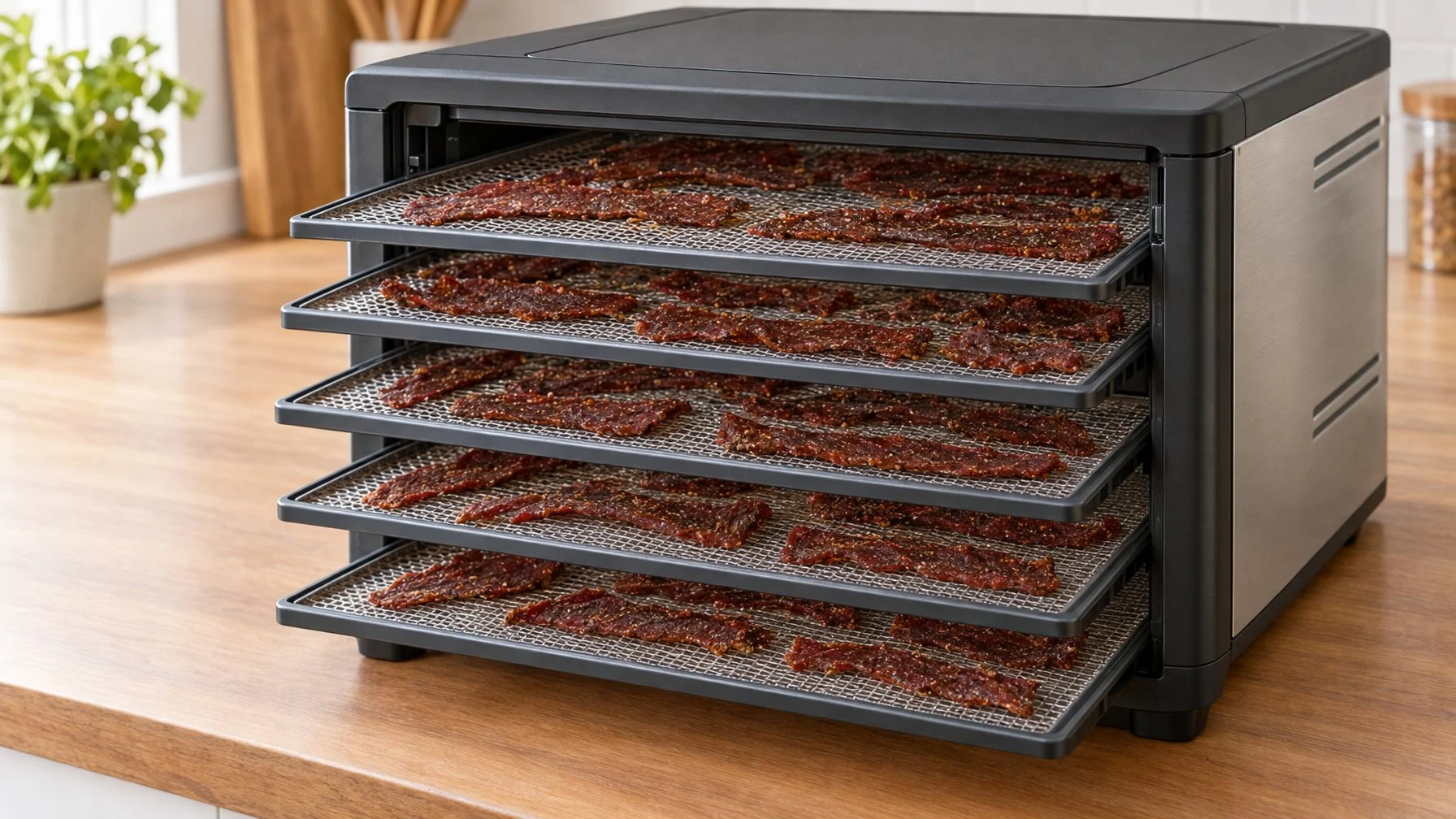
Dried jerky weighs about a quarter of the raw meat. Weighing it after drying makes your yield look short.
Fix your log by multiplying finished jerky weight by 4 to get the raw weight back. That 2.5 lb bag stands for 10 lb of venison.
Deer Meat Yield: Quick Answers
How much meat will a 100 lb field-dressed deer yield?
A 100 lb field-dressed deer yields about 49 lb of venison. The math is 100 × 0.4852 = 48.5 lb, using Ohio’s average from 115 deer. Clean shot placement and careful trimming push you toward that number. Heavy shoulder damage or skipped neck and shank meat pulls you below it, sometimes by several pounds.
How much meat comes from a 150 lb deer?
It depends on which weight you mean. A 150 lb field-dressed deer gives about 73 lb (150 × 0.4852). A 150 lb live deer sits near the 157 lb row of the Pennsylvania chart, which lists about 126 lb field dressed and 71 lb of boneless edible meat. Always confirm whether the scale weight was live or field dressed.
How much meat should you get from a 200 lb deer?
A 200 lb field-dressed deer should give about 97 lb of venison using the 0.4852 factor. Pennsylvania’s chart lists 110 lb boneless for a 198 lb field-dressed deer with a 44-inch girth. If 200 lb is live weight, expect much less, roughly 80 to 90 lb, since a 182 lb live deer lists 80 lb boneless.
Do bucks and does yield the same percentage of venison?
Bucks and does yield nearly the same percentage. Ohio’s 47 antlered deer averaged 48.20%, and its 68 antlerless deer averaged 48.83%. Bucks give more total meat because they weigh more: 62.51 lb versus 45.05 lb on average. Plan by weight and girth, not antlers.
Does the weight of jerky count toward a deer’s meat yield?
Yes, but count the raw weight, not the dried weight. Jerky dries to about one-fourth of its starting weight, according to Utah State University Extension. Weigh strips before they go in the dehydrator. If you only have the finished weight, multiply it by 4 to estimate the venison you started with.
Once you know your yield, use the break-even calculator to see whether processing your own deer saves you money this season.
This is general guidance based on USDA recommendations. When in doubt, follow the USDA FSIS source linked above.