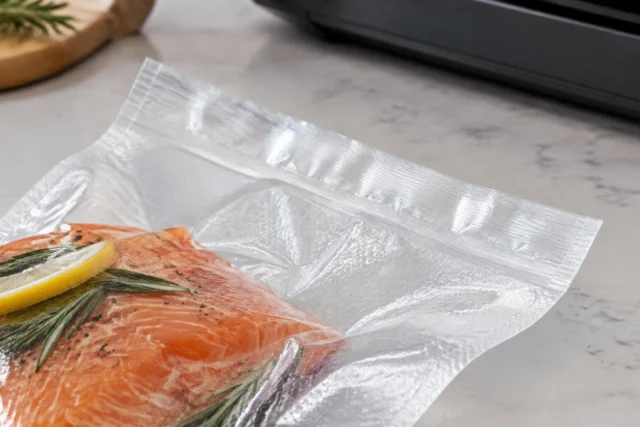

Yes, you can vacuum seal wet meat and liquids, but they take more work than dry food. Wet items such as meat and fish, and liquids such as soup, need extra effort, and lower-quality sealers may not handle them. Vacuum sealing also never replaces the fridge or freezer. Keep sealed perishables at 34 to 40°F or at 0°F or below.
UMaine says to match the sealer setting to the food’s liquid content, because excess moisture prevents sealing.
What Do the Sources Cover, and Leave Unanswered?
Two extension sources speak to wet food and storage, and they leave several common questions open. The table shows what each source says and what it does not cover.
Clemson HGIC says vacuum packaging does not replace refrigeration or freezing.
| Question | What the sources say | Status |
|---|---|---|
| Does wet food seal differently? | UMaine: takes extra effort; excess moisture prevents sealing | Sourced |
| Does the sealer setting matter? | UMaine: use the setting that fits the liquid content; the author uses “moist” for bloody cuts; low-cost models may lack it | Sourced |
| Do all sealers handle liquid? | UMaine: lower-quality sealers may not | Sourced |
| Is a chamber sealer better with liquids? | The Avid Armor USV20 maker page, as quoted in our chamber-vs-external comparison, says liquids seal because the liquid is never pulled toward a suction port | Maker statement (see the comparison) |
| Should you freeze liquids or marinade first? | No extension source we opened says | Not covered |
| Does vacuum sealing make wet food last longer? | Clemson: it does not replace refrigeration or freezing | Sourced |
You will find plenty of tips online on how to vacuum seal soup, vacuum seal marinades, and operate chamber machines. The extension guidance we opened does not back them, so this post leaves them out.
If you are weighing machine types, our chamber vacuum sealer vs vacuum sealer comparison covers the general differences between a chamber unit and an external vacuum sealer.
How Should You Approach Wet or Bloody Meat?
The sources point to two things: whether your sealer has a moisture setting, and whether you match that setting to how much liquid the food carries.
Check Whether the Sealer Has a Moisture Setting
Start with the machine. The University of Maine Cooperative Extension notes that sealing wet items like meat and fish takes extra effort, and lower-quality sealers may not be able to handle it. Low-cost models may not have a moisture setting at all.
Look at the control panel before you start a batch. A button labeled “moist” or similar is the feature to find.
If your sealer has no such setting, expect more failed seals on bloody cuts.
Match the Setting to the Food’s Liquid Content
UMaine’s guidance is simple: use the setting that fits the food’s liquid content, so the oxygen comes out and a tight, airtight seal forms. Excess moisture prevents sealing. The UMaine author uses the “moist” setting for moist or bloody cuts.
Follow these steps for wet or bloody meat:
- Check your sealer for a moisture setting.
- Judge how wet the cut is. A dry cut and a bloody cut are not the same job.
- Pick the setting that fits that liquid content, such as “moist” for bloody cuts.
- Seal, then check that the bag holds a tight seal with the air removed.
- Get the package into the fridge or freezer right away.
What if the Sealer Will Not Seal?
A failed seal on wet meat points to two causes the sources name: too much moisture, and a machine that cannot cope. After that, your sealer’s own manual is the next place to look.
Recognize the Moisture and Equipment Limits
The first limit is moisture, covered above.
The machine itself is the second limit. UMaine notes lower-quality sealers may not handle wet items, and low-cost models may lack a moisture setting. If your unit fails on wet meat again and again, the equipment may be the cause.
| Sign | Likely cause (per UMaine) |
|---|---|
| Bag will not close tight on wet meat | Excess moisture |
| Repeated failures with bloody cuts | Sealer may not handle wet items |
| No setting to change | Low-cost model without a moisture setting |
Check the Sealer’s Own Manual for Model-Specific Instructions
The extension sources we reviewed do not give a step-by-step fix for a wet bag that will not seal. They name the causes and stop there.
Your manual is written for your exact machine. Look for its section on moist foods, liquids or seal failures, and follow it.
How Must Vacuum-Sealed Wet Food Be Stored?
Following proper food safety for vacuum-sealed meat comes down to two rules from Clemson: keep sealed perishables cold, and throw out packages that sat warm too long.
Keep Perishable Packages Refrigerated or Frozen
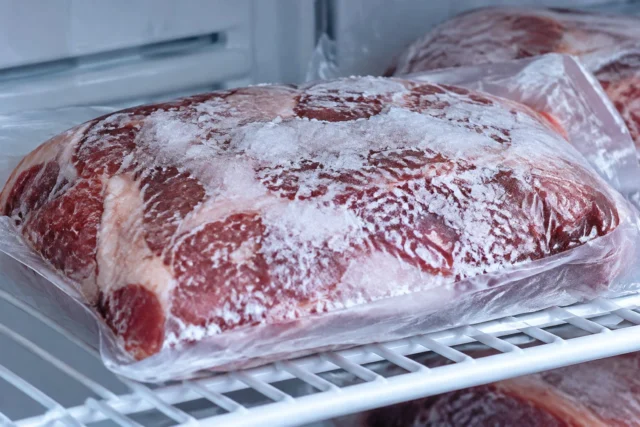
Clemson’s Home & Garden Information Center states that vacuum packaging does not replace refrigeration or freezing. A sealed bag of wet meat is still perishable.
| Storage | Temperature |
|---|---|
| Refrigerator | 34 to 40°F |
| Freezer | 0°F or below |
Label each package so you know what it is and when you sealed it. Our guide on how to label frozen meat covers that step. For how long each cut keeps, see how long vacuum-sealed meat lasts in the freezer; for getting it back out, see how to thaw vacuum-sealed meat.
When Must You Discard a Warm Package?
A closed package is still a vacuum environment where harmful bacteria can be active if the temperature is warm enough. Removing air does not stop bacterial growth.
SAFETY: Clemson HGIC says perishable vacuum-packaged foods must be kept refrigerated (34 to 40°F) or frozen (0°F or below). Discard foods held over 40°F for more than two hours.
If a package sat out during processing or a power outage pushed it above 40°F past two hours, throw it out.
Frequently Asked Questions
These answers cover liquids, marinated meat, chamber sealers and how long wet meat lasts.
Can you vacuum seal liquids without freezing them first?
The extension sources we reviewed do not say. UMaine confirms that liquids such as soup take extra effort to seal and that lower-quality sealers may not handle them. Use the setting that fits the liquid content, and check your sealer’s manual for its instructions on liquids before you try a batch.
Can you vacuum seal marinated meat?
The sources we reviewed do not address marinades directly. UMaine does say wet items take extra effort, so a setting matched to the liquid content is the sourced approach. Once sealed, keep it at 34 to 40°F or frozen at 0°F or below, as Clemson advises.
Is a chamber vacuum sealer better for liquids?
The makers say so for chamber machines: our chamber vs external comparison quotes the Avid Armor USV20 page, which says liquids seal because the liquid is never pulled toward a suction port. University of Maine Extension adds that lower-quality sealers may not handle wet items. Check the manual for your own machine.
How long will wet meat last after vacuum sealing?
The sources we reviewed do not give storage times. Clemson says vacuum packaging does not replace refrigeration or freezing, so keep sealed wet meat at 34 to 40°F or at 0°F or below. Discard any package held over 40°F for more than two hours, since bacteria can still grow inside a closed bag.
Before your next batch, check your sealer’s manual for its moist or liquid setting.
This is general guidance based on University of Maine Extension and Clemson HGIC guidance. When in doubt, follow the Clemson source linked above.