
As an Amazon Associate I earn from qualifying purchases.
If you process your own venison or buy meat in bulk, the Hamilton Beach 14 cu ft Chest Freezer is our top pick for most home meat processors, because it pairs deer-season capacity with a design Amazon lists as garage ready, a lockable lid, and a front defrost drain.
Finding the best chest freezer for meat comes down to consistent cooling, usable capacity, and dependable build quality.
For long-term meat preservation, a dedicated deep freezer suits meat storage well and provides reliable bulk meat storage.
The U.S. Department of Energy says chest freezers are more efficient than upright models because they typically have more insulation and cold air does not sink out of them when they are opened.
According to ENERGY STAR, a certified chest freezer uses about 215 kWh of electricity a year against about 395 kWh for an upright, and manual defrost freezers use half the energy of automatic defrost models but must be defrosted periodically.
Size and location drive the choice. Match cubic feet to how much meat you put up each year, and check garage temperature ranges before buying. Garage ready is a model-specific maker label, and Amazon titles are not a maker rating; see can you put a chest freezer in the garage for what four maker manuals say.
With those details in hand, you can pick a meat freezer that keeps a practical supply on hand without paying to cool empty space.
How we ranked these
SaltRail did not use or test these freezers. We compared each Amazon listing’s stated capacity, ambient-temperature range, power, defrost type and warranty, plus Amazon’s own review summaries, and we checked storage guidance against USDA and U.S. Department of Energy pages. Picks are ordered by fit for a deer or two a year first, then by how much the listing says about garage use. Commission rates play no part in the order.
Best Chest Freezer for Meat
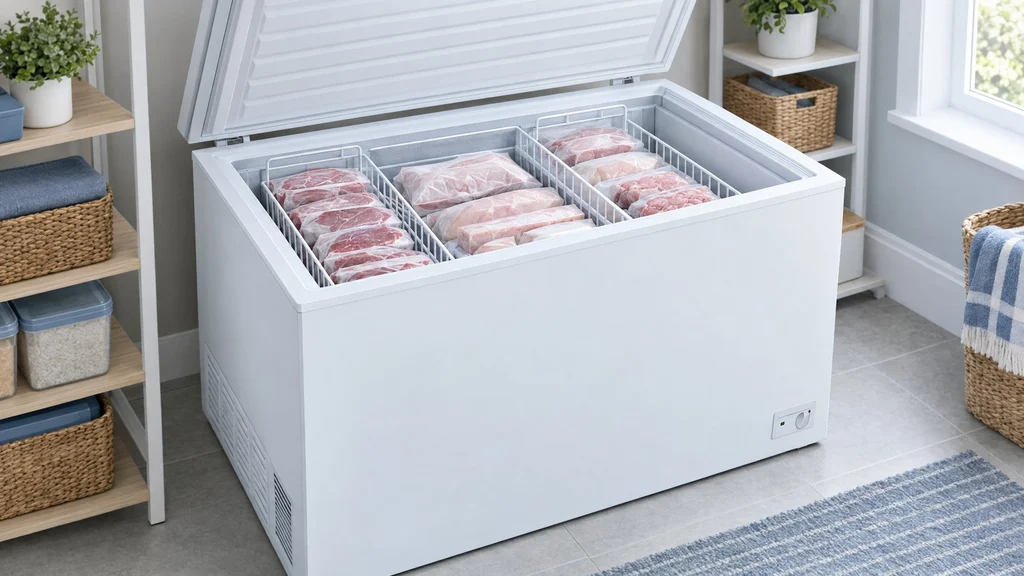
Best for most meat processors: Hamilton Beach 14 cu ft Chest Freezer
Best for small households and overflow: Midea 3.5 Cu. Ft. Convertible Chest Freezer
Best mid-size for bulk buys: Frigidaire 7 Cu. Ft. Chest Freezer
Best for climate-controlled basements: BLACK+DECKER 16.2 Cu. Ft. Chest Freezer
Best for shops and multi-deer seasons: VEVOR 19.8 Cu. Ft. Chest Freezer
Midea 3.5 Cu. Ft. Convertible Chest Freezer
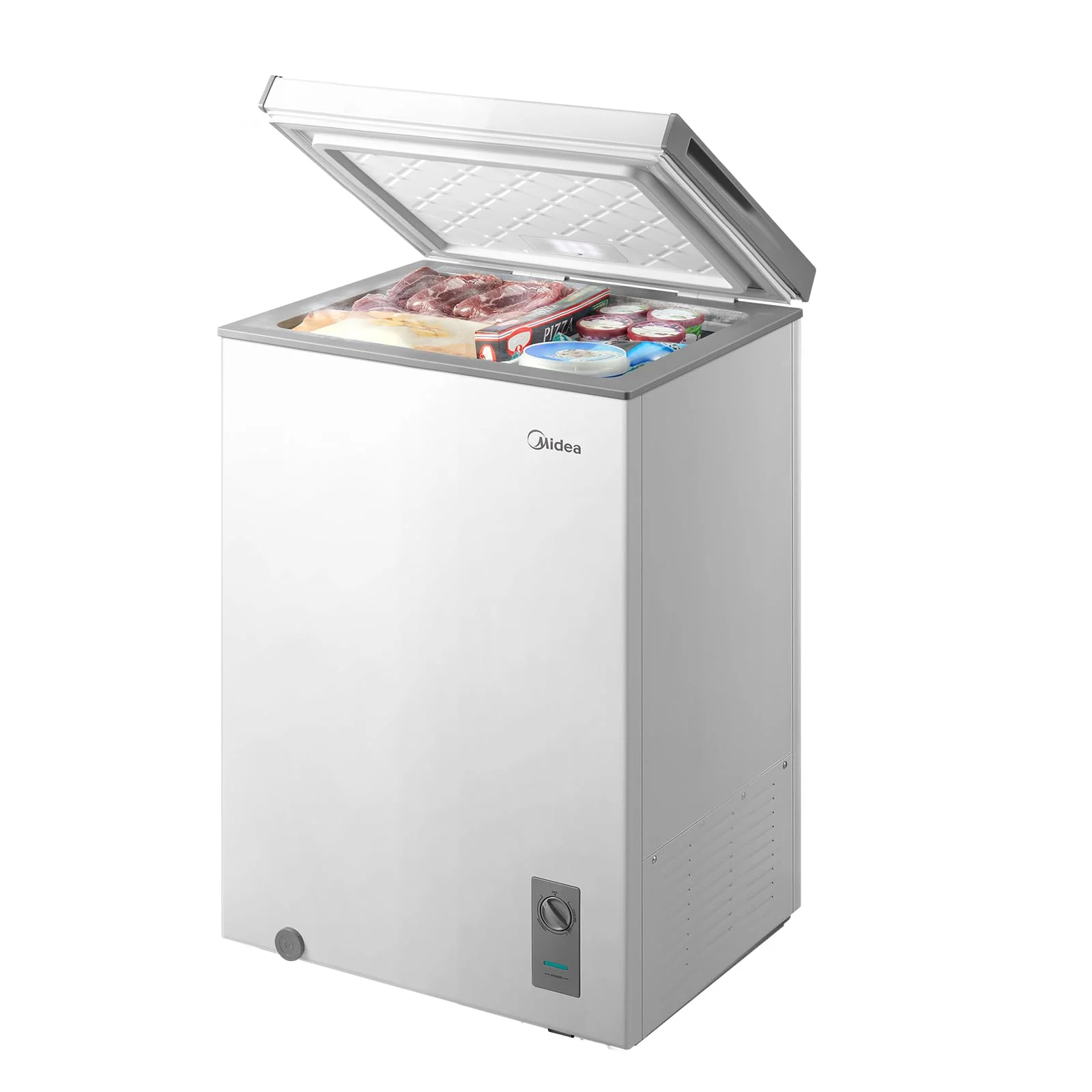
Buy this one if you need a small overflow freezer for a few months of meat. A small chest freezer works well for tight utility areas, apartments, or holding game bags during butchering.
Pros
- The listing states 0°F to 110°F in freezer mode
- Converts to fridge mode for thawing or brining
- Small footprint at 21.5 inches wide
Cons
- 3.5 cu ft holds far less than a whole deer
- One removable storage basket only
- 1-year warranty
Best for: one to three people, or a second unit beside a full kitchen freezer.
Listed spec (per the Amazon listing): 3.5 cu ft, 115 volts, 47.8 lb; the listing states up to 48 hours after losing power.
Amazon’s review summary describes quiet running and value, with mixed durability (dented units, hinges). The fridge mode is handy for slow thawing a roast.
Skip it if: you put up more than a partial deer or a quarter of beef each year.
Frigidaire 7 Cu. Ft. Chest Freezer
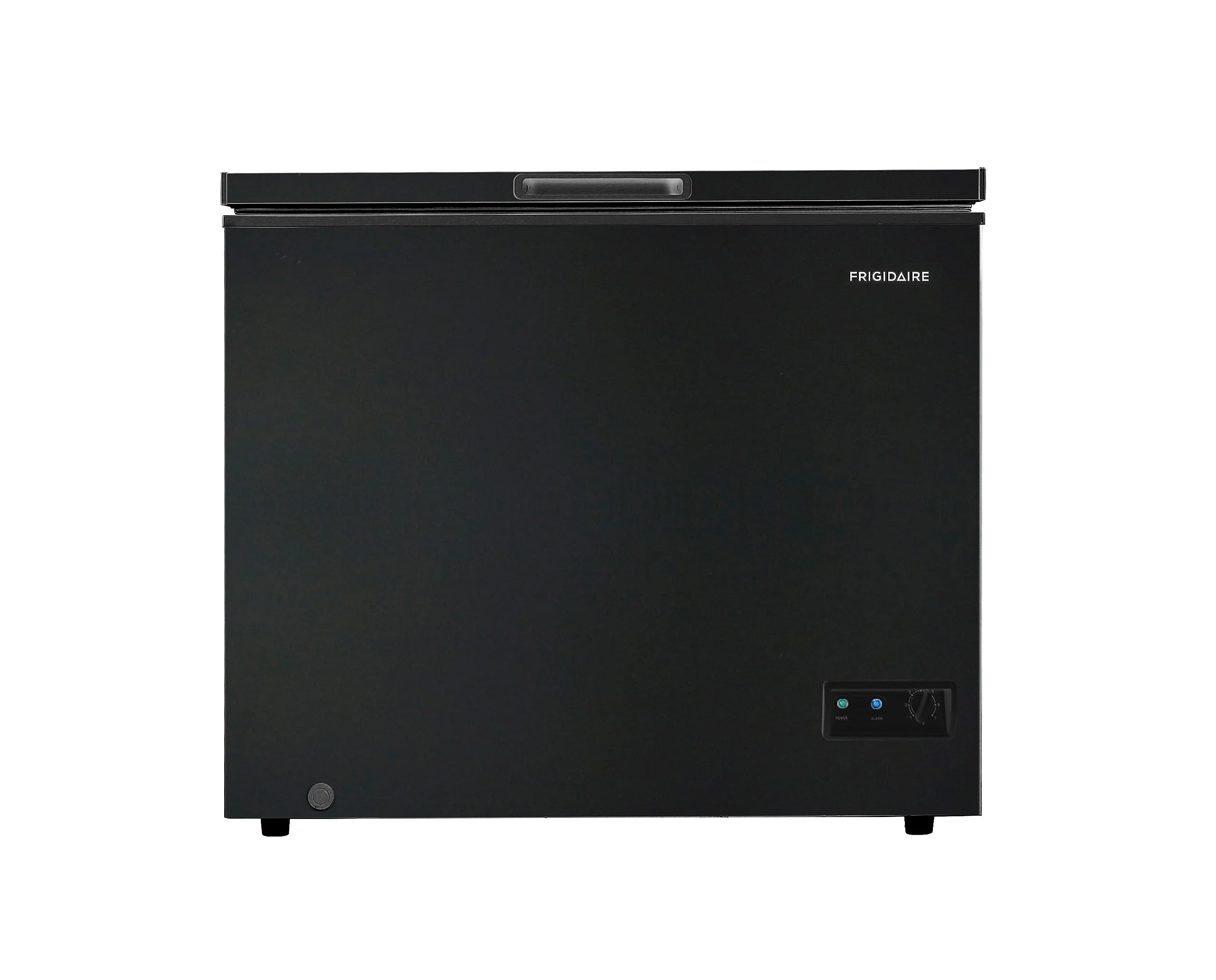
Choose this if you want room for bulk-store packs and batch meals without giving up a whole wall.
Pros
- Seven-setting adjustable thermostat on the front
- Exterior defrost drain
- 1-year parts and labor coverage
Cons
- The Amazon listing does not state a garage rating, so check the manual first
- One wire basket
- About 3 feet wide still needs planning
Best for: couples or small families buying meat in bulk.
Listed spec (per the Amazon listing): 7 cu ft, 120 volts, 70 lb, aluminum liner, power-on light.
Amazon’s review summary describes quiet running and value, with mixed durability (dented units, hinges). The front dial sets the temperature without opening the lid. The Amazon listing does not state a garage rating, so check the manual first.
Skip it if: the freezer will sit in an unheated garage or shed.
Hamilton Beach 14 cu ft Chest Freezer
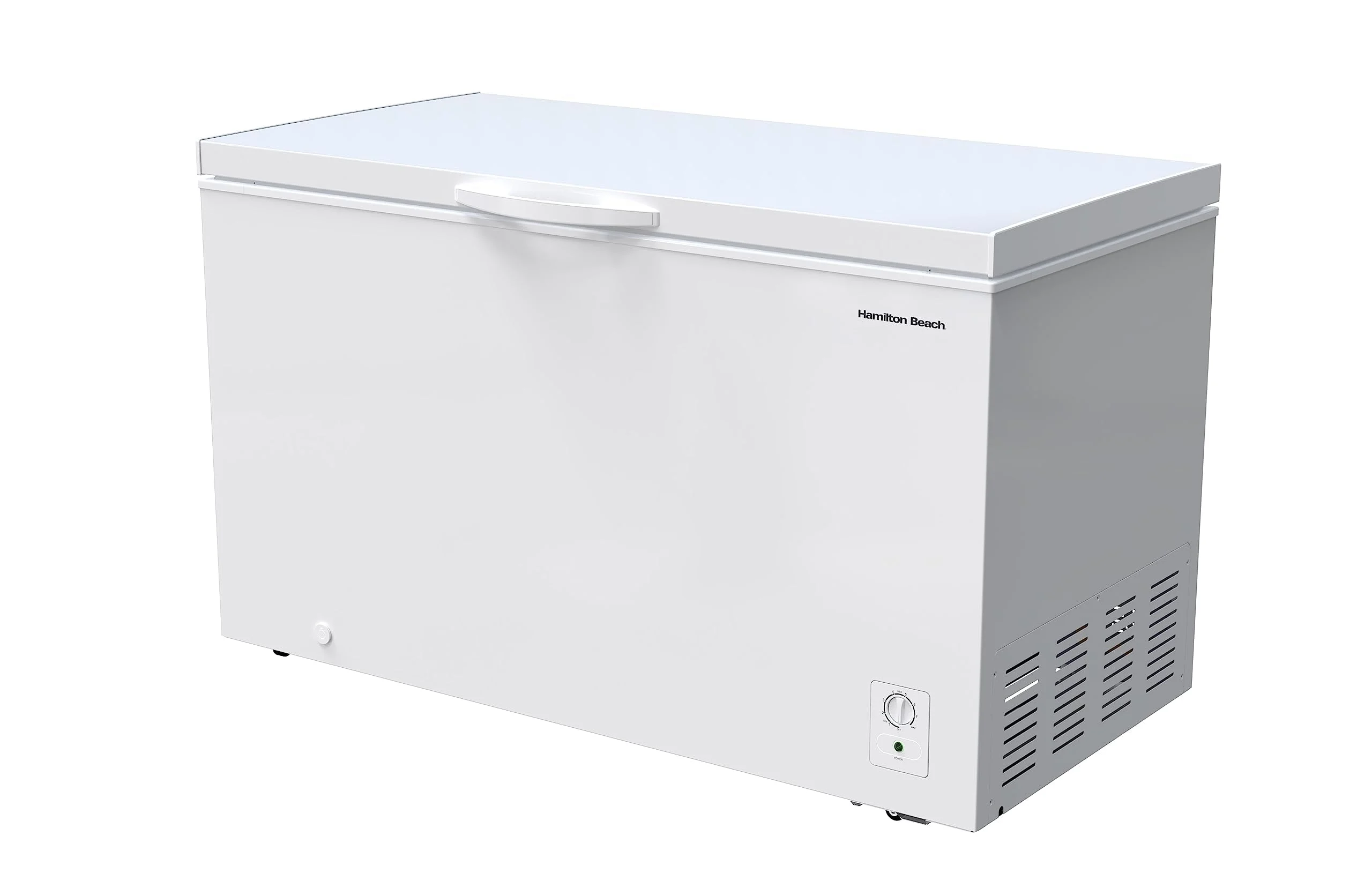
This is the best chest freezer we would point most hunters and bulk buyers to first.
Pros
- Marketed as garage ready with a flat back
- Lockable lid and front drain
- Amazon’s review summary mentions quiet running
Cons
- Amazon lists 70 inches wide; other retailers list about 55 inches for the same model, so measure against the manual before you buy
- One basket for a large box
- Some delivery complaints
Best for: a deer or two per season plus store-bought bulk packs.
Listed spec (per the Amazon listing): 14 cu ft, 110 volts, 500 watts listed, seven-setting thermostat, aluminum liner.
Amazon’s review summary describes quiet running and working temperature control, with some delivery complaints and mixed durability; owners report fitting a whole beef.
After you grind and package venison, this size gives you room to stack flat bags by cut.
Skip it if: you have not measured the space.
BLACK+DECKER 16.2 Cu. Ft. Chest Freezer
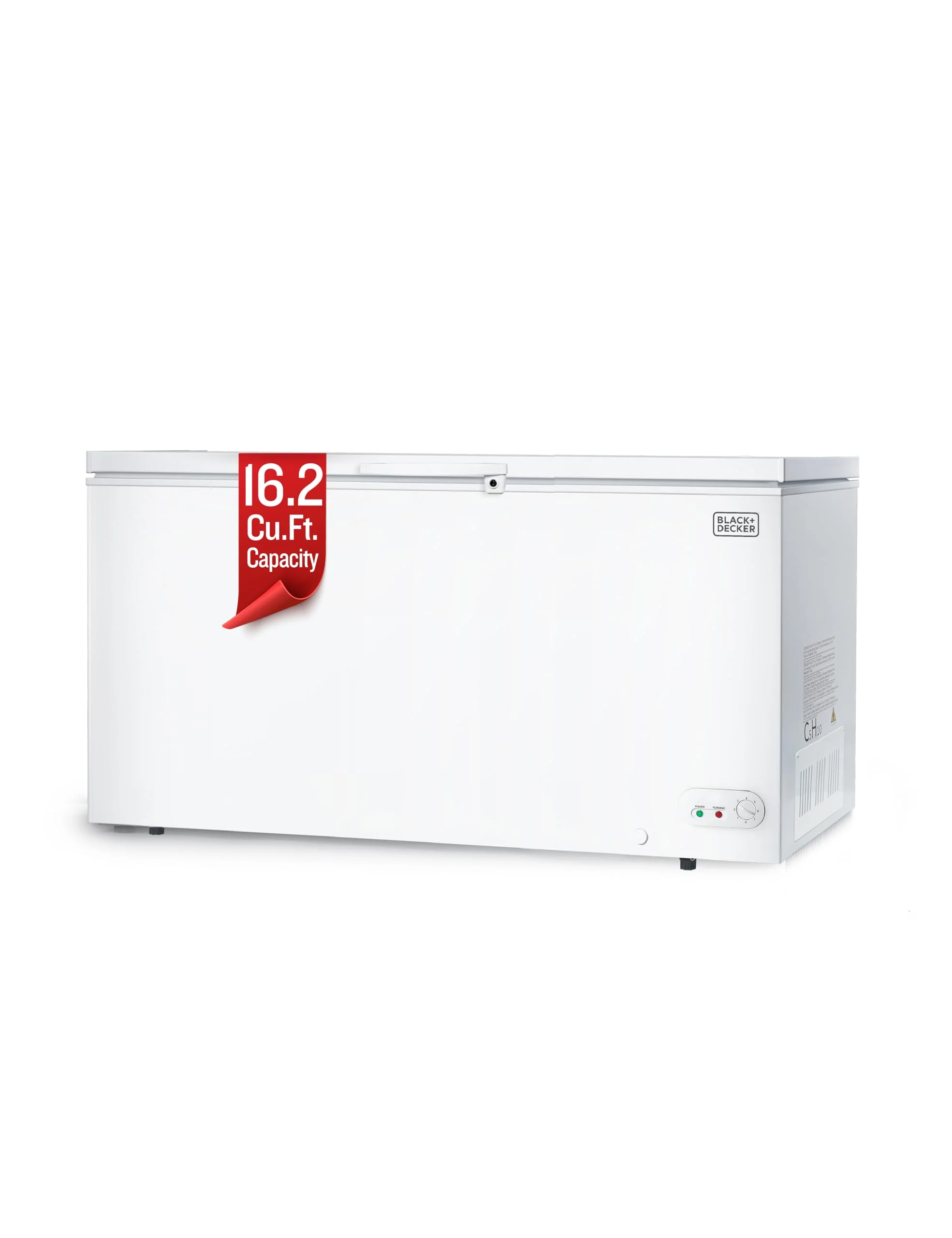
Pick this for big capacity indoors, in a heated basement or utility room.
Pros
- Two removable storage baskets
- External dial and indicator lights
- Low 95-watt rating
Cons
- The listing mentions garage and basement use but gives no ambient range
- Mixed noise reports
Best for: large households storing meat inside the home.
Listed spec (per the Amazon listing): 16.2 cu ft, 120 volts, 141.1 lb, R600a refrigerant, manual defrost.
Amazon’s review summary says noise and cooling reports are mixed and some units arrive dented.
Skip it if: your only spot is an unheated garage.
VEVOR 19.8 Cu. Ft. Chest Freezer
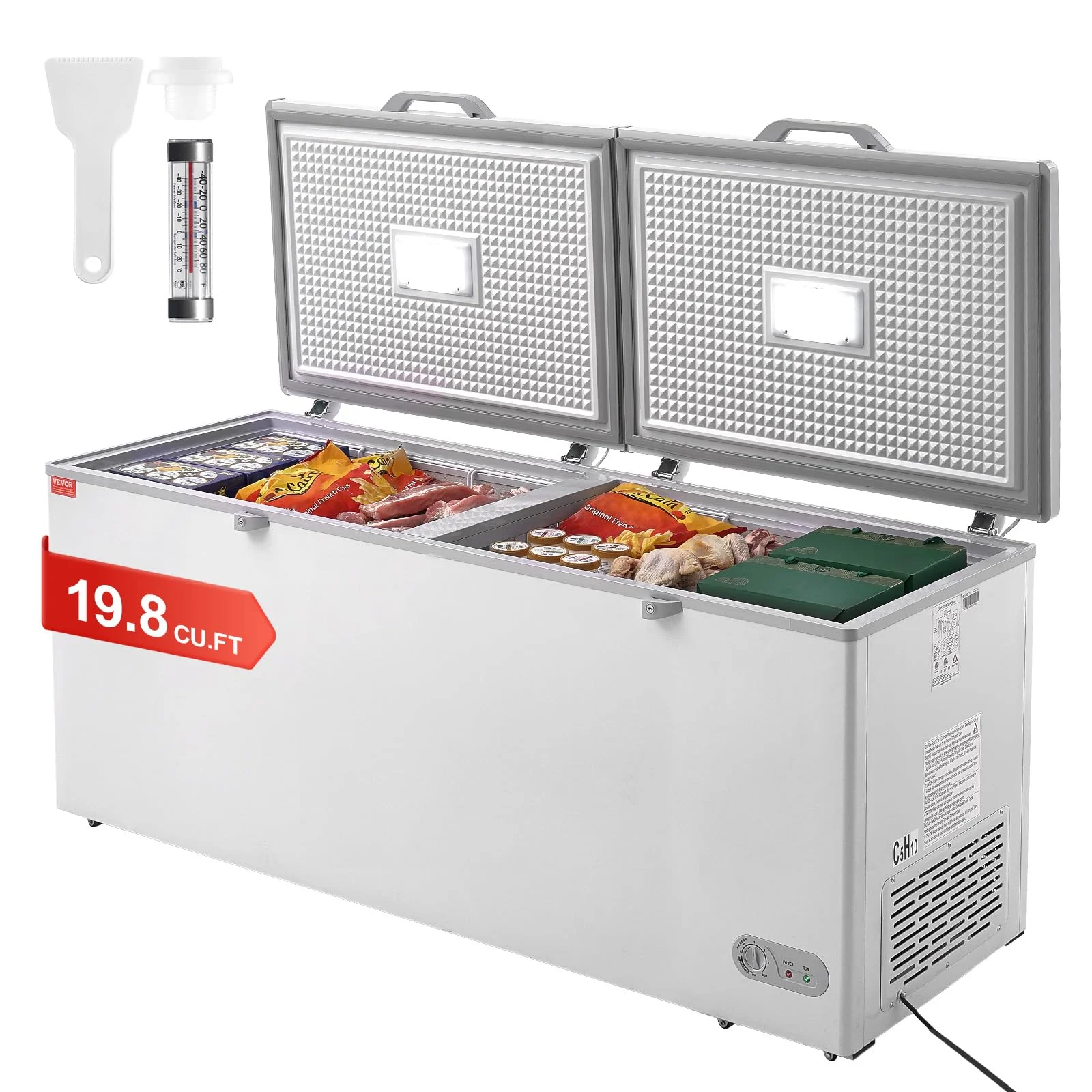
Buy this if you need the most space here.
Pros
- Four baskets and split, lockable lids
- Six casters for moving
- 2.11 kWh per day, per VEVOR
Cons
- Amazon and VEVOR’s own page disagree on the electrical rating, so read the rating label before you order
- 76 inches wide, nearly 159 lb
Best for: shops or cabins handling several deer per season.
Listed spec (per the Amazon listing): 19.8 cu ft, freezer range -18.4°F to 10.4°F, R290 refrigerant, LED light.
Split lids mean you open only half at a time, which keeps more cold in during a long pack-in.
Skip it if: you do not have the floor space for a 76-inch-wide unit.
Buying Guide
Choosing the best chest freezer means matching your yearly meat volume to steady sub-zero cooling in the space you have available. Start with space and power, then size it.
Quick Picks
| Pick | Best for | Key spec | Listed spec |
|---|---|---|---|
| Hamilton Beach 14 cu ft | Most processors | 14 cu ft | Listed as garage ready (Amazon), lockable lid |
| Midea 3.5 cu ft | Small overflow | 3.5 cu ft | 0°F to 110°F room range |
| Frigidaire 7 cu ft | Bulk buys | 7 cu ft | 7-setting thermostat |
| BLACK+DECKER 16.2 cu ft | Indoor basements | 16.2 cu ft | 95 watts, 2 baskets |
| VEVOR 19.8 cu ft | Shops | 19.8 cu ft | 2.11 kWh/day (per VEVOR) |
Check today’s price for each, since listings change often.
Capacity: how much freezer you need
Choosing the right chest freezer for meat depends on how many animals you harvest and how you package portions.
Match cubic feet to how much meat you put up each year.
Flat, vacuum-sealed packs stack tighter than round bundles. Our deer processing cost calculator helps you estimate yearly volume.
Specs that decide the job
- Room temperature range: garage use needs a stated range, such as 0°F to 110°F.
- Temperature stability: thick wall insulation helps maintain temperature stability during sudden summer heatwaves.
- Adjustable thermostat: an external adjustable thermostat lets you set lower freezing temperatures without lifting the lid.
- Electrical rating: read the rating label before you order.
- Footprint: measure width plus 3 inches of clearance on each side.
- Defrost type: ENERGY STAR says manual defrost freezers use half the energy of automatic defrost models but must be defrosted periodically.
- Defrost drain: a front drain saves bailing water by hand during an annual defrost.
- Energy efficiency: check daily kilowatt-hour usage to minimize running costs over time.
- Baskets: at least one removable storage basket keeps ground meat away from roasts and easy to grab.
How long raw meat keeps in a 0°F freezer
From the USDA FSIS freezer storage chart. Time limits are for quality only; frozen foods remain safe indefinitely.
| Item | Months (quality) |
|---|---|
| Wild game, uncooked | 8 to 12 |
| Meat, uncooked roasts | 4 to 12 |
| Meat, uncooked steaks or chops | 4 to 12 |
| Meat, uncooked ground | 3 to 4 |
| Bacon and sausage | 1 to 2 |
FSIS says a freezer full of food will usually keep about 2 days if the door stays shut, and a half-full freezer about a day. The Midea listing states up to 48 hours after losing power; treat that as the listing’s number, not a guarantee.
The listed specs lined up
| Pick | Capacity | Warranty term shown | Defrost / drain (listing) | Notes from listing |
|---|---|---|---|---|
| Midea 3.5 cu ft | 3.5 cu ft | 1 year | not stated in the checked fields | 0-110°F room range in freezer mode; fridge mode 38-110°F |
| Frigidaire 7 cu ft | 7 cu ft | 1 year parts and labor | exterior defrost drain | no garage rating stated |
| Hamilton Beach 14 cu ft | 14 cu ft | 1 year | front drain | “Garage Ready” in listing title; width conflicts between retailers |
| BLACK+DECKER 16.2 cu ft | 16.2 cu ft | 1 year (limited) | manual defrost with drain | garage and basement mentioned; no ambient range |
| VEVOR 19.8 cu ft | 19.8 cu ft | not shown | not stated in the checked fields | 2.11 kWh/day per VEVOR; electrical rating disputed |
Every cell is per the Amazon listing unless it says VEVOR. Cells marked “not stated” were not recorded, so we do not fill them.
Who this is not for
If you freeze a few packs and use them within a few months, a freezer compartment is enough and none of these is worth the floor space. If your only space is an unheated shed, none of the listings here states a rating for it that we could confirm beyond what Midea’s listing says. A chest freezer also does not make meat safer: the 0°F setting, a thermometer inside it and clean, sealed packaging do.
Raw-meat safety callout
Keep the freezer at 0°F or colder and check it with an appliance thermometer (USDA FSIS). Freezer time limits are about quality, not safety. In a power outage, keep the lid shut: a full freezer holds about two days, a half-full one about one day (USDA FSIS). While you pack, FSIS says to keep cold food at or below 40°F and not to leave it out of refrigeration for more than 2 hours.
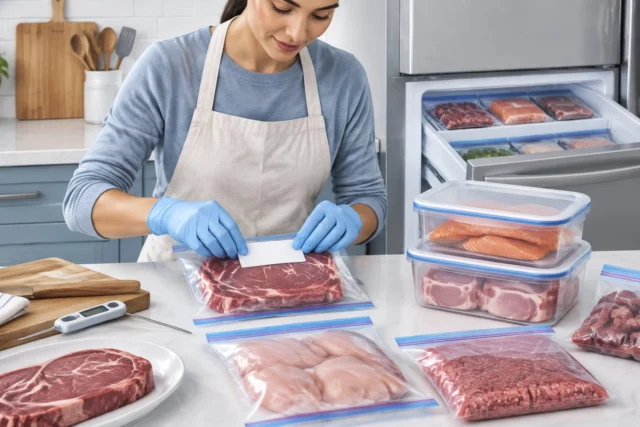
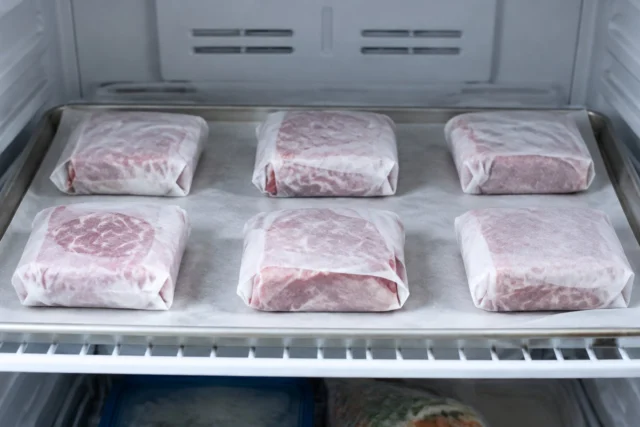
Proper packaging is the cornerstone of meat preservation. It helps prevent freezer burn and maintains cut quality over time.
Our guide to chamber vacuum sealers vs. standard vacuum sealers covers bag choice, and you should label frozen meat with the cut and date.
Frequently Asked Questions
Which chest freezer is best for meat storage?
When searching for the best chest freezer for meat, the Hamilton Beach 14 cu ft is our top pick for most home processors. It is marketed as garage ready and has a lockable lid.
The U.S. Department of Energy says chest freezers are more efficient than upright models. Browse our wider freezer coverage for other storage options.
What is the best small chest freezer for storing meat?
The Midea 3.5 cu ft is the best small chest freezer option here. The listing states 0°F to 110°F in freezer mode, and it switches to fridge mode for thawing. It fits overflow, not a full deer.
Which 7 cu ft chest freezer is best for meat storage?
The Frigidaire 7 cu ft is the 7 cubic foot model in our roundup. It has a front thermostat dial and an exterior drain. Check the manual before putting it in a garage, since the Amazon listing does not state a garage rating.
What should you look for in a chest freezer for storing meat in a garage?
Look for a stated garage-ready rating with a room temperature range. Confirm the voltage matches your outlet and leave space around the unit for airflow.
Which chest freezer brands are most reliable for long-term meat storage?
Four of the five list one year of coverage on Amazon; the VEVOR listing shows no warranty term. Hamilton Beach and Frigidaire are both made by Curtis International (per the Amazon manufacturer field), so they are not independent brands. Amazon’s review summaries are mixed on durability, so register your warranty the day it arrives.
How long can meat stay in a chest freezer?
Meat held at 0°F stays safe indefinitely, but quality fades. USDA FSIS suggests about 8 to 12 months for uncooked wild game, 4 to 12 months for steaks and roasts and 3 to 4 months for ground meat. For grinding, see how long to freeze meat before grinding, and plan fat in burger blends with our venison burger fat ratio guide.