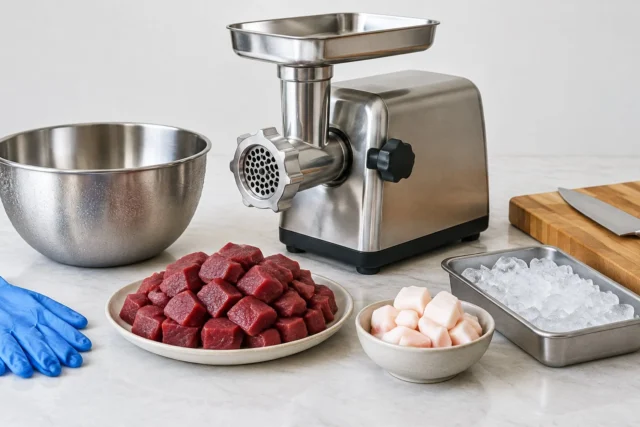
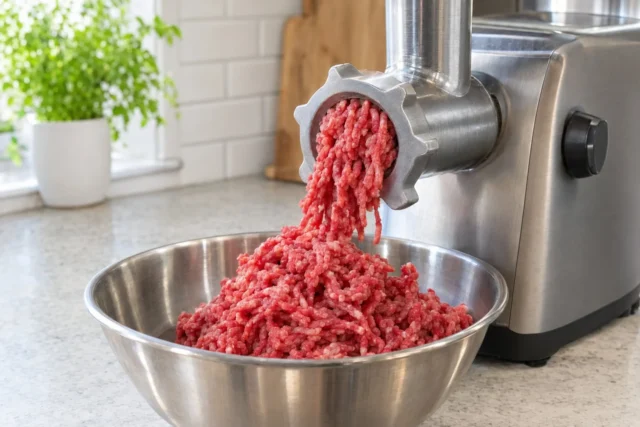
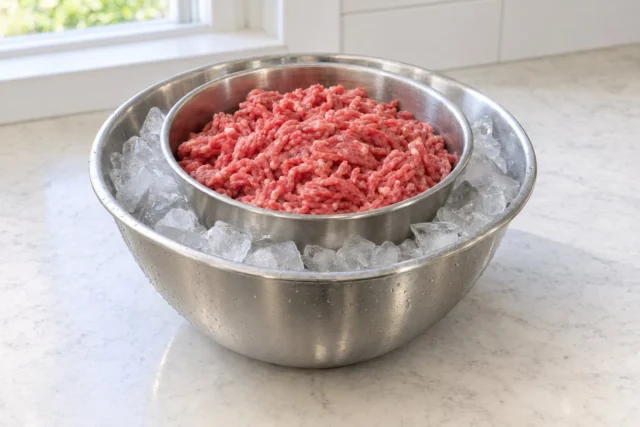
USDA FSIS says grinding beef at home is not a safer alternative to buying ground beef at a store, and that USDA cautions against grinding beef at home. Grinding mixes surface bacteria through the meat, and steaks and roasts are usually not checked for E. coli. FSIS gives these numbers: store ground beef at 40°F or below and use it within 2 days, or freeze it, and cook it to 160°F.
This guide shows what FSIS says, with its dates, and what the sources do not say. It covers beef only, because the pages we opened are about beef. We make no claim that home grinding is safer or less safe than another method beyond FSIS’s own wording.
Why Does FSIS Caution Against Grinding at Home?
The FSIS page (last updated February 6, 2025) says that recalls of ground beef contaminated with E. coli O157:H7 or Salmonella might lead some consumers to consider grinding beef at home, but this is not a safer alternative to buying ground beef at a retail store. It gives two reasons.
| Point | What FSIS says |
|---|---|
| Testing | In a USDA-inspected plant, trimmed beef destined for grinding is checked for E. coli. Primal cuts such as steaks and roasts are usually not checked for E. coli. |
| Sanitation | Inspected plants have Sanitation Standard Operating Procedures that cover cleaning of grinding machines and handling and chilling of ground beef. Consumers and stores might not follow such stringent procedures. |
| What you can sense | Neither you nor meat market employees can see, smell or taste dangerous bacteria. |
The same caution appears in FSIS’s leaflet as hosted by Utah State University Extension (revised August 2012).
Does Grinding Spread Bacteria Through the Meat?
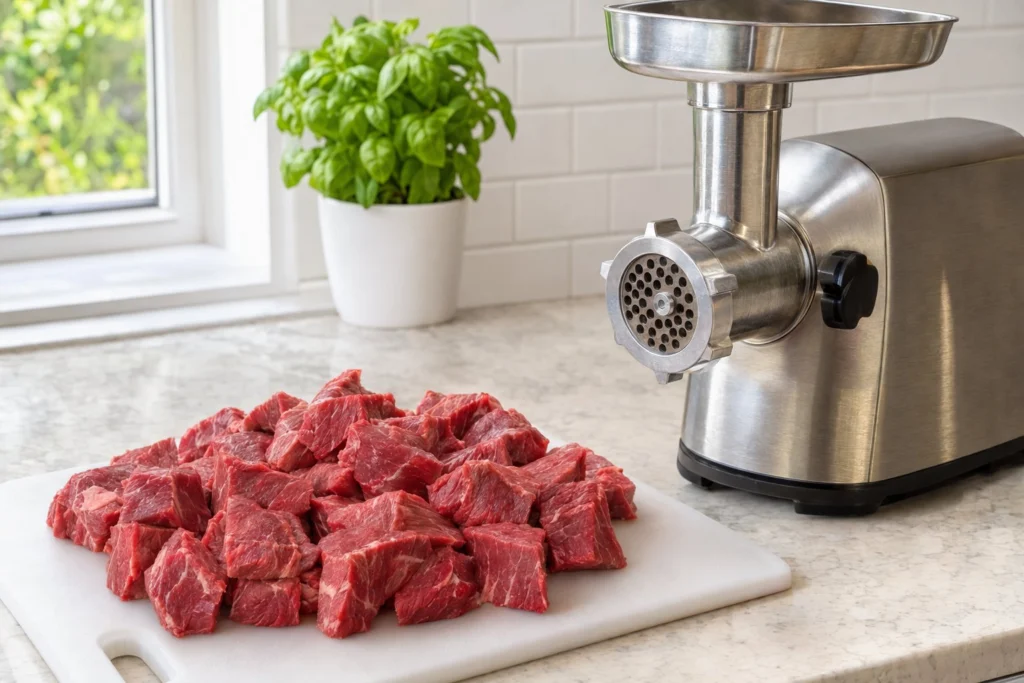
FSIS says that if pathogens are present when meat is ground, more of the meat surface is exposed to the harmful bacteria, and that grinding allows any bacteria present on the surface to be mixed throughout the meat. For what a second grind does, see our guide to grinding meat twice.
What Temperatures Matter for Ground Beef?
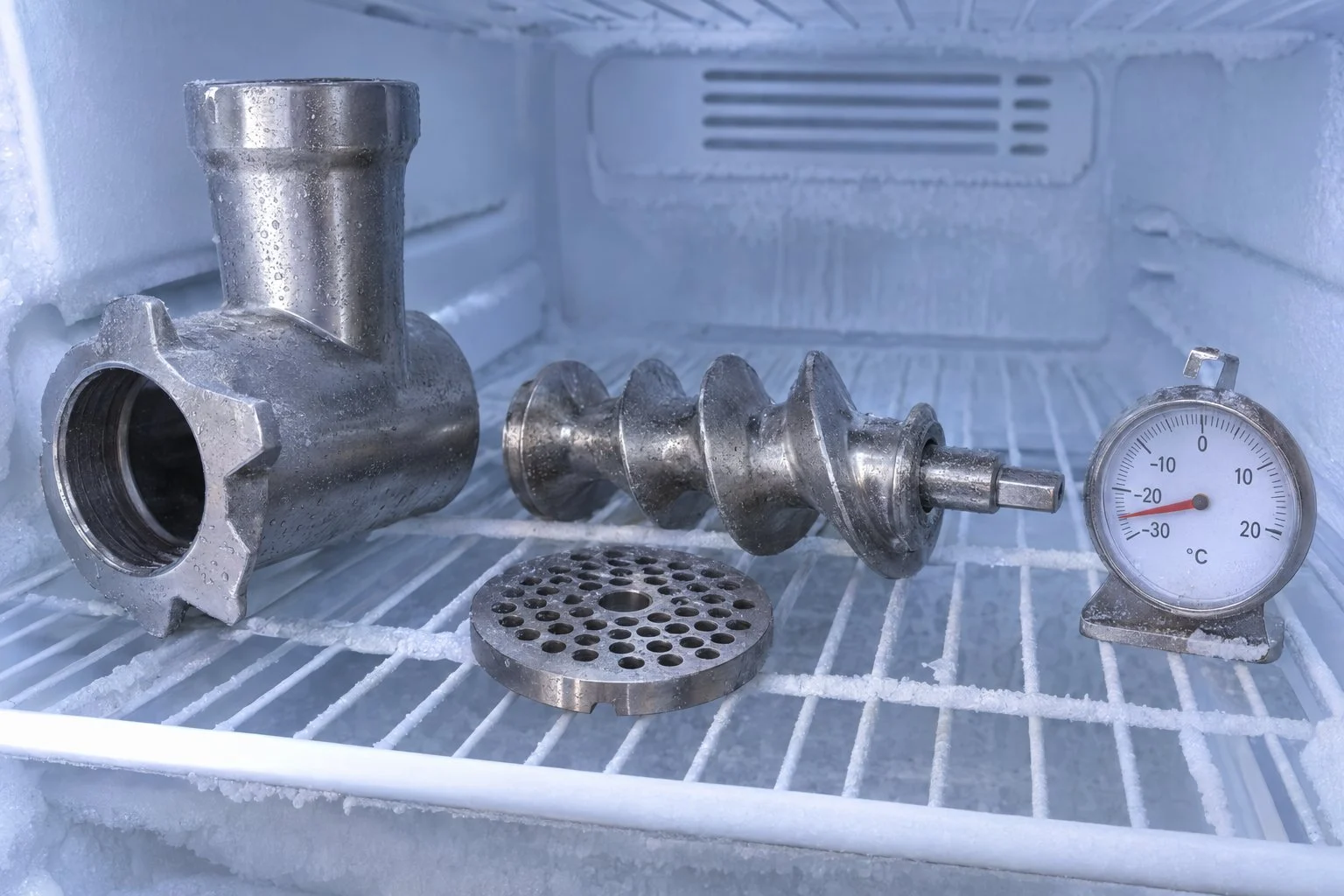
| Step | FSIS number |
|---|---|
| Danger Zone, where bacteria multiply rapidly | 40°F to 140°F |
| Storage | 40°F or below, and use within 2 days, or freeze |
| Cooking | 160°F, measured with a food thermometer |
| E. coli O157:H7 | Survives refrigerator and freezer temperatures |
FSIS adds that ground beef is safe indefinitely if kept frozen but loses quality, and is best used within 4 months. To check doneness, see how to calibrate a meat thermometer.
SAFETY: FSIS says E. coli O157:H7 survives refrigerator and freezer temperatures, so freezing ground beef does not make it safe. The bacteria are killed by thorough cooking to 160°F.
What Can You Do If You Still Grind at Home?
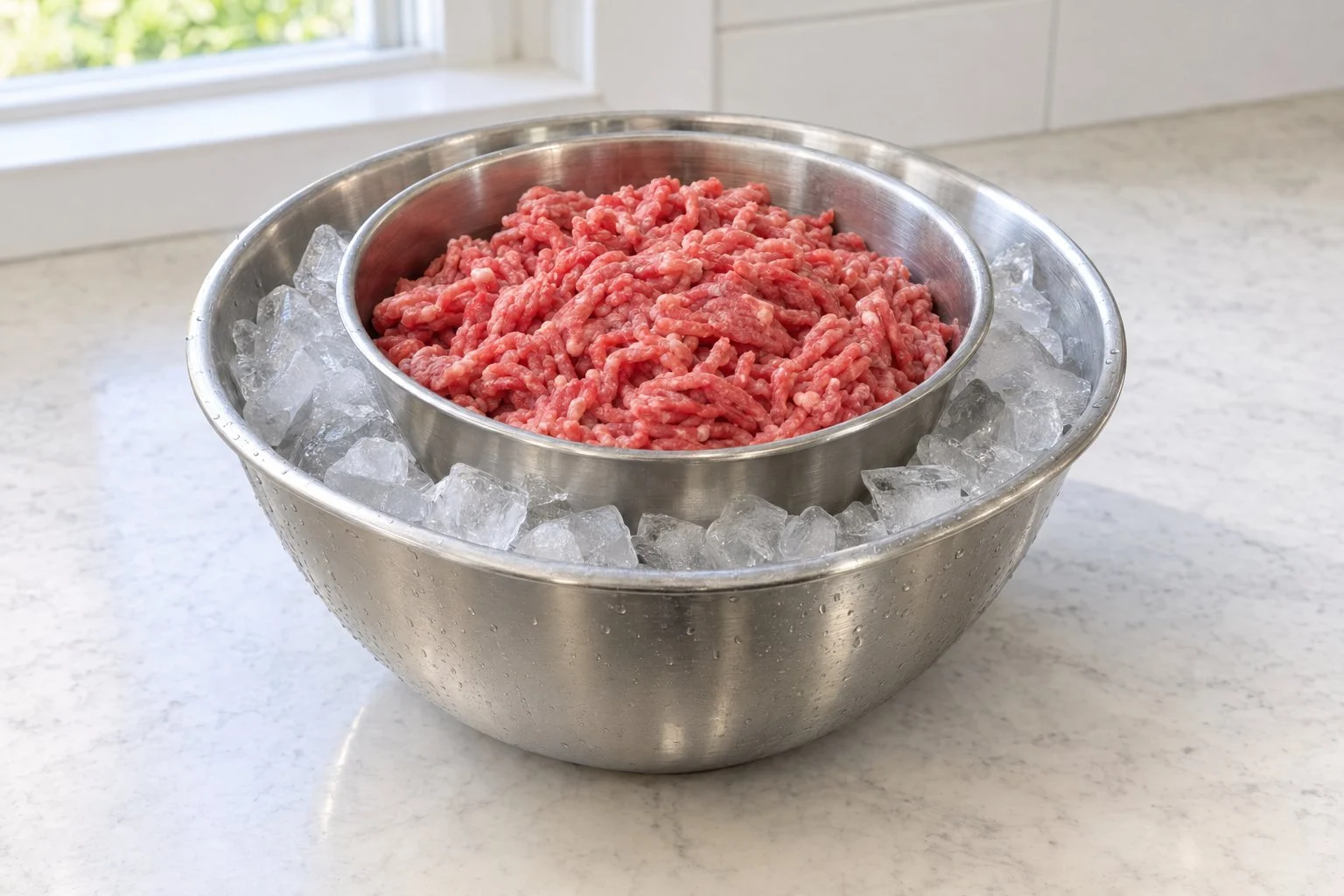
- Store the ground beef at 40°F or below and use it within 2 days, or freeze it (FSIS).
- Wash your hands with soap and water for 20 seconds before and after handling ground beef (FSIS).
- Use soap and hot water on utensils and surfaces that touched the raw meat (FSIS). For cutting boards, see how to sanitize a cutting board after raw meat.
- Do not put cooked hamburgers on a platter that held raw patties unless you wash it first (FSIS).
- Cook to 160°F as measured with a food thermometer (FSIS).
FSIS does not give a grinder-cleaning method or a chilling temperature for grinding. SaltRail has its own guides, which are not FSIS advice: how long to freeze meat before grinding and how to clean a meat grinder. If you are choosing a machine, see our meat grinder buying guide. For poultry, see how to grind chicken.
Why Can’t You Judge Ground Beef by Color?
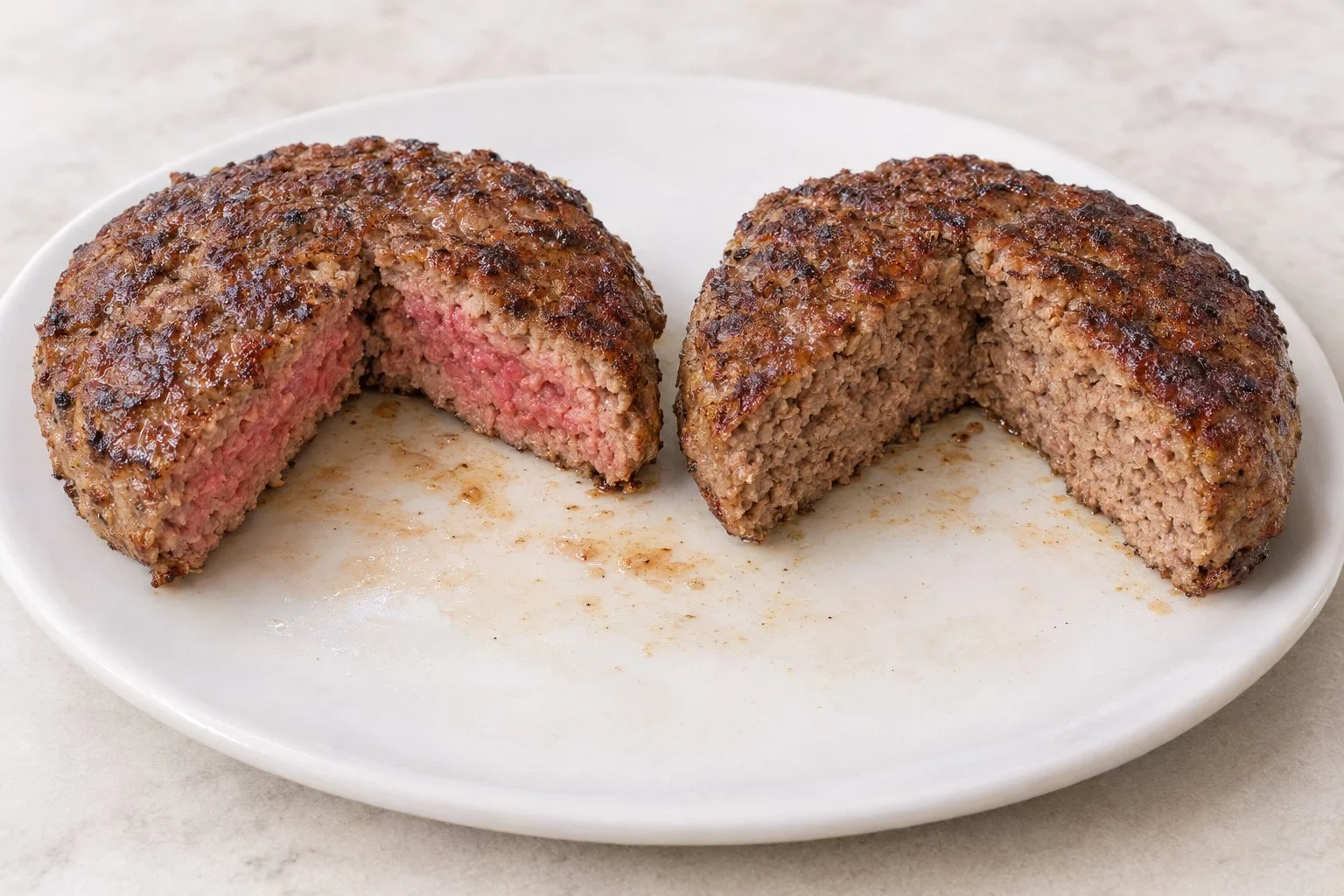
FSIS says research has shown that color and texture indicators are not reliable. It cites a 1995 Kansas State University study that found enough ground beef patties turning brown well before they reached 160°F to make color an unreliable indicator of doneness, and warns that a consumer who believes a brown color always means a safe hamburger is taking a chance on foodborne illness.
| Problem | What the source says |
|---|---|
| Brown before it is safe | FSIS: some ground beef may appear to have lost all pink color before it is fully cooked. In an FSIS survey, more than 25 percent of fresh patties turned brown before reaching 160°F. FSIS also cites research in which some patties looked well-done at temperatures as low as 131°F. |
| Pink after it is safe | Arizona Extension (2012): some lean ground beef may remain pink at temperatures well above 160°F. FSIS says the same, that low-fat patties have stayed pink at 160°F to 165°F in some cases, and that persistent pink color is primarily associated with the meat’s pH and pigment level as well as its fat content. |
Neither page we opened gives a doneness color chart, and we do not give one. FSIS also says that at 160°F a safely cooked patty may look brown, pink or some variation of those colors. For raw meat color and spoilage, see how to tell if meat is spoiled.
How Do You Check a Burger Patty?
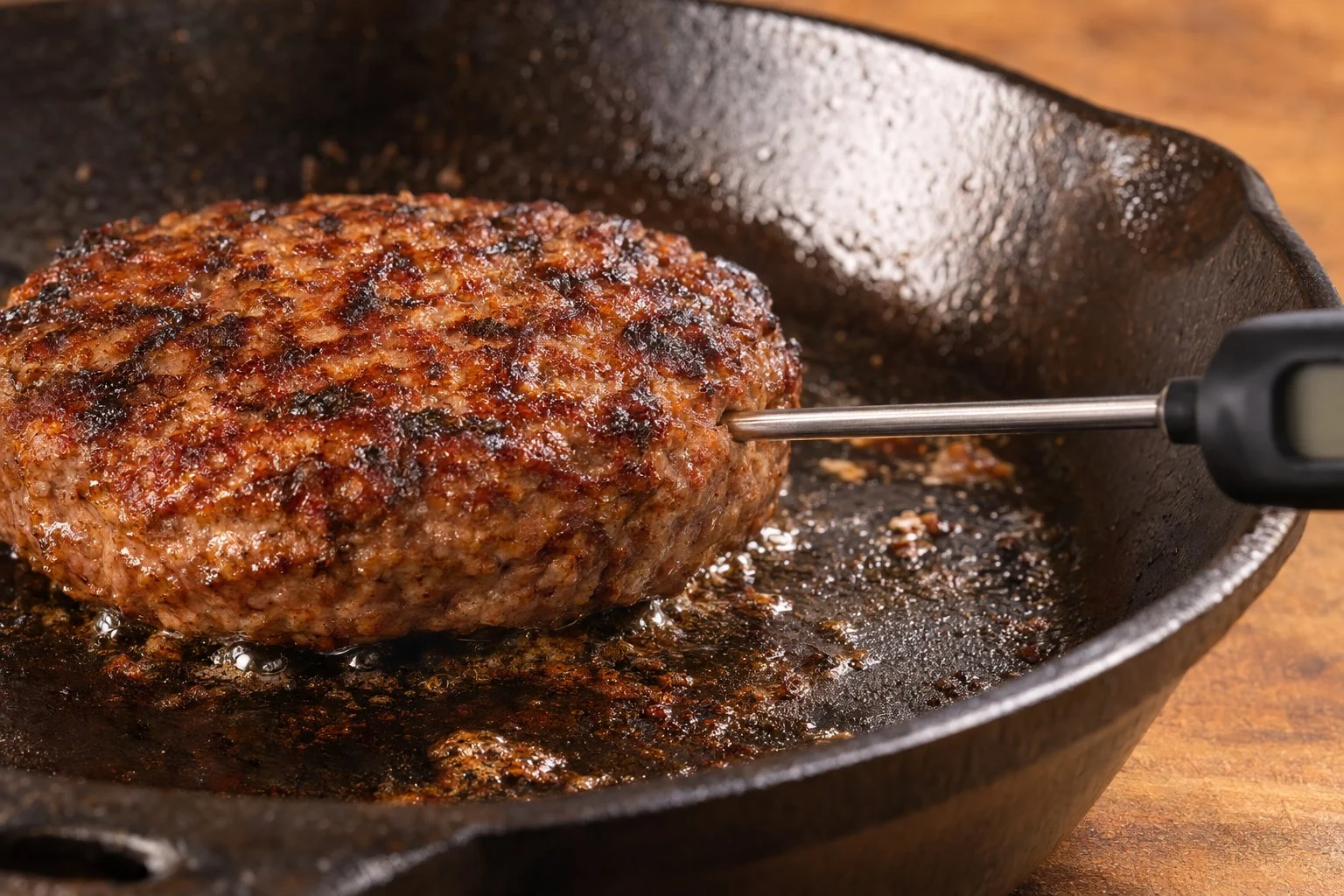
- Use an instant-read digital food thermometer toward the end of cooking.
- Insert it at least ½ inch into the thickest part of the patty. If the patty is not thick enough to check from the top, insert the thermometer sideways (FSIS, Arizona Extension).
- If you are uncertain about the reading, take a second reading in another location (FSIS).
- Look for 160°F. Check the thermometer instructions for correct use and calibration (Arizona Extension).
SAFETY: FSIS says consumers should not eat ground beef patties that are pink or red in the middle unless a food thermometer is used to verify the temperature.
What Do the Sources Not Say?
- Anything about pork, venison or poultry. The FSIS page is about beef.
- How to clean a grinder or how cold the meat should be while grinding.
- Comparative risk numbers for home-ground and store-ground beef.
- Opposing views. We did not open any source that takes the opposite position, so we do not describe one.
Grinding Your Own Meat: Quick Answers
Is store-bought ground beef safer than home-ground?
FSIS says grinding beef at home is not a safer alternative to buying ground beef at a retail store, and that USDA cautions against it.
Does freezing kill E. coli?
No. FSIS says E. coli O157:H7 survives refrigerator and freezer temperatures; thorough cooking kills it.
Can I eat a home-ground burger medium?
FSIS says to cook ground beef to 160°F as measured by a food thermometer, and not to eat or taste raw or undercooked ground beef.
Does grinding twice help?
FSIS does not address it. See our guide to grinding meat twice.