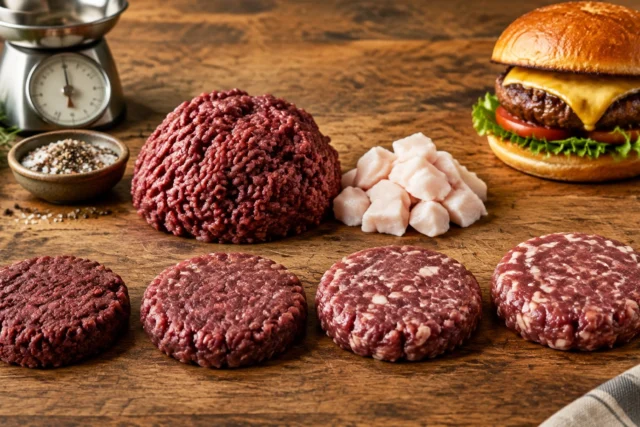

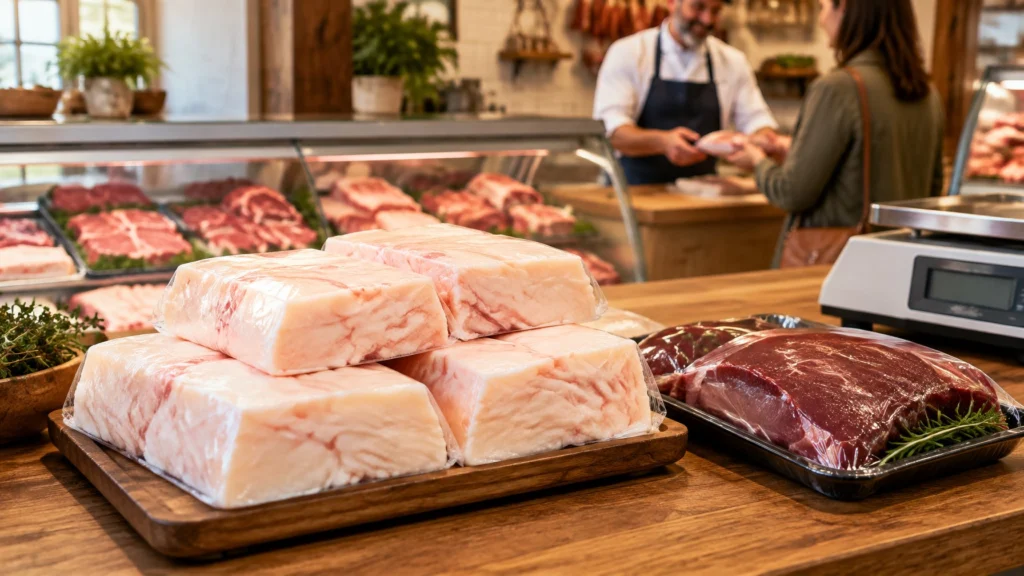
Call a local butcher shop or grocery meat counter and ask for raw beef fat trimmings, usually sold frozen or by the pound. Trimmings grind and cook more evenly in venison burger than hard suet. Rendered tallow is a cooking fat, so it will not grind into venison the same way. For 10 lb of venison, about 1.1 lb of fat gives a 10% mix, and 2.5 lb gives 20%.
After reading, you will know what to say when you call a shop and how to read an online listing so you get raw fat instead of tallow. You will also be able to work out exactly how many pounds to buy for your batch of ground venison. The guide adds the fat-to-venison math most pages skip, plus USDA FSIS cold-holding and cooking numbers you can trust while the meat is on your table.
Where Should You Ask for Raw Beef Fat Locally?
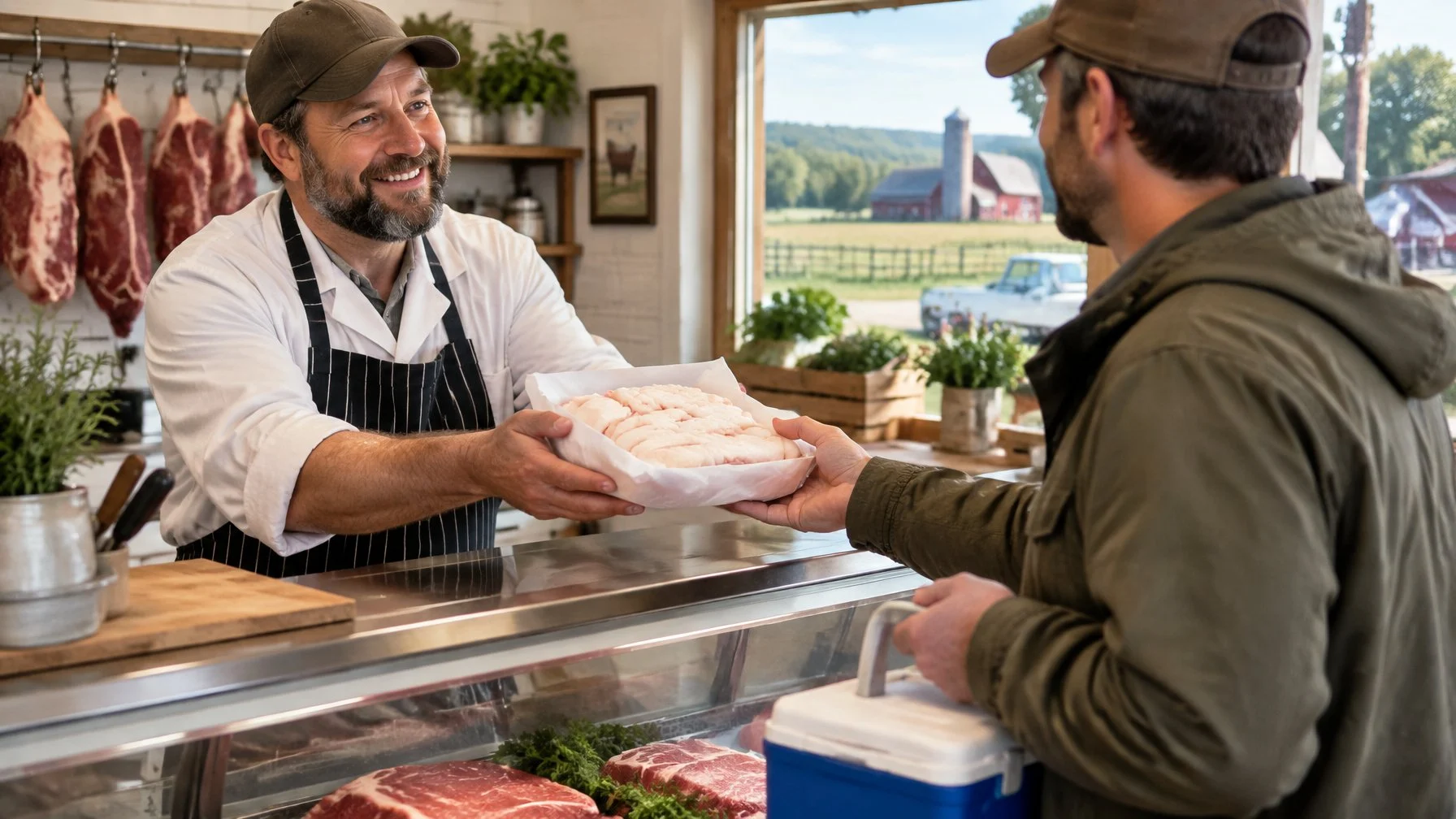
Your best local leads are butcher shops and meat markets first, then grocery meat counters, deer processors and beef farmers. A short phone script saves you a wasted drive.
Call Butchers and Meat Markets Before You Drive
Full-service butcher shops break down beef sides, so they trim fat every day. Most of it goes to grind or gets tossed. That makes them the most reliable place to ask.
Call first. Fat trimmings are not always in the case, and some shops save them only on cutting days. Ask if they can hold a set weight for you, frozen or fresh.
Meat markets, including Mexican carnicerías and other ethnic markets, often keep beef fat trimmings behind the counter. If it is not on display, ask anyway.
Prices for beef fat trim are hard to pin down. They vary by region and by shop, and some butchers will give trim away free if they would otherwise throw it out. Call a day or two ahead, ask for the per-pound price, and say you need it for grinding venison. Some shops can’t help in deer season because they use all their trim for their own ground beef.
Ask Grocery Meat Counters, Processors, and Farmers
Grocery stores with an in-house meat cutter trim beef on site. Smaller and regional chains are more likely to say yes than stores that receive case-ready packages.
If you are deciding where to buy beef fat for deer processing, deer processors are a natural source. Many keep beef fat for deer processing on hand for custom grinds and will happily sell you extra trimmings during the season.
Local beef farmers who sell halves or quarters get fat back from their processor. Ask at a farmers market or call the farm directly. If your family is already weighing whether to process your own deer, a farm source for fat each fall helps the math.
| Source | Odds of raw fat | Call ahead? | Notes |
|---|---|---|---|
| Butcher shop | High | Yes | Can hold a set weight |
| Meat market / carnicería | Medium to high | Yes | Often behind the counter |
| Grocery meat counter | Medium | Yes | Needs an in-store cutter |
| Deer processor | Medium | Yes | Busiest in season |
| Beef farmer | Medium | Yes | Often frozen in packs |
What to Say When You Ask for Fat Trimmings
Use clear words so you get the right product. Here is a script that works by phone or at the counter:
- “Do you sell raw beef fat trimmings?” If the shop offers suet instead, ask whether it has softer fat trim from steaks and roasts.
- “I need about [X] pounds for grinding into venison.” The weight lets them check stock.
- “Is it fresh or frozen, and when was it trimmed?” Fresher fat has less off flavor.
- “Can you leave out bone, blood spots and gristle?” Clean fat grinds easier.
- “Can you hold it for me until [day]?” A hold stops it going into the shop’s own grind.
If they offer to coarse-grind it for you, say yes. It saves you a pass through your grinder.
How Do You Buy Raw Beef Fat Online?
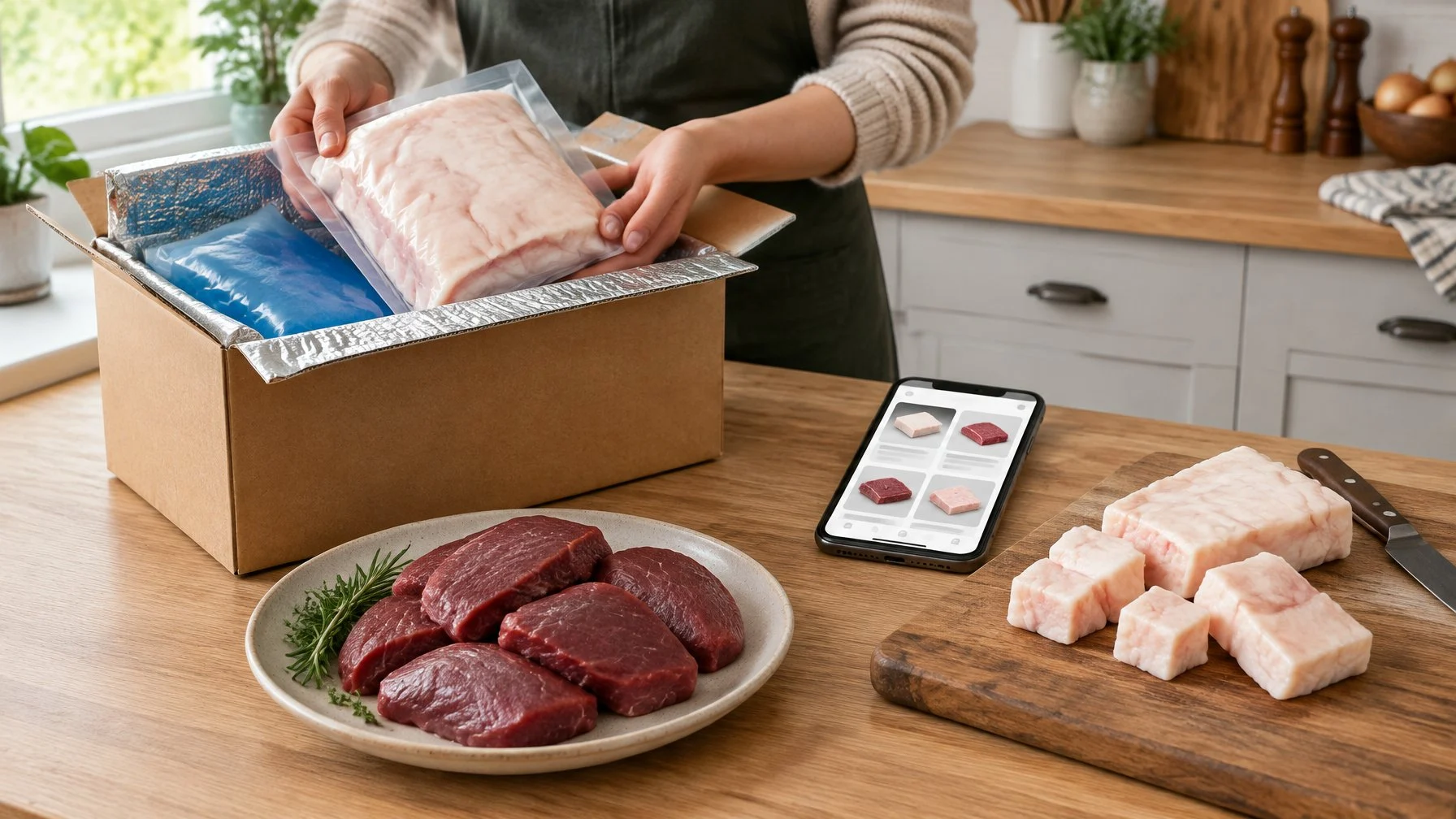
Buying online works if you read two things closely: what kind of fat the listing sells, and what it costs once shipped cold to your door.
Check Whether the Listing Is Raw Fat, Suet, or Tallow
Online shops use three names that mean different things. Only two of them belong in your grinder.
Beef suet is the hard, raw fat from around a steer’s kidneys. It stays firm when cold, but LEM’s grinder manual advises against it for wild-game burger because it can leave unmelted bits in the cooked patty.
Rendered beef fat, commonly sold as beef tallow, is fat that has been melted and strained. It sets into a smooth, waxy block and is meant for cooking rather than grinding.
| Listing says | What it is | Grind into venison? |
| Unrendered beef fat / trimmings | Raw fat, often coarse ground | Yes |
| Unrendered beef suet | Raw kidney fat | Yes |
| Rendered beef tallow | Melted, strained fat | No |
One grass-fed farm store, for example, lists unrendered beef fat at $4.38 per lb and unrendered suet at $5.69 per lb, both in packs averaging 2 lb, next to a quart of rendered tallow. That layout shows why you read the label before adding to cart. Grass-fed brands such as Organic Prairie also sell beef online; check the current product page for the word “unrendered” or “raw” before you order.
Check Pack Size, Cold Shipping, and Total Delivered Cost
Before you order, run through this checklist:
- Pack weight. Divide your needed weight by the pack size. A 2.5 lb need with 2 lb packs means buying two.
- Frozen or fresh. Frozen fat ships better and is easier to cube.
- Cold shipping method. Look for insulated boxes with dry ice or gel packs.
- Delivery days. Avoid weekend arrivals that sit on a porch.
- Total delivered cost. Add shipping to the per-pound price. A cheap pound becomes expensive with overnight freight.
If the box arrives with fat soft or warm, contact the seller before using it.
What Do You Need, and How Much Fat Should You Buy?
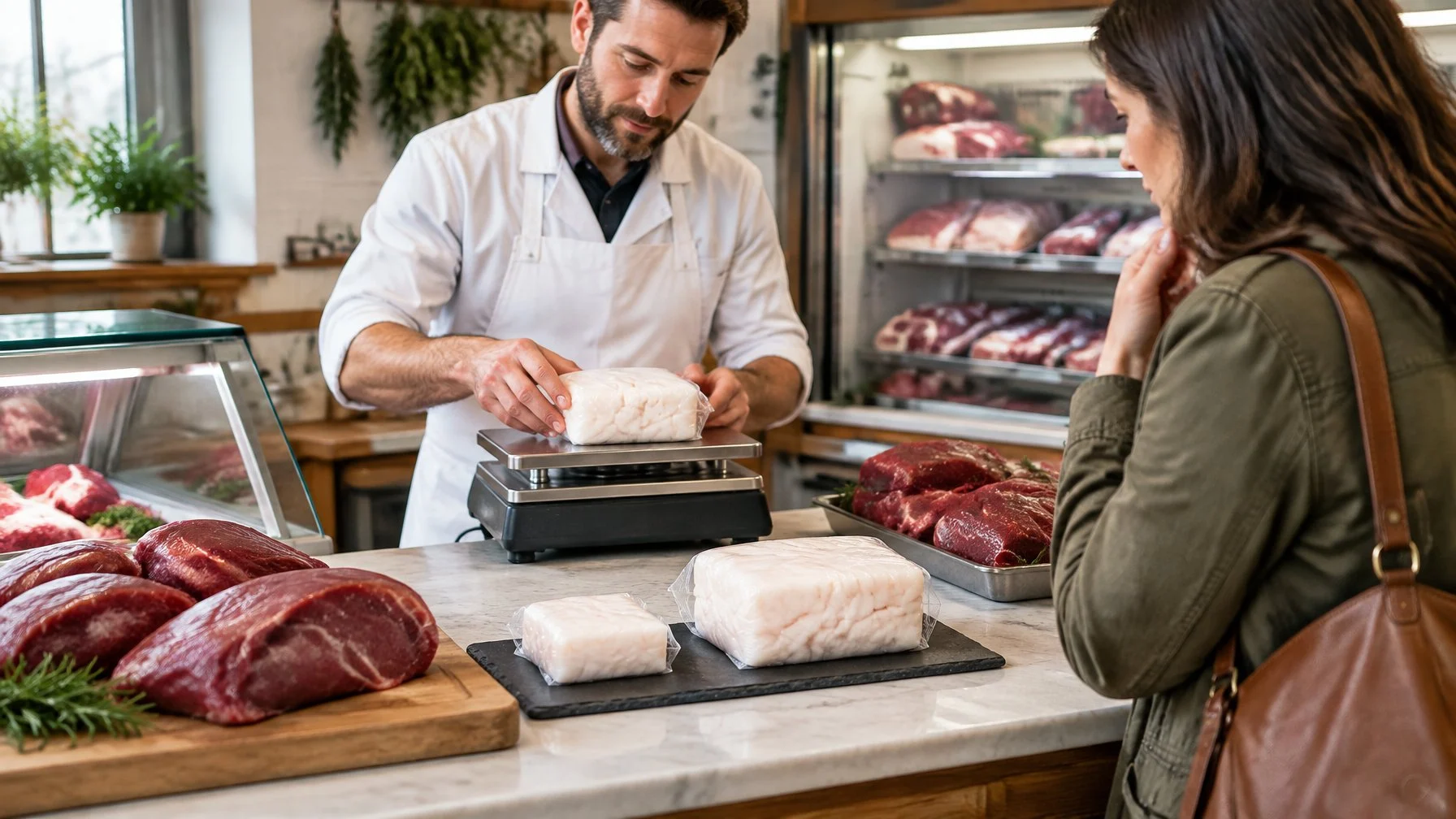
You need four things on the table, raw beef fat trimmings (suet only as a backup), and one simple formula for pounds of fat.
What You Need: Fat, Venison, a Scale, and Grinding Equipment
Ingredients by weight
- Venison, trimmed of silver skin and sinew: weigh it after trimming
- Raw beef fat trimmings (suet only as a backup): see the math below
Equipment by type
- Digital kitchen scale that reads in 0.1 lb or 1 oz steps
- Meat grinder with a coarse plate (about 3/8 in) and a fine plate (about 3/16 in)
- Sharp boning knife and a large cutting board
- Sheet pans and freezer space for chilling
- Large bowl or food-safe tub for mixing
- Freezer bags, vacuum bags or butcher paper, plus a marker
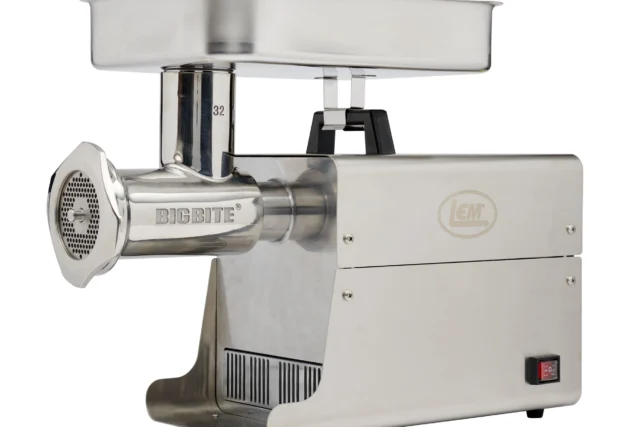
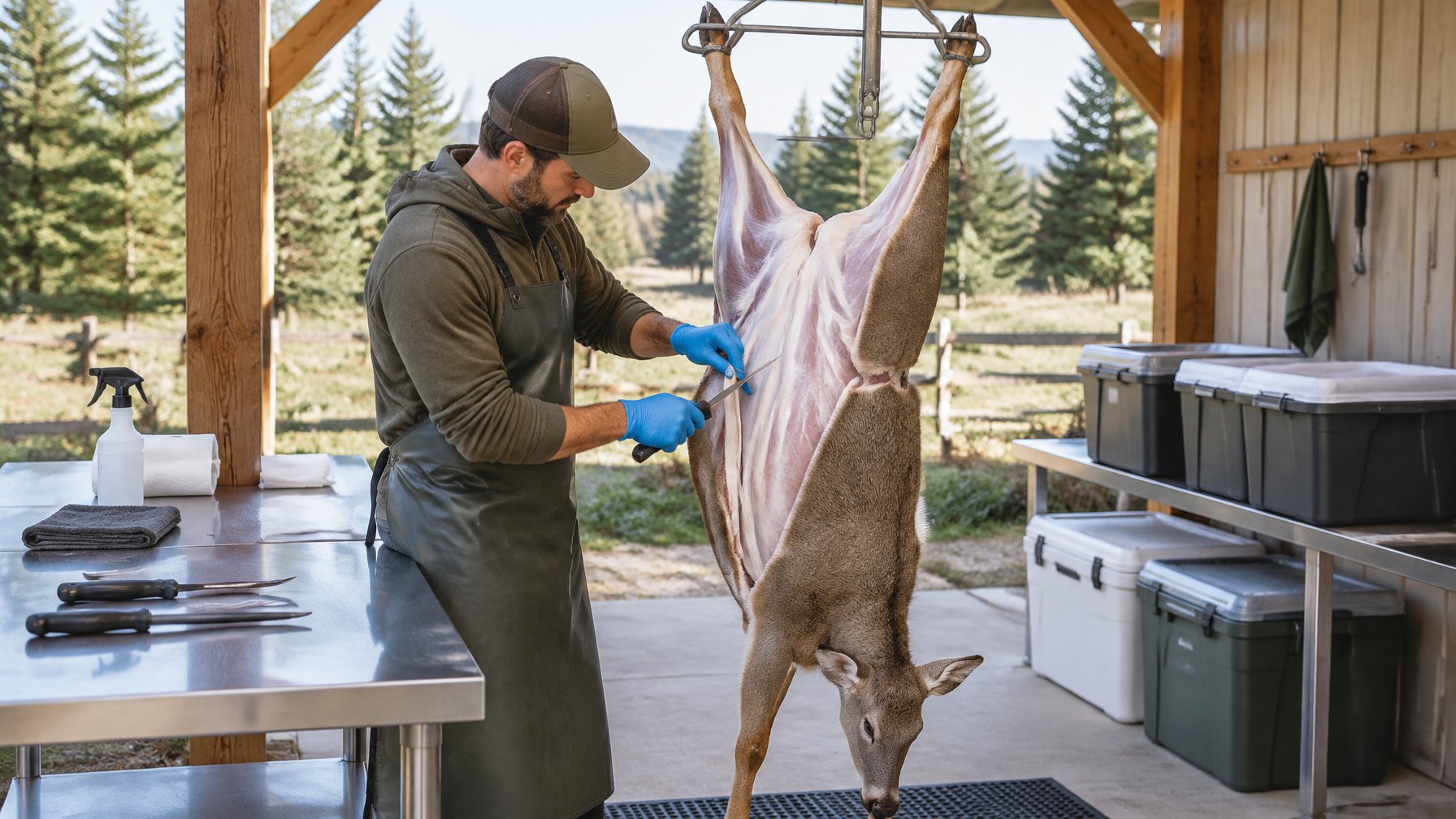
From a commercial-kitchen view, pick a grinder whose head, auger and plates come apart fully and fit in your sink. Fat left in crevices goes rancid fast. If you are shopping, the meat grinder size guide matches grinder number to batch size. Clean trim starts with how you butcher the deer.
Which Fat Should You Request? Trimmings Over Suet
Ask for trimmings first. Trimmings are the fat cut off steaks and roasts. Suet, also called kidney fat, is harder and drier, and LEM’s grinder manual recommends pork fat or beef fat trim over suet for wild-game burger.
| Fat type | Texture cold | Grinding | Best for |
|---|---|---|---|
| Fat trimmings | Firm, a bit soft | Easy | Burger, general grind |
| Beef suet (kidney fat) | Very firm, flaky | Clean if frozen | Burger, summer sausage |
| Leaf fat | Soft | Smears easily | Better known from pork; skip for beef grind |
Suet has a high melt point, so some people find it coats the mouth in burgers eaten warm, not hot. Trimmings give a softer bite. If suet is all a shop has, look for trimmings elsewhere or use pork fat, the other fat LEM’s manual recommends.
Calculate Fat as a Percentage of the Finished Grind
Figure fat as a share of the finished mix when making ground venison. Use this formula:
Fat lb = venison lb × target % ÷ (100 − target %)
| Venison | 10% mix | 15% mix | 20% mix |
|---|---|---|---|
| 5 lb | 0.56 lb | 0.88 lb | 1.25 lb |
| 10 lb | 1.1 lb | 1.8 lb | 2.5 lb |
| 25 lb | 2.8 lb | 4.4 lb | 6.25 lb |
For 10 lb venison at 20%: 10 × 20 ÷ 80 = 2.5 lb fat, for 12.5 lb finished. Buy about 10% extra to cover trim loss and bone bits.
How Do You Check, Store, and Grind the Fat?
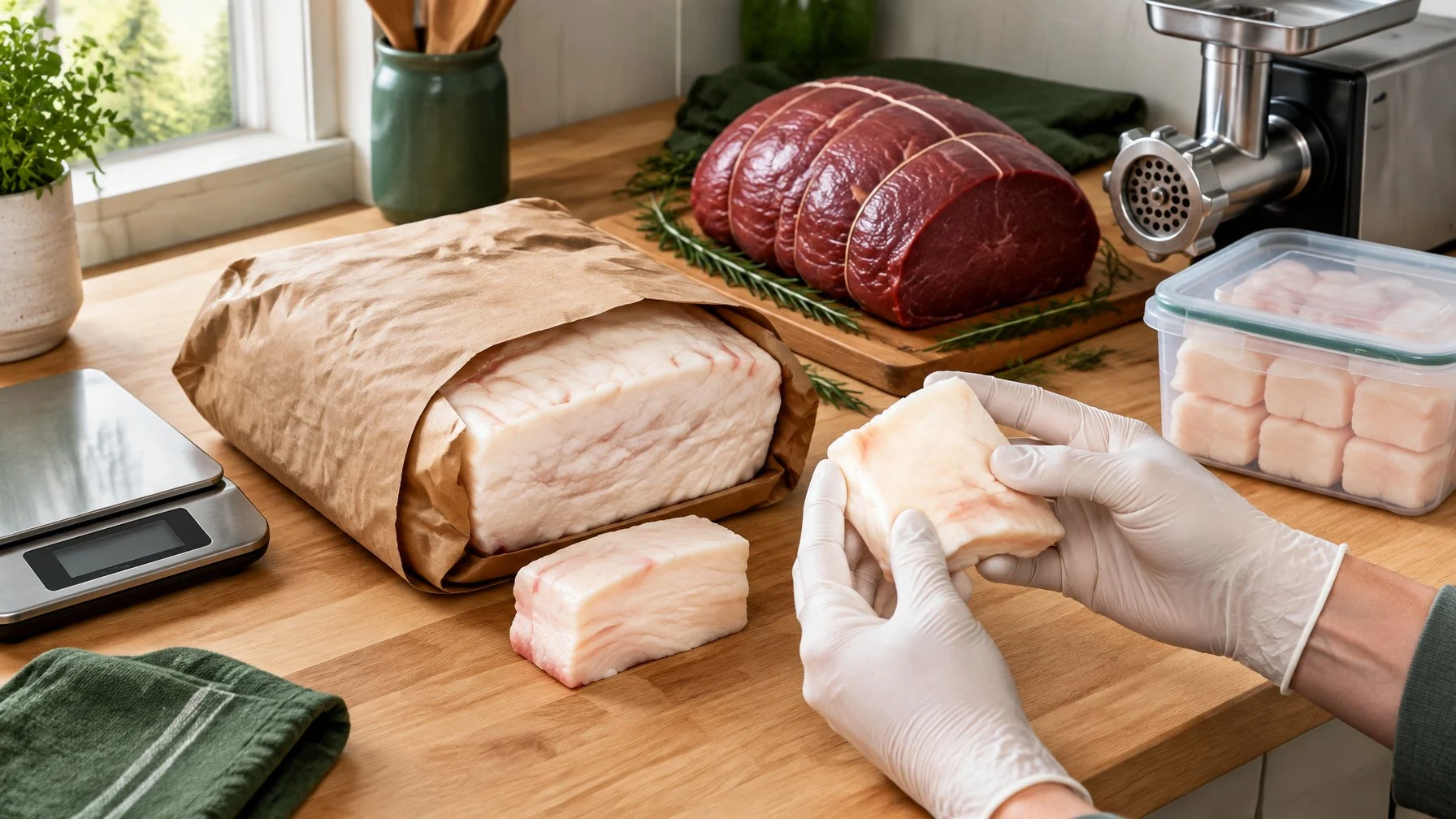
The job runs in three steps: check and chill the fat, weigh and cube both meats, then grind and package. USDA FSIS numbers and a short fix list follow.
Step 1: Check the Fat and Keep It Cold
Quality beef fat is white to creamy, firm and smells clean. Yellow fat is common in grass-fed beef and is fine. Gray, slick or sour-smelling fat goes back.
Bring a cooler with ice when you pick it up. Raw fat follows the same rules as raw ground meat: keep your fridge at 40 °F or below and use ground meats within 1 to 2 days. If you will not grind within that window, freeze the fat.
Step 2: Weigh, Cube, and Chill Both Ingredients
- Weigh the trimmed venison. The fat math depends on this number.
- Weigh out the fat from your chart. Guessing gives you dry or greasy grind.
- Cut both into 1 in cubes. Small cubes feed the auger without jamming.
- Spread cubes on sheet pans and freeze 30 to 60 minutes until the edges are stiff. Firm fat cuts cleanly instead of smearing.
- Chill the grinder head, auger, knife and plates in the freezer too. Warm steel melts fat on contact.
For timing by cube size, see how long to freeze meat before grinding.
Step 3: Grind, Mix, and Package Promptly
- Toss fat and venison cubes together before grinding. Even feeding spreads fat through the batch.
- Grind once through the coarse plate. It cuts without heating the meat.
- Mix gently by hand for about a minute. Overmixing makes burger dense.
- Regrind through the fine plate if you want a tighter texture. A second pass blends any fat streaks.
- Package in 1 lb portions, press out air, label and date. Flat packs freeze and thaw faster.
- Freeze the same day. Packaged ground venison spoils faster than whole cuts if left unfrozen.
Plan your freezer space with SaltRail’s storage guides.
Keep the fat as cold as the venison. Weston’s grinder manual says to chill meat to 32–34°F, cut it into cubes of about 1 inch, and run it through the coarse plate before the fine plate. MeatEater advises fat that is firm but not frozen solid, and chilling it again if it starts to smear. One caution: LEM’s grinder manual recommends pork fat or beef fat trim over hard beef suet for wild-game burger, because suet can leave unmelted bits in the cooked patty.
SAFETY: Handle and Cook Ground Venison Using USDA FSIS Guidance
SAFETY: USDA FSIS advises never leaving ground meat at room temperature more than 2 hours, or 1 hour at 90 °F and above. Frozen ground meat is safe indefinitely but is best used within 4 months for quality. Cook all ground meats to 160 °F internal temperature, checked with a food thermometer. Wash hands with soap for 20 seconds before and after handling raw meat.
No cure or salt is needed to grind plain ground venison for burgers. Add cure only when following a tested sausage recipe.
Troubleshooting: Smearing, Waxy Texture, Off Odors, and the Wrong Fat Percentage
| Problem | Likely cause | Fix |
|---|---|---|
| Fat smears, grind looks pasty | Warm fat or warm grinder head | Refreeze cubes and parts 30 minutes |
| Waxy coating in the mouth | All suet, burger eaten below hot | Mix in trimmings or serve hot |
| Sour or off odor | Old fat or slow chilling | Discard; buy fresher fat |
| Burger dry and crumbly | Too little fat | Regrind with more fat at 15 to 20% |
| Pan full of grease | Too much fat | Blend in more lean venison |
A dull knife or plate also causes smearing. Sharpen or replace them if chilling does not fix it.
Where to Buy Beef Fat for Venison – Quick Answers
Can I buy beef fat from a butcher?
Yes. Full-service butcher shops trim beef fat daily and are the most reliable source. Call ahead, ask for “raw beef fat trimmings or suet,” and give the weight you need. Many shops will hold fat for you or sell it frozen. Some will coarse-grind it on request, which saves you a step at home and makes mixing into ground venison easier.
Where can I buy beef fat trimmings near me?
If you want to know where to buy beef fat, start with local butchers and meat markets, including carnicerías. Next, try grocery stores with on-site cutters, deer processors, and beef farmers. Phone each one before driving, since trimmings are rarely out on display.
Ask for raw, unrendered fat, specify the exact pounds you need, and check whether they can set it aside for pickup.
Can I order raw beef fat for venison online?
Yes. Some farms and meat shops sell unrendered beef fat or suet in frozen packs. Read the listing for “unrendered” or “raw,” check the pack weight, and confirm it ships frozen with insulation. Add shipping to the per-pound price before you buy. Avoid listings for rendered tallow, which is melted cooking fat and does not grind well.
What kind of beef fat should I add to venison?
Use raw beef fat trimmings or beef suet. Trimmings give a softer bite in burger. Suet, the hard fat from around the kidneys, stays very firm when cold and grinds cleanly when frozen. Most hunters mix 10 to 20% fat into finished ground venison. For 10 lb of venison, 2.5 lb of fat gives a 20% mix.
Can I grind rendered beef tallow into venison?
Not well. Rendered beef fat has no cellular structure to grind and smears or clumps when mixed into cold venison. Beef tallow works great for pan-searing steaks or frying, but not inside a grind. For grinding burgers or sausage, stick strictly to raw trimmings or suet.
When you are ready to pick a machine for the job, start with SaltRail’s roundup of the best meat grinders.
This is general guidance based on USDA recommendations. When in doubt, follow the USDA FSIS source linked above.