
A deer breaks into seven groups you keep: the backstraps, the tenderloins, the hindquarters, the front shoulders, the neck, the ribs and the flank. Each venison hindquarter gives you a sirloin, top round, bottom round, eye of round and shank. Keep the backstraps, tenderloins and hind leg rounds whole for steaks and roasts, and send the shanks, ribs, flank and trim to grind.
With this chart, home deer processing gets simpler: you can stand at the table with a skinned quarter and know where each cut sits and how thick to slice it.
You will also know what to wrap whole and what goes in the grind pile. It covers holding meat at 40°F or below, avoiding tough round steaks, and packaging against freezer burn.
Where Is Each Cut, and How Should You Use It?
The cuts chart gives you the location, best use and cutting method for every piece. It helps you prep the right portions for classic venison recipes. A second table sorts each cut into steaks, roasts, stew meat or grind.
Deer Meat Cuts Chart: Cut, Location, Best Use, and How to Cut
A venison cuts chart is a map of the deer’s major muscle groups that shows where each cut sits and how it should be cooked.
Every fact below comes from two extension and state wildlife guides. Thickness is listed only where those guides give it.
| Cut | Where it is | Best use | How to cut |
|---|---|---|---|
| Tenderloin | Under the ribcage, mid-ribcage back to the pelvis | Steaks; the most tender piece | Lift free from the backbone; butterfly for wider steaks |
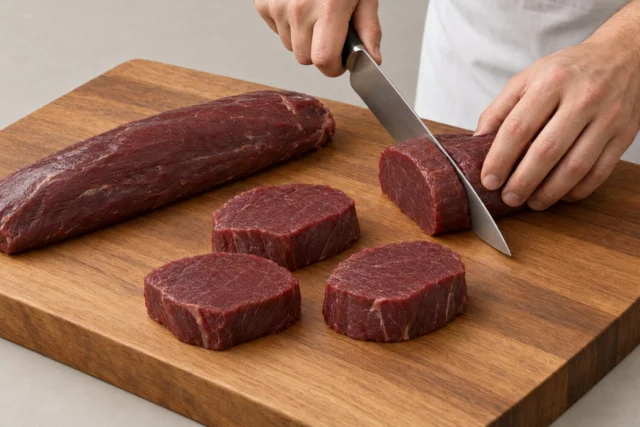
| Backstrap (loin) | Along the spine, neck to hips | Steaks or whole roasts | Trim fat and silver skin; steaks about 3/4 inch |
| Sirloin | Front of the hind leg, hugging the femur | Roasts or steaks | Separate along the natural seam |
| Top round | Inside of the hind leg; the largest round piece | Roasts or thin steaks | Separate along seams; slice thin |
| Bottom round | Outside of the hind leg; smaller | Roasts or thin steaks | Separate along seams; slice thin |
| Eye of round | Between the top and bottom rounds | Roasts or steaks | Follow the seam between the rounds |
| Hind shank | Below the knee joint | Grind | Cut through the knee joint; trim from tendons |
| Shoulder (flat iron) | Along the ridge of the shoulder blade | Steaks or roasts | Lift the muscle off each side of the ridge |
| Shoulder roast/steaks | Front leg above the shank | Roasts; steaks 1/4 to 3/8 inch | Trim; trimmings go to grind |
| Front shank | Lower front leg | Grind | Break loose; trim from tendons |
| Neck | Base of the skull to the shoulders | Roasts, stew, grind | Remove fat, lymph nodes and silver skin |
| Ribs | Rib cage | Smoking or barbecue, stew, grind | Saw into plates or cut meat off |
| Flank | Belly wall in front of the hind leg | Grind | Cut free from the backbone and ribs |
The top round runs about twice the size of the bottom round, and that guide says to trim all fat because venison fat tastes bitter.
Which Cuts Become Steaks, Roasts, Stew Meat, or Grind?
Most of the deer can become venison steaks if you slice them thin. NMSU notes that venison steaks are smaller than beef steaks and can come from most of the larger muscles. Its guide says to cut every steak thin except loin and tenderloin.
Lean trimmings and round steaks also make great venison jerky or tender cubes for venison kebabs.
| Use | Cuts |
|---|---|
| Thick steaks (3/4 inch) | Backstrap, tenderloin |
| Thin steaks (1/4 to 3/8 inch) | Top round, bottom round, eye of round, sirloin, shoulder |
| Roasts | Sirloin, rounds, shoulder, neck, backstrap section |
| Stew meat | Neck, short-cut ribs, loose loin ends |
| Grind | Shanks, flank, rib meat, all trim |
| Smoking or barbecue | Rib plates, whole or in 2 to 3 rib pieces |
Grind trim pairs with added fat. Our venison burger fat ratio guide covers the mix, whether you make patties or craft homemade venison sausage.
What Do You Need at the Cutting Table?
You need two sets of gear. The first is a short list of cutting and trimming tools. The second is wrapping supplies, labels and enough freezer room for every package.
Cutting and Trimming Tools
A boning job takes very little gear. NMSU lists a table top, a meat saw or fine-toothed carpenter saw, a sharp narrow-bladed knife, and a place for meat and scraps.
- Sharp, narrow boning knife: It follows seams and lifts silver skin.
- Sharpening steel or stone: Touch up every few cuts. A dull edge tears silver skin.
- Meat saw: You need it for rib plates, the neck and leg bones. NMSU says a fine-toothed carpenter saw also works.
- Large cutting board: Use one that fits in the sink so you can wash it between jobs.
- Three tubs: One for keeper cuts, one for grind trim, one for waste. Sorting as you go keeps the grind pile clean.
- Cut-resistant glove: Wear it on the hand that holds the meat.
In a commercial kitchen, the knife that holds an edge through a full shift is the one that gets used. Our best knife for processing deer roundup compares blade steel and handle grip. If you process several deer a year, a meat band saw for home use speeds up the bone cuts.
Wrapping, Labels, and Freezer Space
Plan your packaging before you cut. Meat that waits on the counter for wrap warms up.
- Vacuum sealer and bags, or plastic wrap plus freezer paper for double wrapping
- Freezer tape and a permanent marker
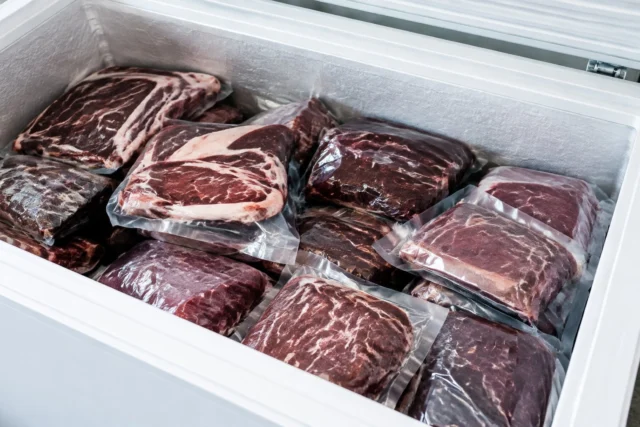
- Chest freezer that holds 0°F or below, with an appliance thermometer inside
- Cooler with ice to hold cuts while you work
Mark every package with the cut, weight and date. Our guide on how to label frozen meat shows a simple system. Freeze roasts and steak chunks whole. NMSU notes that whole chunks hold moisture better and wrap tighter.
How Do You Cut and Sort the Meat?
Five steps take you from skinned quarters to wrapped packages: the loin cuts first, then the hindquarters, shoulders, small cuts and wrapping. Start with skinned, chilled quarters. Our guide on how to quarter a deer covers getting there.
1. Remove the Tenderloins and Trim the Backstraps
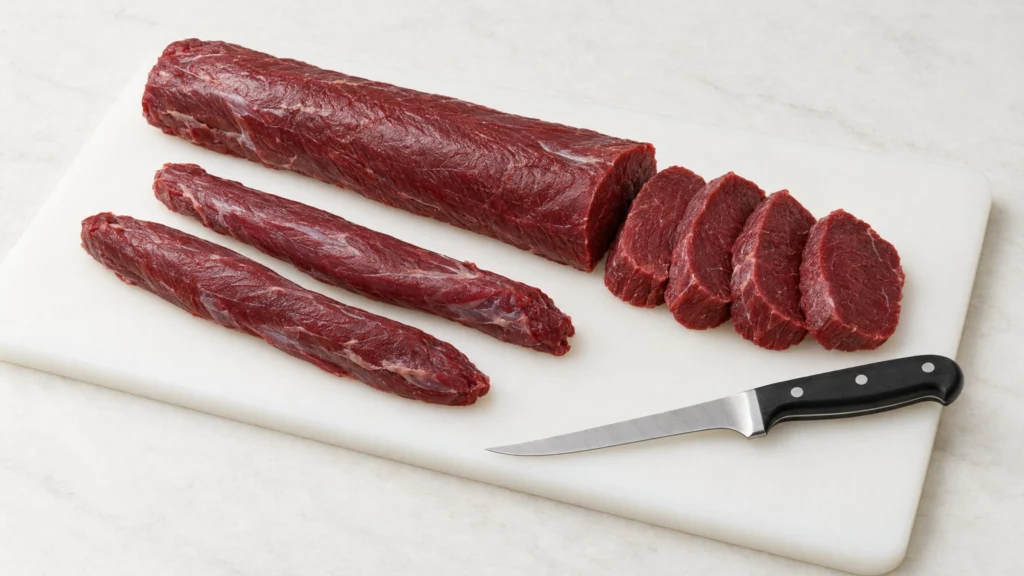
Take the tenderloins first. A venison tenderloin sits under the ribcage on each side of the backbone, just forward of the pelvis. Lift and cut each one free. They run about 1 1/2 inches across and dry out quickly if exposed.
Next, remove each venison backstrap from the groove between the ribs and the spine. This prized venison loin section needs clean prep before packaging:
- Pull off the outer fat and connective tissue from one end. Bitter fat ruins the flavor.
- Slide the knife under the silver skin, blade angled up. This keeps the meat on the strap.
- Cut away the loose meat near the neck end for stew or grind. NMSU notes it takes away from the tenderness of good steaks.
- Cut the strap into family-sized chunks and freeze them whole. You slice steaks at cooking time so the meat keeps its moisture.
2. Follow the Hindquarter Seams and Separate the Shanks
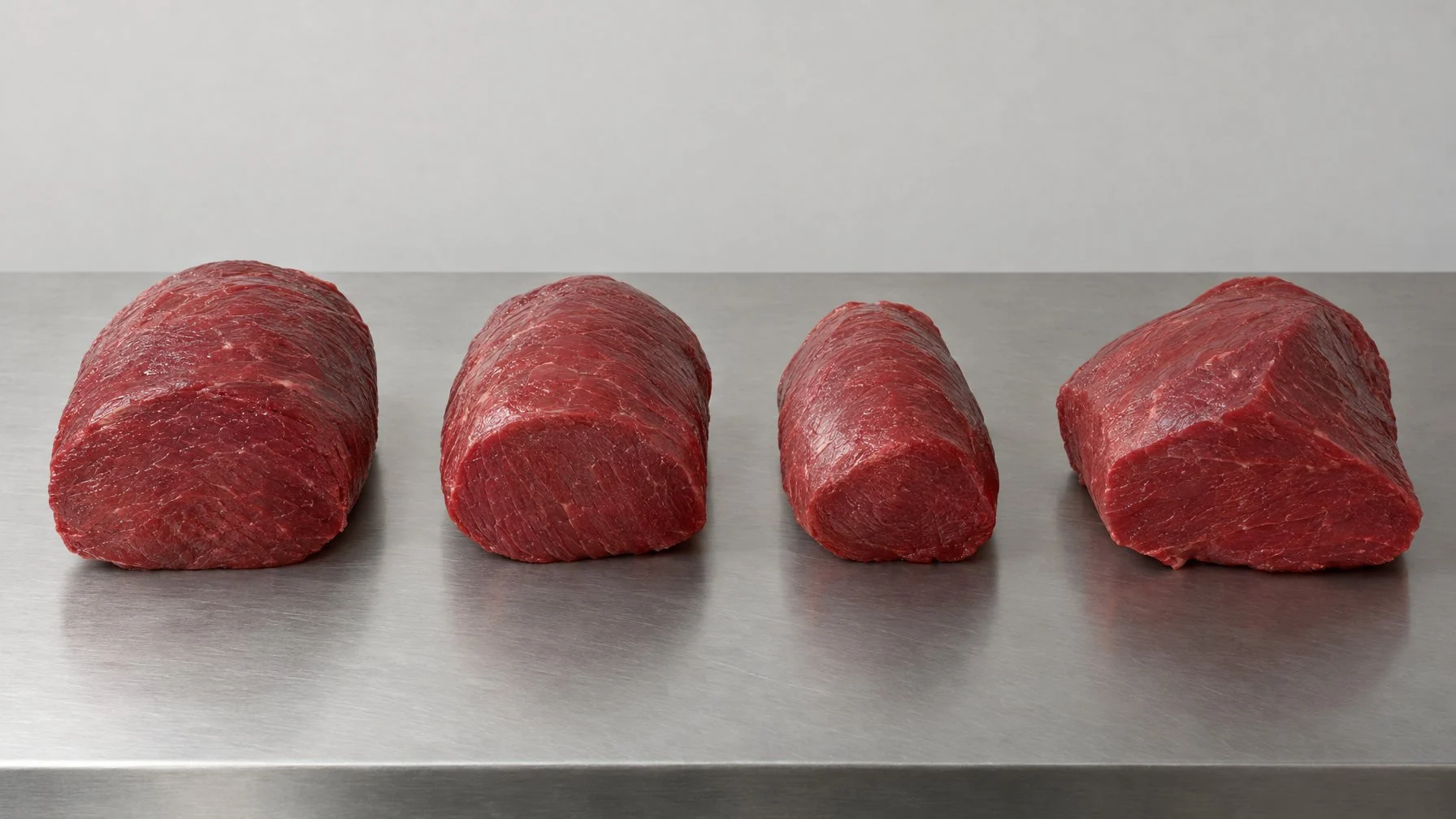
Cut through the knee joint to free the shank. Tougher venison shanks work well for braised venison, or you can trim the meat off the tendons for grind. Venison shanks are full of collagen, so if you would rather braise than grind, cook them low and slow until the collagen turns to gelatin, the way a kitchen makes venison osso buco.
Then split the leg into muscle groups along the natural seams. Use your fingers to open each seam and the knife tip only to free connections. Cutting across muscles makes ragged roasts.
- Lift the sirloin, or sirloin tip, off the front of the leg bone.
- Separate the top round on the inside of the leg.
- Free the bottom round on the outside.
- Pull the eye of round from between the two rounds.
Sections like the rounds and venison rump make dependable roasts or thin steaks. Halve the big rounds lengthwise if your family is small.
3. Break Down the Front Shoulders
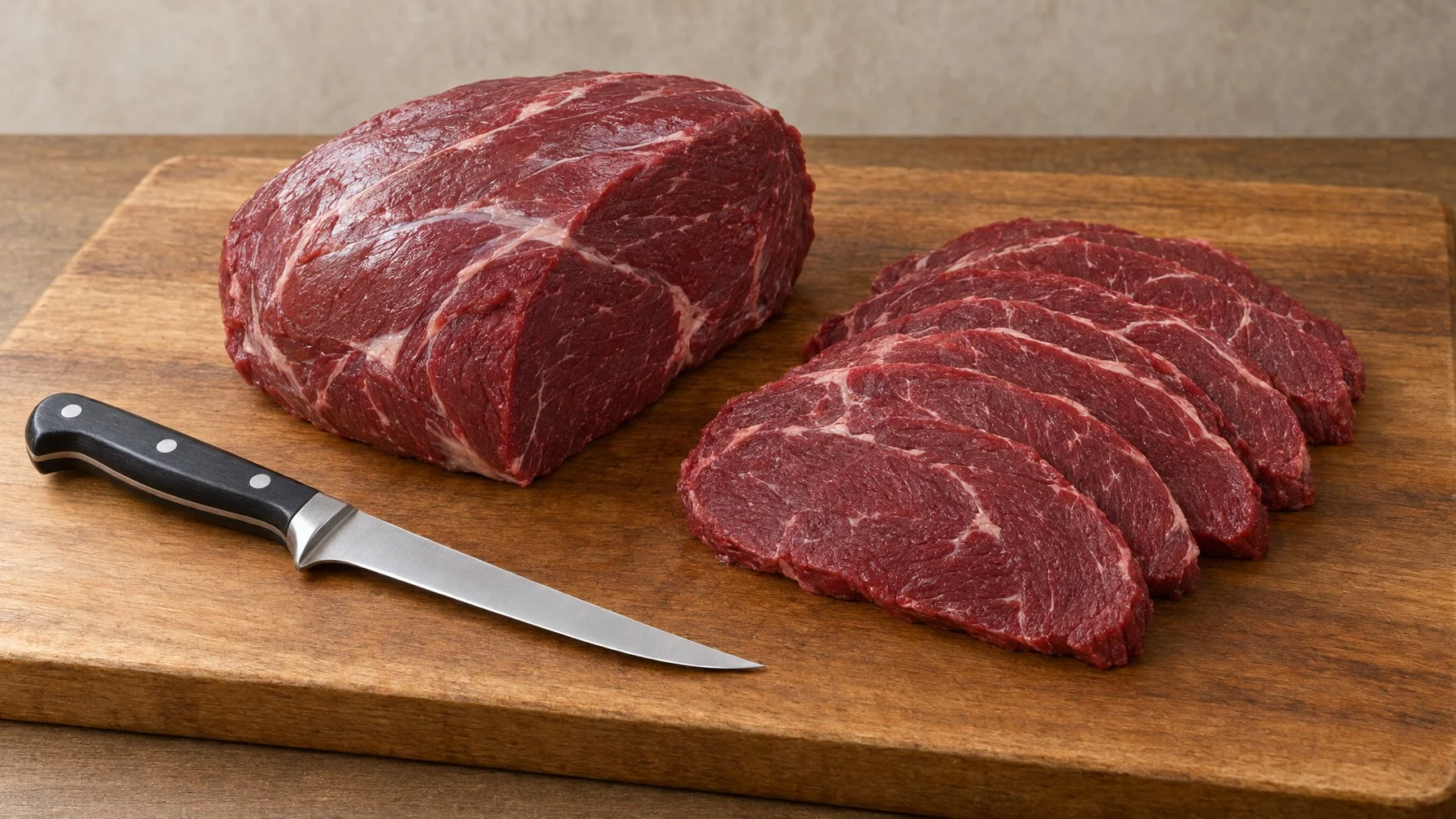
Break the front shank loose and send its meat to grind, then work the rest of the venison shoulder. Along the ridge of the shoulder blade, lift off the muscle on each side. These two pieces are the flat iron, and you can use them as steaks or small roasts.
Leave the rest of the shoulder as a bone-in shoulder roast or bone it out. If you cut it for frying, slice it 1/4 to 3/8 inch thick. Shoulder meat has more connective tissue, so thin slices cook tender. Trimmings go to grind.
4. Sort the Neck, Ribs, Flank, and Trim
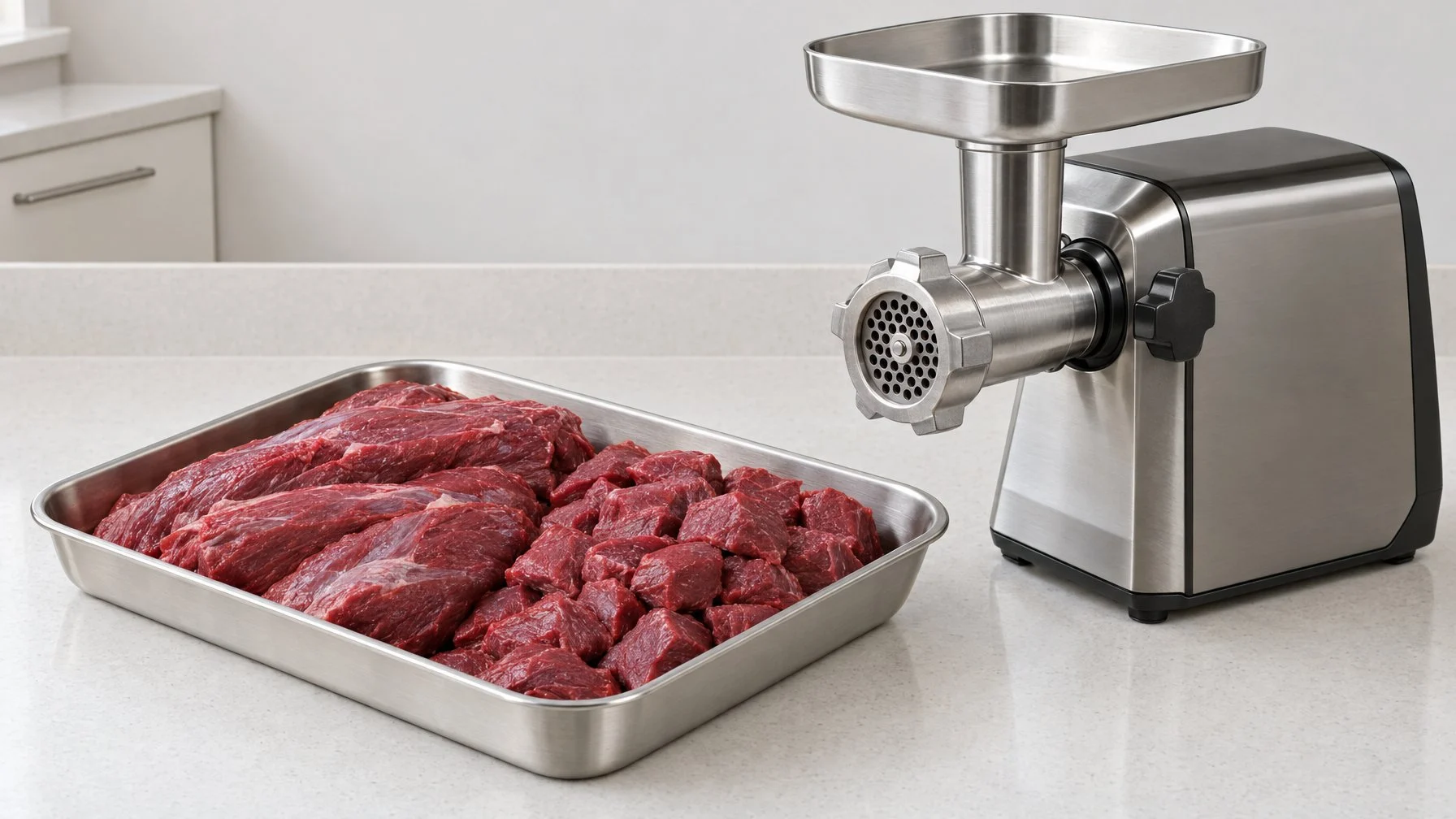
Clean the venison neck of fat, lymph nodes and silver skin. Then keep it whole as a roast, cube it for venison stew or grind it. It braises well because it is lean and well worked.
For the venison ribs, choose one of two paths. You can saw them into plates for smoking, whole or in 2 to 3 rib pieces. You can also cut the meat off and grind it. Cut the venison flank free from the backbone and ribs and add it to the grind tub.
All clean trim can become ground venison for burgers or venison sausage. Chill it hard first. Our guide on how long to freeze meat before grinding gives the timing.
The best meat grinder for deer roundup covers motors that handle a full season of trim.
5. Wrap, Label, and Freeze Each Cut
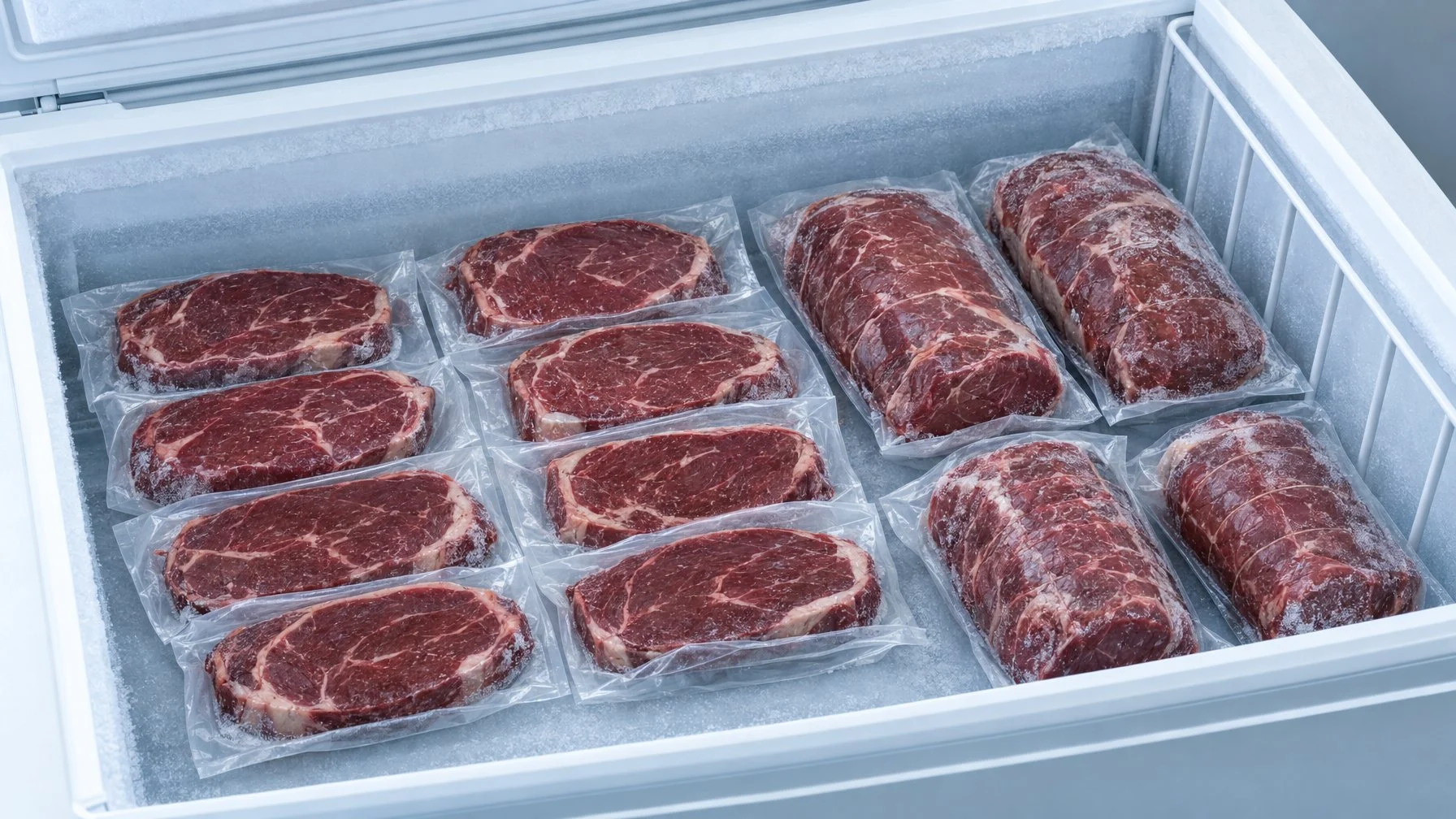
Wrap each cut tight with no air pockets. Air causes freezer burn. Double wrap in freezer paper, or vacuum seal.
Label the package with the cut name, weight and date before it goes in the freezer. Lay the packages in a single layer until they freeze solid. Fast freezing keeps ice crystals small and the texture better.
How Do You Keep the Meat Safe and Fix Common Cutting Problems?
Safety comes down to two numbers: 40°F while you cut and 0°F in the freezer. Four common problems have quick fixes: a hidden eye of round, tough round steaks, leftover silver skin and air in the package.
Safety: Keep Meat at 40°F or Below While Cutting and Freeze at 0°F or Below
SAFETY: The USDA FSIS says bacteria grow most rapidly between 40°F and 140°F. Keep meat at 40°F or below while you work. Cook ground venison to 160°F. NMSU Extension says to freeze meat quickly and store it at 0°F or below.
Work one quarter at a time and keep the rest on ice. Put finished cuts in the cooler as soon as they are trimmed. Wash the board and your hands between raw-meat jobs.
Can’t Find the Eye of Round? Follow the Seam Between the Rounds
The eye of round sits between the top and bottom rounds, wrapped in a thin membrane. Pull the two rounds apart with your hands and look for the long, round muscle in the gap.
Cut along the membrane, not through meat. If you cut across it, you will split the eye in half. A cold leg separates more cleanly than a warm one.
Round Steaks Are Tough? Slice Thin and Avoid the Long Tendon
Round makes good steak only when you cut it thin, about 1/4 to 3/8 inch. Thick round steaks chew hard.
Meat close to the long tendon is too tough for steak. Trim it out and send it to grind. Cook thin round steaks hot and fast, about 90 seconds a side, so the center stays slightly pink.
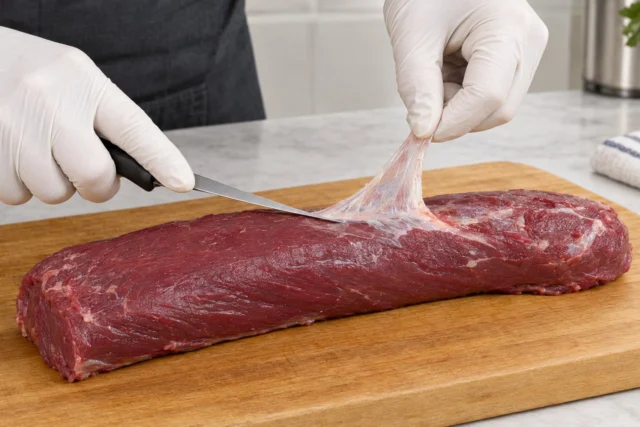
Backstrap Still Has Silver Skin? Trim It Before Cutting Steaks
Silver skin shrinks in the pan and curls the steak. Remove it while the strap is whole, before you slice anything.
Lift a tab of silver skin at one end. Then slide a sharp, thin blade under it with the edge tilted slightly up. Pull the tab tight with your other hand as you push the blade along. Short strokes waste less meat.
Air Is Trapped in a Package? Rewrap It Before Freezing
Trapped air dries the meat surface and leaves gray freezer burn. Check every package before it goes in.
If a vacuum bag shows a pocket, cut it open and reseal. For paper wrap, press the plastic layer flat against the meat, then add the paper as a second layer.
Frequently Asked Questions
These answers cover the main venison cuts, the best venison tenderloin and venison loin picks for steaks, what to grind and what to tell a deer processor.
What are the different cuts of whitetail deer meat?
A whitetail breaks into backstraps, tenderloins, hindquarters, front shoulders, neck, ribs and flank. Each hindquarter splits into sirloin, top round, bottom round, eye of round and shank. The shoulder gives you the flat iron, a shoulder roast and a shank. Everything left over becomes trim for burger or sausage, so very little of a clean deer goes to waste.
What are the best cuts of deer meat for steaks?
The tenderloins and backstraps make the best steaks. They have no connective tissue and can be cut thick, about 3/4 inch. After those, the top round, bottom round, eye of round and sirloin all make good steaks when you slice them 1/4 to 3/8 inch thick. Shoulder steaks at the same thickness work well for frying.
Which deer hindquarter cuts should I keep as roasts?
Keep the sirloin, top round, bottom round and eye of round whole as roasts. Separate them along their natural seams so each roast holds together while cooking. Freeze them whole, and you can still slice thin steaks from a partly thawed roast later. Send the hind shank to grind, because its heavy tendons make it a poor roast.
What deer meat should I grind?
Grind the shanks, flank, rib meat, loose loin ends and every clean trimming. The neck also grinds well if you do not want it as a roast or stew meat. Remove fat, silver skin and tendons first, since venison fat tastes bitter. Many hunters add pork or beef fat to the grind for burger and sausage.
What should I ask a deer processor to keep whole?
Ask a deer processor to keep the backstraps, tenderloins and hind leg rounds whole or in large chunks. Whole pieces hold moisture better and suit a wider variety of venison recipes later. Ask for the neck as a roast if you braise. Request that all fat and silver skin come off before anything is ground.
When the steaks and roasts are wrapped and the grind tub is full, our guide on how to butcher a deer covers the full process from quarters to freezer.
This is general guidance based on USDA recommendations. When in doubt, follow the USDA FSIS source linked above.