Vacuum-sealed raw meat lasts the same time in the fridge as unsealed meat: 3 to 5 days for steaks, chops and roasts, 1 to 2 days for ground meat, and 7 days for bacon, held at 40°F or below. Sealing can keep quality longer. It does not add safe days, so freeze anything you will not cook in time.
You will be able to read a sealed package and know whether to cook it, freeze it or toss it. That covers home-sealed bags, plant-sealed products and commercial wet-aged beef. You will also learn why a sealed bag can hide the usual warning signs of spoilage. That caveat comes from Clemson Extension.
Use These Refrigerator Storage Limits
No source gives vacuum-sealed meat its own fridge times, so SaltRail applies the federal chart times exactly as written. The points below cover each meat type and whether sealing resets the clock. They also explain why quality and safety run on different timelines, and the fridge temperature you need.
What Does the Storage Chart Say for Each Meat?
At 40°F or below, FoodSafety.gov lists 3 to 5 days for fresh beef, veal, lamb and pork steaks, chops and roasts. Ground meats and raw sausage get 1 to 2 days. Bacon gets 1 week. For sealing ground beef step by step, see how to vacuum seal ground beef.
The FDA’s printable Refrigerator & Freezer Storage Chart from March 2018 gives the same numbers. The two federal charts agree, so you have one set of limits to follow.
| Meat (raw) | Fridge limit at 40°F or below | What vacuum sealing changes |
|---|---|---|
| Beef, pork, lamb, veal steaks | 3 to 5 days | Quality may hold longer; safe time stays the same |
| Chops and roasts | 3 to 5 days | Quality may hold longer; safe time stays the same |
| Ground beef, pork, other ground meats | 1 to 2 days | Safe time stays the same |
| Raw sausage | 1 to 2 days | Safe time stays the same |
| Bacon | 7 days | Safe time stays the same |
Times from FoodSafety.gov and the FDA chart. For freezer times, see how long vacuum sealed meat lasts in the freezer. Sausage has its own rules for cooked and cured types, which are covered in how long sausage lasts.
Does Sealing Restart the Refrigerator Clock?
No source says sealing restarts the count. SaltRail’s reading of the charts: count from the day you bought or processed the meat, because sealing only changes the package.
Say you bought pork chops on Monday and sealed them on Wednesday. You still need to cook or freeze them between Thursday (3 days) and Saturday (5 days) at the latest, because the count began Monday. USDA FSIS says to cook or freeze ground meats within 2 days and other beef, veal, lamb or pork within 3 to 5 days.
Why Can Quality Last Longer Without a Longer Safety Window?
Vacuum sealing removes oxygen. That slows the aerobic spoilage bacteria that turn meat slimy and sour. Other bacteria do fine with less oxygen.
Reduced oxygen packaging (ROP) is any package that removes or limits air around food, which slows some bacteria but favors others. University of Maine Extension notes that vacuum sealing does not kill pathogens already present. It also warns that anaerobic pathogens such as Clostridium botulinum can still be present inside a sealed bag.
Clemson Extension says vacuum packaging may extend the storage time of refrigerated foods but may increase the danger of growing disease-causing bacteria. Clemson’s fact sheet was last revised in 2007, and no newer federal source gives home-sealed raw meat a longer safe fridge time. So you use the chart.
SAFETY: USDA FSIS sets the refrigerator at 40°F or below. Vacuum sealing does not kill bacteria and does not lengthen the safe storage times on the FoodSafety.gov chart. Cook or freeze within the chart window.
What Refrigerator Temperature Should You Maintain?
Keep the fridge between 34 and 40°F. Clemson gives that range for vacuum-packaged foods, and the federal charts set 40°F as the upper limit.
USDA FSIS says to check the temperature of your refrigerator with an appliance thermometer. The refrigerator should be at 40°F or below. FSIS also notes that door bins fluctuate in temperature more than the cabinet, so keep meat off the door.
How Do Home-Sealed and Commercial Packages Differ?
Home-sealed meat follows the chart for the raw meat inside. Plant-sealed products follow their printed date. The parts below explain plant-sealed products, why commercial wet aging is a separate process, and which longer claims do not hold up.
| Package type | Who sealed it | Fridge guidance |
|---|---|---|
| Home-sealed raw meat | You, with a countertop or chamber sealer | Chart time for that meat (for example 3 to 5 days for steaks) |
| Plant-sealed, unopened (such as fully cooked ham) | Processing plant | Printed “use by” date, or the chart’s listed time |
| Commercial wet-aged beef | Packer, under controlled cold | Plant conditions only; do not copy at home |
Which Instructions Apply to Unopened Plant-Sealed Products?
Follow the package date on unopened plant-sealed products. For example, FoodSafety.gov lists fully cooked ham vacuum-sealed at the plant at 2 weeks unopened, or the “use by” date.
That time is for an unopened package. The chart does not extend it to plant products you open and reseal at home.
If your meat came from a custom processor rather than in a retail plant package and you are unsure which rules apply, see custom exempt vs USDA inspected meat.
Why Is Commercial Wet Aging a Different Process?
Commercial wet aging keeps vacuum-packed beef at a narrow, very cold temperature under plant control. LSU AgCenter describes vacuum-packed bags held at 32 to 34°F for up to three weeks.
A home fridge at 40°F or below is above that 32 to 34°F range, and home-sealed beef stays on the 3 to 5 day chart. Do not try to wet-age beef in your home fridge. The process and its trade-offs are covered in dry-aged vs wet-aged beef.
What Longer Storage Claims Do the Sources Not Support?
No federal or extension source gives home-sealed raw meat a fridge time of 2 weeks, 3 weeks or “3 to 5 times longer.” Treat any longer figure as unsupported.
The sources also do not give separate fridge times for these cases:
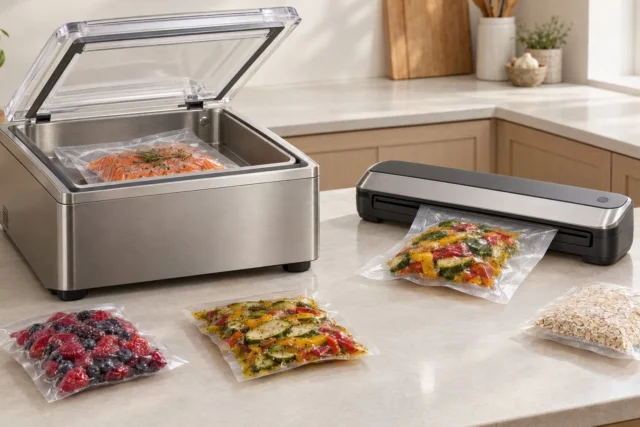
- Meat sealed with a chamber sealer versus an edge sealer. The chamber vacuum sealer vs vacuum sealer choice affects how well liquids seal, but the chart time stays the same.
- Vacuum-sealed cooked meat beyond the chart’s 3 to 4 days for leftovers.
- Fish and seafood, which follow separate FDA rules.
How Should You Handle Meat Before Refrigerating It?
Good handling before the seal keeps you inside the chart window. You need basic gear, then four steps: check the history, keep it cold, seal and label, and decide between cooking and freezing.
- Check the storage history before you seal.
- Keep the meat cold while you portion it.
- Seal and label with the original date.
- Cook within the chart window or freeze.
What You Need
- Vacuum sealer: an edge sealer or a chamber sealer.
- Vacuum bags or rolls sized to the cut.
- Appliance thermometer for the fridge.
- Permanent marker or labels for the date and contents.
- Clean cutting board and knife, washed in hot, soapy water after raw meat.
- Paper towels to blot surface moisture.
Gear options are covered in the vacuum sealing roundup.
1. Check the Storage History Before You Seal
Write down when the meat was bought or processed. That date sets the deadline, because sealing does not reset it.
If you cannot tell when it was bought or processed, no chart can give you a deadline. Do not guess.
2. Keep the Meat Cold While You Portion It
Work in small batches and keep the rest in the fridge. USDA FSIS says to refrigerate perishable food within 2 hours (1 hour when the temperature is above 90°F). For the full time limits, see how long can raw meat sit out.
For big jobs, such as a half hog or a deer, plan for cold space before you start. Meat from the field needs to be chilled first, which is covered in how to cool a deer carcass. For fresh venison fridge times, see how long is venison good in the fridge.
3. Seal and Label Without Resetting the Clock
Blot the surface, seal and write the original purchase or processing date on the bag. This is SaltRail’s suggestion: the seal date would make the meat look fresher than it is.
Add a second line with the cook-by date. For steaks bought Monday, the cautious end of the 3 to 5 day window reads “cook or freeze by Thursday.”
4. Cook Within the Window or Choose Freezing
If you will not cook the meat inside its chart time, freeze it now. Freezer times are covered in how long vacuum sealed meat lasts in the freezer.
When you are ready to cook frozen packs, thaw them in the fridge. Steps and timing are in how to thaw vacuum sealed meat.
What Should You Do When Storage Goes Wrong?
Most problems come down to one question: do you know the time and temperature history? The four cases below cover a lost seal, a missing date, meat that seems fine and liquid in the seal.
The Bag Has Lost Its Vacuum: Check the History Before Repacking
A loose bag means air got back in. It does not add or reset time: the chart time still runs from the original date.
If the meat is still inside its window and stayed at 40°F or below, reseal it in a new bag or cook it. If it is past the window, discard it. Recurring seal failures point to the sealer or bag, and vacuum sealer not sealing covers the common causes.
The Date or Temperature History Is Unknown: Do Not Guess
No date means no safe deadline. SaltRail’s suggestion: discard unlabeled bags whose date you cannot confirm.
The Meat Looks and Smells Normal: Check Time and Temperature Anyway
Normal smell and color do not prove a sealed pack is safe. Clemson notes that vacuum packaging may remove the spoilage bacteria that warn you through odor, color or sliminess, while some pathogens prefer low oxygen.
Go by the date and the fridge temperature. If either is outside the limit, throw the meat out even if it looks fine. For the signs of spoiled meat, see how to tell if meat is spoiled.
Liquid Is Interfering With the Seal: Follow the Equipment Instructions
Wet meat and marinades can keep a bag from sealing. Follow your sealer’s instructions for moist foods.
For brines and soups, see can you vacuum seal wet meat and liquids. A good seal protects the package. The fridge clock stays the same.
Frequently Asked Questions
Does vacuum sealing double refrigerator storage life?
No federal or extension source says vacuum sealing doubles safe fridge time. Clemson says sealing may extend storage time for quality, but steaks, chops and roasts still get 3 to 5 days at 40°F or below. Clemson Extension warns that low-oxygen packs can favor some disease-causing bacteria, so use the chart times and freeze anything you will not cook soon.
How long can vacuum-sealed ground beef stay in the fridge?
Vacuum-sealed ground beef gets 1 to 2 days in the fridge, the same as unsealed ground beef. USDA FSIS says to cook or freeze ground meats within 2 days.
How long can vacuum-sealed bacon stay in the fridge?
USDA FSIS says to use raw bacon within 7 days or freeze it, kept at 40°F or below. Home-cured bacon is covered in how to cure bacon.
Can vacuum-sealed meat sit out at room temperature?
No. Clemson Extension states that vacuum packaging does not allow you to store foods at room temperature. USDA FSIS says to refrigerate perishable food within 2 hours, or 1 hour above 90°F. Thaw sealed meat in the fridge, never on the counter.
Can meat go bad in a vacuum-sealed bag?
Yes. Vacuum sealing does not kill bacteria already on the meat, and some pathogens grow in low oxygen. The meat can turn unsafe without the usual smell or slime, so track the date and fridge temperature on every bag.
If you plan to hold meat longer than the chart allows, the next step is the SaltRail guide to what temperature a chest freezer should be.
This is general guidance based on USDA recommendations. When in doubt, follow the USDA FSIS source linked above.